Getting Around a City Built in the Middle Ages
Let's be honest: London is an old city. Between the cobblestones of Covent Garden and the deep-level Tube stations from the 1800s, it can feel like a maze if you're using a wheelchair or have limited mobility. But here is the good news: London has quietly become one of the most accessible major cities in the world. You just need to know which spots are truly step-free and how to navigate the gaps. If you're planning a trip, the biggest hurdle isn't the sights themselves-most major museums are fantastic-it's the journey between them. You can't just jump on any random bus or train and hope for the best. You need a strategy that prioritizes accessible attractions in London while avoiding the "accessibility traps" like hidden stairs or broken lifts.Key Takeaways for a Smooth Trip
- Prioritize the "Big Three" museums (British Museum, Tate Modern, V&A) for guaranteed step-free access.
- Use the TfL Go app to check real-time lift status before heading to a station.
- Stick to the Elizabeth Line for the fastest, most reliable step-free rail travel.
- Book "Accessible Tickets" for the London Eye or Tower of London to avoid long queues and get dedicated entry.
The Best Step-Free Museums and Galleries
Luckily, London's cultural hubs are leading the way in inclusivity. Most of the big galleries have spent the last decade ripping out old stairs and installing massive ramps.
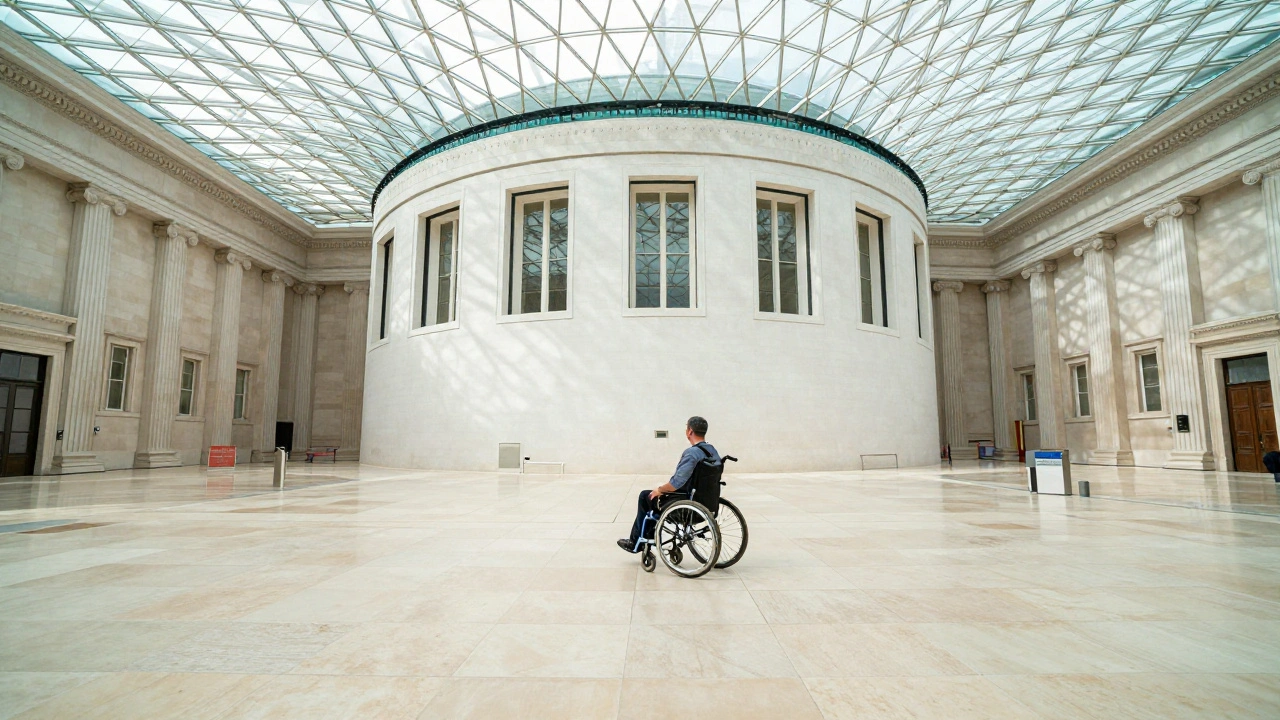
The British Museum is a must, but it's huge. The main entrance on Great Russell Street is fully accessible, and they provide complimentary wheelchairs at the front desk. A pro tip here: the Great Court is a flat, open space that's perfect for regrouping, but some of the older galleries have narrow corridors. Always check the map for the lift locations to avoid backtracking through the whole building.
If you're into art, Tate Modern is probably the gold standard for accessibility. Because it's a converted power station, the spaces are massive and mostly flat. The Turbine Hall is a dream for wheelchair users-plenty of room to maneuver and zero stairs to worry about. They also offer a "relaxed" viewing experience for those with sensory sensitivities.
Then there is the Victoria and Albert Museum (V&A). It's a bit more complex because of its layout, but every single gallery is accessible via lifts. The museum is particularly good about providing height-adjustable displays and tactile guides for visitors with visual impairments.
| Museum | Entrance Access | Internal Movement | Wheelchair Hire |
|---|---|---|---|
| British Museum | Step-free | Lifts available | Free (at entrance) |
| Tate Modern | Step-free | Open plan/Lifts | Available |
| V&A Museum | Step-free | Lifts/Ramps | Available |
| National Gallery | Step-free | Lifts available | Available |
Navigating the City: Transport Hacks
This is where most people get stuck. The London Underground (The Tube) is iconic, but many stations are essentially vertical shafts with nothing but stairs. If you see a station labeled "Step-free from street to train," you're golden. If it says "Step-free to platform," you might still have a gap to bridge between the platform and the carriage.
Your best friend is the Elizabeth Line. It is the newest addition to the network and was built with accessibility as a core requirement. Every single station on this line is step-free from the street to the train, and the trains are level with the platforms. It's the fastest way to get from Heathrow or Canary Wharf into the center without stressing over a broken lift.
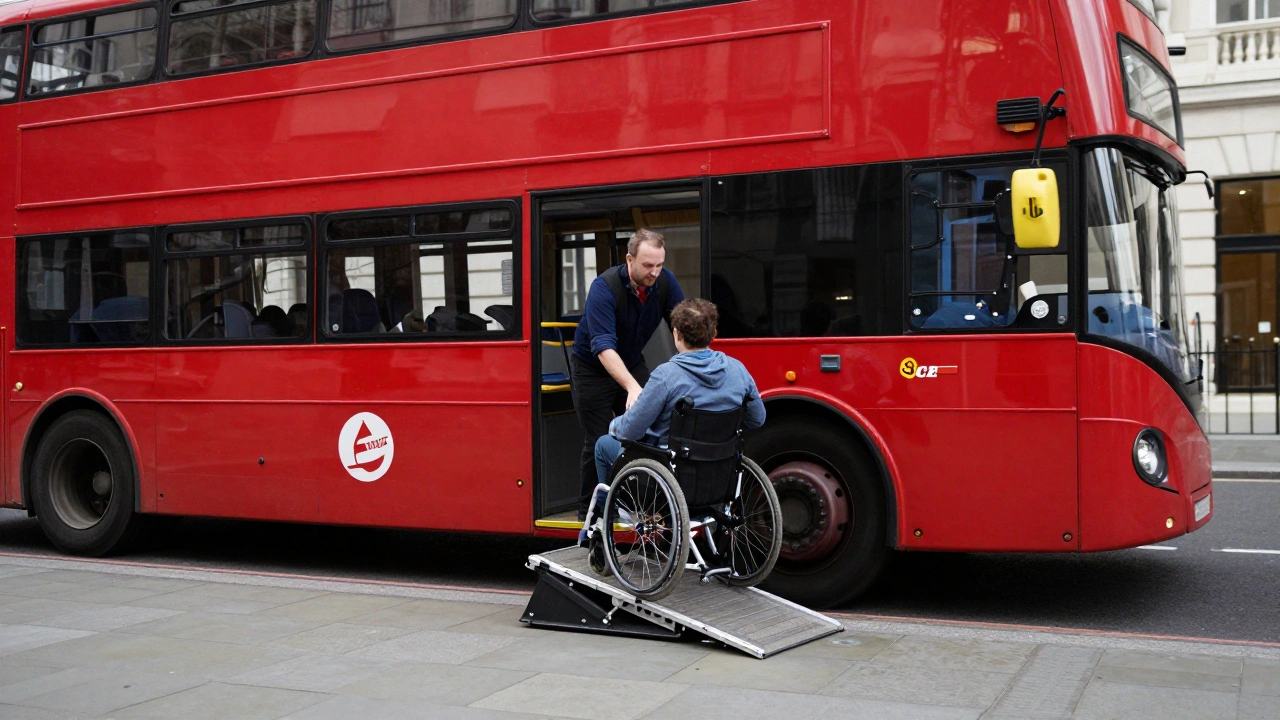
For shorter trips, the London Bus network is a lifesaver. Every single red bus in London is low-floor and equipped with a ramp at the middle door. The driver will usually help deploy it, and there is a dedicated space inside for one wheelchair user. Just keep in mind that buses can get incredibly crowded during rush hour, making it harder to get in and out quickly.
If you prefer a more scenic route, the Uber Boat by Thames Clippers is a great way to see the city. Most piers are accessible via ramps, and the boats have designated wheelchair spaces. It's a much more relaxing experience than fighting through the crowds at a Tube station.
Step-Free Sights: Landmarks and Views
Can you actually see the sights without climbing a thousand stairs? Yes, but you have to be selective. The Tower of London is a fortress, which means lots of old stones. While the main paths are accessible, some of the upper towers are impossible. However, they provide a very detailed accessibility map and a dedicated entrance for wheelchair users that bypasses the longest lines.
For a bird's-eye view, the London Eye is fully accessible. You can roll right into the pods. The only tricky part is the boarding ramp, which can be steep, but the staff are trained to assist and make the process quick. Avoid the "Fast Track" tickets unless they explicitly confirm the accessibility route, as some of the fast-track entrances have narrow turnstiles.
Walking along the South Bank is one of the most accessible activities in the city. The promenade is flat, wide, and paved, taking you past the Southbank Centre and the National Theatre. It's a great spot to experience the vibe of London without worrying about curbs or cobblestones.

Practical Tips to Avoid Common Pitfalls
One of the biggest mistakes visitors make is relying on Google Maps' default "walking" directions. Google doesn't always know if a lift is out of service or if a "accessible" route actually involves a steep slope. Instead, use the TfL Go app. It gives you real-time status updates on lifts across the network. If a lift at Oxford Circus is broken, you'll know before you leave your hotel.
When it comes to dining, avoid the tiny, historic pubs in the City or Soho. Many of these "atmospheric" spots have a single step at the entrance and a tiny bathroom upstairs. Look for newer developments or larger chain pubs (like those in the South Bank area) which are required by law to be fully accessible.
Don't be afraid to ask for the "accessible entrance." In London, the main door is often a historic landmark that can't be changed, but there is almost always a side door with a ramp or a lift. If you don't see a ramp, look for a bell or a call button-it's common for staff to come out and deploy a portable ramp for you.
Is every London bus wheelchair accessible?
Yes, all London buses are low-floor and have ramps. The ramp is located at the middle doors. If you are using a motorized wheelchair, the driver will help you secure your position, though space is limited to one wheelchair per bus.
How do I find step-free Tube stations?
The best way is through the TfL Go app or the official Transport for London (TfL) website. Look for the blue wheelchair symbol on the map. Be sure to check if it's "step-free from street to platform" or "step-free from street to train," as the latter is the only one that guarantees no stairs at any point.
Are London's free museums truly accessible?
Most are. Major institutions like the British Museum, Tate Modern, and the National Gallery are fully accessible. However, because they are old buildings, some specific exhibits in smaller rooms might have limitations. Always ask for an accessibility map at the entrance.
Do I need to book accessibility services in advance?
For museums, usually not. For paid attractions like the London Eye or the Tower of London, it is highly recommended. Booking an "Accessible Ticket" ensures you get the correct entry point and can avoid the general queue, which can be physically draining.
What is the best way to see the city without using the Tube?
The Uber Boat (Thames Clippers) and the London Bus network are the best alternatives. The South Bank walk is also highly recommended as it's a flat, paved area with many attractions clustered together, minimizing the need for long-distance travel.
Next Steps for Your Visit
If you're just starting to plan, I recommend mapping out your days by "zones." Instead of crossing the city multiple times, pick one area-like the South Bank-and spend the whole day there. This reduces the number of transfers and minimizes the risk of encountering accessibility issues.
For those with more complex needs, consider contacting the attraction's accessibility coordinator via email a week before your visit. They can often provide a custom route through the building or arrange for a staff member to meet you at the door to ensure a seamless entry.
Finally, download the TfL Go app and familiarize yourself with the Elizabeth Line map. It will be the single most important tool in your pocket for getting around London without the stress.