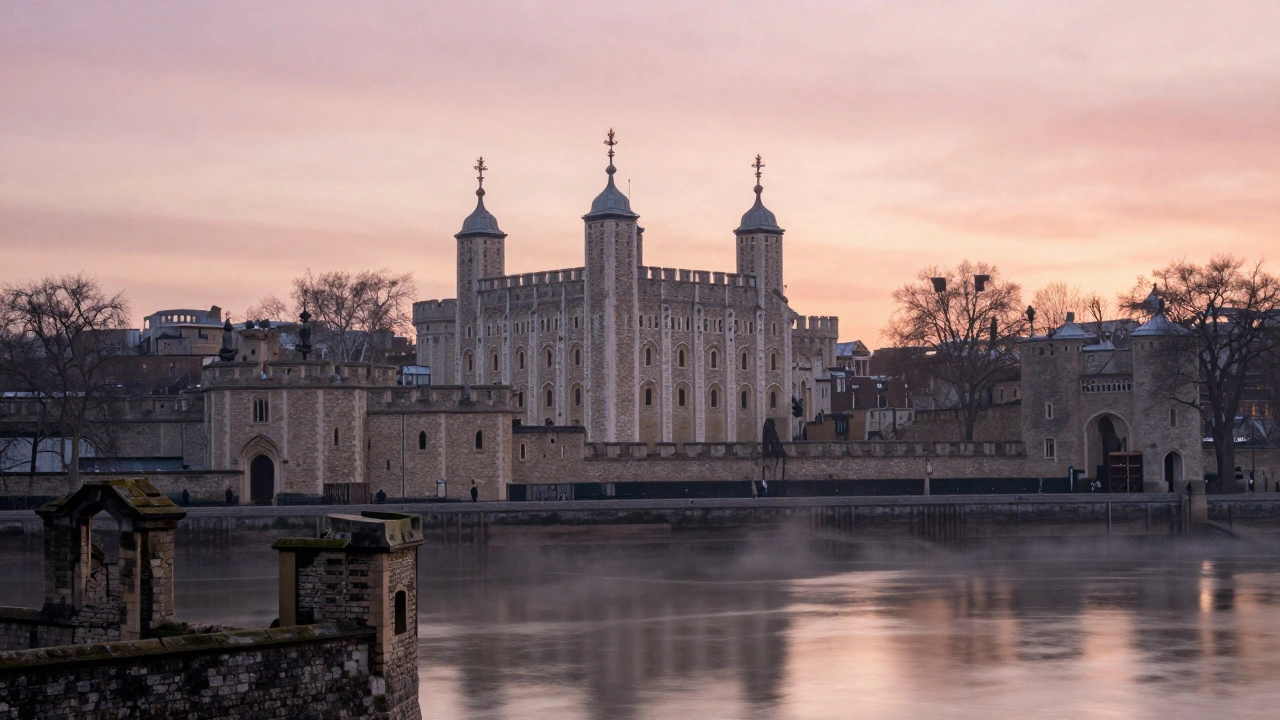
Walk through any neighborhood in London and you’ll see centuries of history stacked like layers in a cake. One moment you’re standing beside a 900-year-old stone castle, the next you’re gazing up at a glass tower that looks like it came from a sci-fi movie. This isn’t just a city with old buildings - it’s a living textbook of architectural evolution. London didn’t just change its style over time; it rebuilt itself, burned down, expanded, and reinvented its identity through brick, stone, steel, and glass.
The Foundations: Roman and Medieval London
Long before skyscrapers, London was a Roman outpost called Londinium. The first real architectural footprint? A wall. Built around 200 AD, parts of it still exist near the Tower of London. That wall wasn’t just defense - it defined the city’s shape for centuries.
By the 11th century, after the Norman Conquest, stone replaced wood. The Tower of London is a massive fortress built by William the Conqueror starting in 1078. It combined military power with royal authority, featuring thick walls, a moat, and a central keep called the White Tower. This was Norman architecture - heavy, practical, and intimidating.
Then came the Gothic style. In the 13th century, churches and cathedrals started reaching upward. Westminster Abbey is a masterpiece of Early English Gothic, begun in 1245 under Henry III. Pointed arches, ribbed vaults, and flying buttresses let light flood in through stained glass - a spiritual upgrade from dark Romanesque churches. These weren’t just religious buildings; they were statements of wealth, faith, and power.
The Fire and the Rebirth: 17th to 18th Century
In 1666, a fire tore through London. It destroyed over 13,000 homes and 87 churches. The city had to rebuild - fast. That’s when Sir Christopher Wren came in. He didn’t just fix what was lost; he redesigned it. His most famous work? St. Paul’s Cathedral is a dome-shaped masterpiece completed in 1710, blending classical Roman design with Baroque drama. Its dome, modeled after St. Peter’s in Rome, became London’s skyline anchor for over 300 years.
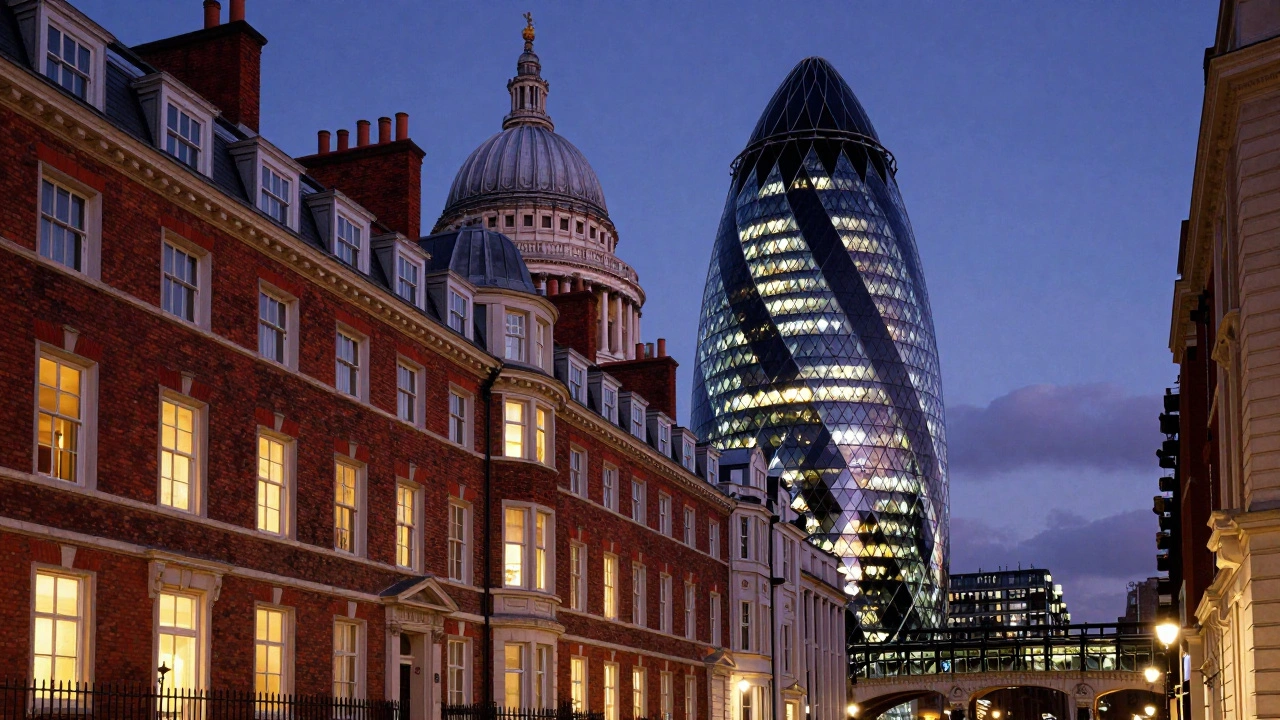
After the fire, brick became the new standard. Fire-resistant, affordable, and easy to mass-produce. Row houses with red brick facades, sash windows, and modest cornices became the norm. These were Georgian homes - elegant, symmetrical, and quiet. You’ll still see them in Bloomsbury, Mayfair, and the East End. They weren’t flashy, but they were durable. And they housed the growing middle class.
The Industrial Boom: Victorian and Gothic Revival
The 1800s changed everything. Steam engines, railways, and factories turned London into the world’s largest city. Population exploded. Architecture had to keep up.
The Houses of Parliament is a Gothic Revival landmark built between 1840 and 1870 after a fire destroyed the old palace. Designed by Charles Barry and Augustus Pugin, it used pointed arches, ornate carvings, and over 1,000 rooms. It wasn’t just government - it was a statement: Britain’s empire was eternal, and its traditions were sacred.
At the same time, terraced housing boomed. Workers needed homes, so developers built narrow brick rows with shared walls and tiny backyards. These weren’t designed for comfort - they were designed for density. Many still stand today, especially in Southwark and Islington. Some have been renovated into chic apartments, but their original structure? Still unmistakably Victorian.
Public buildings got grander too. Victoria Station opened in 1860 with its arched glass roof and ornate clock tower. It wasn’t just a train station - it was a temple to progress. Iron, glass, and brick came together in ways no one had imagined before.
The 20th Century: War, Reconstruction, and Modernism
World War II didn’t just change politics - it changed London’s skyline. Over 70,000 buildings were destroyed. After the war, the city had a blank slate. Architects didn’t want to rebuild the past. They wanted the future.
Barbican Estate is a brutalist housing complex built in the 1960s on the ruins of bombed-out streets. Concrete towers, elevated walkways, and underground gardens - it looked like a sci-fi city from a 1950s novel. Critics called it cold. Residents called it home. It still houses over 4,000 people today.
Modernism wasn’t just about housing. The Royal Festival Hall opened in 1951 as part of the Festival of Britain. Curved lines, glass walls, and open spaces. It was a break from the past - light, airy, democratic. It still hosts concerts and events.
But not everyone loved modernism. In the 1980s, a backlash began. People missed ornament, texture, history. That’s when Postmodernism arrived - playful, ironic, sometimes absurd. The SIS Building (MI6 headquarters) at Vauxhall Cross? A dark, fortress-like structure with a glass facade that mirrors the Thames. It’s not pretty, but it’s unmistakable.
21st Century London: Glass Towers and Sustainable Design
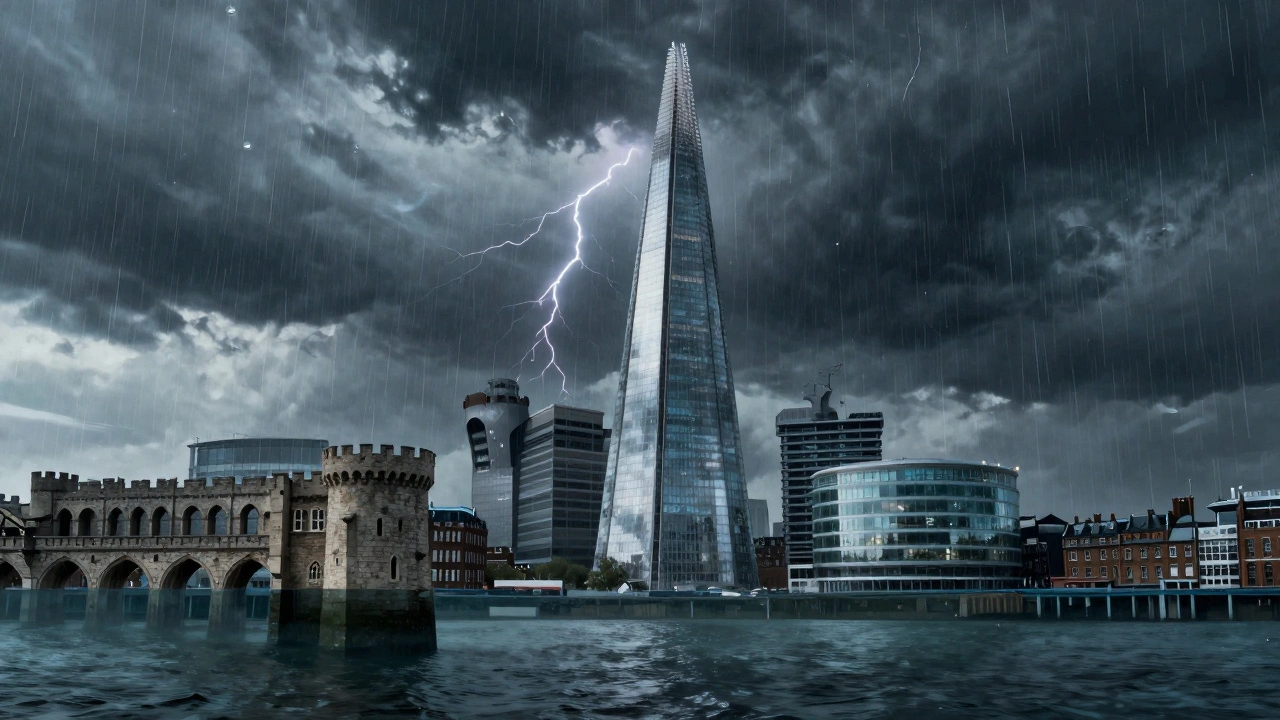
Today, London’s skyline is dominated by glass. The Shard is a 310-meter-tall pyramid-shaped tower completed in 2012. Designed by Renzo Piano, it has 95 floors of offices, apartments, and a viewing gallery. It cost £430 million and took five years to build. It’s not just tall - it’s a symbol of global finance.
But the city isn’t just building up - it’s building smart. New developments like Battersea Power Station is a 1930s industrial relic restored into a mixed-use complex with apartments, shops, and green roofs. The original brick chimneys were preserved. Solar panels were added. Rainwater is recycled. It’s history meeting sustainability.
Even the oldest buildings are adapting. The British Museum added a glass-roofed courtyard in 2000. It didn’t replace the neoclassical facade - it enhanced it. Now, natural light floods the central courtyard, and visitors move through centuries of history under one modern roof.
What Makes London’s Architecture Unique?
What sets London apart isn’t just the variety - it’s the coexistence. You can stand on the same street and see:
- A 12th-century Norman arch beside a 2020s glass office tower
- A Georgian townhouse with a rooftop solar panel
- A Victorian railway bridge carrying modern commuter trains
There’s no single style. No attempt to erase the past. London doesn’t pretend to be clean or perfect. It’s messy, layered, and alive. That’s why it’s not just a city of buildings - it’s a city of stories.
Where to See the Evolution in One Walk
Try this route: Start at the Tower of London, walk to St. Paul’s Cathedral, then head to The Gherkin (30 St Mary Axe), and end at The Shard. Each stop is less than a 20-minute walk. You’ll cover 900 years of design - from stone fortresses to steel-and-glass peaks.
| Period | Key Style | Iconic Example | Material Used | Function |
|---|---|---|---|---|
| 11th-13th century | Norman & Early Gothic | Tower of London | Stone, mortar | Fortress, cathedral |
| 17th-18th century | Baroque & Georgian | St. Paul’s Cathedral | Brick, stone, lead | Religious, residential |
| 19th century | Gothic Revival | Houses of Parliament | Stone, iron, glass | Government, transport |
| 1960s-1980s | Modernism/Brutalism | Barbican Estate | Concrete, steel | Housing, public space |
| 2000s-present | Contemporary | The Shard, The Gherkin | Steel, glass, composite | Office, residential, observation |
Why It Matters Today
London’s architecture isn’t just for tourists. It shapes how people live. Old brick buildings are warmer in winter. Modern glass towers use less energy per square foot. Heritage buildings preserve cultural memory. New designs push sustainability.
The city doesn’t choose between old and new. It layers them. That’s why it still feels alive - because every generation left something behind, and every new one added to it.
What’s the oldest building still standing in London?
The oldest intact building is the Tower of London’s White Tower, built in 1078. Parts of the Roman city wall from 200 AD also still exist, but they’re fragments. The White Tower remains fully functional as part of a historic site and museum.
Why does London have so many different architectural styles?
London didn’t have a single master plan. It grew organically - through fire, war, economic booms, population spikes, and changing tastes. Each era rebuilt what was lost or outdated. There was no effort to erase the past, so layers remained. That’s why you see medieval walls next to glass towers.
Are Victorian houses still being built today?
No, not as original Victorian homes - but their style is often copied. Modern developments in places like Notting Hill or Camden sometimes mimic brick facades, sash windows, and bay fronts to blend in with historic neighborhoods. These are called "neo-Victorian" designs - inspired by the past, built with modern materials.
Which architectural style dominates London’s skyline today?
Contemporary glass towers dominate the financial district and Canary Wharf. The Shard, The Gherkin, and 20 Fenchurch Street are all over 200 meters tall. But outside the City, most residential areas still feature brick terraces, Edwardian villas, and postwar flats. The skyline is split: glass on top, brick below.
Can you visit all these architectural sites?
Yes - most major landmarks are open to the public. The Tower of London, St. Paul’s, the Houses of Parliament (book ahead), and the Shard viewing gallery all offer tours. Even the Barbican Estate has open days. Some modern buildings like The Gherkin are private, but you can view them from the outside or book a restaurant inside.
What’s Next for London’s Architecture?
The next big push? Climate resilience. New buildings must meet strict energy standards. Rooftop gardens, solar panels, and passive cooling are now required. The city is also protecting historic structures from flood risks - especially along the Thames.
There’s also a quiet movement to bring back craftsmanship. Instead of prefab panels, some developers are using hand-laid brick, timber frames, and copper roofs. It’s expensive. But it’s lasting.
London’s architecture isn’t frozen in time. It’s still being written - one brick, one beam, one glass pane at a time.