London’s best bakeries aren’t just about bread-they’re about moments.
You know the feeling: you walk into a shop, the scent of butter and caramel hits you, and suddenly, your whole day changes. That’s what London’s top bakeries do. They don’t just sell pastries. They serve memory. Whether it’s a flaky croissant at 8 a.m. before work or a chocolate éclair after a long walk through Covent Garden, these places make the city taste better.
Forget the chain stores. The real magic lives in the small shops run by people who wake up at 3 a.m. to knead dough, test oven temps by hand, and let their sourdough ferment for 24 hours. These aren’t just bakeries. They’re craft studios where flour, water, salt, and time turn into something unforgettable.
St John Bread and Wine - Where bread is sacred
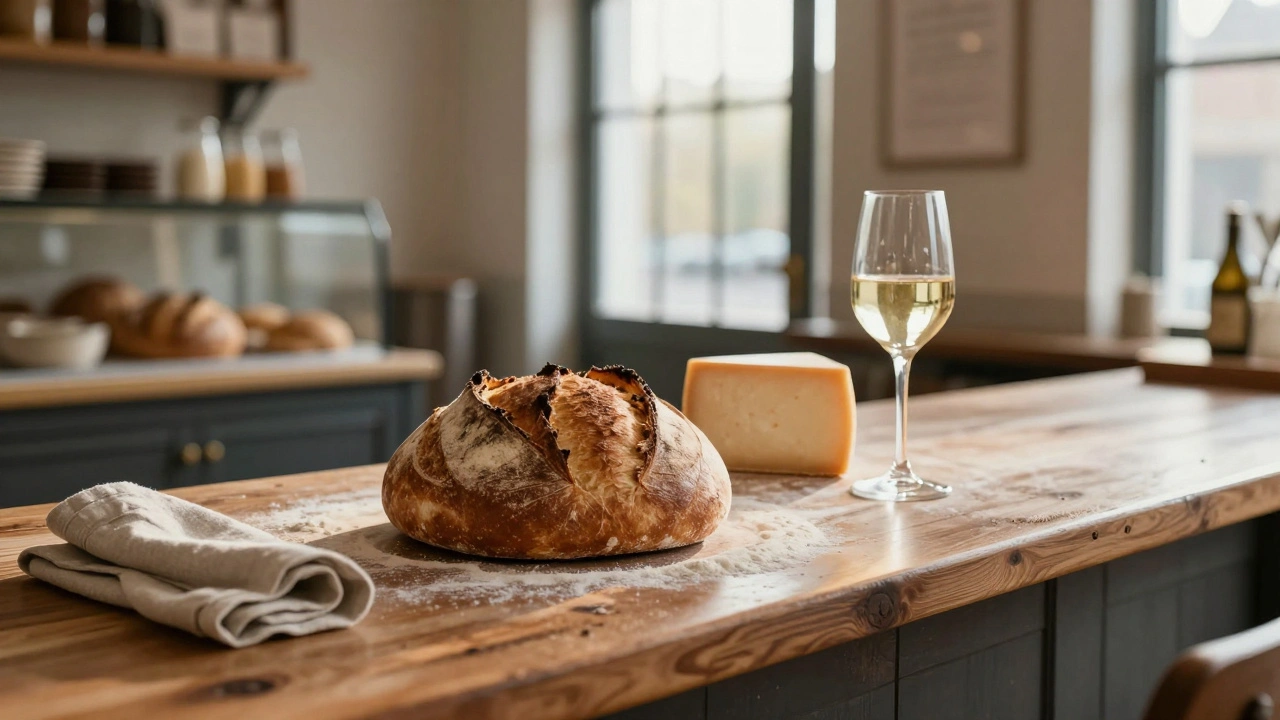
St John isn’t just a restaurant. It’s a movement. Founded by Fergus Henderson, this place brought the idea of nose-to-tail eating to the mainstream. But their bread? That’s the quiet hero. Their wholemeal sourdough is baked daily in a wood-fired oven, crust crackling like autumn leaves underfoot, inside soft and chewy with a deep, earthy tang. It’s not fancy. It’s not sweet. It’s honest. You can buy a loaf to take home, or just sit at the counter with a wedge of it, a slab of aged cheddar, and a glass of natural wine. No frills. Just truth.
They also make a plum tart in autumn that’s been unchanged since 2003. It’s not Instagram-perfect. The jam bubbles over the edges. The crust is slightly uneven. But one bite, and you understand why people drive across London just for it.
Poilâne - The Parisian transplant that owns London’s sourdough crown
Founded in 1932 in Paris, Poilâne came to London in 2017 and didn’t just open a shop-they set a new standard. Their pain de campagne is a 1.5kg loaf of pure fermentation magic. It’s made with organic French flour, wild yeast, and water from the Seine (yes, they ship it over). The crust is thick, dark, and crunchy. The crumb is open, moist, and full of air pockets. You tear it, not slice it. You eat it with sea salt and butter, or just plain. No butter? Still amazing.
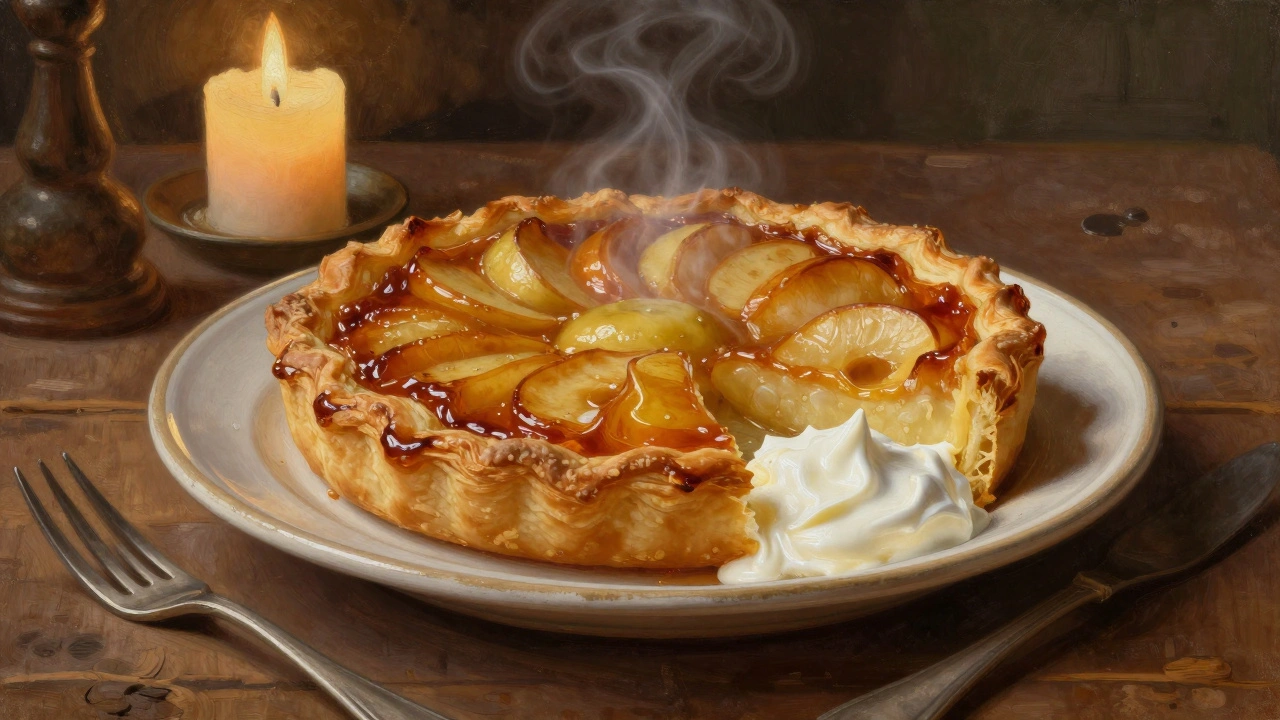
They also bake a mi-levain-a half-sourdough, half-yeast loaf-that’s softer, perfect for sandwiches. And their apple tarte tatin? It’s the real deal. Caramelized apples, buttery pastry, served warm with crème fraîche. You won’t find this level of precision anywhere else in the UK.
Padella - Not just pasta. Not just wine. But the best brioche in London
Padella is famous for its handmade pasta. But if you ask the staff what they eat for breakfast, they’ll point you to the brioche they bake in-house. It’s not on the menu. It’s for the team. But if you ask nicely, they’ll slip you one.
This isn’t your supermarket brioche. It’s dense, rich, golden, and smells like melted butter and vanilla. The inside is custardy. The outside is crisp. It’s the kind of thing you eat slowly, because you don’t want it to end. They use French butter, free-range eggs, and a 12-hour fermentation. No sugar syrup. No artificial flavoring. Just time and technique.
They also serve a chocolate croissant that’s been voted best in London by Time Out in 2024. It’s not huge. It’s not covered in sprinkles. But the chocolate inside is 70% dark, and it melts into the layers like a warm river. You’ll taste the butter before you taste the chocolate. That’s how you know it’s real.
Brick Lane Bakery - The East End’s hidden gem
Brick Lane has a thousand food stalls. But only one bakery that bakes baguettes the way they do in Lyon. This tiny shop, tucked between a curry house and a vintage record store, has been running since 2008. The owner, Jean-Luc, is French, trained in Lyon, and doesn’t speak much English. But his bread? It speaks volumes.
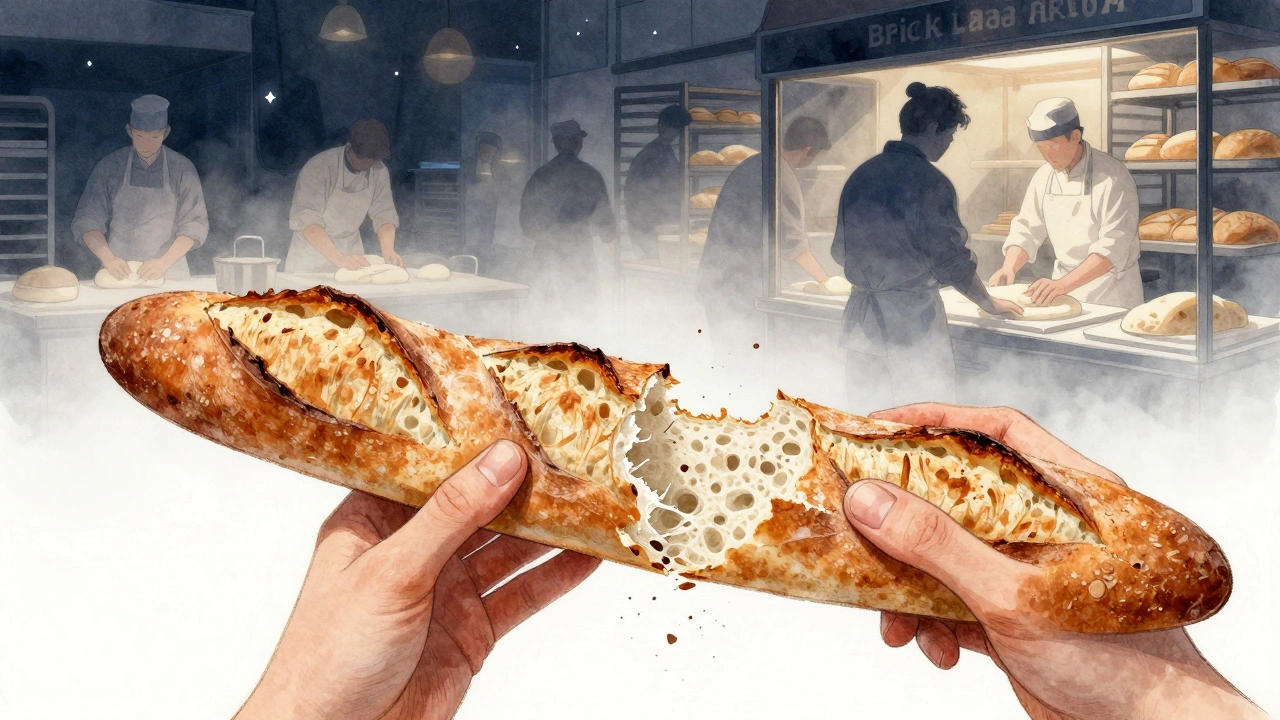
His baguette tradition is scored with a single, clean slash. The crust is blistered, thin, and shatters like glass. The crumb is springy, slightly chewy, with a faint sour note. He bakes 300 a day. By 10 a.m., they’re gone. You can buy one plain, or with a smear of house-made black olive tapenade. He also makes pain aux raisins-flaky, buttery, rolled with cinnamon and plump raisins. It’s the size of your palm. You eat it in one bite. And you’ll be back tomorrow.
Gail’s - The chain that got it right
Yes, Gail’s is a chain. But unlike most chains, they didn’t sacrifice quality for scale. Every Gail’s bakery in London bakes its own bread on-site. No frozen dough. No preservatives. Their wholegrain loaf has 17 different grains and seeds. You can see them. You can taste them. The crust is thick. The crumb is moist. It’s the bread you want to toast, smear with ricotta, and drizzle with honey.
They also make a lemon drizzle cake that’s been in their lineup since 2012. It’s not too sweet. The lemon is bright, not artificial. The crumb is tender. It’s the kind of cake you eat with tea at 4 p.m. and then immediately regret not buying two.
They roast their own hazelnuts for their chocolate and hazelnut croissant. The chocolate is Valrhona. The butter is French. The croissant? It’s the reason people queue 20 minutes on a Saturday morning.
Richmond Bakery - Where tradition meets innovation
Richmond Bakery doesn’t have a flashy sign. It’s in a quiet corner of southwest London, near the river. But if you ask any pastry chef in the city where they get their inspiration, they’ll say: Richmond.
They make a danish that’s unlike any other. Layers of puff pastry, brushed with vanilla bean custard, folded with almond paste, and topped with candied orange peel. It’s not sweet. It’s complex. It’s the kind of pastry that makes you pause.
They also bake a chocolate babka that’s been featured in The Guardian’s “Best Desserts of 2025.” It’s swirled with 60% dark chocolate, dusted with sea salt, and baked in a loaf pan. You slice it, and the layers pull apart like silk. It’s rich. It’s dense. It’s perfect with espresso.
What makes a great bakery in London?
It’s not about the Instagrammable display. It’s not about the name on the sign. It’s about three things:
- Time - Real sourdough takes 24-48 hours. Real croissants need 3 days of laminating and resting. If they’re making it in 4 hours, it’s not the same.
- Ingredients - French butter. Organic flour. Real vanilla. No hydrogenated oils. No artificial flavors. You can taste the difference.
- Consistency - The same loaf, same croissant, same cake, every day. No luck. No shortcuts. Just skill.
Look for bakeries that sell out by noon. That’s a sign they’re making enough for demand, not for show. Look for staff who know the names of the breads. Look for customers who come every day. Those are the places that matter.
What to order if you only have time for one thing
- For bread: St John’s wholemeal sourdough
- For pastries: Poilâne’s apple tarte tatin
- For chocolate: Gail’s chocolate and hazelnut croissant
- For something unique: Richmond Bakery’s danish
- For breakfast: Padella’s brioche (ask for it)
When to go
- Monday-Thursday: 7:30 a.m. - Best selection, no crowds
- Friday-Sunday: 6:30 a.m. - Get there early. Popular items sell out by 9 a.m.
- Afternoon: Avoid unless you want day-old bread. Most bakeries don’t restock after lunch.
Why this matters
London is full of places that serve food. But only a few serve soul. These bakeries aren’t just feeding people. They’re keeping traditions alive. They’re giving jobs to bakers who train for years. They’re using ingredients that support small farmers and mills. And they’re reminding us that good food doesn’t need to be expensive. It just needs to be made with care.
Next time you’re in London, skip the tourist café. Walk into one of these places. Order something simple. Sit down. Taste it slowly. You’ll leave with more than a pastry. You’ll leave with a memory.
What’s the best time to visit London bakeries to avoid crowds?
Go between 7:30 a.m. and 9 a.m. on weekdays. That’s when fresh bread comes out of the oven and the crowds haven’t arrived yet. Popular items like sourdough loaves and croissants sell out by 10 a.m., especially on weekends. If you’re after a specific pastry, show up at opening.
Are London bakeries expensive?
Not compared to what you get. A sourdough loaf costs £5-£7, but it lasts 3-4 days. A croissant is £3.50-£4.50, and it’s made with real butter and no preservatives. You’re paying for quality, not branding. Most of these places don’t mark up prices because they’re not chains-they’re small businesses run by bakers who care.
Do any London bakeries offer gluten-free options?
Yes, but sparingly. St John and Gail’s offer gluten-free sourdough and cakes made with almond or buckwheat flour. Richmond Bakery has a gluten-free chocolate babka available on request. Most traditional bakeries don’t offer gluten-free because it requires separate equipment and ingredients. Always ask ahead if you have a severe allergy.
Can I order bread online from these bakeries?
Poilâne and Gail’s ship nationwide. St John sells loaves online for London delivery. Richmond Bakery and Brick Lane Bakery don’t ship-they’re small and focused on local customers. If you’re outside London, order from Poilâne or Gail’s. Their bread holds up well in transit.
What’s the difference between a French bakery and a British one in London?
French bakeries focus on technique: long fermentation, high hydration, precise laminating. British bakeries often emphasize flavor and texture using local ingredients like rye, spelt, and honey. Many top London bakeries, like Poilâne and Brick Lane, are French-run. Others, like St John and Gail’s, blend British traditions with French methods. The best ones do both.
Next steps
If you’re planning a bakery crawl, start with St John in Smithfield for bread, then head to Poilâne in Covent Garden for pastries. Walk to Gail’s in Soho for a chocolate croissant. End at Brick Lane for a baguette and a cup of tea. You’ll have eaten your way through 150 years of baking tradition in one day.
Bring a tote bag. Most of these places don’t give out plastic. And bring cash-some still prefer it. Most of all, slow down. Eat slowly. Taste everything. London’s best bakeries aren’t just places to buy food. They’re places to slow down and remember what real food tastes like.