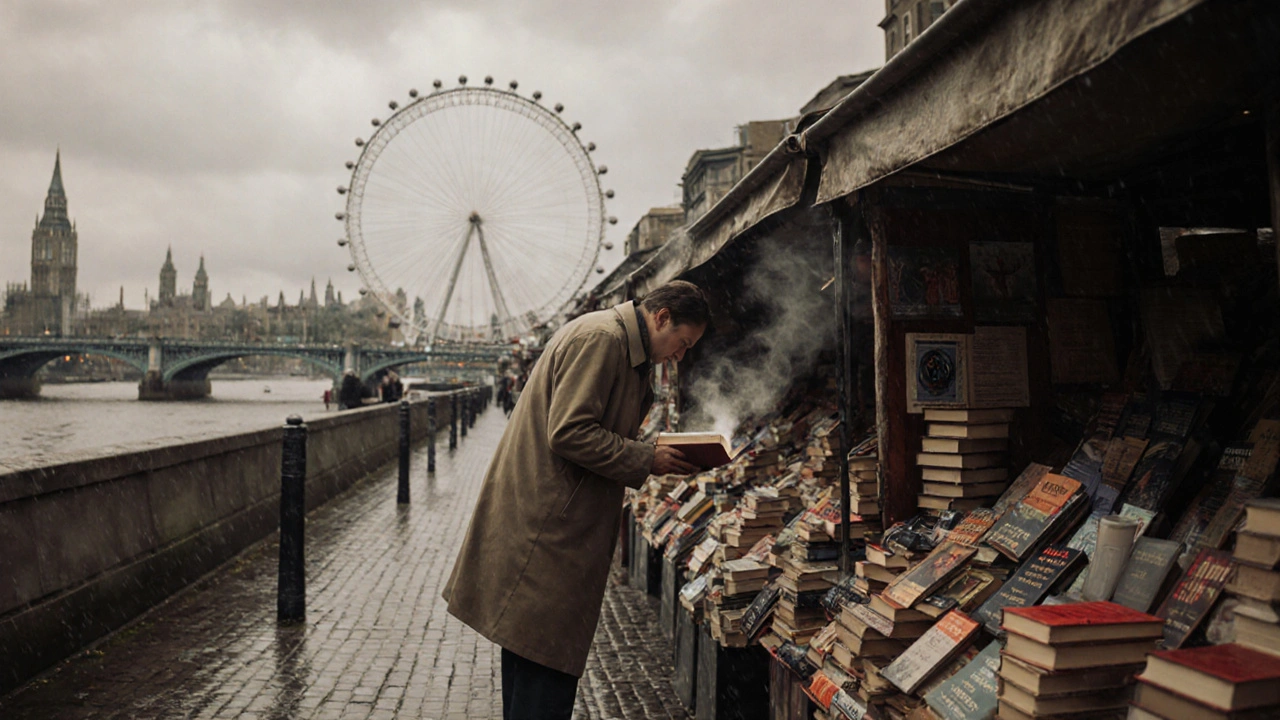
There’s something magical about flipping through a worn-out paperback in a bustling outdoor market, the smell of old paper mixing with coffee and rain. In London, book markets aren’t just places to buy books-they’re living archives, quiet corners of history, and community hubs where strangers bond over first editions and forgotten poetry. If you’re hunting for rare finds, cheap paperbacks, or just a quiet escape from the city’s noise, you don’t need to go far. Southbank, Spitalfields, and a few hidden spots around the city offer some of the most authentic book-buying experiences you’ll find anywhere.
Southbank Book Market: Where the Thames Meets the Written Word
The Southbank Book Market sits right under the London Eye, tucked between the National Theatre and the Hayward Gallery. It’s open every day from 10 a.m. to 6 p.m., rain or shine, and has been running since the 1970s. What makes it special isn’t just the location-it’s the sheer volume of books and the diversity of sellers. Over 40 stalls line the riverwalk, each run by independent dealers who’ve spent decades curating their collections.
You’ll find everything here: first editions of Dickens and Woolf, 1980s sci-fi paperbacks with faded covers, out-of-print travel guides to the Soviet Union, and even a few dusty philosophy tomes that haven’t been touched since 1992. The prices are fair-most paperbacks cost £2 to £5, while rare books can go for £50 or more. But here’s the trick: don’t rush. The best finds are often buried under piles of duplicates. Spend an hour just browsing. One regular visitor told me they found a 1953 first printing of The Catcher in the Rye for £15 after three visits.
Pro tip: Visit on a weekday morning. Weekends get crowded, and the good stuff gets snapped up fast. If you’re lucky, you might catch one of the sellers reading aloud from a favorite passage. It happens more often than you think.
Spitalfields Market: Books, Brunch, and Borough Culture
Spitalfields Market isn’t just about artisanal doughnuts and vintage clothes-it’s also home to one of London’s most vibrant book corners. Every Saturday and Sunday, a cluster of book stalls pops up near the old fruit and vegetable sheds. Unlike Southbank, this market leans more toward modern and niche titles: zines, indie poetry, graphic novels, and self-published memoirs.
What sets Spitalfields apart is the energy. It’s a younger crowd here-students, artists, writers-and the sellers often know the books they’re selling. One stall, run by a former librarian from East London, specializes in feminist theory and 1970s radical pamphlets. Another deals exclusively in Japanese manga translated into English. You’ll also find a rotating selection of local authors selling their own work-sometimes signing copies right at the stall.
Prices here are a bit higher than Southbank, with most paperbacks ranging from £5 to £12. But if you’re into contemporary writing or want to support emerging voices, this is the place. Bring cash. Most stalls don’t take cards. And if you’re hungry, grab a coffee from the nearby roastery and sit on the stone benches. You’ll find people reading in silence, sometimes for hours.

Beyond the Big Two: Hidden Gems You Can’t Miss
London has more book markets than most people realize. Here are three lesser-known spots that deserve a visit.
- Camden Market’s Book Row: Tucked behind the food stalls near the canal, this small section has about a dozen stalls specializing in rare comics, horror novels, and 1960s counterculture literature. Look for the stall with the green awning-its owner, Barry, has been selling Beat Generation books since 1987.
- Islington’s Book Fair at the Town Hall: Held every third Sunday of the month, this indoor market is quieter and more curated. It’s perfect for collectors. You’ll find signed first editions, vintage encyclopedias, and even handwritten letters from authors. Entry is free, and the staff are happy to help you hunt for something specific.
- Willesden Green Book Fair: A local favorite, this market runs every Saturday and focuses on non-fiction: history, science, and political theory. It’s run by retired academics and librarians, so the books are well-organized and often come with handwritten notes in the margins. Great for anyone who likes books with a story behind them.
These spots don’t get the same attention as Southbank or Spitalfields, but they’re where the real book lovers go. You won’t find Instagram influencers here-just people who love stories and know how to find them.
What to Look For: A Simple Guide to Spotting Value
Not every old book is valuable. But there are a few signs that tell you you’ve stumbled onto something special.
- First editions: Look for the publisher’s logo on the title page. If it’s the original publisher (like Penguin for 1940s paperbacks), it’s more likely to be a true first. Check the copyright page-many publishers list print runs. If it says “First published 1954” and no other printings, you’ve got something.
- Dust jackets: For hardcovers, the dust jacket is worth more than the book itself. A faded or missing jacket can drop the value by 80%. If it’s intact and colorful, hold onto it.
- Signatures: A simple autograph from the author can double or triple the price. Look for names like George Orwell, Doris Lessing, or Zadie Smith. Even a note inside (“To John, with thanks-1982”) adds character.
- Condition: Don’t be fooled by “old” meaning “rare.” Water damage, torn pages, or missing covers lower value fast. A slightly worn but complete book is better than a pristine one with half the pages gone.
And here’s a rule of thumb: if a book looks like it was read, not收藏 (collected), it’s probably more interesting. The books that have been loved tend to have the best stories.

Why Book Markets Still Matter in 2025
With Amazon, Kindle, and AI-generated summaries everywhere, you might think book markets are relics. But they’re not. They’re the last places where books are still treated as objects-with weight, history, and personality. You can’t scroll past a first edition of 1984 and feel the same way you do when you tap a screen. At these markets, you touch the pages, smell the ink, and sometimes talk to the person who saved it from a garage sale.
Book markets are also community spaces. In Southbank, you’ll hear people debating Orwell with strangers. In Spitalfields, you’ll see a 70-year-old woman buying a zine about queer punk bands because her granddaughter recommended it. These aren’t transactions-they’re connections.
And in a city where rent is high and time is short, these markets offer something rare: slow, unhurried discovery. You don’t need a plan. Just wander. Let your fingers lead you.
Final Tips for Book Hunters
- Bring a reusable tote bag. Most stalls don’t give out bags.
- Carry £20-£50 in cash. It’s easier, faster, and sellers appreciate it.
- Don’t be afraid to ask, “Have you got anything by [author]?” Most sellers will dig around for you.
- Visit on a rainy day. Fewer people mean better picks.
- Check the weather. Outdoor markets cancel in storms, but indoor ones like Islington keep going.
Book markets in London aren’t just about buying books. They’re about finding pieces of the city’s soul-one page at a time. Whether you’re after a 1920s poetry collection or a 2018 memoir by a local busker, these places have it. And they’re still growing, still changing, still full of surprises.
Are London book markets open every day?
Most outdoor book markets like Southbank are open daily, but weekend-only spots like Spitalfields and Willesden Green only operate on Saturdays and Sundays. Indoor markets like Islington’s Town Hall fair happen once a month. Always check the market’s official social media or website before heading out-weather and holidays can affect opening times.
Can I negotiate prices at book markets?
Yes, but only if you’re buying multiple items or if a book has visible damage. Sellers at Southbank and Camden are usually open to a small discount-ask politely. Don’t haggle over £1 or £2, but if you’re picking up five books, it’s reasonable to say, “I’ll take all five for £20.” Most sellers will say yes. At curated stalls like Islington, prices are fixed.
Are there book markets in London that sell only rare or antique books?
Yes. Islington’s monthly book fair is the most reliable for rare and antique books. You’ll also find specialized dealers at the London Book Fair (held in March) and smaller pop-ups in Chelsea and Bloomsbury. These aren’t street markets-they’re curated events with provenance documentation. If you’re serious about collecting, these are worth attending.
What’s the best time of year to visit London’s book markets?
Autumn and spring are ideal. The weather is mild, and many sellers restock after summer. December brings holiday-themed stock-think vintage Christmas books and illustrated carolers. Avoid July and August if you’re looking for depth; many sellers take holidays, and the crowds are overwhelming. Early October is peak season for hidden gems.
Can I sell my old books at these markets?
Some stalls buy books, but it’s not guaranteed. Southbank and Camden allow individual sellers to rent stalls for a day-usually £20-£40. For casual selling, try local charity shops or online platforms like Ziffit. If you have rare or signed books, contact specialist dealers in Bloomsbury or Soho-they’ll pay cash and give you a fair appraisal.
If you’re looking for a quiet afternoon with a book in hand, skip the tourist traps. Head to Southbank at sunrise, or wander Spitalfields after lunch. The best stories aren’t always on the bestsellers list-they’re tucked between the stacks, waiting for someone to pick them up.