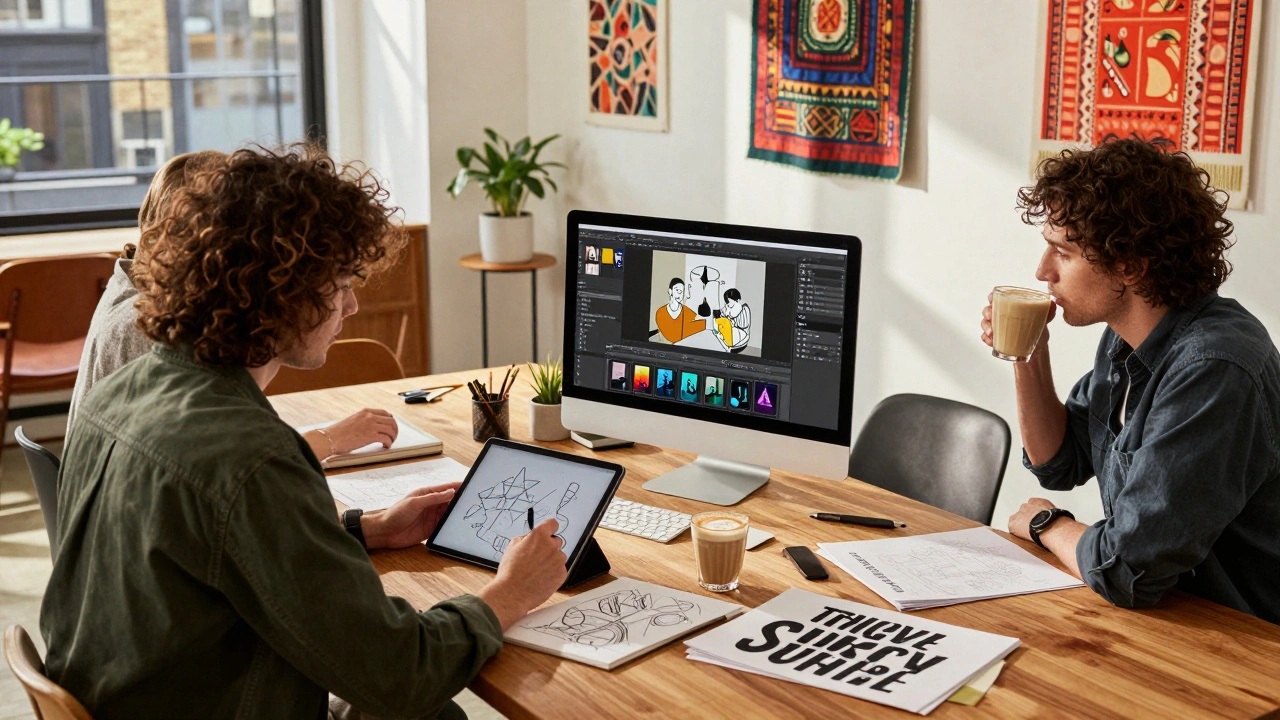
London isn’t just a city of historic landmarks and busy streets-it’s also one of the most vibrant creative hubs in the world. If you’re a designer, illustrator, writer, or any kind of creative professional, finding the right workspace can make all the difference. It’s not just about having a desk and Wi-Fi. It’s about being surrounded by people who get it-people who understand deadlines, creative blocks, and the magic that happens when good ideas collide.
Over the last five years, London’s co-working scene has evolved beyond generic office pods. Today, the best spaces are designed with creatives in mind: natural light, quiet zones, communal kitchens that turn into brainstorming sessions, and walls that double as exhibition spaces. Some even host weekly critiques or open-mic nights for makers. You’re not just renting a desk-you’re joining a community.
SoHo Works: The Heart of Creative London
SoHo Works, tucked into the former printing district of Soho, is where you’ll find half the freelance illustrators in London. It opened in 2021 and quickly became the go-to spot for graphic designers and branding teams. Why? Because it doesn’t feel like an office. The ceilings are high, the furniture is mid-century modern, and every room has a different vibe-some are silent, others buzz with music and sketching.
They offer private studios for teams of up to four, but the real magic happens at the communal tables. You’ll see someone sketching a logo while sipping oat milk lattes, another person editing a short film on a 4K monitor, and a third debating typography with a stranger who turns out to be a former Apple designer. Membership includes 24/7 access, free coffee, and monthly workshops led by industry pros-from Adobe experts to pitch-deck coaches.
SoHo Works also runs a rotating art wall. If you’re a visual artist, you can submit your work. If it gets picked, it hangs for a month. One member, a textile designer, sold her entire collection after it was displayed there.
The Creative Hub at King’s Cross
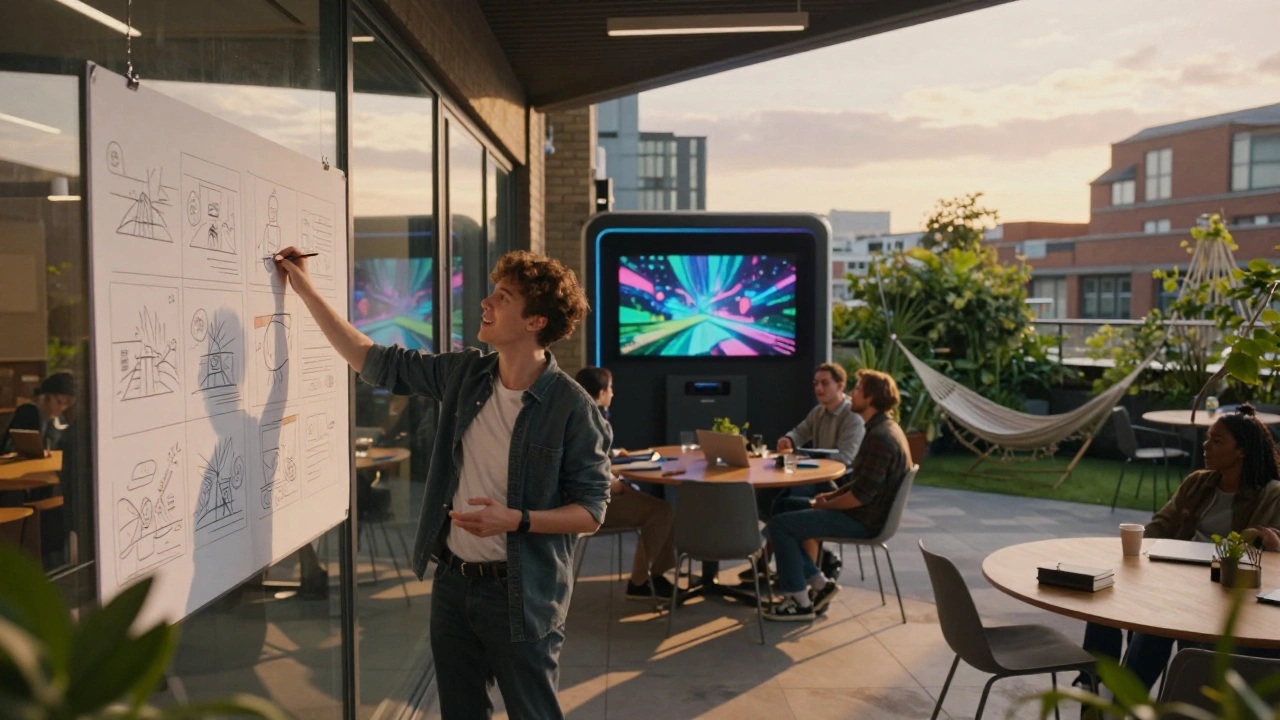
If you’re into tech-driven creativity-think motion graphics, UX/UI, or interactive storytelling-The Creative Hub at King’s Cross is your match. It’s part of a larger innovation campus that includes startups, universities, and media labs. The space itself is sleek: glass-walled meeting rooms, VR booths for prototyping, and a soundproof recording studio for podcasters and voice artists.
What sets it apart is the access to resources. Members get free licenses to Figma, Adobe Creative Cloud, and Notion. There’s also a weekly “Show & Tell” session where anyone can present a project-no matter how rough. Last year, a 22-year-old animator pitched a short film she made in her bedroom. Three months later, it was picked up by Channel 4.
The building has a rooftop garden with hammocks and outdoor desks. People often take calls there. It’s quiet, green, and surprisingly peaceful for being in the middle of one of London’s busiest transport hubs.
Design District at Shoreditch
Shoreditch has been the creative epicenter of London for over a decade. But Design District, which launched in late 2024, is the first space built specifically for independent designers-not just freelancers, but those running their own small studios.
Each member gets a custom-built, modular desk that can be reconfigured as needed. Want to turn your workspace into a photo studio? Swap out the lighting panels. Need more storage for fabric swatches? Add a rolling cabinet. The space is designed to adapt to you, not the other way around.
There’s a shared print lab with a large-format printer, fabric cutter, and screen-printing station. You don’t need to be a pro to use it-they offer free 30-minute training sessions every Tuesday. The lounge has a library of design books, from vintage Bauhaus catalogs to the latest Pantone guides. And yes, there’s a vinyl record player, because sometimes you need Motown to finish a poster.
The Loft at Waterloo
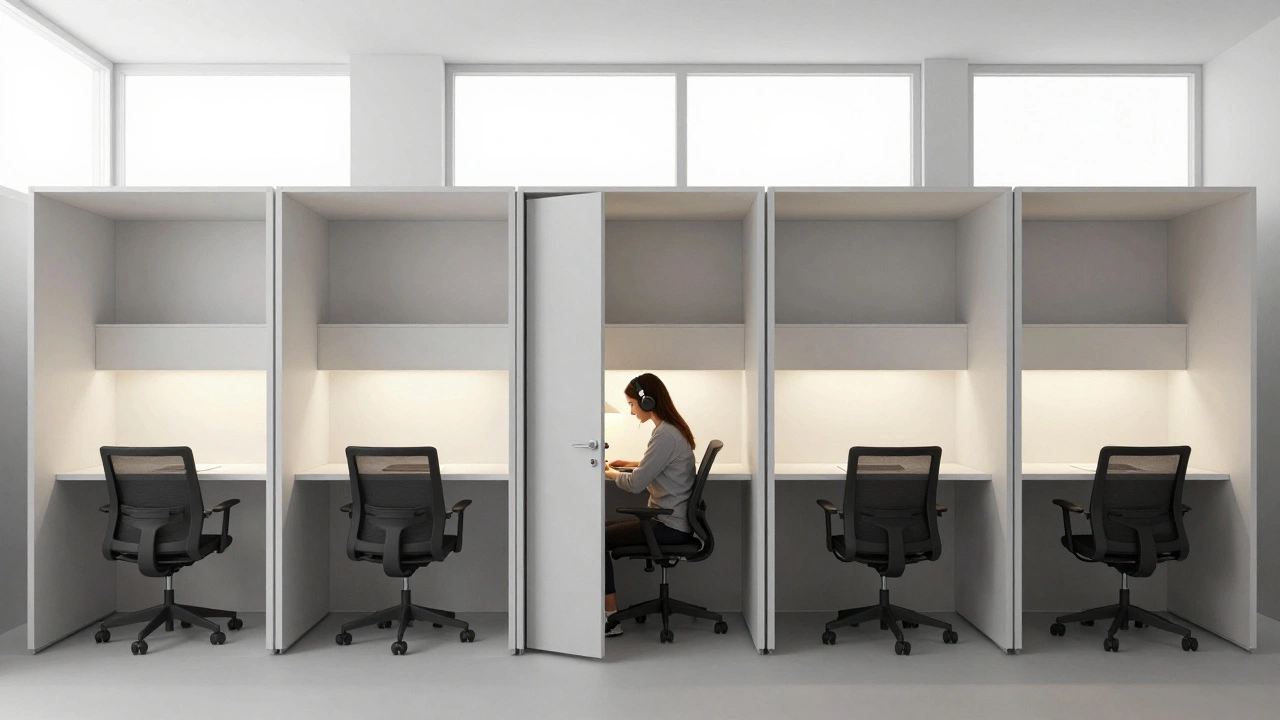
For writers, filmmakers, and artists who need deep focus, The Loft at Waterloo is a quiet sanctuary. It’s not flashy. No neon signs. No kombucha on tap. Just 80 individual soundproof pods, each with a desk, ergonomic chair, natural light, and a personal climate control system. You book by the hour, day, or month.
It’s popular with novelists, documentary editors, and composers. One member wrote an award-winning screenplay here over nine months. Another recorded an entire album using a portable synth and studio-grade headphones. There’s no communal area-no distractions. You come in, close the door, and disappear until you’re done.
They also offer monthly “Unplug Days” where members can leave their phones at the front desk and spend the day sketching, journaling, or just sitting with their thoughts. It’s become a ritual for many.
Co-Lab by The Design Museum
This one’s special. Co-Lab is run by The Design Museum and is only open to creatives who are actively working on projects that push boundaries. It’s not just a workspace-it’s a residency program with a desk.
To join, you apply with a project proposal. They accept about 20 people every quarter. If you’re chosen, you get a dedicated desk, mentorship from museum curators, and access to their archive of design artifacts. You can request to study a 1960s Swiss poster or borrow a 1970s typewriter for inspiration.
Members get free tickets to all museum exhibitions and invitations to private talks with designers like Es Devlin and Neville Brody. One member, a ceramicist, turned her residency into a pop-up show at the museum. Another, a data visualization artist, exhibited her work in the museum’s main hall.
It’s competitive, but if you’re serious about your craft, it’s worth the effort.
What to Look For in a Creative Workspace
Not every co-working space is built for creativity. Here’s what actually matters:
- Natural light - Studies show it boosts mood and focus. Avoid windowless basements.
- Quiet zones - Even the most social spaces need silent areas. Look for soundproof pods or designated quiet floors.
- Access to tools - Do they have a printer? A sewing machine? A green screen? For designers, this isn’t a luxury-it’s a necessity.
- Community events - Weekly critiques, portfolio reviews, or guest speakers? These turn a desk into a career boost.
- Flexibility - Can you switch from a desk to a studio room? Can you bring a dog? Can you work late? Flexibility matters more than you think.
Most places offer day passes. Try three different spaces over a month. See where you feel most inspired. Don’t just pick the cheapest one. Pick the one where you forget to check your phone.
Price Ranges and What You Get
Here’s what you can expect in 2026:
| Space | Daily Pass | Monthly Membership | Key Perks |
|---|---|---|---|
| SoHo Works | £35 | £420 | 24/7 access, free coffee, art wall, monthly workshops |
| The Creative Hub (King’s Cross) | £30 | £400 | Free Adobe/Figma, VR booth, rooftop garden |
| Design District (Shoreditch) | £28 | £380 | Modular desks, print lab, fabric cutter, vinyl library |
| The Loft (Waterloo) | £25/hour | £650 (unlimited hours) | Soundproof pods, Unplug Days, no distractions |
| Co-Lab (Design Museum) | Not available | £500 (quarterly residency) | Mentorship, museum access, archive use, exhibition opportunities |
Most places offer discounts for students or freelancers on low income. Ask. You’d be surprised how often they say yes.
Real Stories, Real Results
One illustrator moved from her kitchen table to SoHo Works in 2023. Within six months, she landed her first client from a conversation at the coffee machine. Now she’s got a team of three and a waiting list.
A sound designer from The Loft finished a BBC documentary soundtrack after using the space’s acoustic panels to test audio in real time. He says he’d never have gotten the clarity without the isolation.
And then there’s the designer from Co-Lab who spent her residency studying 19th-century British pattern books. She turned that research into a textile line now sold in Liberty London.
These aren’t lucky breaks. They’re the result of being in the right environment-where creativity isn’t just encouraged, it’s expected.
Can I try a co-working space before committing?
Yes, almost all of them offer day passes or trial memberships for under £40. Some even give you a free hour to test the vibe. Use it. Sit in different spots. Talk to people. See where you feel most energized-or most relaxed.
Are these spaces only for freelancers?
No. Many studios, small agencies, and even remote employees from big companies use these spaces. If you’re a creative professional-whether you work alone or with a team-you belong here. Some spaces even offer private rooms for small teams.
Do I need to be a London resident to join?
No. Most spaces welcome international creatives. Some even help with visa letters if you’re relocating. If you’re serious about your work, location doesn’t matter-only your commitment to creating.
Is it worth paying more for premium spaces?
If you’re serious about your craft, yes. The extra cost buys you access to tools, mentors, and networks that can jumpstart your career. A £400/month space isn’t an expense-it’s an investment. Look at what you gain: clients, skills, confidence, and community.
What if I’m not a designer but still creative?
You still belong. These spaces welcome writers, musicians, filmmakers, photographers, poets, and even coders who make art. Creativity isn’t a job title-it’s a mindset. If you’re making something meaningful, you’re one of them.
London’s creative energy isn’t just in its galleries or theaters-it’s in the quiet hum of a designer working late, the clack of a typewriter in a soundproof pod, the laughter over coffee in a shared kitchen. The right workspace doesn’t just house your work-it fuels it. Find yours. Then go make something unforgettable.