London’s Best Cycling Routes for Every Type of Rider
If you’ve ever tried to ride a bike in London, you know it’s not all chaos and exhaust fumes. The city’s been quietly transforming over the last decade, turning old rail lines, riverside paths, and quiet backstreets into some of the most enjoyable cycling routes in Europe. You don’t need to be a pro to enjoy them-just a helmet, a decent lock, and a sense of curiosity.
Whether you’re a commuter looking to skip the Tube, a tourist wanting to see the city differently, or a local chasing weekend peace, London’s bike paths deliver. And the best part? Many of them run through parks, green corridors, and quiet waterways where you won’t hear a single car horn.
The Regent’s Canal Path: Peaceful, Picturesque, and Perfect for Beginners
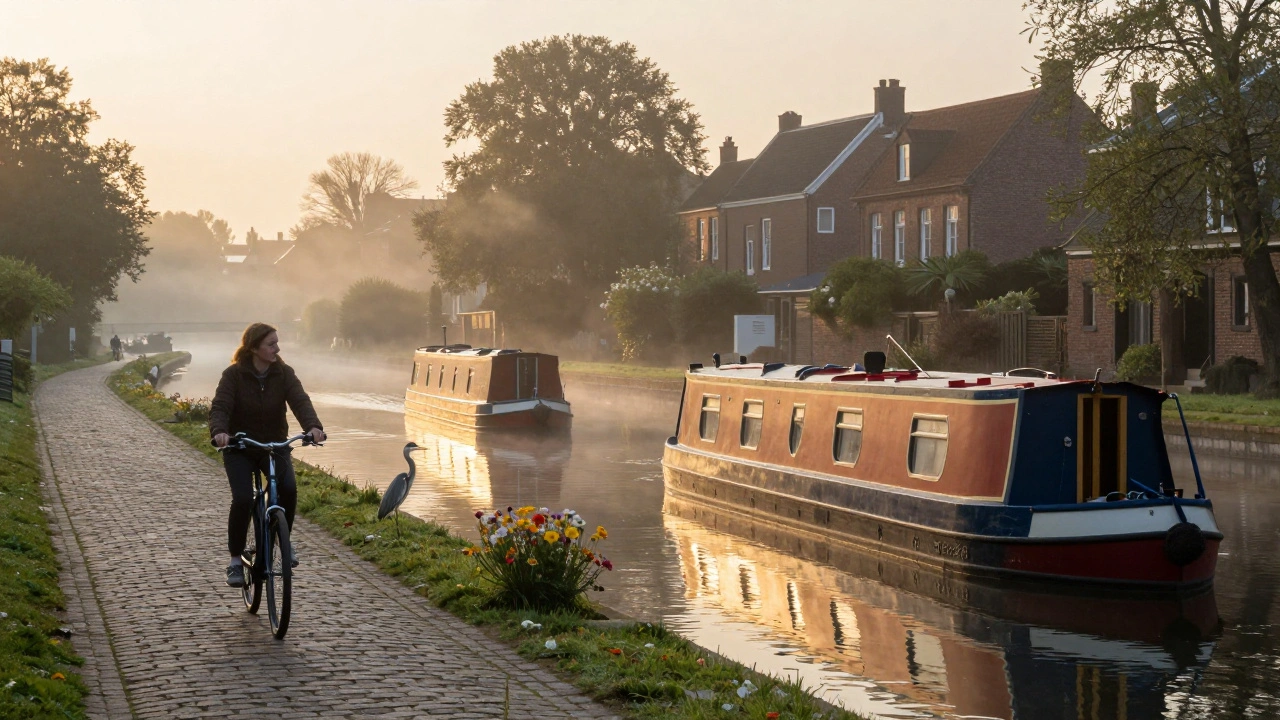
Start at Little Venice, where the canals shimmer under the morning sun, and pedal east toward the Tower Bridge. This 8-mile stretch is flat, mostly traffic-free, and lined with houseboats, wildflowers, and the occasional heron. You’ll pass through Camden Lock, where street food stalls smell like cinnamon and grilled corn, then glide past the British Library and into the industrial-chic vibe of Hackney Wick.
This route is ideal if you’ve never cycled in the city before. No steep hills. No busy intersections. Just you, the water, and the rhythm of your pedals. Local cyclists call it the “slow lane to serenity.” On weekends, you’ll see families, dog walkers, and people reading books on benches beside the path. Bring a coffee. Stop often.
The Thames Path: Ride Along the River Between History and Nature
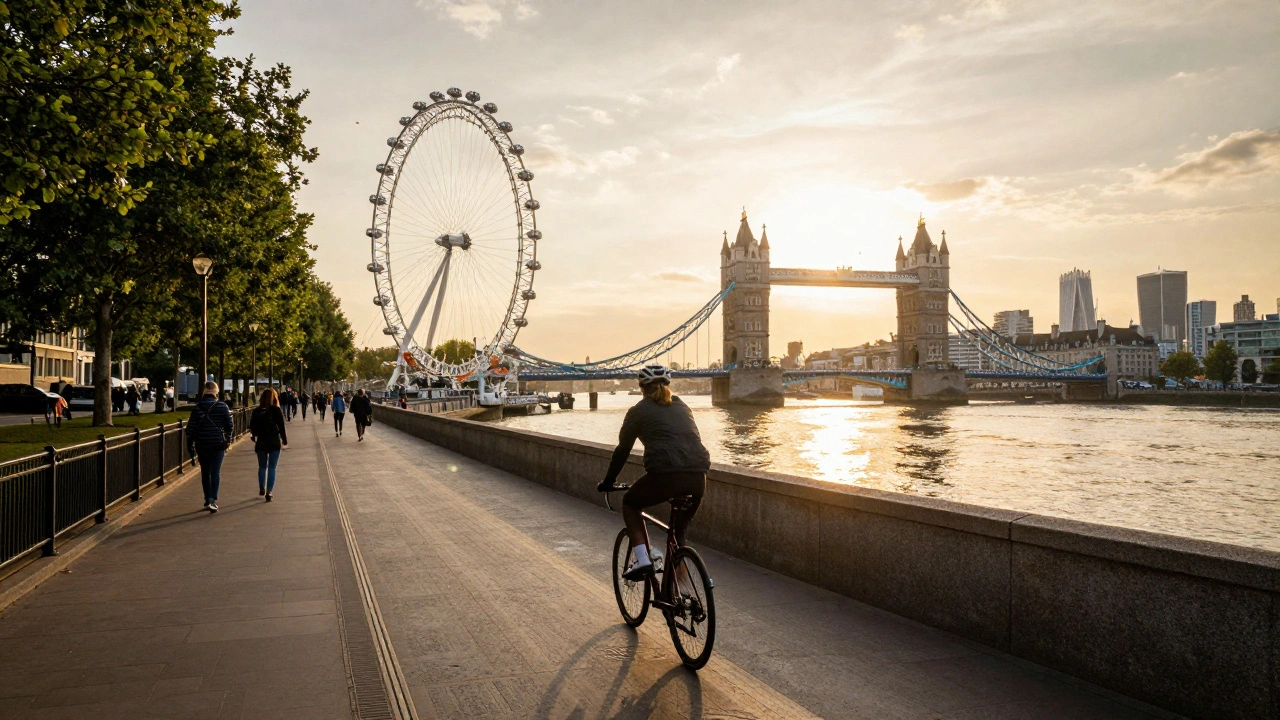
From Westminster Bridge to Greenwich, the Thames Path is London’s most iconic bike route. It’s not a single trail-it’s a chain of connected paths, some paved, some gravel, all lined with history. You’ll pass the Houses of Parliament, the London Eye, and Tower Bridge without ever touching a car lane.
Between Battersea and Chelsea, the path hugs the riverbank with wide, smooth tarmac. You can stop at Albert Bridge Gardens for a picnic, or hop off at the Tate Modern for a quick art fix. Near Greenwich, the path climbs gently up to the Old Royal Naval College, where the view over the river is worth every pedal stroke.
Pro tip: Avoid this route on weekends between 11 a.m. and 3 p.m. It gets packed with tourists. Go early or after sunset, when the city lights reflect off the water and the crowds thin out.
Wimbledon Common to Richmond Park: The Wild Ride
If you want to feel like you’ve escaped the city-even though you’re still in it-ride from Wimbledon Common to Richmond Park. This 7-mile loop takes you through one of London’s largest ancient woodlands. The path is mostly gravel, so a hybrid or gravel bike works best, but even a city bike can handle it if you’re careful.
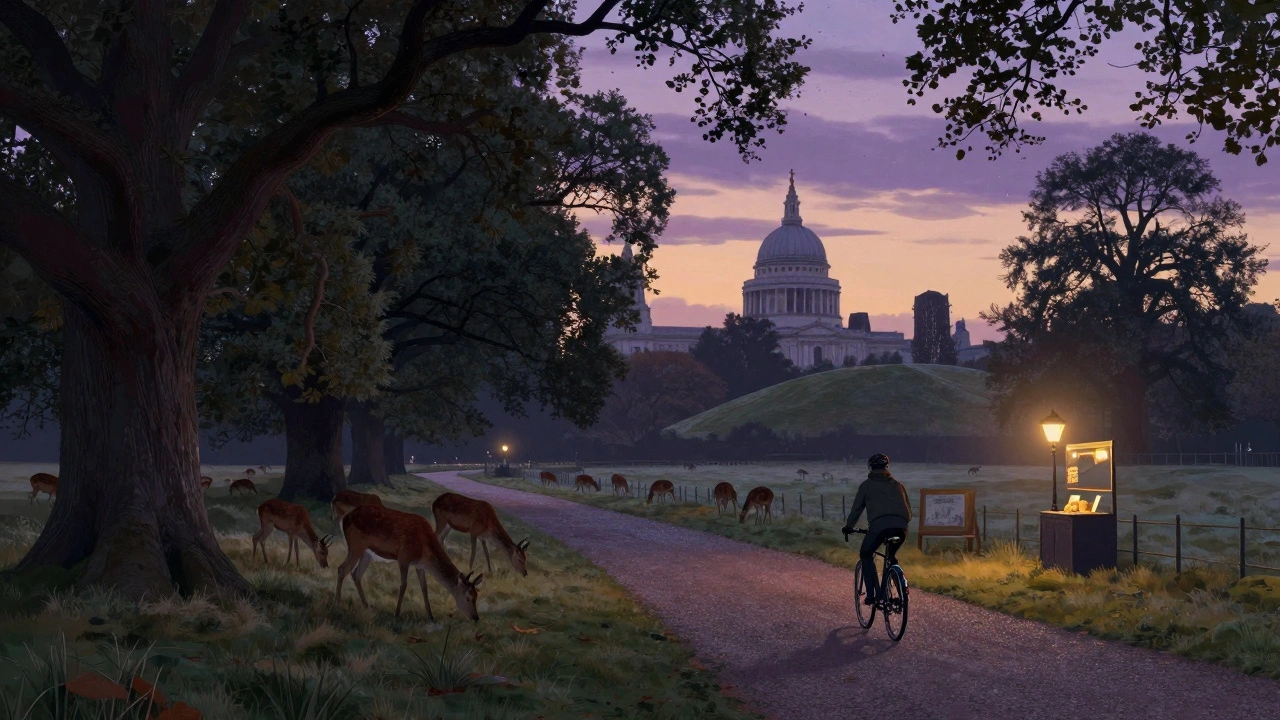
Richmond Park isn’t just a park. It’s a 2,500-acre deer reserve. You’ll see herds of red deer grazing near the trees, sometimes just feet from the path. The park’s main roads are closed to cars on weekends, making it one of the safest places in London to ride fast. There’s a café at the park’s center, and if you’re lucky, you’ll catch the sunset behind King Henry’s Mound-the spot where you can see St. Paul’s Cathedral in the distance, framed by trees.
This route is longer and more rugged, but it’s the closest thing to a countryside ride you’ll find inside London’s M25. Bring water. Wear gloves. And don’t be surprised if a deer walks right in front of you.
The Green Chain Walk: A Hidden Network of Quiet Paths
Most tourists don’t know about the Green Chain Walk, but locals swear by it. It’s not one route-it’s 50 miles of linked paths stretching from the Thames in southeast London to the hills of Crystal Palace. The most popular section runs from Eltham Palace to Kidbrooke, passing through ancient woodlands, former railway lines, and hidden gardens.
It’s mostly flat, mostly quiet, and mostly free of cars. You’ll ride past orchards, community gardens, and old Victorian pump houses turned into art spaces. The path is well-signed with green arrows, and many sections are shared with walkers and joggers, so keep your speed low and your bell ready.
This is the route you take when you need to disappear. No landmarks. No crowds. Just trees, birdsong, and the occasional sound of a distant train. It’s the antidote to the noise of the city.
Queen Elizabeth Olympic Park: Modern, Safe, and Surprisingly Beautiful
After the 2012 Olympics, London didn’t just tear down the stadiums-it turned the whole area into a cycling paradise. The park’s 10-mile network of smooth, dedicated bike lanes connects Stratford to Hackney Wick, passing lakes, sculpture gardens, and open fields.
What makes this route special? It’s designed for safety. No cars. No junctions with traffic lights. Just wide, clearly marked paths that loop around the park’s water features. You’ll pass the ArcelorMittal Orbit, a twisted steel tower that looks like a sculpture from another planet, and the Lee Valley VeloPark, where you can rent a bike or watch pro riders train.
It’s also one of the most family-friendly routes in the city. Kids ride here with training wheels. Parents bring picnics. There are public toilets, water fountains, and shaded rest areas every mile. If you’re looking for a stress-free ride with zero traffic anxiety, this is it.
Why London’s Cycling Scene Is Better Than You Think
People still think London is a bike-unfriendly city. They remember the old days-narrow lanes, aggressive drivers, and bike lanes painted on top of parked cars. But things changed. Since 2020, the city added over 200 miles of new cycleways. The number of people cycling daily jumped from 450,000 in 2019 to nearly 800,000 in 2025.
Why? Because the city stopped trying to fit bikes into car space and started building for people. The new cycle superhighways are wide, separated from traffic, and lit at night. Many parks now have dedicated bike repair stations with pumps, tools, and even free air. You can even rent a bike from Santander Cycles with a credit card at over 800 stations across the city.
The result? More women, more kids, more older riders. London’s cycling culture isn’t about speed or fitness anymore. It’s about freedom. About moving through the city without being stuck in traffic. About finding quiet corners you’d never see on foot.
What to Bring and What to Avoid
- Bring: A good U-lock (theft is still common), a small repair kit with a spare tube, a phone mount, and a lightweight rain jacket. Even in January, London weather changes fast.
- Avoid: Riding on pavements unless it’s a shared-use path clearly marked for bikes. Don’t assume drivers see you-even if you’re in a cycle lane. And never ride without lights after dusk. It’s the law.
Most of the routes I’ve listed are free to use. Santander Cycles cost £2 for 30 minutes, but if you have an Oyster card, you can get a daily pass for £5. Many parks have free parking for bikes, too.
When to Ride: Timing Matters
Weekdays before 7 a.m. or after 7 p.m. are the quietest. Weekends are great for parks like Richmond and Queen Elizabeth Olympic Park-but only if you go before noon. After that, the crowds come: families, photographers, selfie-takers, and ice cream vendors.
Spring and autumn are ideal. Summer can be hot and humid, and winter? It’s damp, but the paths are less crowded. Rain isn’t a deal-breaker-most of these routes are paved or gravel, and the city’s bike lanes are cleared faster than the roads.
Final Thought: The City Is Yours to Explore
London doesn’t ask you to be fast, fit, or fancy to ride a bike. It just asks you to show up. Get on a bike, pick a route, and go. You’ll see the city differently-the way the light hits the Thames at dusk, the smell of wet grass after rain, the sound of ducks splashing as you glide past a hidden canal bridge.
It’s not about the distance. It’s about the quiet moments in between.
Are London’s bike routes safe for beginners?
Yes, many routes are designed specifically for beginners. The Regent’s Canal Path, Queen Elizabeth Olympic Park, and sections of the Thames Path have no car traffic, clear signage, and gentle terrain. Avoid busy roads like Oxford Street or the North Circular-stick to the greenways and park paths. Most new riders start on these routes and feel confident within a few weeks.
Can I rent a bike in London without a credit card?
You can rent a Santander Cycle using an Oyster card or contactless debit/credit card. If you don’t have either, you can buy a 24-hour pass at any Tube station ticket machine using cash. The pass gives you unlimited 30-minute rides. Some independent bike shops in areas like Camden and Islington also rent bikes for cash, but they’re less common and more expensive.
Which route is best for photography?
Richmond Park and the Thames Path are the top two. Richmond offers deer, golden light through trees, and distant views of St. Paul’s. The Thames Path gives you iconic landmarks-London Eye, Tower Bridge, the Shard-with water reflections. Early morning or golden hour (just before sunset) is best. Avoid midday sun; it flattens the colors.
Is it safe to cycle in London at night?
On dedicated bike paths like the Regent’s Canal or Queen Elizabeth Olympic Park, yes-it’s very safe. The paths are well-lit and patrolled. Avoid riding on major roads after dark. Stick to the greenways. Always use front and rear lights, even if you think you can see. Many accidents happen because riders assume they’re visible.
Do I need a helmet in London?
No, it’s not legally required. But over 80% of regular cyclists wear one, and for good reason. In 2024, the London Cycling Campaign reported a 30% drop in head injuries among riders who wore helmets consistently. If you’re riding on busy paths or at higher speeds, wear one. It’s cheap, lightweight, and saves lives.
Are there places to fix a flat tire along these routes?
Yes. Queen Elizabeth Olympic Park and Richmond Park both have free bike repair stations with pumps, tools, and spare inner tubes. The Regent’s Canal has a few near Camden Lock and Mile End. You’ll also find repair shops near major Tube stations like Stratford, Richmond, and Westminster. If you’re stuck, use the Santander Cycles app-it shows the nearest repair point.
Next time you’re in London, skip the bus. Grab a bike. Pick a path. And ride like you’ve never seen the city before.