London’s museums aren’t just for adults with quiet whispers and no-touch signs. If you’ve ever stood in front of a dinosaur skeleton while your kid asks, “Can we ride it?”, you know the real challenge: keeping kids engaged without spending a fortune. The good news? Some of the best museums in London are not only free to enter but built for hands-on learning, messy experiments, and genuine wonder.
Science Museum: Where Kids Become Scientists
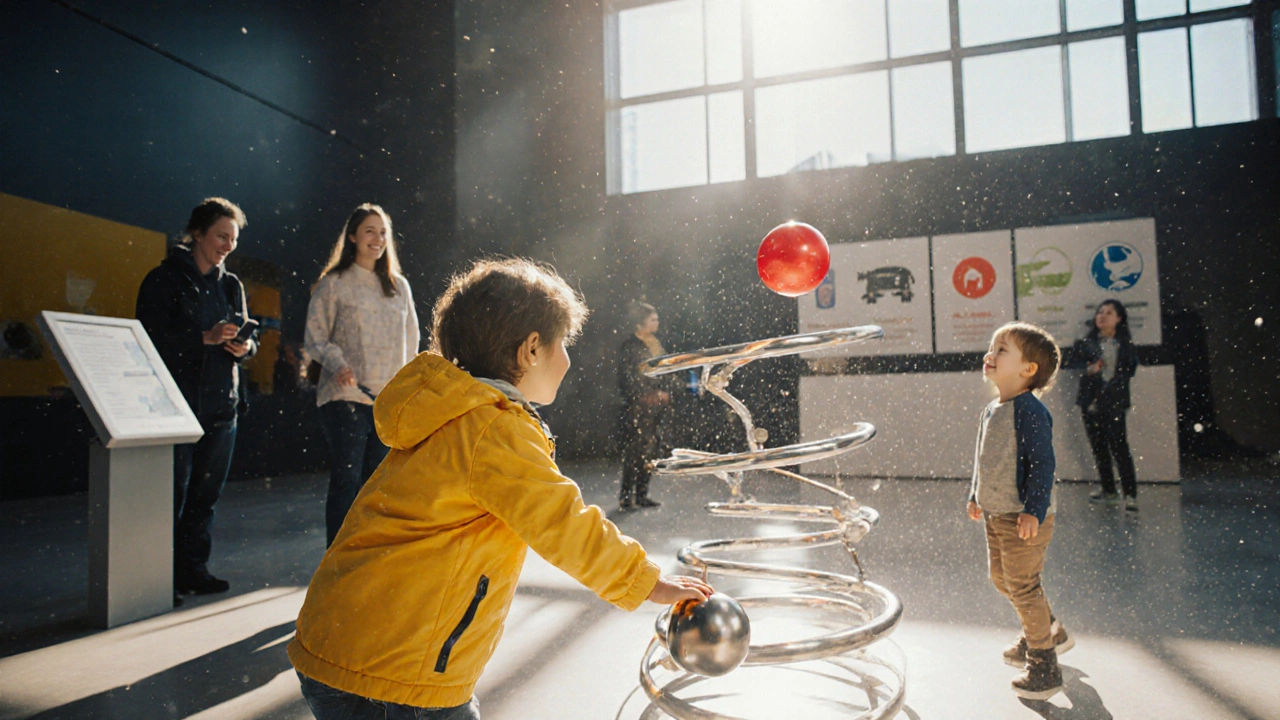
The Science Museum isn’t just a building with glass cases-it’s a playground for curiosity. In the Wonderlab gallery, children as young as five can launch rockets with air pressure, create lightning with a Tesla coil, or watch their own voice turn into visible sound waves. No tickets needed. No reservations. Just walk in and let them touch, press, and shout.
Parents love the Launch Pad area, where kids design roller coasters using magnetic tracks and test gravity with rolling balls. It’s not just fun-it’s physics made real. Over 1.2 million families visit each year, and nearly 70% say their child asked to come back within a month. That’s the kind of impact hands-on learning makes.
Don’t miss the Flight Gallery, where kids can sit in a real Spitfire cockpit and pretend to fly through the Battle of Britain. The staff are trained to answer questions like, “Why doesn’t it fall?” without using jargon. They’ll say, “Wings push air down, and that pushes the plane up.” Simple. Clear. Effective.
Natural History Museum: Dinosaurs, Rocks, and a Giant Blue Whale
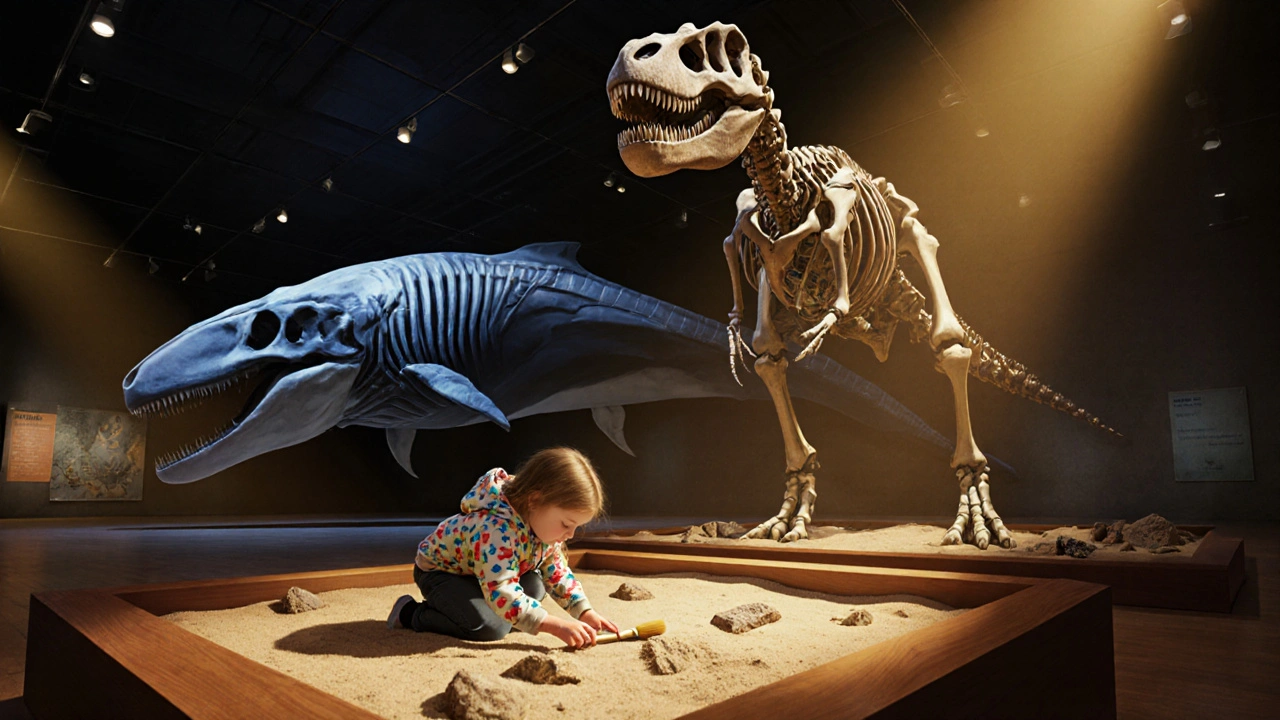
If your child believes dinosaurs are real animals that lived yesterday, the Natural History Museum is their temple. The Dino Gallery has life-sized skeletons of T. rex, Triceratops, and a 25-meter-long Diplodocus that stretches across the room. Kids can dig for fossils in the Fossil Walk exhibit, using real tools to uncover plaster bones buried in sand.
The star attraction? Hope, the 25-meter blue whale hanging from the ceiling. It’s not just impressive-it’s emotional. Parents report kids standing silently underneath it, whispering, “That’s bigger than our house.” The museum also has a Mineral Gallery with glowing rocks under UV light. Kids love finding the ones that shine green or purple.
Every Saturday, free Family Science Trails are offered. Pick up a map at the entrance, follow clues to hidden specimens, and earn a sticker. Last year, over 40,000 families completed the trail. No booking required. Just show up.
Victoria and Albert Museum: Art You Can Touch
Yes, you read that right-art you can touch. The V&A’s Young V&A in Bethnal Green is a dedicated space for kids under 12. It’s not a scaled-down version of the main museum-it’s a full experience designed by child psychologists and artists.
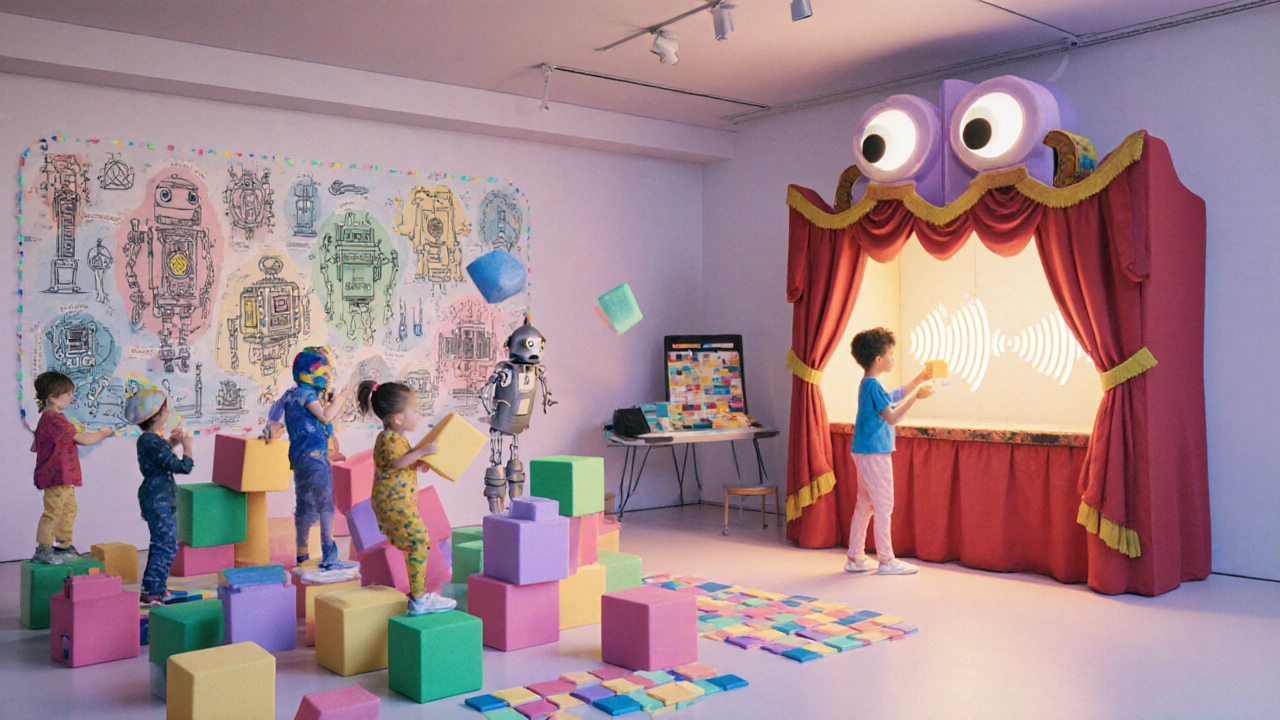
Here, kids can build their own city out of giant foam blocks, dress up in Victorian costumes, or design a robot using magnetic tiles. The Play Lab lets them create stories with moving puppets and sound effects. It’s not about looking at art-it’s about making it.
Even the main V&A building has free family activities. Every Sunday, Art Detectives kits are available at the info desk. They include magnifying glasses, sketchbooks, and clues to find hidden details in famous paintings. One kid found a cat in a 17th-century portrait no adult had spotted in 30 years.
London Transport Museum: Trains, Taxis, and Time Travel
Most people think of buses and tubes as boring. Until they visit the London Transport Museum in Covent Garden. The Explore Gallery lets kids drive a real 1950s bus simulator, ride a mini underground train, and build their own tube map with magnetic tiles.
The Design Lab challenges families to redesign a bus for the year 2050. What color should it be? Should it fly? Can it talk? The answers are wild-and the museum displays the best ones on a screen. Over 80% of visitors say their kids started asking questions about how cities work after this visit.
Best part? Entry is free. The museum is open daily, and the interactive exhibits never close. You can spend 20 minutes or two hours-it’s all up to you.
Imperial War Museum: History That Doesn’t Feel Like School
Don’t let the name scare you. The Imperial War Museum in Lambeth has one of the best family zones in London: Children in War. It’s not about battles-it’s about how kids lived during WWII. They can sit in a real air raid shelter, listen to wartime radio broadcasts, and try on replica gas masks (without the chemicals, of course).
The Interactive Timeline Wall lets kids pull handles to see how life changed from 1914 to 1945. One handle shows a child’s ration book. Another shows a letter from a soldier. It’s emotional, but not overwhelming. Staff are trained to adjust the tone based on age.
Every Wednesday, the museum runs Family Story Time in the courtyard. A storyteller reads real letters from children during the war, followed by a drawing activity. Last year, 12,000 children participated. Many brought their own drawings home-some of which are now in the museum’s archive.
Free Activities Beyond the Exhibits
These museums don’t stop at galleries. Most offer free daily activities that turn a visit into a full-day adventure:
- Science Museum: Free daily shows in the IMAX theatre (no booking needed, first-come, first-served).
- Natural History Museum: Free fossil-cleaning stations where kids can polish real specimens.
- V&A: Free craft carts outside the Young V&A with paper, glue, and scissors-no parent required to help.
- London Transport Museum: Free family quiz sheets with prizes like stickers or postcards.
- Imperial War Museum: Free wartime recipe booklets to take home and bake with kids.
Many also have quiet rooms for overstimulated kids, nursing stations, and changing tables. No extra charge. No need to ask. They’re just there.
What to Bring (And What to Leave at Home)
These museums are designed for families, but a few simple things make the day smoother:
- Bring: Snacks (many have cafes, but lines get long), a light jacket (museums are always cold), a small backpack for art projects, and patience.
- Leave at home: Strollers with big wheels (some floors are uneven), expensive toys (there’s plenty to do inside), and expectations of quiet.
Pro tip: Visit on a weekday morning. Weekends are packed. Tuesdays and Wednesdays are quietest, and staff are more available to help kids explore.
Why These Museums Work for Families
It’s not magic. It’s design. These museums don’t just add a “kids’ corner.” They rethink the entire experience:
- Height: Exhibits are at child eye level, not adult.
- Language: Labels use short sentences, active verbs, and questions.
- Choice: Kids can pick what to do next-no forced path.
- Feedback: Interactive elements give instant results. Push a button? Light flashes. Pull a lever? Sound plays.
That’s why, according to a 2024 survey by the UK Museums Association, 89% of families who visited these five museums said their child talked about the experience for weeks after.
Are all these museums really free to enter?
Yes. All five museums listed-Science Museum, Natural History Museum, Victoria and Albert Museum, London Transport Museum, and Imperial War Museum-offer free general admission. Some special exhibitions or IMAX shows may cost money, but the main interactive galleries and family activities are always free.
What’s the best age for these museums?
They’re designed for kids 2 to 12, but even toddlers enjoy the textures, sounds, and colors. Babies can nap in quiet rooms, and teens often get hooked on the science demos or design challenges. The key is matching the activity to their attention span-short bursts of play work better than long walks.
Do I need to book in advance?
No. General entry is walk-in only. For special events like science shows or guided trails, you can check the museum’s website, but most family activities don’t require booking. Just show up.
Are there places to eat inside?
Yes. All five museums have cafes with kid-friendly options like sandwiches, fruit, and hot chocolate. Some also have picnic areas outside. You’re welcome to bring your own food too-most allow it in designated zones.
Which museum is best for toddlers?
The Young V&A in Bethnal Green is the top pick. It’s built for under-12s with soft flooring, low shelves, and no glass cases. The Science Museum’s Launch Pad is a close second-kids love the rolling balls and ramps. Both have changing tables and nursing rooms.
How long should I plan to spend?
Two to three hours is ideal for most families. Kids get tired after that. Pick one or two exhibits to focus on, not the whole museum. A quick visit with deep engagement beats rushing through everything.
Next Steps: Make It a Tradition
These museums aren’t one-time trips. They’re part of a rhythm. Try visiting one every season. In spring, explore the Natural History Museum’s bug exhibit. In summer, test the Science Museum’s rocket launcher. In autumn, build a wartime shelter at the IWM. In winter, dress up in Victorian clothes at the V&A.
Keep a small notebook. Let your child draw what they saw. Write down their favorite moment. A year from now, you’ll have a collection of memories-not just photos, but real stories about what made them curious.
London’s museums aren’t just places to see things. They’re places to become something: a builder, a scientist, a designer, a storyteller. And it all starts with a free ticket and a child who asks, “What happens if I push this?”