London doesn’t need you to spend a penny to feel like you’ve seen the real city. You don’t need a ticket, a guide, or even a map-just good shoes and a little curiosity. The city’s best stories aren’t locked behind paid entrances. They’re along quiet alleys, beside the Thames, and under the shadow of centuries-old churches. And the best part? You can walk them all for free.
South Bank Walk: From Tower Bridge to Westminster
This is the most popular free walk in London for a reason. Start at Tower Bridge, where the bascules still rise for river traffic. Walk west along the South Bank, past street performers, book stalls, and the Tate Modern’s raw brick facade. You’ll pass the London Eye from a distance-no need to pay to ride it when you can see it just as well from the riverbank.
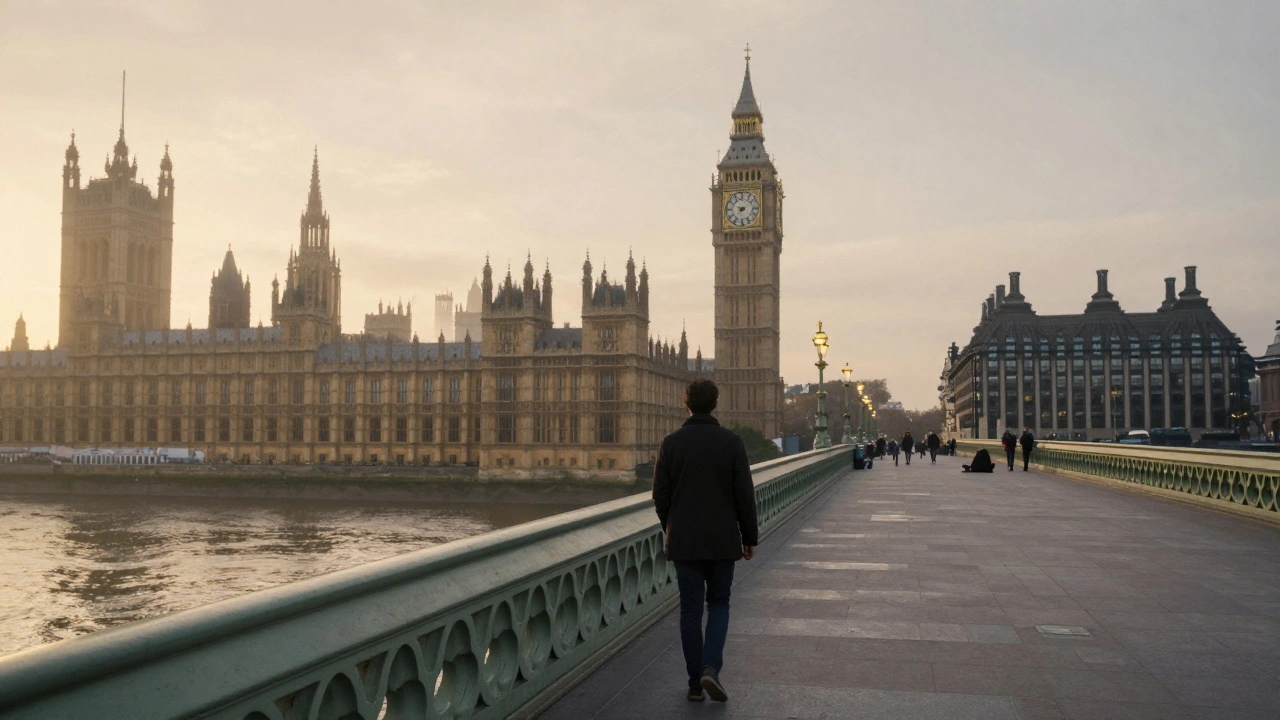
Keep going until you reach Westminster Bridge. Here, you get the classic view: Big Ben, the Houses of Parliament, and the Thames all in one frame. Stop for a minute. Sit on the steps. Watch the boats go by. This stretch is alive with locals jogging, artists sketching, and tourists taking photos. No entry fee. No line. Just the city breathing.
Pro tip: If you’re walking this in the evening, wait until after sunset. The buildings light up, and the river reflects the glow like liquid gold. It’s free, but it feels like a private show.
Hyde Park to Kensington Gardens: Green Heart of the City
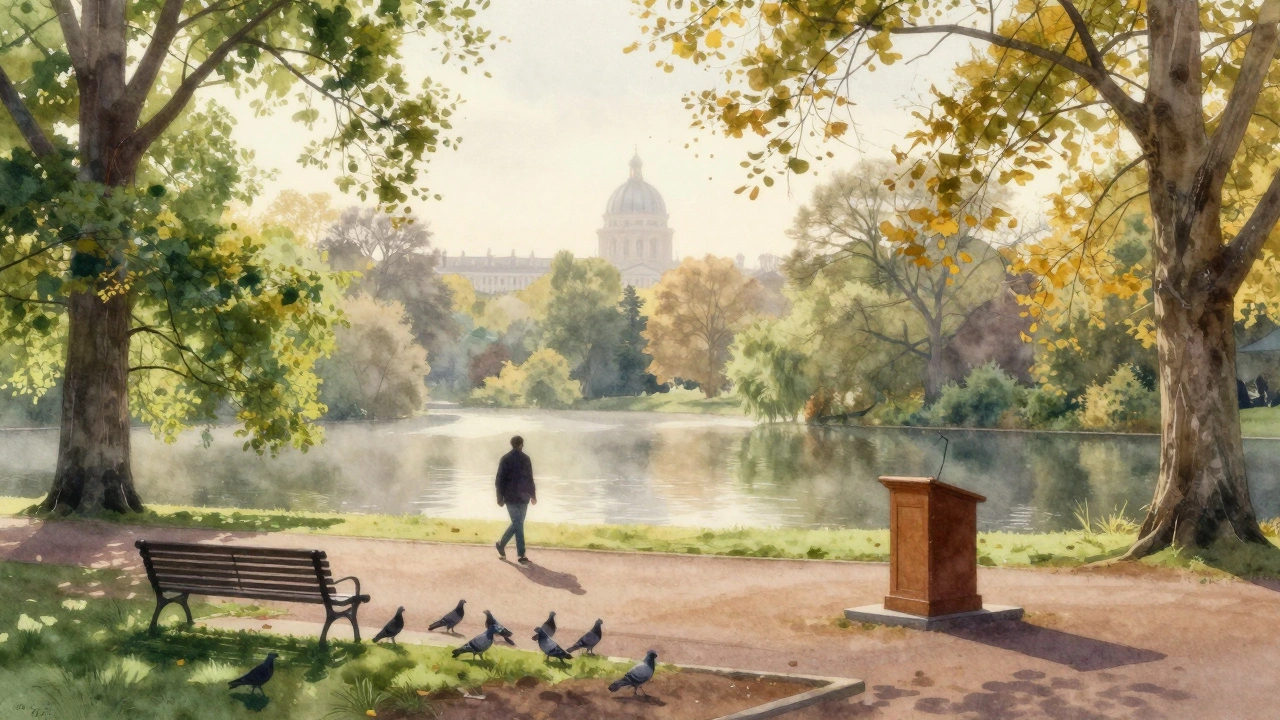
Hyde Park isn’t just a park-it’s a 360-acre escape from traffic, noise, and tourist traps. Enter at Marble Arch and walk south toward the Serpentine Lake. You’ll pass the Speakers’ Corner, where anyone can stand up and say anything-free speech in action since 1872. People argue politics, preach religion, or just yell into the wind. It’s chaotic. It’s real.
Continue west into Kensington Gardens. This quieter side is where Princess Diana’s memorial fountain sits, surrounded by water and wildflowers. The Peter Pan statue is here too, tiny and covered in pigeons. Kids still leave toys at its base. You don’t need to know the history to feel it.
There are no gates, no tickets, no checkpoints. Just paths winding through trees, benches with views of the lake, and the occasional deer grazing near Kensington Palace’s outer walls. The palace itself costs money, but the gardens? Totally free. And they’re open every day, sunrise to sunset.
Camden to Regent’s Park: Street Culture and Hidden Corners
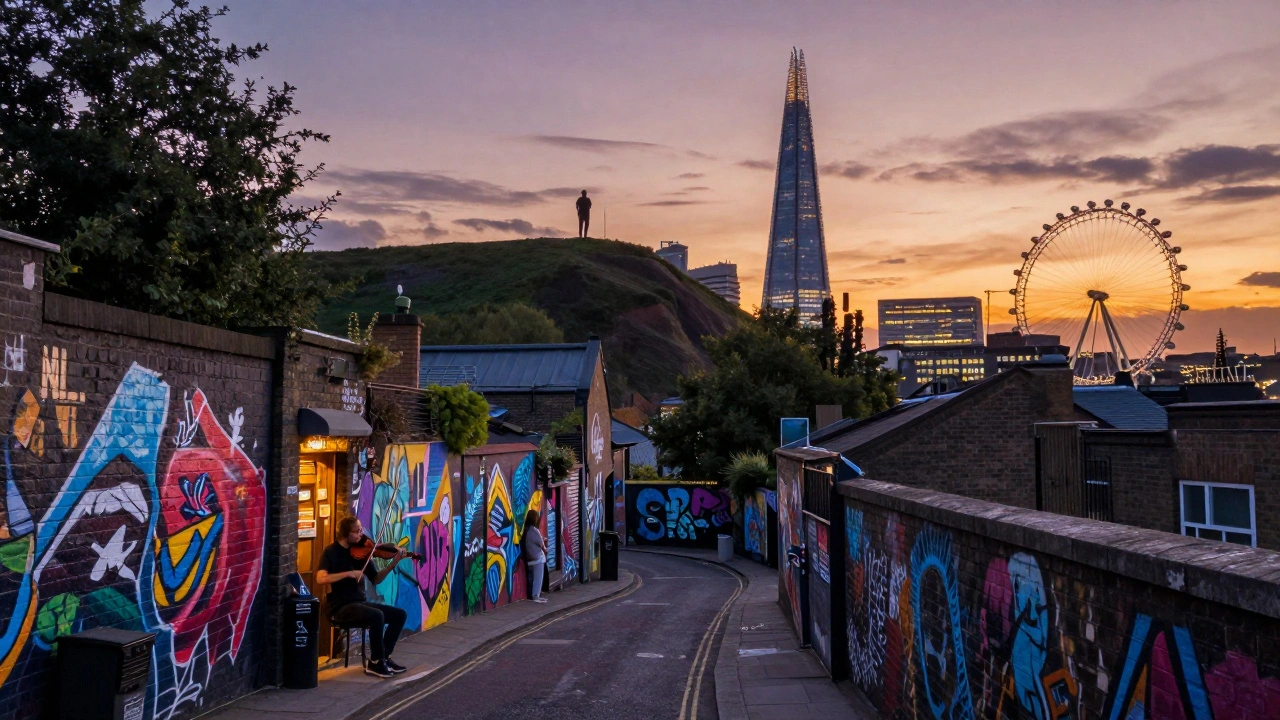
Start in Camden Market-not to shop, but to walk. The real magic isn’t in the stalls selling vegan dumplings or vintage band tees. It’s in the narrow alleys behind them. Turn left off Camden High Street into Hawley Crescent. You’ll find murals painted on brick walls, musicians playing in doorways, and the smell of coffee mixing with rain.
Walk north up Camden Road until you hit Regent’s Park. Enter at the Primrose Hill side. Climb the gentle slope to the top. From here, you get one of the best skyline views in London: the Shard, the City towers, and the London Eye all in a row. Locals come here to read, nap, or just stare at the horizon. No one asks for money. No one even looks at you funny.
Down in the park, you’ll find the Queen Mary’s Gardens, where roses bloom in summer. In winter, the empty beds look like abstract art. The park’s boating lake is free to walk around. You can watch rowers, ducks, and kids chasing bubbles. All free. All quiet. All yours.
The City of London: Ancient Streets and Forgotten Churches
Forget the tourist crowds at St. Paul’s. Walk the narrow lanes behind it. Start at the Monument to the Great Fire of London-climb it if you want (it’s £8, but you don’t need to). Instead, head down Fish Street Hill toward London Bridge. Turn left onto Pudding Lane, where the fire started in 1666. A small plaque marks the spot. That’s it.
Now walk through the financial district. The skyscrapers are impressive, but the real gems are the hidden churches. St. Bartholomew-the-Great, founded in 1123, still holds services. Walk inside. The stone arches, the candlelight, the silence-it feels like stepping into another century. No one checks your bag. No one asks for a donation. You can sit for 20 minutes and just listen.
Keep going to Guildhall Yard. The Roman amphitheater ruins are visible under glass. You can walk right over them. No sign says “pay here.” No guard stands watch. Just history, quietly waiting.
Greenwich Park: Views, Time, and the Prime Meridian
Take the DLR to Greenwich. Walk up the hill through the park. You’ll pass the Old Royal Naval College-its golden dome looks like it came from a movie. But you don’t need to go inside. Keep climbing.
At the top, you’ll find the Royal Observatory. The red line marking the Prime Meridian is outside, free to stand on. One foot in the Eastern Hemisphere, one in the West. Take a photo. No ticket needed. The view from here? The River Thames curling past Canary Wharf, the O2 Arena glowing like a silver spaceship, and the whole of London spread out below.
Walk down the other side of the hill to the Cutty Sark. You can’t go inside without paying, but you can circle it. The old tea clipper sits on the riverbank, rusted and proud. Locals sit on the grass nearby, eating sandwiches. You can too.
Why Free Walking Routes Work Better Than Paid Tours
Guided tours give you facts. But walking on your own gives you moments.
A paid tour will tell you that Big Ben weighs 13.5 tons. You’ll hear it once, forget it by lunch. But if you stand on Westminster Bridge at 8 a.m. and hear the chime echo over the water while the fog rolls in? That sticks.
Free walks let you stop when you want. Sit when you’re tired. Duck into a café for a £2 coffee. Chat with a street artist. Find a bench with no one else on it. You’re not racing to the next landmark. You’re not stuck in a group of 20 people all taking selfies.
And here’s the truth: London’s soul isn’t in its paid attractions. It’s in the quiet corners where history doesn’t advertise itself. The alley behind a pub where a 200-year-old plaque is half-covered in ivy. The park bench where an old man feeds pigeons every afternoon. The churchyard where the gravestones are worn smooth by rain.
What to Bring and How to Plan
- Good walking shoes. London’s cobbles and pavements are unforgiving. Blister-free feet make the difference.
- A phone with offline maps. Download Google Maps offline for central London. No data? No problem.
- A light jacket. Even in summer, the Thames wind bites. In winter, layers are non-negotiable.
- A bottle of water. Tap water in London is safe and clean. Refill at any public fountain or café (ask politely).
- A notebook or voice memo. Write down what you see. A red door. A dog wearing a scarf. A man playing the violin on a bridge. These are the things you’ll remember.
Plan your route around two to four hours. Don’t try to do it all in one day. Pick one walk. Do it slowly. Come back another day for another.
When to Go
Spring and autumn are ideal. The light is soft, the crowds are thinner, and the parks are full of color. Summer is busy but warm. Winter is cold, but the city looks like a postcard-foggy, quiet, and full of twinkling lights.
Avoid weekends in Camden or the South Bank if you hate crowds. Weekdays at dawn? Best time of all. You’ll have the streets to yourself.
Final Thought: London Doesn’t Cost Money. It Costs Time.
You can’t buy the best of London. You have to earn it. By walking. By pausing. By noticing.
The city doesn’t need your money to reveal itself. It just needs your feet.
Are these walking routes safe for solo travelers?
Yes, all the routes listed are in well-traveled, central areas that are safe for solo walkers during daylight hours. Stick to main paths, avoid isolated parks after dark, and trust your gut. London’s streets are busy, even in quieter neighborhoods. The South Bank, Hyde Park, and Greenwich are especially safe and popular with locals and tourists alike.
How long does each walking route take?
Each route is about 3 to 5 miles, depending on how many stops you make. At a relaxed pace-with photo breaks and coffee pauses-you’ll spend 2 to 4 hours per walk. The South Bank route is the quickest (2.5 hours), while the City of London loop with church visits can stretch to 4.5 hours if you explore every corner.
Do I need to download an app for these walks?
No app is required. Google Maps works offline if you download the area ahead of time. Some people use the free London Walks app for audio guides, but you don’t need it. The routes are easy to follow with basic directions: walk along the river, turn left at the park entrance, keep going until you see the big dome. No tech needed.
Can I bring my dog on these walks?
Absolutely. Hyde Park, Greenwich Park, and the South Bank are all dog-friendly. Keep your dog on a leash near busy roads and in crowded areas, but most Londoners are used to seeing dogs on walks. Bring water and a bag-many parks have waste bins.
Are there public restrooms along these routes?
Yes, but they’re not always free. Look for cafes, pubs, or visitor centers. The South Bank has free toilets near the Tate Modern and London Eye. Greenwich Park has public loos near the observatory. Some are £0.50, but many cafés will let you use theirs if you buy a drink-even if you’re not shopping.
What if it rains?
London rain doesn’t stop walks-it just changes them. Carry a compact umbrella or a light rain jacket. The South Bank and parks are still beautiful in the rain. The city looks moody, cinematic. And many indoor spots like St. Bartholomew-the-Great or the Guildhall ruins are still accessible. Rainy days are actually quieter, and you’ll have the views all to yourself.