If you only have one day in London and you’re torn between the British Museum and the National Gallery, you’re not alone. Both are free, world-class, and just a short walk from each other in central London. But they’re not the same. One holds human history across 2 million years. The other holds Western art from the 13th to the 19th century. So which one should you pick first?
What’s Inside the British Museum?
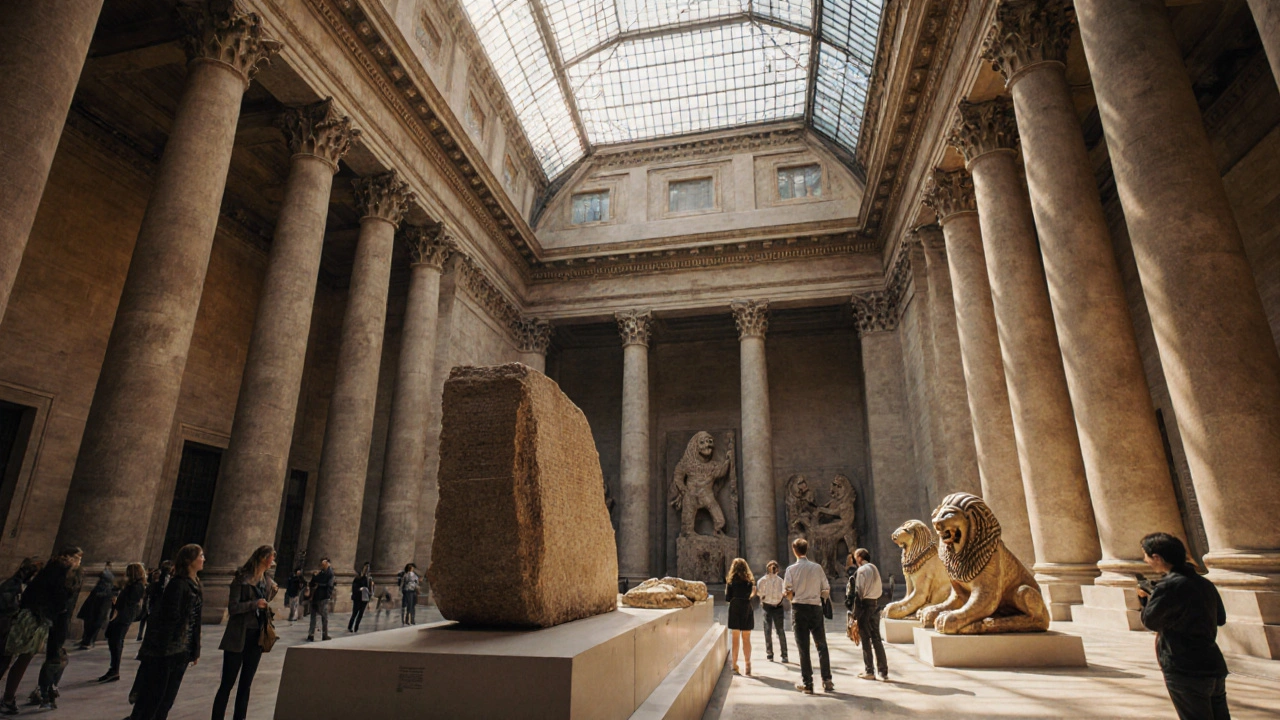
The British Museum isn’t just a building-it’s a time machine. Walk in and you’re staring at the Rosetta Stone, the Parthenon sculptures, Egyptian mummies, and ancient Assyrian lions. It’s not a museum about art. It’s a museum about civilization.
It opened in 1759 and has grown into one of the largest collections of human history on Earth. With over 8 million objects, you can’t see it all in one day. But you don’t need to. Focus on the highlights: the Egyptian galleries on the ground floor, the Assyrian palace reliefs in Room 6, and the Greek and Roman sculptures on the upper level.
People come here for the scale. The sheer number of artifacts from every continent, every era, makes you feel like you’ve traveled through time. It’s the place where you learn how ancient cultures lived, worshipped, and died. You’ll see a 3,000-year-old Babylonian tablet next to a 1,000-year-old Viking sword. No other museum in the world gives you that.
What’s Inside the National Gallery?
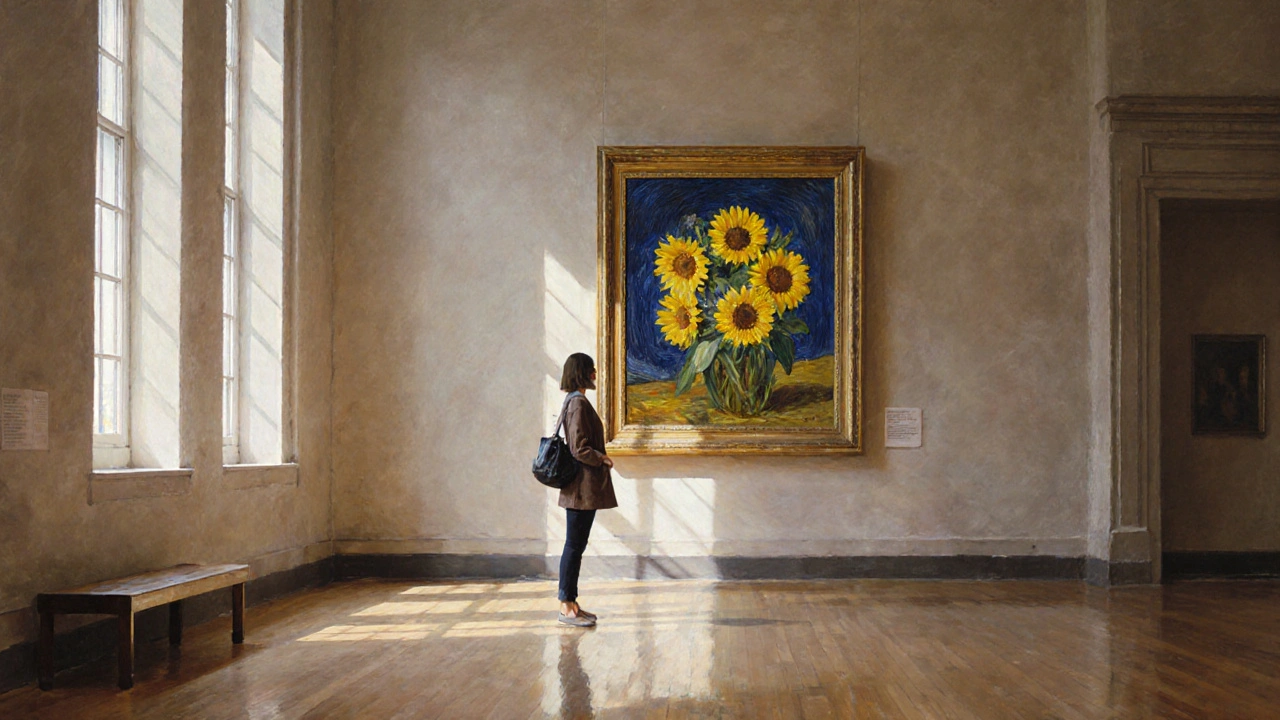
The National Gallery is where Western art comes alive. It’s not about relics. It’s about emotion. Van Gogh’s sunflowers, Turner’s stormy seas, da Vinci’s unfinished Virgin of the Rocks, and Botticelli’s Venus-these aren’t just paintings. They’re moments frozen in color and brushstroke.
Founded in 1824 with just 38 paintings, it now holds over 2,300 works from the 1200s to 1900. The collection is arranged by time and region: Italian Renaissance on the ground floor, Dutch Golden Age on the upper level, and British art in the Sainsbury Wing.
Unlike the British Museum, the National Gallery doesn’t overwhelm you with quantity. It invites you to slow down. Stand in front of a Caravaggio and feel the drama. Watch how Rembrandt paints light on skin. You’ll leave not just informed, but moved.
Size, Crowds, and Time Needed
The British Museum is massive. It’s bigger than the entire National Gallery. If you try to see everything, you’ll be there for hours-and still miss half. Most visitors spend 2 to 4 hours. If you’re short on time, stick to the top 5 galleries: Egypt, Assyria, Greece, Rome, and the Enlightenment Gallery.
The National Gallery is more compact. You can see the highlights in 90 minutes. If you’re an art lover, you might stay 3 hours. The building is easier to navigate. No confusing wings. Just clear sections by century.
Crowds? The British Museum gets packed. Lines form at the Rosetta Stone and the mummies. Weekends and school holidays are chaotic. The National Gallery is quieter, even in peak season. You can stand in front of a Van Gogh without jostling for space.
Who Should Go to the British Museum?
If you’re curious about how humans lived across continents and centuries, the British Museum is your place. Families love it. Kids are fascinated by the mummies. History buffs get lost in the tablets and tools. Even if you’ve never read a history book, you’ll walk away with a sense of wonder.
It’s also the best pick if you’re visiting London on a tight schedule and want to see the most iconic artifacts under one roof. You won’t find the Rosetta Stone anywhere else. The Elgin Marbles? Only here.
But be warned: it’s not designed for quiet reflection. You’ll hear tour guides, kids asking questions, and the echo of footsteps in the Great Court. If you want peace, come early on a weekday.
Who Should Go to the National Gallery?
If you’ve ever felt moved by a painting-if you’ve stared at a sunset and thought, ‘I wish I could paint that’-then the National Gallery is for you.
It’s the ideal first stop if you’re new to art. The labels are clear. The lighting is perfect. The staff are helpful. You don’t need to know anything about art history to enjoy it. Just look. Feel. Wonder.
It’s also better for couples, solo travelers, or anyone who wants a calm, thoughtful experience. You can sit on a bench in front of a Monet and just breathe. No one will rush you. No crowds will push past.
And if you’re into photography? The National Gallery is more forgiving. You can take photos without flash in most areas. The British Museum bans tripods and sometimes asks you to put your phone away near sensitive artifacts.
Can You Do Both?
Yes. But only if you plan wisely.
Both museums are in Trafalgar Square and Bloomsbury, about a 15-minute walk apart. If you have a full day, start at the National Gallery in the morning. It opens at 10 a.m. and is quieter early. Spend 2 hours there, then grab a coffee in the square.
Walk to the British Museum by noon. You’ll beat the worst crowds. Spend your afternoon there. If you’re tired, sit in the Great Court and watch the glass roof glow in the afternoon sun.
But if you only have time for one? Here’s the rule: pick the British Museum if you want to see the world’s history. Pick the National Gallery if you want to feel the soul of Western art.
What’s Missing From Each?
The British Museum doesn’t have much modern art. No Picasso, no Pollock. If you’re looking for 20th-century pieces, go to Tate Modern instead.
The National Gallery doesn’t have non-Western art. No African masks, no Chinese ceramics, no Islamic calligraphy. If you want global culture, you need the British Museum-or the V&A.
Neither has interactive exhibits or digital displays like newer museums. They’re old-school. Quiet. Respectful. That’s part of their charm.
Final Verdict: Which One First?
Here’s the simple answer: if you’re a first-time visitor to London and you only have one museum day, go to the British Museum first. Why? Because it’s the one place where you’ll see objects you’ve read about in school, seen in documentaries, or dreamed about. The Rosetta Stone. The Elgin Marbles. The Egyptian mummies. These aren’t just artifacts. They’re cultural landmarks.
But if you’ve already seen those, or if you’re more interested in emotion than archaeology, start with the National Gallery. Stand in front of a Van Gogh and feel something real. That’s harder to find in a history museum.
Most locals I’ve talked to say: go to the British Museum if you’re visiting from abroad. Go to the National Gallery if you’re a Londoner taking a quiet afternoon off.
Either way, you can’t go wrong. Both are free. Both are world-class. Both will change how you see the world.
Is the British Museum free to enter?
Yes, entry to the British Museum is completely free. You can walk in anytime during opening hours without a ticket. Some special exhibitions charge a fee, but the permanent collection is always free.
Is the National Gallery free too?
Yes, the National Gallery is also free to enter. Like the British Museum, you don’t need to book in advance. Special exhibitions may cost money, but the main collection of over 2,300 paintings is always free for everyone.
Which museum has better food options?
The National Gallery has a better café. It’s right inside the building, with outdoor seating in the courtyard. The British Museum’s café is in the Great Court and can get crowded. For a quick bite, the National Gallery wins. For a full meal, head to nearby Covent Garden or Trafalgar Square.
Can I take photos in both museums?
Yes, you can take photos without flash in both museums. But the British Museum restricts tripods and sometimes asks you to stop if you’re blocking a path. The National Gallery is more relaxed-just avoid using lights or tripods near sensitive works.
Which museum is better for kids?
The British Museum is better for kids. The mummies, Egyptian artifacts, and ancient weapons are instantly fascinating. They also have free family trails and activity sheets you can pick up at the information desk. The National Gallery is quieter and better for older kids who can sit and stare at paintings.
Do I need to book tickets in advance?
No, you don’t need to book tickets for either museum’s permanent collection. You can just walk in. But if you want to see a special exhibition, check the website ahead of time-those often sell out.
Which museum is closer to public transport?
The National Gallery is right next to Trafalgar Square, served by Charing Cross tube station (Bakerloo and Northern lines). The British Museum is a 10-minute walk from Holborn or Tottenham Court Road stations. Both are easy to reach, but the National Gallery is slightly more central.