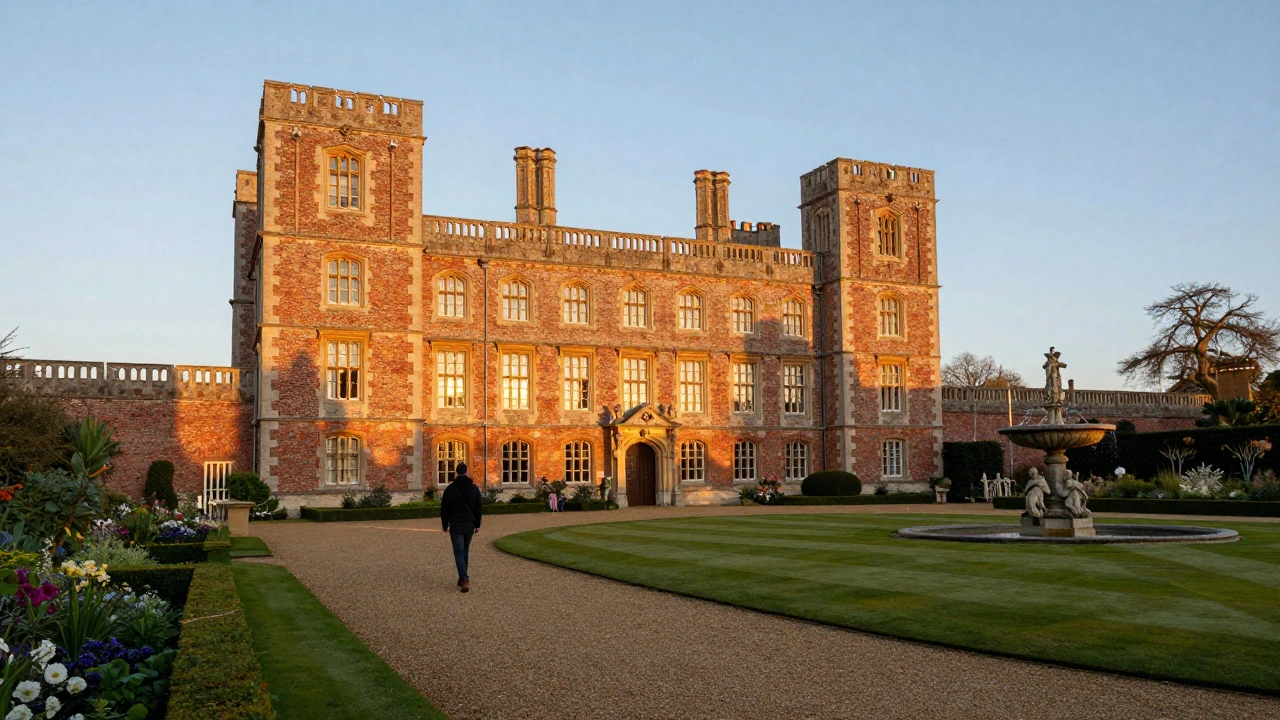
Charlton House isn’t the kind of landmark you stumble upon by accident. Tucked between quiet residential streets and the busy A206 in southeast London, this grand Jacobean mansion feels like a secret kept by time. Built in 1607 for Sir Adam Newton, tutor to Prince Henry-the eldest son of King James I-it’s one of the last surviving examples of early 17th-century aristocratic architecture in Greater London. And unlike many historic homes that became museums or private estates, Charlton House still serves the public: as a community center, event space, and free-to-visit heritage site.
A House Built for Royalty, Not Just Riches
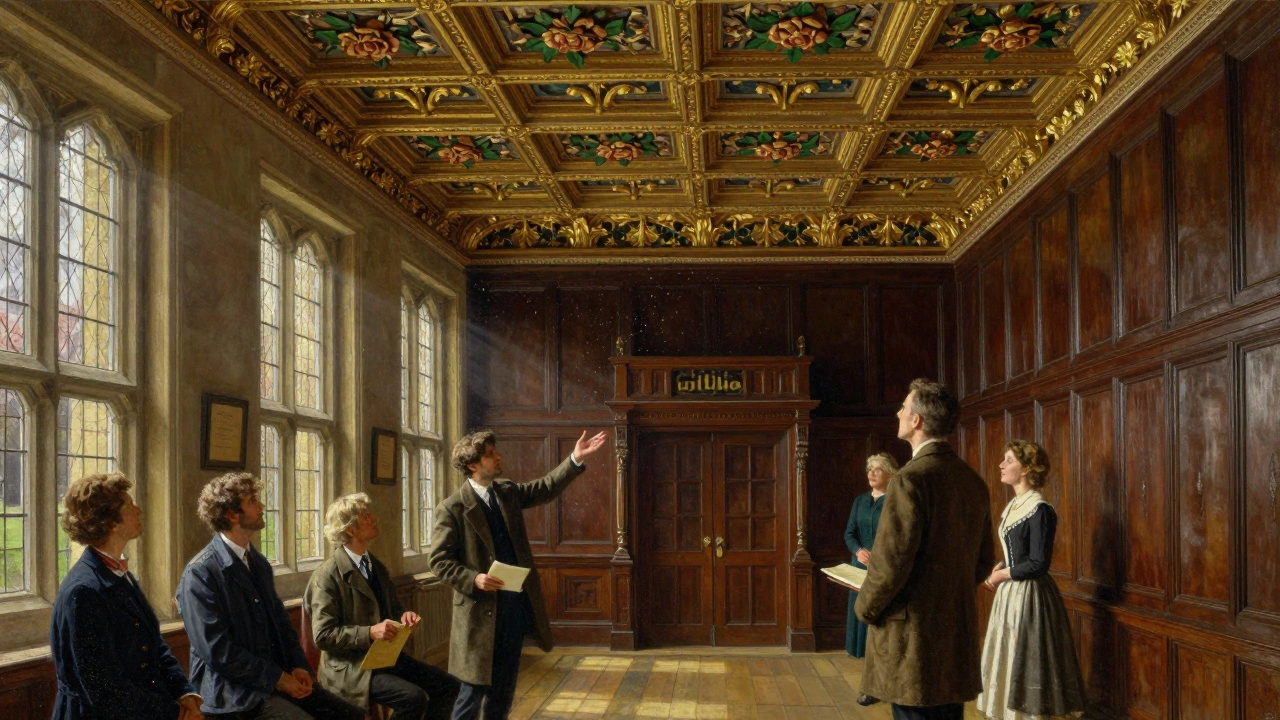
When Sir Adam Newton commissioned Charlton House, he wasn’t just building a home-he was making a statement. Newton had been appointed tutor to Prince Henry in 1603, a role that brought him close to the royal court. The house was designed to impress: 50 rooms, a grand staircase, ornate plasterwork ceilings, and a courtyard that mirrored the style of royal palaces like Hampton Court. Its brick-and-stone facade, with tall chimneys and mullioned windows, is textbook Jacobean: heavy, symmetrical, and full of carved details. The original oak panelling still lines the Great Hall, and the ceiling there features gilded stucco roses and fleur-de-lis, untouched since the 1620s.
What’s remarkable is how little it changed. While most manor houses were modernized, subdivided, or demolished over the centuries, Charlton House survived because it was never sold. It passed from Newton’s family to the Crown, then to the London County Council in 1903. That’s why today, you can still see the original leaded glass windows, the 17th-century fireplaces, and even the servants’ bell system still wired into the walls.
The Garden That Time Forgot
Behind the house lies a 12-acre park that feels like stepping into a 1600s landscape painting. The formal gardens were restored in the 1990s based on original plans found in the National Archives. You’ll find a sunken knot garden with box hedges shaped into interlocking patterns, a herb border with plants used in Jacobean medicine-like lavender for calming nerves and sage for digestion-and a stone fountain carved with mythological figures. Unlike the manicured lawns of royal gardens, this space was meant to be lived in: a place for quiet walks, outdoor feasts, and even jousting practice in its early years.
Today, the garden hosts seasonal events: apple picking in autumn, open-air Shakespeare in summer, and candlelit tours during winter. Local schoolchildren come here to learn how people grew food before supermarkets. The old orchard still produces Bramley apples and damsons, and the fruit is used in jams sold at the on-site café.
More Than a Museum: A Living Space
Charlton House doesn’t just preserve history-it uses it. The Great Hall now hosts weekly community lunches, art exhibitions from local artists, and free genealogy workshops for residents tracing their roots in southeast London. The former servants’ quarters have been turned into a small archive, where you can handle facsimiles of 17th-century letters, estate maps, and even Newton’s own handwriting.
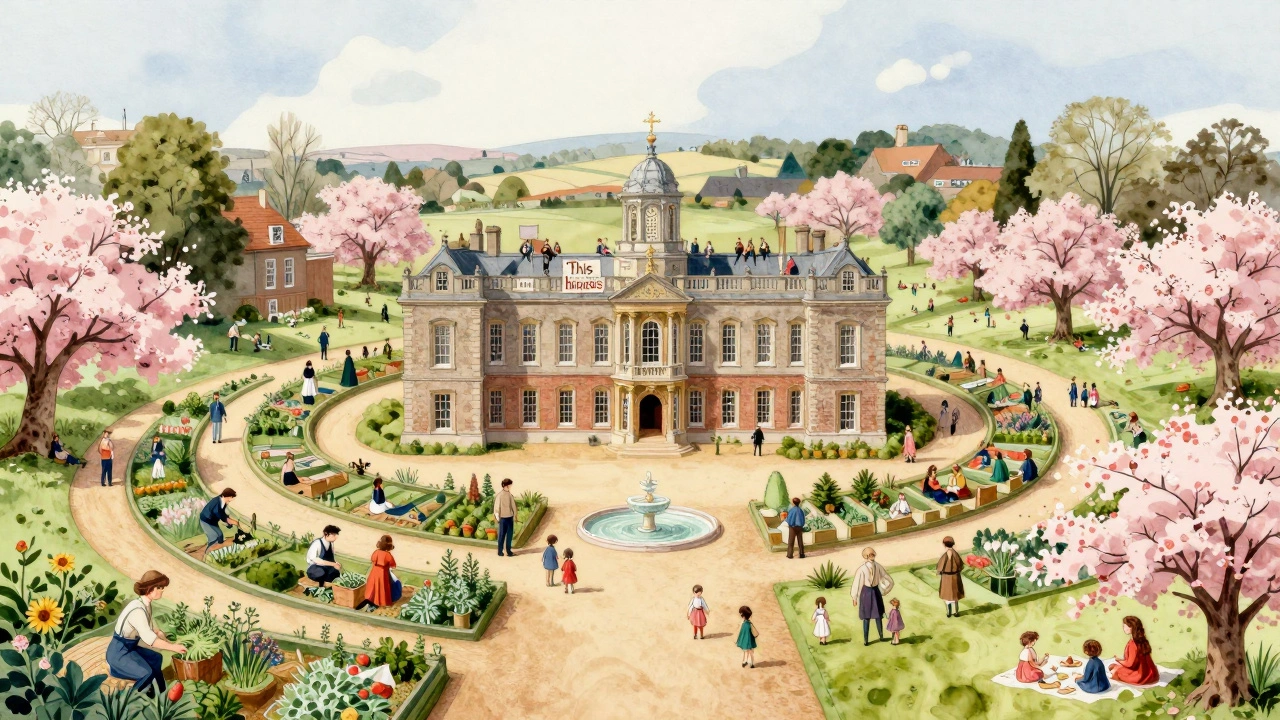
There’s no admission fee. You can walk in, wander the halls, sit in the library with a cup of tea, or join a guided tour led by retired history teachers from the area. The volunteers who run the tours don’t just recite dates-they tell stories: how the house survived the Great Fire of London because it was too far out, how it sheltered refugees during WWII, and how a local woman in the 1970s fought to stop its demolition by sitting on the roof with a sign that read, “This house remembers who we were.”
Why Charlton House Matters
Most people visiting London head to the Tower, Buckingham Palace, or the British Museum. But Charlton House tells a quieter, more human story. It’s not about kings and queens-it’s about teachers, servants, gardeners, and neighbors who kept a piece of history alive. It shows how a building can outlive empires if it’s cared for by ordinary people.
It also challenges assumptions. Many assume historic sites are either crumbling ruins or sterile exhibits. Charlton House proves otherwise: it’s warm, alive, and deeply connected to the community around it. You’ll find teenagers doing homework in the library, elderly locals sharing stories in the garden, and local musicians playing folk tunes on the terrace.
What to See and Do
- Walk through the Great Hall and look up at the original 1610 ceiling plasterwork.
- Visit the Wool Room, where the house’s original wool trade records are displayed-evidence of how the estate funded itself through textile production.
- Try the 17th-century herb tea at the café, made from plants grown in the garden.
- Join the free Saturday guided tours (book ahead on their website).
- Attend the annual Jacobean Fair in September, complete with costumed reenactors, archery, and period music.
Getting There
Charlton House is in the London Borough of Greenwich. The nearest Tube station is Charlton (on the Southeastern line from London Bridge), just a 5-minute walk away. If you’re coming by car, there’s free parking on-site. The house is open Tuesday to Sunday, 10am to 5pm. No booking needed unless you’re joining a tour.
It’s not flashy. It doesn’t have a gift shop full of plastic souvenirs. But if you’ve ever wondered what life was like for a wealthy family in early 1600s London-before skyscrapers, before the Underground, before the Blitz-this is the place to feel it.
Is Charlton House really open to the public for free?
Yes. Unlike many historic houses that charge entry fees, Charlton House has been publicly owned since 1903 and remains free to visit. Donations are welcome but not required. The café and special events may have small fees, but the house, gardens, and most exhibitions are always free.
Why is it called a Jacobean manor?
"Jacobean" refers to the style of architecture and design that flourished during the reign of King James I (1603-1625). It’s the British version of the late Renaissance, characterized by heavy symmetry, elaborate stonework, tall chimneys, and ornate plaster ceilings. Charlton House is one of the few surviving examples of this style in southeast London, built just years after James took the throne.
Can I visit the gardens without entering the house?
Absolutely. The 12-acre park is open daily from dawn to dusk, even when the house is closed. Many locals come here to walk, read, or have picnics. The garden is especially beautiful in spring when the cherry trees bloom and in autumn when the maples turn red.
Are there any original artifacts still in the house?
Yes. The original oak panelling in the Great Hall, the 17th-century fireplaces, and the leaded glass windows are all authentic. Some furniture pieces, like a Jacobean chest and a velvet-upholstered chair from the 1620s, are displayed in their original positions. Most of the house’s furnishings were donated by descendants of Newton’s household staff, making them historically accurate rather than replicas.
Is it suitable for children?
Very much so. The house has a dedicated family trail with puzzles, hidden symbols to find, and a costume box where kids can try on Jacobean-era outfits. The garden has a small play area made from reclaimed wood and stone, and the café serves hot chocolate with honey from hives kept on-site. School groups visit regularly, and there are free workshops on Tudor baking and herbal remedies.
If you’re looking for a slice of London’s past that doesn’t require a ticket, a queue, or a tour group-Charlton House is waiting. It’s not just a building. It’s a quiet, living memory of a time when a manor wasn’t a museum, but a home.