The Hard Truth About London's Shifting Weather
For decades, London was known for its grey skies and drizzle. But the data is showing a sharp turn. We are seeing a massive spike in "extreme weather events," which basically means weather that falls far outside the historical average. Climate Change is the long-term shift in temperatures and weather patterns, primarily caused by human activities like burning fossil fuels. In London, this manifests as a volatile mix of intense heat and sudden, heavy flooding.
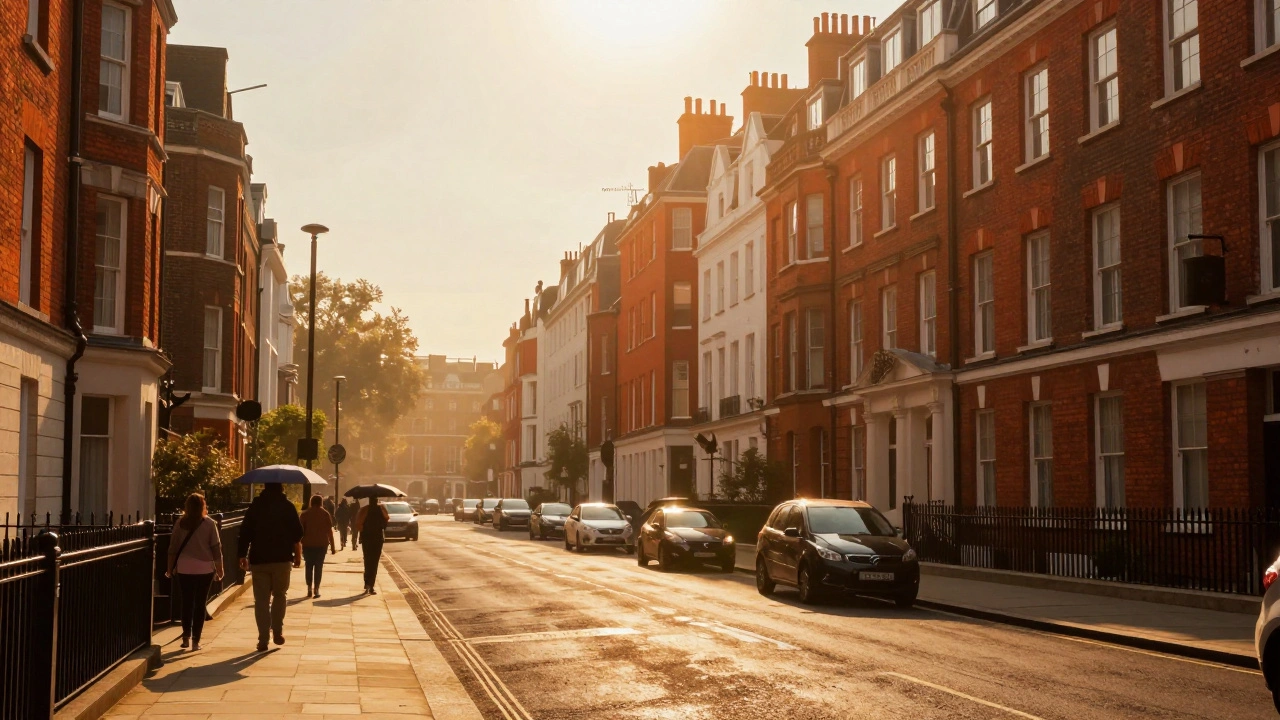
Take the heatwaves of recent years. We aren't just talking about a "nice summer." We are seeing temperatures climb toward 40°C, which is unheard of for a city designed in the Victorian era. Because the city is built with so much brick and tarmac, it creates what experts call an Urban Heat Island effect. This is a phenomenon where urban areas experience much warmer temperatures than surrounding rural areas because buildings and roads absorb and re-emit the sun's heat. During a heatwave, the center of London can be up to 10°C warmer than the outskirts in Essex or Kent. This isn't just uncomfortable; it's a health crisis for the elderly and those living in top-floor flats without air conditioning.
Water Risks and the Thames Barrier
While the heat is a silent killer, water is a more visible threat. London is essentially a city built on a marsh, with the River Thames running right through its heart. As global sea levels rise, the risk of "tidal flooding" increases. This is where the sea pushes water back up the river and into the streets.
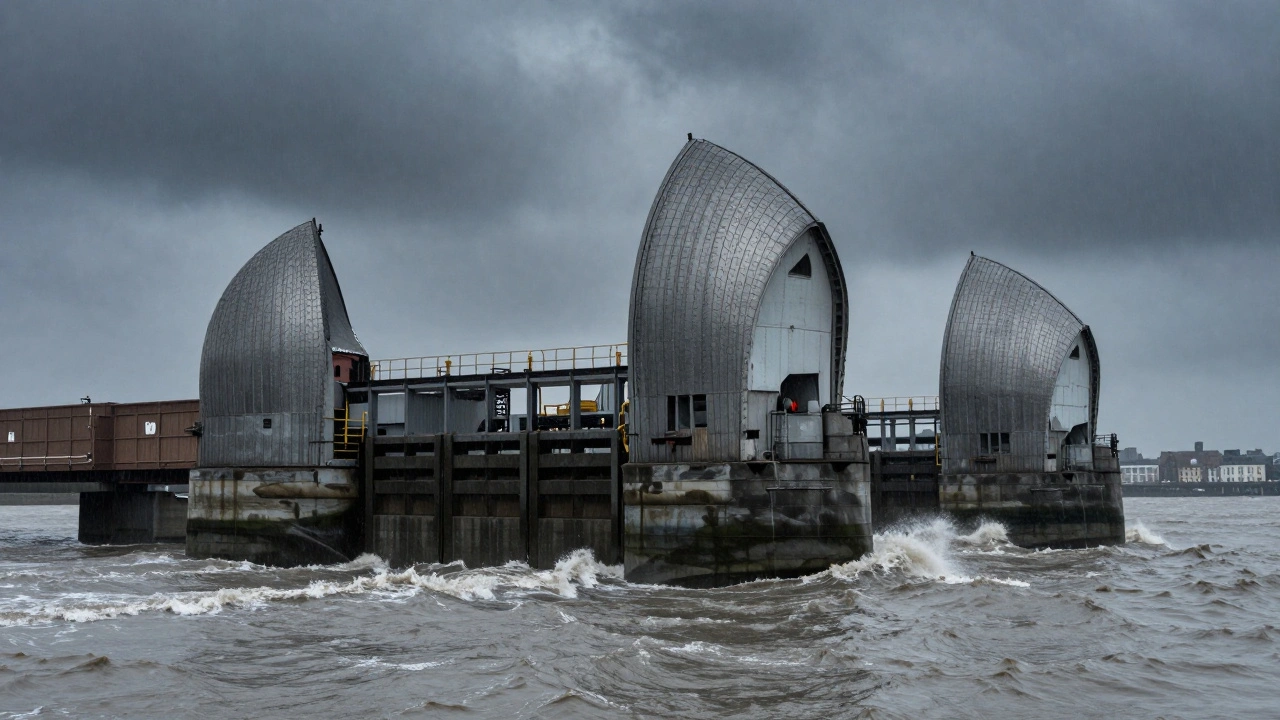
To stop this, the city relies on the Thames Barrier, a massive movable barrier designed to protect London from storm surges and North Sea floods. It's a marvel of engineering, but it has a limit. With the increasing frequency of "storm surges"-where low pressure and high winds push water toward the coast-the barrier is closing more often than it ever did in the 1980s. But there's another problem: surface water flooding. When we get those "atmospheric rivers" that dump a month's worth of rain in two hours, the Victorian sewers simply can't cope. The water has nowhere to go, so it ends up in basements and on the roads.
Building Urban Resilience: How London is Fighting Back
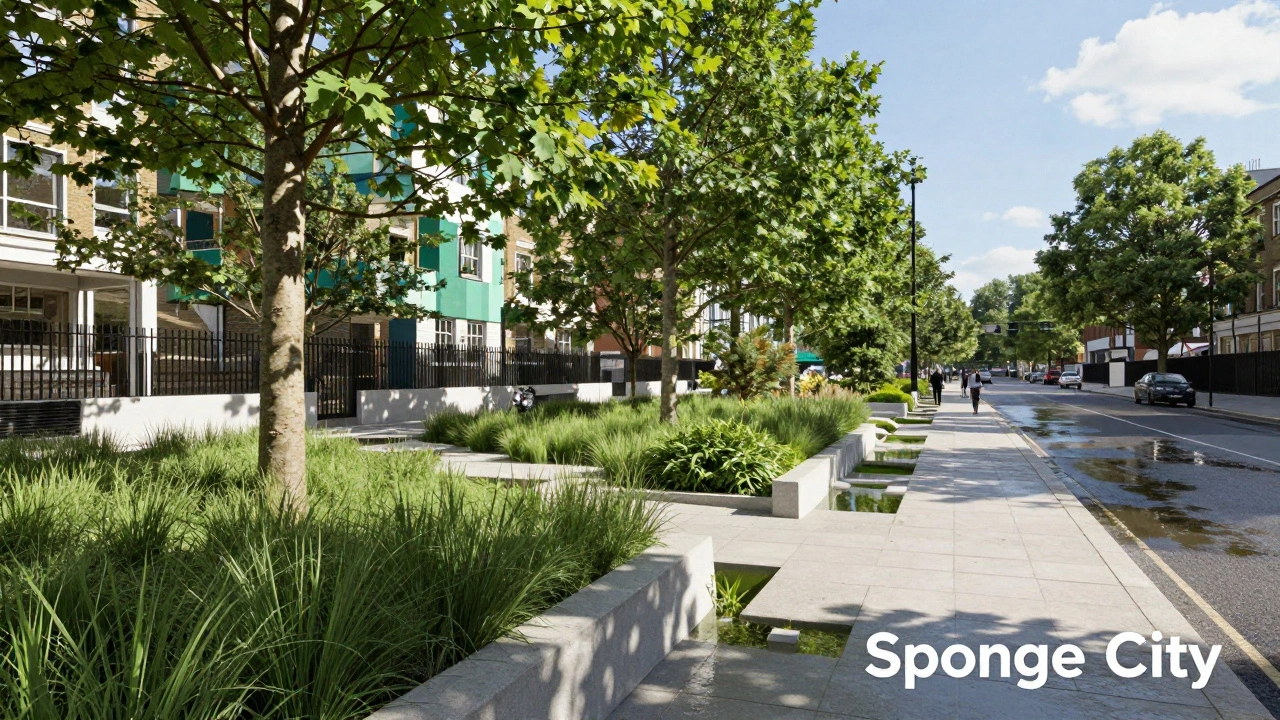
The city can't just move, so it has to adapt. This is where urban resilience comes in. It's not about stopping the rain or the heat, but about making sure the city can "bounce back" quickly when disaster hits. One of the most effective tools is the move toward "Sponge Cities." Instead of trying to push all the water into pipes, the goal is to let the city soak it up.
You can see this in the creation of more Sustainable Drainage Systems (SuDS). These are nature-based solutions like rain gardens, permeable pavements, and bioswales that manage water runoff naturally. By replacing concrete with greenery, London is reducing the pressure on its sewers and cooling the air at the same time. Rain gardens in places like Camden aren't just for looks; they are critical infrastructure that prevents the street from becoming a river during a flash flood.
| Weather Threat | Primary Impact | Resilience Solution | Expected Outcome |
|---|---|---|---|
| Extreme Heat | Heatstroke, energy grid failure | Urban Greening & Cool Roofs | Lower ambient temperature |
| Tidal Flooding | Infrastructure damage, evacuations | Thames Barrier Upgrades | Protection of Central London |
| Flash Floods | Sewage overflow, transport chaos | Sponge City Infrastructure | Reduced surface runoff |
| Winter Storms | Power outages, fallen trees | Hardened Power Grids | Faster utility restoration |
The Role of Green Spaces and Urban Forestry
If you want to survive a London summer, head to a park. It's not just about the view; it's about the science. Urban Forestry is the practice of planting and managing forests within city limits to combat climate effects. Trees provide "evapotranspiration," where they release water vapor into the air, effectively acting as natural air conditioners.
The expansion of the London National Park concept and the protection of the Green Belt are essential. When we preserve the lungs of the city, we reduce the intensity of the Urban Heat Island effect. A street lined with plane trees can be significantly cooler than a street with only asphalt. This isn't just a luxury; it's a survival strategy. For those living in social housing or dense estates, access to a nearby park can be the difference between a manageable summer and a medical emergency.
Policy and the "Net Zero" Goal
Resilience isn't just about planting trees; it's about policy. The Ultra Low Emission Zone (ULEZ) is a prime example. While often debated, the ULEZ targets Carbon Emissions, which are the primary drivers of the warming we're experiencing. By reducing the number of high-polluting vehicles in the city, London is attempting to lower its own contribution to the global warming cycle.
The city's push toward Net Zero by 2030 means a total overhaul of how we heat our homes. Moving away from gas boilers to heat pumps is a massive undertaking, but it's necessary. If the city can stop pumping carbon into the air, it helps slow the rate at which the local climate destabilizes. It's a long game, and while London can't solve global warming alone, it can set the blueprint for other global megacities like New York or Tokyo.
What Residents Can Do Right Now
You don't have to be a city planner to help London's resilience. Small changes in how we manage our own spaces add up. If you have a garden, swapping a concrete patio for a permeable gravel driveway or a flower bed helps the city soak up rain. Installing a "water butt" to collect rainwater reduces the peak load on the sewers during a storm.
Inside the home, the focus should be on "passive cooling." Using heavy curtains to block the sun during the day and opening windows at night is far more sustainable than relying on energy-hungry AC units that actually pump more heat into the street, worsening the Urban Heat Island effect for everyone else. We need to shift our mindset from "fighting" the weather to "flowing" with it.
Is London actually getting hotter?
Yes. Meteorological data shows a clear trend of increasing average temperatures and a higher frequency of extreme heat events. The "Urban Heat Island" effect makes this even more noticeable in the city center compared to the surrounding countryside.
Can the Thames Barrier protect London forever?
The barrier is highly effective, but it was designed based on sea-level projections from decades ago. With accelerating ice melt in the Arctic and Antarctic, the barrier may need significant upgrades or a successor system by the end of the century to handle higher tides.
What is a "Sponge City"?
A Sponge City is an urban design philosophy that uses permeable surfaces, rain gardens, and wetlands to absorb rainwater naturally instead of relying solely on concrete pipes and sewers. This prevents flooding and recharges groundwater.
How does ULEZ help with climate change?
While ULEZ primarily targets air quality (NOx and particulates), it encourages the transition to electric and hybrid vehicles, which reduces the overall carbon footprint of the city's transport network.
Why are parks so important for cooling?
Parks provide shade and use a process called evapotranspiration to cool the air. Large green spaces act as "cool islands" that can lower the temperature of surrounding urban blocks by several degrees.
Next Steps for a Resilient City
For the average Londoner, the next few years are about adaptation. If you're renting, ask your landlord about insulation and ventilation. If you're a business owner, consider adding a green roof to your building. For those in government, the focus must remain on the "15-minute city" model-reducing the need for long commutes and increasing the amount of greenery per square kilometer.
The goal isn't to create a city that is impervious to weather-that's impossible. The goal is to create a London that is flexible. Whether it's through the massive scale of the Thames Barrier or the small scale of a rain garden in a residential street, every bit of resilience counts. The climate is changing; now it's time for the city to change with it.