
When your company tells you you’re moving to London, it’s not just a change of address-it’s a whole new life. You might be excited. You might be terrified. Either way, you’re not alone. Thousands of employees get transferred to London every year, and most of them survive the chaos. But here’s the truth: no one tells you what really happens between the offer letter and your first day in a new flat. This isn’t about tourist tips or tube maps. This is about how internal relocations actually work-what your company will (and won’t) do, what you need to figure out yourself, and how to avoid the mistakes that cost people time, money, and sanity.
What Your Company Actually Pays For
Most companies say they’ll "help" with your move. That’s the marketing language. The real answer? It depends on your role, your contract, and how much budget your HR department has left this quarter.
At mid-sized firms, you’re likely to get a one-time lump sum-usually between £3,000 and £7,000. That’s supposed to cover everything: removals, temporary housing, deposit on a new place, even the cost of breaking your old lease. But here’s the catch: it’s taxed as income. So if you get £5,000, you might only take home £3,800 after tax and National Insurance.
Larger companies-think banks, tech giants, or consulting firms-might offer a more structured package. That could include:
- Full or partial coverage of removal costs (they’ll hire the movers, you don’t touch a box)
- Temporary accommodation for up to 3 months (usually a serviced apartment in Zone 2 or 3)
- Home finding assistance (a relocation agent who shows you flats, but don’t expect them to find you the perfect one)
- Spouse support (career counseling or job search help for your partner)
- Language or cultural orientation (yes, even for native English speakers-London has its own rules)
But here’s what they never cover: the cost of a deposit on a long-term rental. That’s your responsibility. London rents are high, and landlords want six weeks’ rent upfront, plus a deposit equal to five weeks. That’s £4,000-£8,000 before you even sign a contract. And if you’re moving alone, you’re on your own for this part.
The Timeline You Won’t Get From HR
HR gives you a date: "You’ll be relocating on June 1st." That’s not a deadline. It’s a suggestion. The real timeline looks like this:
- Month 1-2: Planning - You get the offer. You panic. You Google "how to move to London" and end up in Reddit threads from 2019. HR sends you a PDF. You don’t read it.
- Month 3: House Hunting - You’re told you have 4 weeks to find a place. You book 3 viewings. Two are scams. One is a studio with no heating. You accept it because you’re tired.
- Month 4: Packing & Logistics - Your movers show up two days late. Your old landlord says your deposit is being held because "the carpet smells." You didn’t even notice the smell.
- Month 5: Arrival - You land at Heathrow with two suitcases and a cat. Your temporary flat is clean. Your new office is 15 minutes away. You cry in the shower.
- Month 6: Settling In - You finally get your National Insurance number. You open a UK bank account. You learn that "lunch" means a sandwich at your desk, not a sit-down meal.
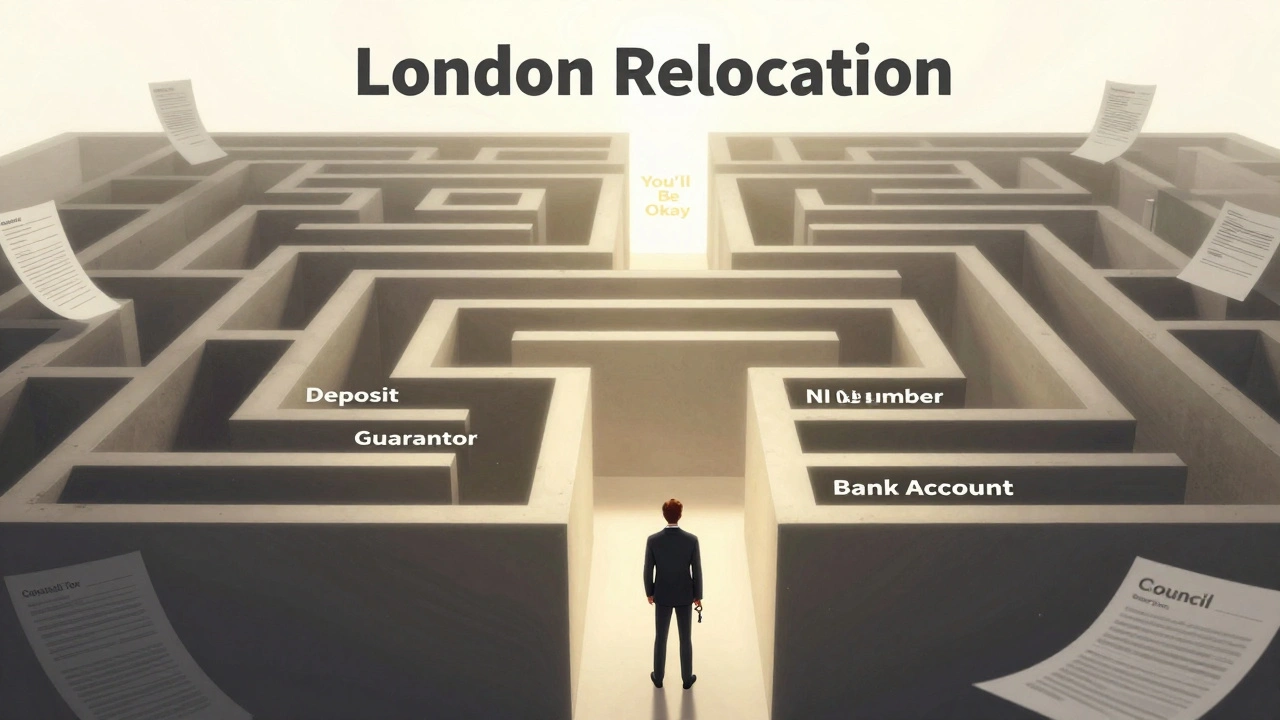
Most people think relocation is about packing boxes. It’s not. It’s about paperwork. You need a UK bank account to pay rent. You need a National Insurance number to get paid. You need proof of address to open a phone contract. But you can’t get proof of address until you have a tenancy agreement. And you can’t get a tenancy agreement without a UK guarantor-or a deposit you don’t have.
This is why so many relocating employees end up in short-term lets for months. It’s not because they can’t find a place. It’s because the system is designed to make you fail.
What No One Tells You About London Rent
You think you know rent. You lived in a city. You paid deposits. London is different.
Landlords here don’t care about your salary. They care about your credit history. And if you’re new to the UK, you don’t have one. That means you need a guarantor-someone who lives in the UK and earns at least 2.5x your rent. Most people don’t know anyone who can do that.
So you turn to guarantor services. Companies like Guarantor Scheme or BeMyGuarantor will cover you for a fee-usually 75-100% of one month’s rent. That’s £1,200-£1,800 just to get into a flat. And it’s non-refundable.
Then there’s the deposit. In London, it’s not just five weeks’ rent. It’s five weeks’ rent plus a holding deposit (usually one week). And if the landlord changes their mind after you pay, you lose it. No law says they have to return it.
And don’t assume the flat will be ready. Many landlords say "furnished" but mean "a bed and a fridge." You’ll need to buy a sofa, a dining table, pots, pans, towels, even toilet paper. That’s another £1,500-£3,000 before you even turn on the lights.

The Hidden Costs No One Talks About
You think your salary will cover everything. It won’t.
Here’s what you’ll suddenly realize you need to pay for:
- Travelcard - A monthly Zone 1-2 Travelcard costs £162. If you live in Zone 4, it’s £220. That’s more than your old internet bill.
- Water bills - In London, water is charged per property, not per person. If you’re in a shared flat, you’ll get one bill for four people. Expect £30-£50 a month.
- Council Tax - Single people pay 25% less, but you still pay. In Zone 2, it’s £1,500-£1,800 a year. You’ll get a bill the day after you move in.
- Phone contract - You need a UK number. O2, EE, Vodafone-each wants a credit check. If you don’t pass, you pay £50-£100 upfront for a prepaid plan.
- Healthcare - You’re covered by the NHS, but you need to register with a GP. It takes 2-6 weeks. Until then, you pay for every doctor visit.
And then there’s the emotional cost. You’re lonely. Everyone you know is back home. Your new coworkers are nice, but they’ve been here for years. They talk about pub crawls and weekend trips to Brighton. You don’t know how to join.
How to Actually Survive Your First 90 Days
Here’s what works:
- Get a local SIM card the second you land. Use a Pay As You Go plan from Three or giffgaff. It’s cheap, and you can top up online.
- Register with a GP immediately. Walk into any clinic with your passport and proof of address. Even if it’s a temporary address, they’ll register you.
- Open a bank account with Monzo or Revolut. They don’t require a credit history. You can use your foreign address and passport. Then transfer money from your home account.
- Find your local supermarket. Aldi, Lidl, or Tesco Express. Don’t waste time on Waitrose. You’ll save £100 a month.
- Join a Meetup group. There are groups for expats, for runners, for board games, for coffee. Go once a week. Even if you’re awkward. You’ll meet someone who’s been where you are.
And here’s the most important thing: don’t compare your first month to your sixth. You will feel lost. You will feel broke. You will feel like you made a mistake. That’s normal. It doesn’t mean you shouldn’t be here. It means you’re human.
What to Ask HR Before You Sign Anything
Before you accept the transfer, ask these questions:
- "Is the relocation package taxable?" (It almost always is.)
- "Do you cover the deposit on my new flat?" (They won’t.)
- "Is there a guaranteed minimum rent allowance?" (Some companies offer £1,500-£2,000/month housing stipend.)
- "Do you provide a relocation agent? Can I choose my own?" (Some agents are terrible. You want control.)
- "What happens if I decide to leave within a year?" (Some companies claw back relocation costs if you quit early.)
Write these down. Don’t trust verbal promises. Get it in writing.
When to Say No
Not every transfer is worth it.
If your salary doesn’t cover London’s cost of living, you’re not being relocated-you’re being exploited. A £50,000 salary in Manchester becomes £35,000 in London after rent, transport, and bills. If your company won’t adjust your pay, you’re taking a 30% pay cut.
And if your partner can’t work because of visa restrictions? If your kids can’t get into a good school? If you’re moving to a flat with no windows? Then you need to push back. Or say no.
Companies need talent. You’re not a burden. You’re a key part of their success. If they won’t treat you like one, find one that will.
Final Thought: You’ll Be Okay
London isn’t magic. It’s loud, expensive, and messy. But it’s also full of people who moved here with nothing and built something. You will learn the tube system. You will find your favorite corner shop. You will make friends who aren’t coworkers. You will start to feel at home-even if it takes a year.
And when you do, you’ll realize the hardest part wasn’t the move. It was the fear of moving. You didn’t need a perfect plan. You just needed to start.
Do companies pay for your rent in London?
Most companies don’t pay your rent directly. Instead, they give you a relocation allowance-usually £3,000 to £7,000-as a one-time payment. This covers moving costs, temporary housing, and sometimes a deposit. But it’s taxed as income, so you’ll get less than the full amount. You’re still responsible for your monthly rent, which can be £1,500-£2,500 for a one-bedroom flat in Zone 2 or 3.
How long does a company transfer to London usually take?
The process typically takes 3 to 6 months. The first 2 months are for planning and paperwork. Month 3 is for house hunting, which is the hardest part because you need a UK credit history to rent. Months 4 and 5 involve packing, shipping, and logistics. By month 6, you’re usually settled in. Many people end up living in temporary housing for longer than expected because of delays in securing a permanent lease.
Do I need a UK bank account to move to London for work?
Yes. Your employer will pay your salary into a UK bank account. You can open one with digital banks like Monzo, Revolut, or Starling using your passport and proof of address-even if your address is temporary. Traditional banks like Barclays or HSBC usually require proof of a UK address and sometimes a credit check, which you won’t have yet. Digital banks are faster and more flexible for new arrivals.
Can I bring my pet to London during a company transfer?
Yes, but it’s complicated. Pets must have a microchip, a rabies vaccination, and a pet passport or official veterinary certificate. You must also wait 21 days after the vaccination before entering the UK. Airlines charge extra for pet transport, and some landlords don’t allow pets. Check your rental agreement before booking your flight. Many relocation services offer pet relocation assistance-ask your HR department if they include this.
What if I hate London after I move?
It’s okay to feel this way. Many people do. Give yourself at least 6 months to adjust. If you’re still unhappy, talk to your manager. Some companies allow internal transfers to other offices after 12 months. Others may let you return home if you’ve been there less than a year-though you might have to repay relocation costs. Don’t quit immediately. Try to find what’s missing-friends, hobbies, a new neighborhood-and make small changes before making big ones.
Next steps: If you’re preparing for a move, start gathering your documents now-passport, proof of employment, bank statements, and any visa paperwork. If you’re unsure about your relocation package, request a written breakdown from HR before signing anything. And if you’re feeling overwhelmed? Talk to someone who’s been through it. You’re not alone.