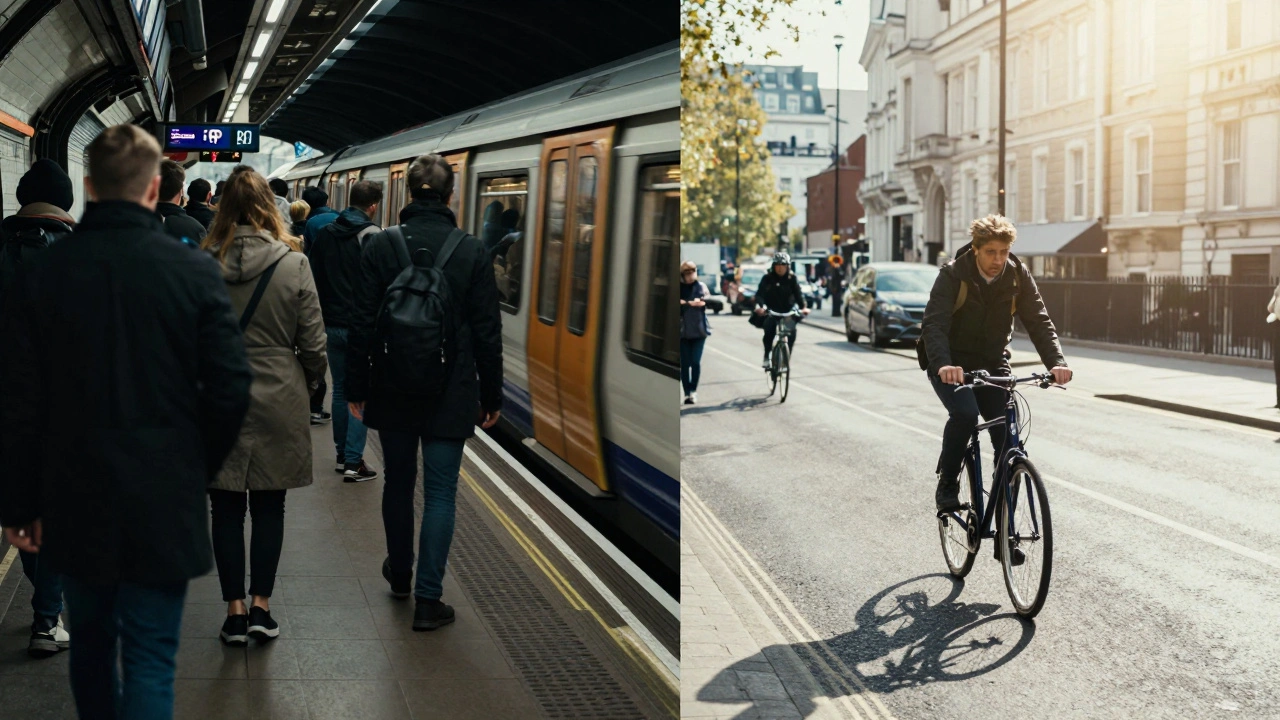
Key Takeaways for Your Commute
- Time: For journeys under 5 miles, cycling is often faster due to the lack of 'last mile' walking.
- Cost: Cycling saves an average of £1,200-£2,000 per year compared to a monthly travelcard.
- Stress: Cycling offers a 'mental reset' and physical activity, while the Tube can increase cortisol through crowding.
- Reliability: Bikes avoid signal failures and strikes, though they are vulnerable to punctures and rain.
The Great Time Debate: Minutes vs. Miles
When we talk about commute time, we usually look at the map. A trip from Canary Wharf to South Bank looks like a quick hop on the London Underground is a rapid transit system serving Greater London, the oldest underground network in the world. But the clock tells a different story. The 'Tube time' isn't just the time spent on the train; it's the walk to the station, the wait on the platform, and the trek from the exit to your desk.
For a 3-mile journey, a cyclist usually averages 10-12 mph. That's roughly 15-20 minutes of door-to-door travel. On the Tube, that same distance might take 10 minutes on the rails, but once you add the 10-minute walk each way and the wait time, you're looking at 30 minutes. In the heart of the city, London commuting by bike often wins the time race for anything under 5 miles. Once you hit the 8-10 mile mark, the Tube's speed advantage becomes undeniable, especially if you're crossing from Zone 1 to Zone 4.
| Distance | Cycling (Door-to-Door) | Tube (Door-to-Door) | Winner |
|---|---|---|---|
| 2 Miles | 10-12 mins | 20-25 mins | Cycling |
| 5 Miles | 25-30 mins | 25-35 mins | Tie / Cycling |
| 10 Miles | 50-60 mins | 35-45 mins | Tube |
The Financial Hit: Oyster Cards vs. Helmet Gear
Let's talk money. The cost of using Transport for London is the local government body responsible for the transport network in Greater London (TfL) is a significant monthly drain. If you're commuting from Zone 2 to Zone 1 daily, your monthly travelcard can easily eat through £150 or more. Over a year, that's nearly £2,000 just to get to work.
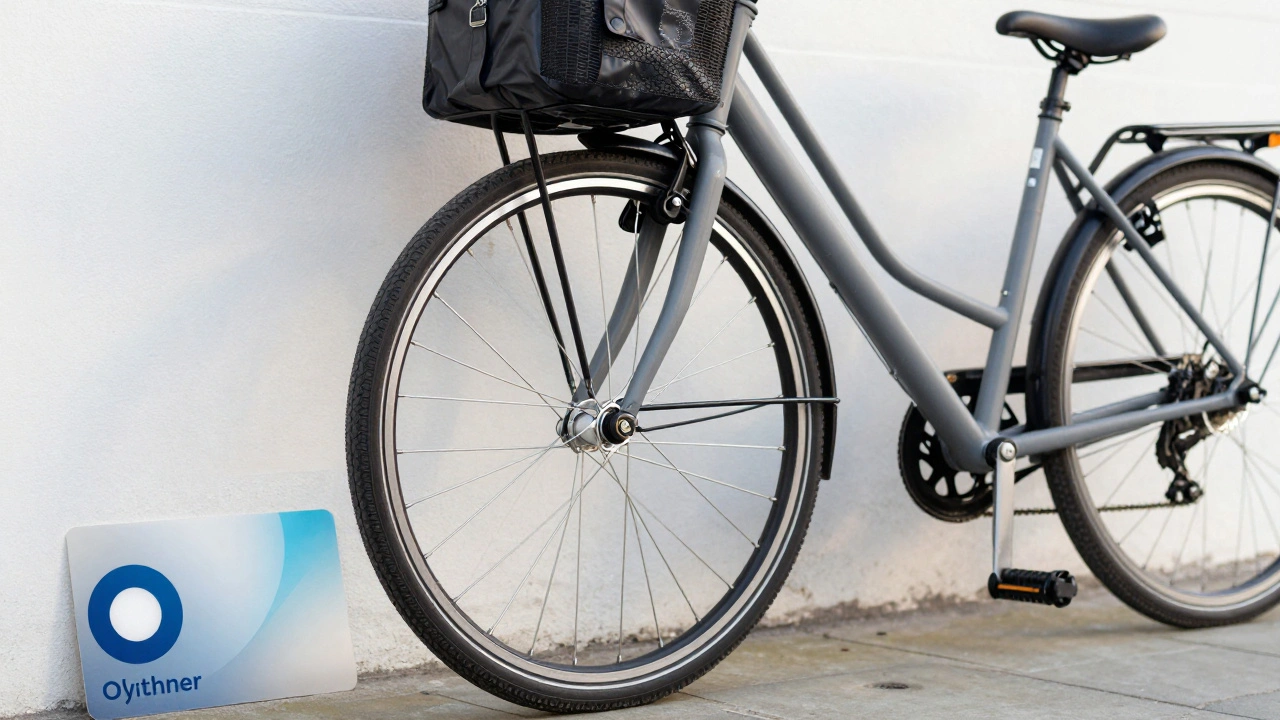
Cycling has a higher upfront cost. You need a decent bike, a lock that won't be snapped in seconds, and a set of waterproofs. A solid mid-range commuter bike and gear might cost you £600. After that, your costs drop to a few pounds a month for occasional tube replacements or a puncture kit. Even if you factor in a yearly service and new tires, you're saving over £1,000 in your first year alone. The only real 'hidden cost' is the potential need for a shower or a change of clothes at the office if you're powering through a humid August morning.
The Mental Game: Stress and Cortisol
Have you ever noticed how you feel when you step off the Tube? Often, it's a feeling of depletion. The sensory overload of the Central Line is one of the busiest lines on the London Underground, known for its high heat and congestion-the noise, the lack of personal space, and the unpredictable delays-triggers a stress response. This is what psychologists call 'commuter stress,' which can bleed into your first two hours of work.
Cycling flips this script. Instead of being passive in a crowded car, you're active. Physical exercise releases endorphins and clears the head. Using the Cycle Superhighways is segregated cycling routes designed to provide a safe and efficient way to travel through London allows you to zone out and enter a flow state. Rather than fighting for a seat on a train, you're navigating the city. While the traffic can be annoying, the feeling of autonomy-knowing you aren't stranded because of a signal failure at Bank station-is a massive psychological win.
The Reality of the London Elements
We can't ignore the rain. London is famous for it, and it's the biggest deterrent for cyclists. When a sudden downpour hits, the Tube feels like a sanctuary. However, the 'weather excuse' is often exaggerated. With a quality raincoat and waterproof trousers, the discomfort is minimal. The real challenge is the 'sweat factor.' If your office doesn't have showers, the Tube is the only sane option unless you're a very slow cyclist.
Then there's safety. London has made huge strides with segregated lanes, but the fear of traffic is real. The Tube is generally safer in terms of road accidents, but it carries the risk of the 'crowd crush' and the general grime of the underground. For most, the tradeoff is between the physical risk of the road and the mental drain of the tunnel.
Finding the Middle Ground: The Hybrid Approach
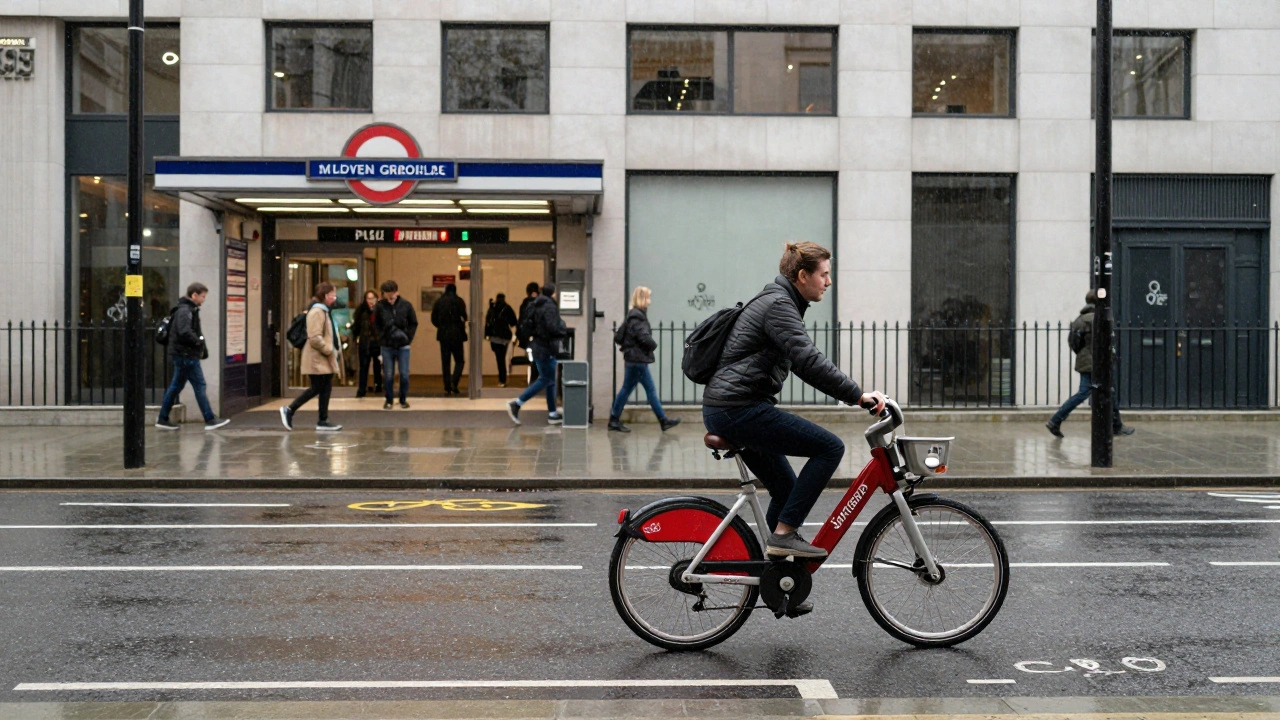
You don't have to choose one forever. Many Londoners use a hybrid system. They might cycle on sunny Tuesdays and Thursdays to get their exercise and save money, but take the Tube on Mondays to start the week fresh or on Fridays when it's raining. Combining this with Santander Cycles is the public bicycle hire scheme in London, providing thousands of bikes across the city allows you to bike one way and take the Tube back, avoiding the need to carry a bike on a crowded train.
If you're considering the switch, start with a 'trial week.' Try cycling on your shortest day of the week. Map out the quietest routes-not necessarily the shortest ones. Avoid the main arteries if you're nervous and look for the backstreets that parallel the main roads. You'll find that the city opens up in a way that the Tube simply can't provide.
Is cycling in London safe for beginners?
Yes, provided you stick to segregated lanes and Cycle Superhighways. Avoid the busiest main roads during peak hours until you're confident. Using a map app that highlights cycle-friendly routes is a great way to stay away from the most stressful traffic.
How do I handle the 'sweat' issue when cycling to work?
The trick is to ride at a 'conversational pace'-meaning you can talk without gasping for air. This prevents you from overheating. Additionally, carrying a change of shirt and using baby wipes for a 'sink shower' in the office works wonders if you don't have a full shower facility.
Which is cheaper in the long run?
Cycling is significantly cheaper. Even with a high-quality bike and maintenance costs, the annual savings compared to a monthly TfL travelcard are usually over £1,000. The only exception is if you have to buy a very expensive e-bike or high-end gear upfront.
What happens if my bike breaks down on the way to work?
Most cyclists carry a basic puncture kit or use a mobile repair service. In a pinch, you can always leave your bike at a secure lock-up and hop on the nearest Tube or bus to make it to your meeting on time.
Are e-bikes a good middle ground?
Absolutely. E-bikes remove the 'sweat factor' almost entirely and make longer commutes (6-10 miles) feel as easy as a 2-mile trip. They are more expensive than standard bikes but significantly cheaper than daily Tube fares over a couple of years.
Next Steps for Your Commute
If you're leaning toward cycling, your first step is a route audit. Use a map to find the 'quiet ways'-routes that avoid the busiest junctions. If you're terrified of the traffic, look into an e-bike to make the journey feel less like a workout and more like a breeze. For those staying with the Tube, try to optimize your timing-leaving just 20 minutes earlier can be the difference between a seat and a shoulder-to-shoulder struggle.