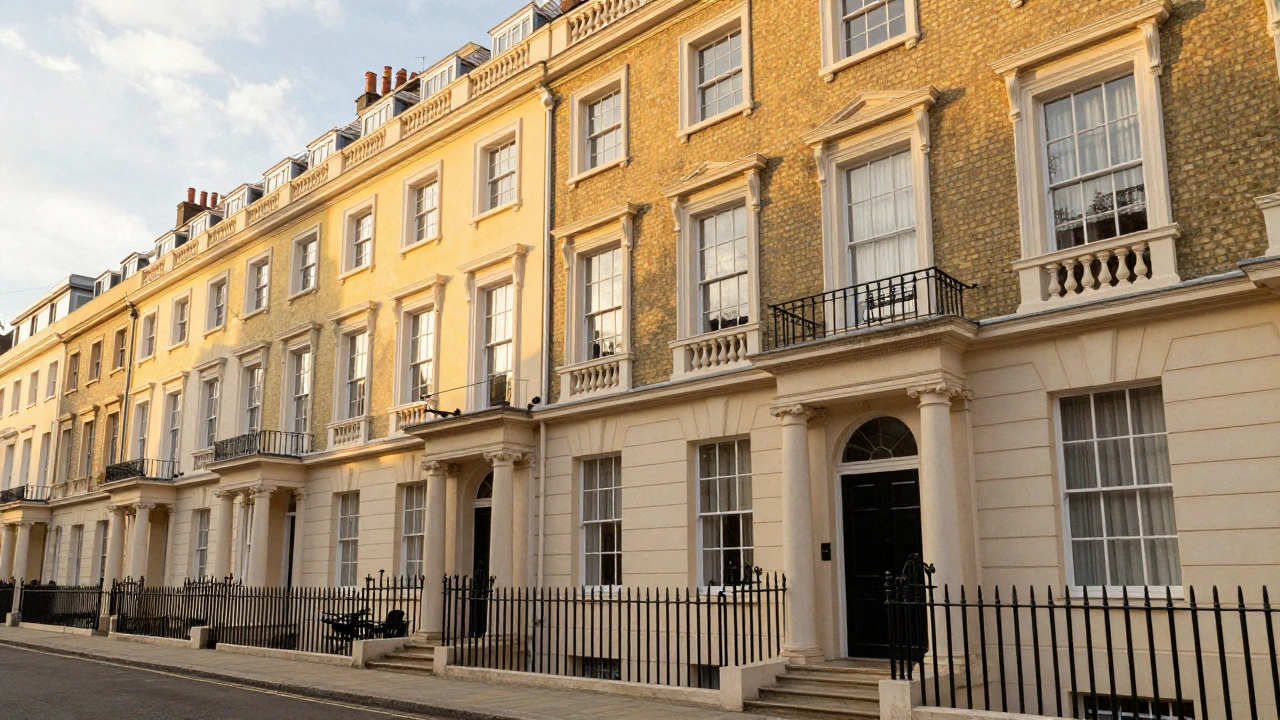
Walk down a quiet street in Mayfair or Fitzrovia, and you might feel like you’ve stepped into a period drama. The buildings stand tall and uniform, painted in soft creams or warm yellows, with sash windows that click shut and black railings that gleam under the streetlights. This is Georgian architecture, which defines much of central London’s built heritage through its symmetry, proportion, and restrained elegance. It was named after the four British kings named George who ruled between 1714 and 1830.
You don’t need an architecture degree to spot these buildings. They have a distinct rhythm. You see it in the way the facades line up perfectly, creating a sense of order that feels almost musical. But there is more to these houses than just pretty faces. They tell the story of how London grew from a medieval cluster of streets into a sprawling metropolis designed for comfort, status, and light.
Key Takeaways
- Georgian architecture spans from 1714 to 1830, characterized by symmetry, brickwork, and sash windows.
- London’s famous squares were designed as private gardens for residents, shaping social life for centuries.
- Period townhouses feature specific details like Portland stone doorcases and high ceilings that modern builds rarely replicate.
- Living in these homes today involves balancing historic charm with strict conservation regulations.
The Rise of the Georgian Square
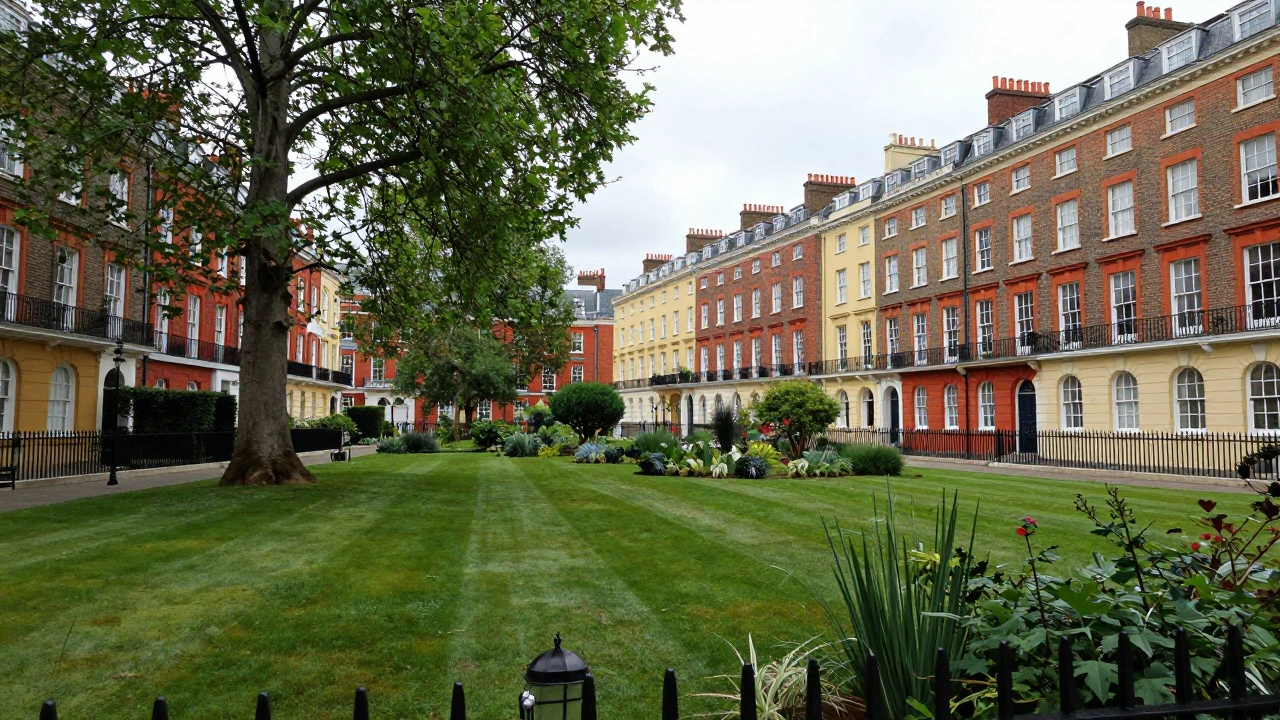
To understand the townhouse, you first have to look at the square. Before the Georgian era, London was crowded, dirty, and chaotic. The wealthy wanted space, air, and privacy. Enter the speculator. Developers like James Burton and John Nash didn’t just build houses; they built communities. They laid out grids around open green spaces, creating what we now call squares.
Take Bloomsbury Square, which was one of the earliest planned residential squares in London, developed in the late 17th century but defining the Georgian style. Or look at Hanover Square, which exemplifies the grand scale of mid-Georgian development in Marylebone. These weren’t public parks initially. They were private clubs. Only residents could enter the gates. This exclusivity created a unique social ecosystem. Neighbors knew each other because they shared the garden. It fostered a sense of community that was new to urban living.
The design followed strict rules. Houses faced inward toward the square, offering views of the green rather than the noisy street. The rear of the house faced the alleyways where servants and deliveries came and went. This separation of front and back stages is still visible today if you walk around the blocks in areas like Fitzrovia, which retains many intact Georgian terraces despite later Victorian infill.
Anatomy of a Georgian Townhouse
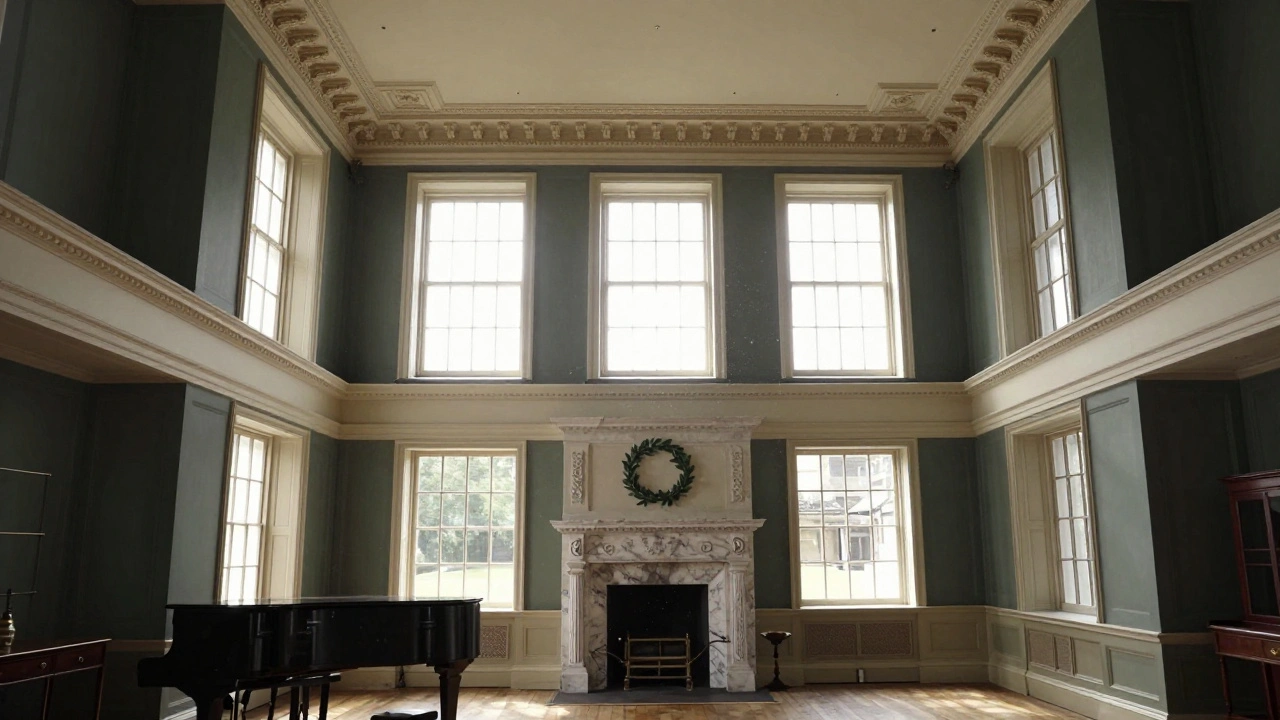
If you step inside one of these period properties, the layout tells a story of hierarchy. The ground floor was often used for business or storage. The real living happened on the first floor, known as the "piano nobile." This level had the highest ceilings, often over 11 feet, and the best light. It housed the drawing room and dining room, where hosts entertained guests.
Let’s break down the key features you should look for:
- Sash Windows: These vertical sliding windows are iconic. Early Georgian ones were small with many panes because glass was expensive. Later, in the Regency period (the final phase of Georgian), larger panes became common. Look for the subtle tilt of the frame, which helps them slide smoothly.
- Brickwork: Unlike the ornate stone carvings of earlier styles, Georgian builders favored red or yellow stock brick. The beauty lay in the precision of the bonding pattern, usually Flemish bond, where headers and stretchers alternate.
- Doorcases: The entrance is the jewelry box of the facade. Most feature Portland stone surrounds with pediments (triangular or curved tops) and fanlights above the door. These details signal wealth and attention to detail.
- Fireplaces: Every main room would have had a fireplace. Original mantels are often made of marble or wood with classical motifs like laurel wreaths or urns.
One thing to notice is the lack of ornamentation compared to the Baroque style that preceded it. Georgian architects believed in restraint. As the architect Robert Adam famously said, simplicity is the ultimate sophistication. This isn’t to say it’s boring. It’s disciplined. The proportions are mathematical, based on the golden ratio, which makes the buildings pleasing to the eye without shouting for attention.
Mayfair vs. Bloomsbury: Two Different Worlds
Not all Georgian architecture looks the same across London. The location dictated the scale and grandeur. If you want to see opulence, go to Mayfair. Here, the townhouses are massive. Think multi-story mansions with stables and coach houses attached. These were built for aristocrats and politicians who needed space for large staffs and frequent entertaining.
In contrast, Bloomsbury and parts of Clerkenwell offer a different vibe. These areas were developed slightly later and targeted academics, professionals, and the middle class. The houses are smaller, narrower, and less ostentatious. Yet, they retain the same architectural integrity. The difference is in the brick color-often darker red in Bloomsbury versus the pale yellow stock brick of Mayfair.
| District | Primary Era | Typical Resident (Historic) | Architectural Scale | Key Feature |
|---|---|---|---|---|
| Mayfair | Early-Mid Georgian | Aristocracy, Politicians | Grand, Wide Facades | Portland Stone Doorcases |
| Bloomsbury | Late Georgian | Academics, Professionals | Modest, Narrower | Red Brick Uniformity |
| Fitzrovia | Mid-Late Georgian | Middle Class, Artists | Varied, Intimate | Hidden Gardens |
| Hampstead | Regency | Wealthy Bourgeoisie | Villas, Detached | Views, Greenery |
Understanding these differences helps you navigate the city. If you’re looking for the grandest examples, stick to the West End. For a more human-scale experience, head north to Bloomsbury. Each area offers a different texture of history.
Living in a Period Property Today
Buying or renting a Georgian townhouse is a dream for many, but it comes with responsibilities. These buildings are protected. Most fall within Conservation Areas, meaning you can’t just knock down a wall or replace windows with modern PVC units. You need permission from the local council for any external changes.
This protection preserves the character but can make renovations tricky. Damp is a common issue. Old bricks breathe, unlike modern concrete. If you seal them up with non-breathable materials, moisture gets trapped, leading to rot and mold. You need specialists who understand lime plaster and traditional pointing techniques.
Then there’s the cost. Energy efficiency is low by modern standards. Single-glazed sash windows let heat escape. While you can install secondary glazing, it adds bulk. Heating an old house requires careful planning. Many owners opt for underfloor heating to avoid radiators that clash with the skirting boards.
Despite the challenges, the rewards are significant. The rooms are deep and well-proportioned. The natural light is excellent due to the large windows. And there’s a certain prestige associated with living in a building that has stood for 250 years. It connects you to the past in a tangible way.
Preservation and Modern Threats
London is changing fast. New developments often overshadow historic neighborhoods. Tall glass towers loom over quaint squares, casting shadows that change the microclimate. There’s also the pressure of commercialization. Ground floors of townhouses are increasingly converted into cafes and shops, altering the residential nature of streets.
Organizations like the Society for the Protection of Ancient Buildings (SPAB), which advocates for the sympathetic repair of historic structures using traditional methods, play a crucial role. They provide guidance and push back against insensitive alterations. Local councils also enforce strict guidelines, but enforcement can be inconsistent.
Another threat is neglect. Maintaining a period property is expensive. Some owners cut corners, using cheap materials that degrade quickly. This leads to a slow decline in the quality of the streetscape. It’s a delicate balance between preserving history and keeping buildings livable.
Exploring the Squares Yourself
You don’t need to live in a Georgian townhouse to appreciate it. Walk around. Notice the details. Stand in the center of a square and look up at the facades. See how the windows align? How the cornices run continuously along the roofline? Try to imagine the life that happened behind those doors two centuries ago.
Start with Russell Square, which offers a spacious green surrounded by elegant terraces and statues. Then move to Bedford Square, which is renowned for its uniformity and well-preserved interiors. In the east, Brunswick Square, which features a mix of Georgian and Victorian architecture, showing the evolution of style.
Pay attention to the gates. Many squares still have original iron railings. Some are locked, others are open to the public. The accessibility varies, but the exterior view is always free. Use your eyes. Look for the plaques on the walls. They often tell the story of famous residents who lived there.
What defines Georgian architecture?
Georgian architecture is defined by symmetry, proportion, and classical details. Key features include sash windows, brick facades, Portland stone doorcases, and flat roofs with parapets. It emphasizes order and restraint over ornate decoration.
Where can I find the best Georgian squares in London?
The best concentrations are in Mayfair, Bloomsbury, Fitzrovia, and Hampstead. Notable squares include Hanover Square, Bedford Square, Russell Square, and Hyde Park Gate. Each offers a slightly different character and scale.
Is it expensive to maintain a Georgian townhouse?
Yes, maintenance costs are higher than for modern buildings. You need specialized craftsmen for repairs, and materials like lime mortar and slate are costly. Energy efficiency upgrades also require careful, expensive solutions to comply with conservation rules.
Can I modify the exterior of a Georgian home?
Generally, no. Most Georgian buildings are in Conservation Areas or listed. Any external changes, including window replacements or painting, require planning permission from the local council. Unauthorized work can lead to fines and forced restoration.
What is the difference between Georgian and Regency architecture?
Regency is the final phase of Georgian architecture (roughly 1811-1837). It tends to be more ornate, with curved lines, Italianate influences, and larger windows. Georgian is stricter and more classical, while Regency shows a transition towards Romanticism.