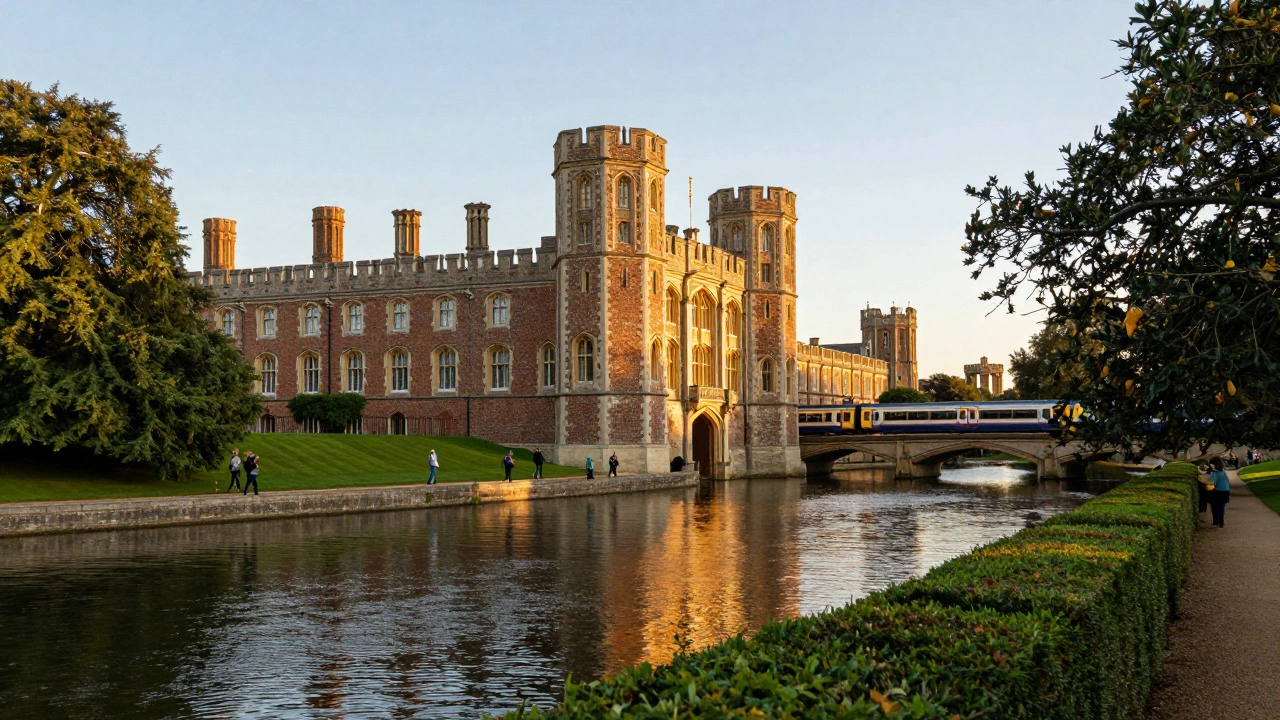
Just 20 minutes from central London, tucked between the River Thames and the quiet suburbs of Surrey, lies one of England’s most vivid slices of Tudor life: Hampton Court Palace is a former royal residence built in the early 1500s that became the favorite home of King Henry VIII and later a showcase of Baroque grandeur under William III. Also known as Hampton Court, it’s not just a palace - it’s a living museum of power, passion, and politics.
If you’ve ever wondered what life was like for kings and queens five hundred years ago, this place answers that question in stone, tapestry, and perfectly trimmed hedges. Unlike the cold, empty halls of some historic sites, Hampton Court feels alive - you can almost hear the echo of courtiers whispering, the clatter of horses in the courtyard, or the rustle of silk as Anne Boleyn walked these corridors.
How to Get There from London
You don’t need a car to visit. The easiest way is by train. Catch a South Western Railway service from London Waterloo Station - trains run every 15 minutes, and the ride takes just 18 to 22 minutes. You’ll get off at Hampton Court Station, and the palace is a five-minute walk from the platform. No taxi needed. No parking stress. Just hop on, sit back, and watch the city melt into green fields.
Or if you’re feeling adventurous, take the Thames Clippers riverboat from Westminster Pier. It’s slower - about 90 minutes - but you’ll glide past Tower Bridge, the Houses of Parliament, and the London Eye. Arriving by water feels like stepping into a period drama.
The Tudor Palace: Where Henry VIII Lived and Loved
Cardinal Thomas Wolsey, Henry VIII’s right-hand man, started building Hampton Court in 1514 as a luxurious country retreat. But when Wolsey fell out of favor, Henry seized the palace - and expanded it like a man who had just won the lottery.
By the 1530s, Hampton Court had 1,200 rooms. It had kitchens that cooked for 1,000 people daily. It had a tennis court (still there), a great hall with a 16th-century hammerbeam roof, and a chapel where Henry married Jane Seymour - the only wife who gave him a son and died shortly after.
Walk into the Great Hall and you’ll see the same oak beams that once held up tapestries of hunts and battles. The walls are lined with portraits of the Tudors - Henry’s six wives, his children, his ministers. The air smells faintly of beeswax and old wood. You’re not looking at a replica. You’re standing where real people lived, argued, and died.
Don’t miss the State Apartments. These rooms were designed to impress visitors. The ceilings are painted with gold leaf. The floors are made of imported marble. And the bedchambers? They’re smaller than you’d think. Royalty didn’t sleep alone - they had servants sleeping right outside the door, just in case they needed a chamber pot or a warm drink at 3 a.m.
The Gardens: A Masterpiece of Design
While the palace tells the story of kings, the gardens tell the story of control - how humans shaped nature to show off power.
The Formal Gardens were redesigned in the 1690s by William III and his wife Mary II. They hired French landscape architect André Le Nôtre - the same man who designed Versailles. The result? A geometric wonder of clipped yew hedges, fountains, and parterres laid out like chessboards.
Walk through the Privy Garden - restored in 2013 to its 1702 appearance - and you’ll see how the royal family relaxed. It’s quiet here, shaded by lime trees, with a central fountain that still sprays water using the same 17th-century hydraulic system. No pumps. Just gravity and clever pipes.
Then head to the Great Fountain Garden. It’s the showstopper. A 200-meter-long canal lined with statues, ending in a 12-meter-high fountain that shoots water 20 meters into the air. It’s the tallest working fountain in Europe. And yes - it still runs on pressure from a 17th-century water tower.
Don’t skip the Tennis Court. Henry VIII played here almost every day. He once broke his leg during a game. The court is still in use today - you can watch matches or even play if you book ahead.

The Maze: A Puzzle from the 17th Century
One of the most fun parts of the visit is the Hampton Court Maze. Built in 1690, it’s the oldest surviving hedge maze in the UK. It covers 1,200 square meters and has over a mile of pathways. Locals say it was designed to confuse courtiers - or maybe to test their patience.
It’s not hard, but it’s tricky. People get lost. Kids laugh. Adults get competitive. The goal? Find the center, where a stone throne sits under a yew tree. You’ll find it in 10 to 15 minutes if you keep left. Or you’ll wander for an hour. Either way, it’s worth it.
What Makes Hampton Court Different From Other Palaces?
Many royal palaces are museums. Hampton Court is a story.
At Windsor Castle, you see grandeur. At Buckingham Palace, you see ceremony. At Hampton Court, you feel the human side of monarchy. You see the kitchen where servants cooked 120 pies a day. You walk through the laundry rooms where clothes were scrubbed by hand. You stand in the room where Henry VIII’s second wife, Anne Boleyn, was accused of adultery - and where his third wife, Jane Seymour, gave birth to Edward VI.
It’s not polished. It’s messy. Real.
And the gardens? They’re not just pretty. They’re engineering marvels. The water system that powers the fountains was designed before steam engines existed. The maze? It’s a time capsule of how people amused themselves before TV.

Visiting Tips: What You Need to Know
- Best time to go: Weekdays in spring or early autumn. Crowds thin out, and the gardens are at their peak.
- Tickets: Buy online. You can save 15% and skip the queue. Adult tickets are £28.50 as of 2026.
- Don’t rush: You need at least 4 hours to see everything - 6 if you want to sit in the gardens and soak it in.
- Bring a jacket: The palace is drafty. Even in summer, the stone halls stay cool.
- Free audio guide: Download the official app. It’s packed with stories you won’t hear from signs.
- Food: The on-site café serves Tudor-inspired pies and ale. Or pack a picnic - there are perfect spots by the river.
Why This Place Still Matters
Hampton Court isn’t just about old buildings. It’s about how power was displayed, how people lived, and how beauty was forced into nature.
Henry VIII turned a cardinal’s house into a royal fortress. William III turned it into a palace of science and order. And today, it’s open to anyone with a train ticket.
It’s one of the few places in England where you can stand where kings died, where queens gave birth, where children played hide-and-seek in a maze - and where you can still hear the water splash in the fountain, just as it did in 1690.
How far is Hampton Court Palace from central London?
Hampton Court Palace is about 12 miles southwest of central London. By train from Waterloo Station, it takes just 18 to 22 minutes. It’s one of the easiest day trips from the city - closer than many people realize.
Is Hampton Court Palace worth visiting?
Absolutely. It’s one of the few royal palaces where you can walk through the actual rooms where Henry VIII lived, eat in the same kitchens, and stand where his wives walked. The gardens are equally impressive - with working fountains and the oldest surviving hedge maze in the UK. It’s history you can feel, not just read about.
Can you walk around the gardens for free?
No. Access to the gardens requires a palace ticket. The gardens are part of the historic site, not public parkland. But if you’re just passing by, you can see the outer courtyards and the riverfront from the public footpath - though you won’t get inside the maze or the fountains.
What’s the best season to visit Hampton Court Palace?
Spring (April-May) and early autumn (September-early October) are ideal. The gardens are in full bloom, the weather is mild, and crowds are thinner than in summer. Winter is quiet but chilly - the palace is open, but the fountains are turned off.
Are there guided tours at Hampton Court Palace?
Yes. Free guided tours run daily and cover the State Apartments, the kitchens, and the gardens. They last about 30 minutes and are led by knowledgeable volunteers. You can also rent an audio guide or download the official app for self-paced exploration.