
When you’re visiting London, the last thing you want is to get sick or hurt and not know where to turn. Whether it’s a bad cold, a twisted ankle, or something more serious, knowing how the UK’s healthcare system works can save you time, stress, and money. The good news? London has one of the most accessible public health systems in the world. The bad news? It’s not always obvious how visitors are supposed to use it.
Do you need to pay for healthcare in London?
If you’re from the European Union, Iceland, Liechtenstein, Norway, or Switzerland, you can get free emergency and urgent care with a valid European Health Insurance Card (EHIC) or Global Health Insurance Card (GHIC). These cover treatment that can’t wait until you get home - like broken bones, infections, or asthma attacks.
Visitors from other countries? You’ll likely have to pay. The UK charges non-residents for most NHS services, unless you’re from a country with a reciprocal healthcare agreement (like Australia, New Zealand, or some others). Even if you’re covered, you still need to know where to go - because not every clinic accepts visitors.
Travel insurance is your best friend here. Most good policies cover emergency medical care, hospital stays, and even medical evacuation. If you didn’t buy insurance before arriving, get it now. Some providers let you buy coverage even after you’ve landed - just check the fine print.
How to find a GP (family doctor) as a visitor
In the UK, you don’t just walk into a doctor’s office and see someone. You need to register with a General Practitioner - or GP - for non-emergency care. But here’s the catch: most GPs won’t register tourists or short-term visitors. They’re only required to treat people who live in their area.
So what do you do if you’re sick but it’s not an emergency? Head to a walk-in center or urgent care clinic. These are designed for people without a GP. You can find them in pharmacies, hospitals, or standalone buildings. No appointment needed. Just show up.
To find one near you, search for “urgent care London” on Google Maps or use the NHS website. Look for places marked as “Walk-in Centre” or “Urgent Treatment Centre.” They handle things like ear infections, cuts that need stitches, rashes, and minor injuries. They’re open evenings and weekends - perfect for travelers.
Pharmacies are another key resource. In London, most pharmacies have a Pharmacist Consultation Service. You can walk in with a cold, sore throat, or upset stomach, and they’ll give you advice or over-the-counter medicine - often for free if you’re eligible. Just ask: “Can I see the pharmacist?”
What counts as an emergency?
Emergency means life-threatening. Think: chest pain, trouble breathing, severe bleeding, head injury with confusion, stroke symptoms (face drooping, arm weakness, speech trouble), or a serious allergic reaction. If you’re not sure, it’s better to call than wait.
For true emergencies, call 999 or go straight to the nearest A&E (Accident & Emergency) department. Every major hospital in London has one. Popular ones for visitors include:
- St Thomas’ Hospital (near Westminster)
- University College Hospital (near Euston)
- King’s College Hospital (near Elephant & Castle)
- Royal London Hospital (in Whitechapel)
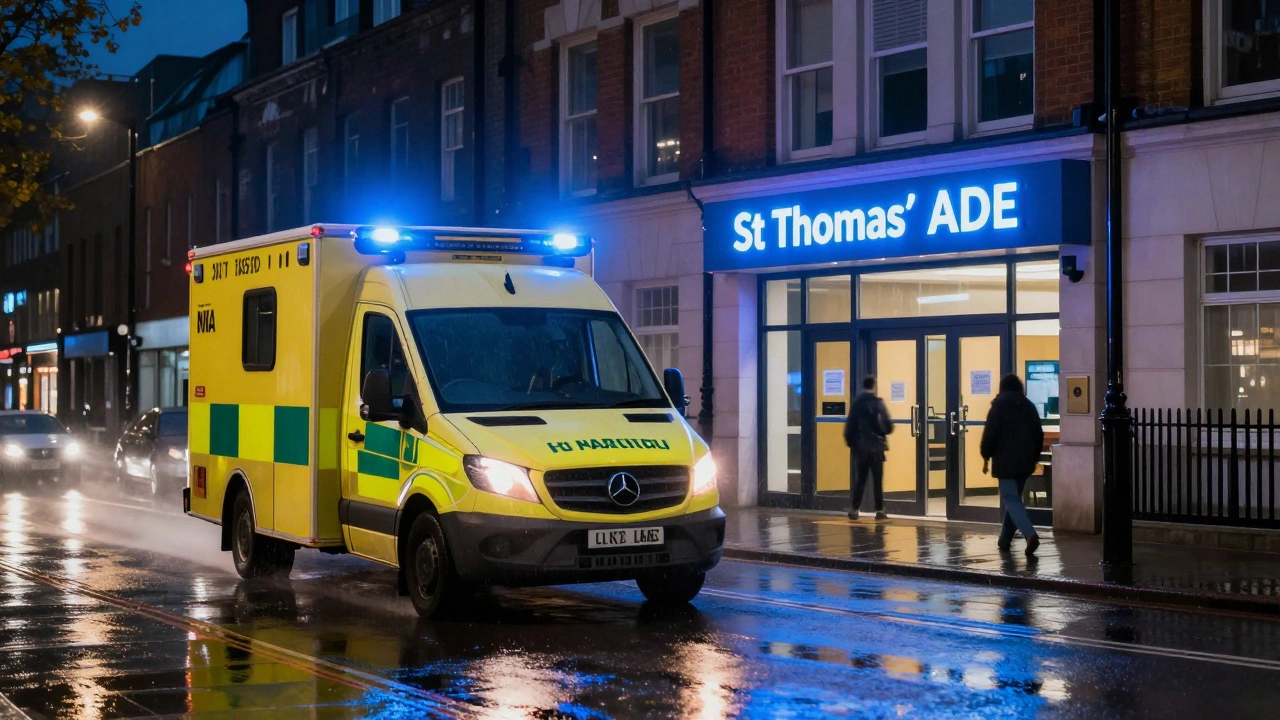
Don’t drive yourself if you’re seriously unwell. Ambulances are free for emergencies - even for visitors. When you call 999, they’ll ask what’s wrong and send help. They don’t ask for your passport or insurance card on the spot.
What if you need a prescription?
If a doctor gives you a prescription, you’ll need to pay for it - unless you’re exempt. The standard charge in England is £9.65 per item (as of 2025). That’s not cheap if you need multiple meds.
But here’s a trick: if you’re staying longer than three months or have a chronic condition, ask if you can get a Prescription Prepayment Certificate (PPC). It costs £111.60 for three months or £314 for a year. If you need more than 11 items in that time, it pays for itself.
Pharmacies are everywhere. Look for signs that say “Pharmacy” or “Chemist.” Most are open until 8 PM, and some are open 24 hours - especially in central areas like Oxford Street or near train stations.

What you can’t get for free as a visitor
The NHS doesn’t cover everything for non-residents. Here’s what you’ll usually pay for:
- GP appointments (unless you’re registered)
- Dental care (except emergency extractions)
- Eye tests and glasses
- Non-urgent mental health counseling
- Some vaccines (like travel shots)
If you need dental care, don’t wait. Emergency dental treatment is available through NHS Urgent Dental Care Centres. You can find them by calling NHS 111 or searching online. They’ll see you even if you’re not registered.
For mental health, if you’re in crisis, you can still go to A&E or call 111. But routine therapy? You’ll need private care. Apps like BetterHelp or local private clinics (like The Priory) offer sessions - but they cost £60-£120 per hour.
How to get help fast without knowing English
Language shouldn’t be a barrier. Most hospitals and urgent care centers in London have interpreters on call - either in person or over the phone. When you arrive, say: “I need an interpreter.” They’ll arrange it.
You can also call NHS 111 - the non-emergency medical helpline. Press 0 if you need help in another language. Operators can connect you to translators in over 200 languages. It’s free, 24/7, and works from any phone, even without a UK SIM card.
Download the NHS App before you arrive. It lets you book appointments, check symptoms, and find services - and it supports multiple languages. Even if you can’t use it right away, having it installed saves time later.
What to carry with you
Always keep these handy:
- Your passport or ID
- Travel insurance details (policy number, emergency contact)
- EHIC/GHIC card (if you have one)
- Any regular medications in original packaging
- A list of allergies or medical conditions
It sounds basic, but people forget. If you’re diabetic, have a heart condition, or take blood thinners, write it down. Show it to staff. It can change how fast you’re treated.
Common mistakes visitors make
Here’s what not to do:
- Don’t assume your home country’s insurance covers you in the UK - check before you go.
- Don’t go to a regular GP expecting to register as a tourist - they’ll turn you away.
- Don’t wait until you’re in pain to look up urgent care centers - know where they are before you need them.
- Don’t use 999 for non-emergencies. It ties up resources for people who are truly in danger.
- Don’t skip the pharmacist. They’re trained, licensed, and often faster than waiting for a doctor.
The NHS is designed to be simple - but only if you know the rules. Visitors aren’t supposed to use it like residents. But you’re absolutely allowed to use it for urgent and emergency care. Just know your limits.
What to do if you’re turned away
Sometimes, you’ll get a “no” - especially if you’re not registered and the clinic thinks you’re not eligible. Don’t panic. Ask: “Can you refer me to an urgent care center?” or “Can I speak to a supervisor?”
If you’re denied emergency care, that’s illegal. The NHS must treat anyone in immediate danger, no matter their status. If you’re refused, call 111 and explain what happened. They’ll help you find the right place.
Most staff are kind and want to help. They’re used to travelers. Just be clear, stay calm, and have your documents ready.
Can I use the NHS if I’m just visiting London for a week?
Yes - for emergencies and urgent care. The NHS treats everyone in life-threatening situations, no matter where you’re from. But for non-emergency care like colds or minor injuries, you’ll need to go to a walk-in center or pharmacy. Don’t try to register with a GP - they won’t accept short-term visitors.
Is healthcare in London free for tourists?
Only for emergencies. If you’re from the EU, Iceland, Liechtenstein, Norway, or Switzerland with a valid EHIC/GHIC, you get free urgent care. Everyone else pays for non-emergency treatment. Travel insurance is essential - it covers most costs and saves you thousands.
What number do I call if I’m sick but it’s not an emergency?
Call NHS 111. It’s free, available 24/7, and staff can connect you to urgent care centers, pharmacists, or even interpreters. You don’t need a UK phone number - it works from any mobile or landline.
Can I get a prescription in London without a GP?
Yes - if you’re seen at an urgent care center or A&E, they can give you a prescription. You’ll pay £9.65 per item unless you qualify for free meds. Pharmacies will fill it right away. No GP needed.
Do I need to show my passport to get medical care?
Not always - but it helps. In emergencies, staff treat you first. Later, they may ask for ID or insurance details to bill you. Keep your passport, EHIC/GHIC, and insurance card together in one place. It makes things smoother.
Final tip: Plan ahead
Before you leave home, check your travel insurance. Know the nearest urgent care centers to your hotel. Save NHS 111 in your phone. Download the NHS App. Carry your meds in original bottles.
London’s healthcare system works - if you know how to use it. You don’t need to be a resident to get help. You just need to know where to go, who to call, and what to bring. Stay calm, be prepared, and you’ll be fine.