Most tourists in London head straight for the British Museum, the Tate Modern, or the Victoria and Albert. But if you’ve already seen those, or if you just want to escape the crowds, there’s a whole other side of London’s museum scene waiting for you. These aren’t just small museums-they’re fascinating, oddly specific, and often deeply human places that tell stories you won’t find anywhere else.
The Sir John Soane’s Museum
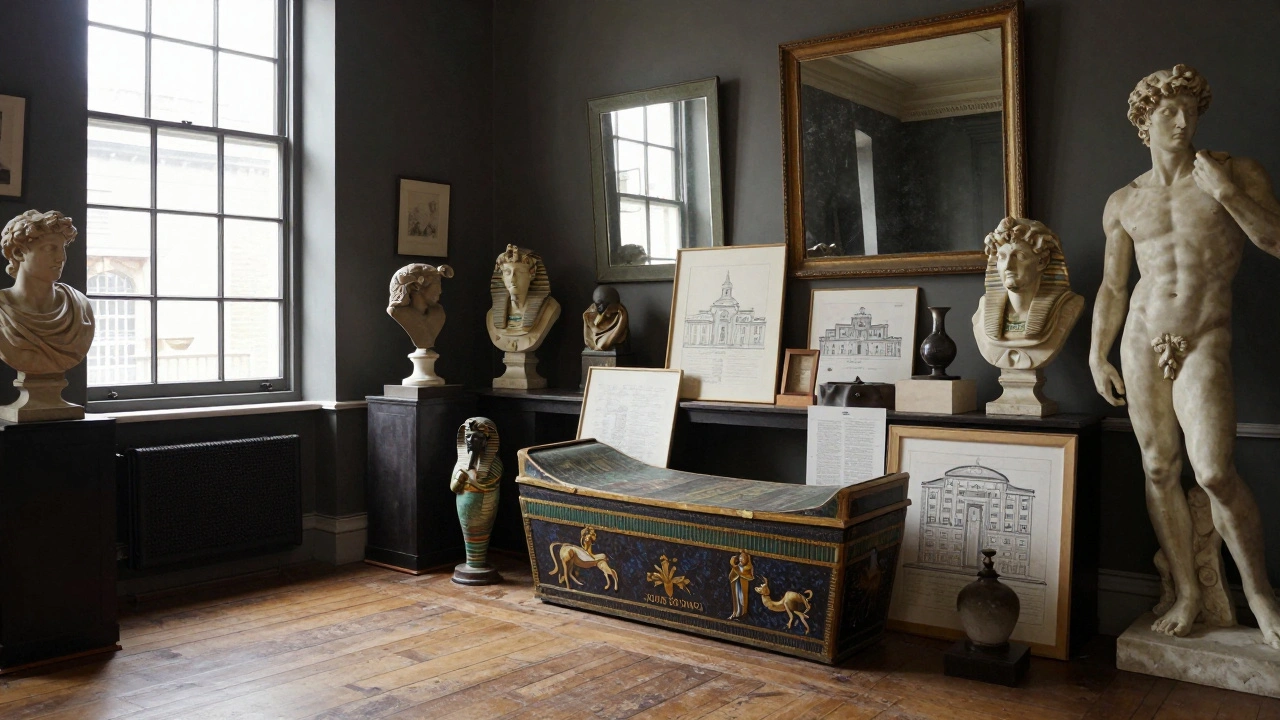
Imagine walking into a house that looks like a museum, but is actually a home-and then realizing the home itself is the exhibit. That’s Sir John Soane’s Museum in Holborn. Soane, an architect who designed the Bank of England, spent his life collecting artifacts: Roman sculptures, Egyptian relics, architectural drawings, even the tomb of an Egyptian prince. He packed every inch of his home with them, stacking shelves, hanging mirrors, and building secret passageways. There’s no signage telling you what to look at. You wander, and things reveal themselves-a plaster cast of Michelangelo’s David, a 2,000-year-old sarcophagus, or a ceiling painted with constellations.
It’s not curated. It’s lived-in. And it’s free. No timed tickets. No lines. Just you, the echoes of the 1800s, and a whole lot of wonder.
The Grant Museum of Zoology
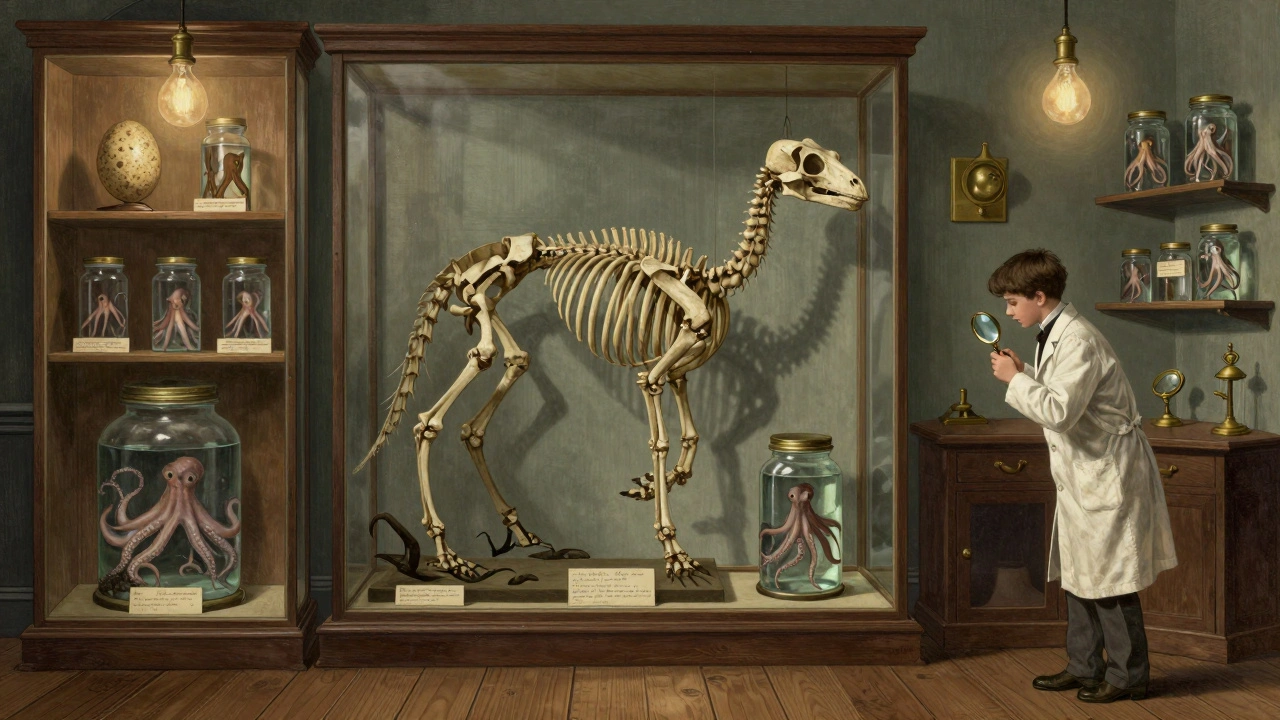
Underneath the UCL library in Bloomsbury lies a room that feels like a Victorian science lab that time forgot. The Grant Museum of Zoology holds over 68,000 animal specimens, from a single quagga (one of only 11 known in the world) to jars of preserved octopuses and a giant moa egg. It’s not glamorous. The glass cases are old. The labels are handwritten. But that’s the point.
This isn’t a museum for tourists. It’s a teaching collection, still used by biology students today. You’ll see the skeleton of a thylacine-the last Tasmanian tiger-hanging in the corner. A dodo bone. A jar labeled “Pig’s Heart, 1840.” It’s weird. It’s raw. And it’s one of the most honest displays of natural history you’ll ever see.
The Museum of Brands, Packaging & Advertising
Ever wonder how a soap box from 1897 became a cultural artifact? The Museum of Brands in Notting Hill has over 12,000 items tracing the evolution of consumer culture since 1850. Walk through recreated Victorian grocery stores, 1960s kitchens, and 1980s living rooms-all filled with real packaging: Kellogg’s Corn Flakes from 1903, the first Coca-Cola bottle, a 1970s Tamagotchi prototype.
It’s not about luxury. It’s about memory. You’ll find your childhood cereal box. The shampoo your mum used. The toothpaste that came in a tube with a flip-top. This museum makes you feel like you’ve time-traveled through your own life. And it’s surprisingly emotional.
The Fan Museum in Greenwich
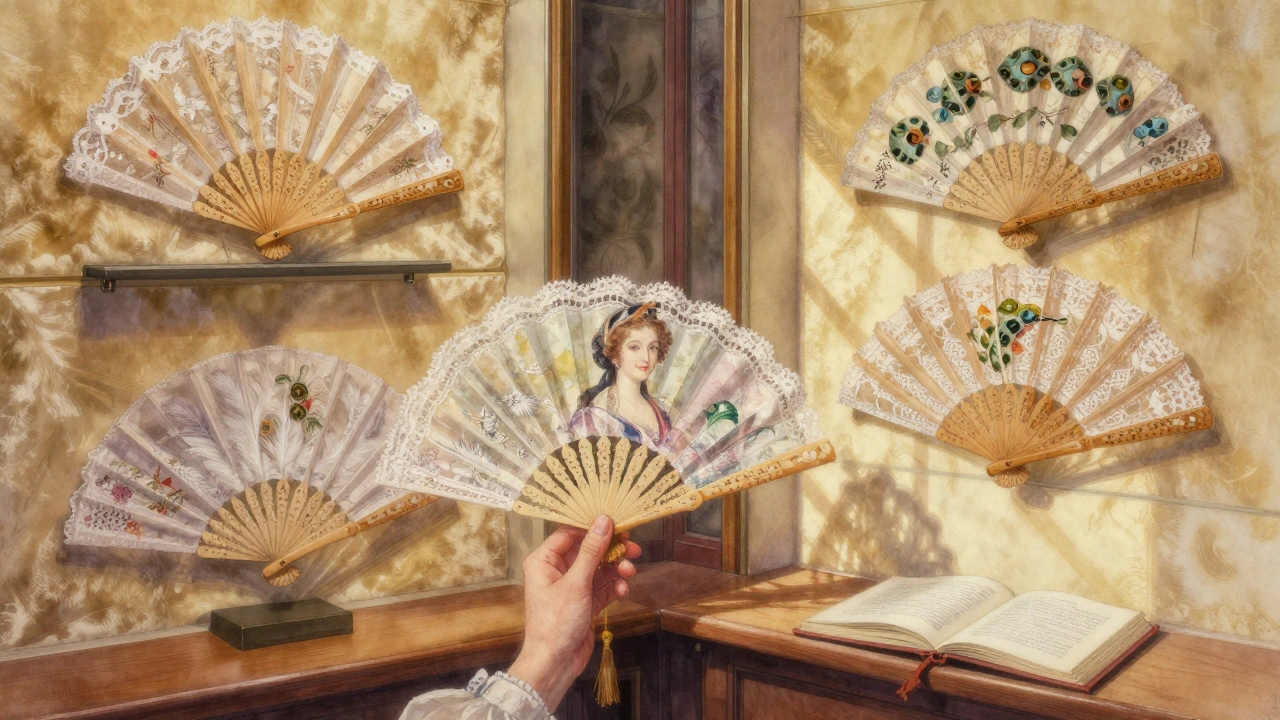
It sounds silly. A museum about fans? But this tiny, sunlit building in an 18th-century house holds over 6,000 fans from across the world. Chinese silk fans from the Ming Dynasty. Japanese lacquered ones. Victorian lace fans with hidden messages. One from 1780 even has a miniature painting of Marie Antoinette on it.
There’s a whole room dedicated to fans made from feathers, paper, and even turtle shell. You’ll learn how fans were used to signal romance, status, or even rebellion. In 18th-century Europe, a woman could say “I love you” just by how she held her fan. The museum hosts live fan-dancing workshops and talks on fan-making traditions in China and India. It’s quiet. It’s delicate. And it’s completely unforgettable.
The Wallace Collection
People don’t talk about this one enough. Housed in a grand London townhouse, the Wallace Collection is the private art collection of a 19th-century English aristocrat. You’ll find 18th-century French furniture, Renaissance armor, and over 200 paintings by Velázquez, Rembrandt, and Titian. But what makes it special? It’s not just the art-it’s the setting.
The collection was never meant for the public. It was kept in a home. And it still feels like one. The rooms have original fireplaces, chandeliers, and carpets. You can sit on the couch in the Long Gallery. You can read the letters on the desk. The museum doesn’t have a gift shop. There’s no audio guide. Just you, the art, and the silence.
The London Museum of Water & Steam
It sounds boring. Water? Steam? But this museum, tucked into Kew, is one of the most surprising places in London. It’s housed in a former Victorian pumping station that once supplied water to the city. Inside, you’ll find the world’s largest working beam engine-the 1838 Grand Junction 90-inch engine-that still runs on steam every weekend.
They let you stand right next to it as it thunders to life. The noise is deafening. The steam billows. The pistons move like giant arms. There’s a whole gallery on how London’s water system changed public health, and how cholera outbreaks led to the first modern sewage systems. It’s engineering. It’s history. And it’s thrilling.
Why These Places Matter
These aren’t just alternatives to the big museums. They’re reminders that museums don’t need to be massive to be meaningful. They don’t need millions of visitors. They just need to care deeply about something.
Each of these places was built by someone obsessed-by architecture, by a single type of fan, by the history of soap packaging. They weren’t built for Instagram. They were built because someone wanted to preserve a piece of the world that no one else thought was worth saving.
And that’s why they stick with you. You won’t find them in travel brochures. But if you’ve got a few spare hours in London, skip the crowds. Go where the passion lives.
How to Visit
- Most of these museums are free or ask for a voluntary donation.
- Some require booking in advance-check their websites. The Sir John Soane’s Museum, for example, limits visitors to 100 per day.
- They’re all easy to reach by public transport. No need for a car.
- Bring a notebook. You’ll want to remember what you saw.
Final Thought
London’s greatest treasures aren’t always the ones with the longest lines. Sometimes, they’re the quiet ones- tucked into alleyways, basements, and old houses-waiting for someone to walk in, look around, and say: I didn’t know this existed. And now, neither will anyone else.
Are these hidden museums really worth visiting?
Absolutely. These museums aren’t just small-they’re deeply personal. While the big museums show you what society values, these hidden ones show you what one person cared enough to save. You’ll leave with stories, not just photos. A quagga skeleton, a Victorian fan with a secret message, or a steam engine that still runs-these are the moments you remember.
Do I need to pay to visit these museums?
Most are free or request voluntary donations. The Sir John Soane’s Museum and the Fan Museum are free, but require advance booking. The Grant Museum is free, though donations help keep the specimens preserved. The Museum of Brands charges £10, but it’s worth every penny. The Wallace Collection and the London Museum of Water & Steam are free to enter, though special exhibits or engine runs may have a small fee.
Can I visit all of these in one day?
Not really-and you shouldn’t try. Each museum deserves time. Spending 45 minutes at the Grant Museum, an hour at the Wallace Collection, and 30 minutes at the Fan Museum is more rewarding than rushing through four places. Pick one or two that match your interests. A fan lover? Go to Greenwich. A history buff? Soane’s Museum. A tech geek? The Water & Steam museum. Quality beats quantity.
Are these museums kid-friendly?
Some are, some aren’t. The Grant Museum and the Museum of Brands are great for curious kids-the weird specimens and old packaging spark questions. The Fan Museum is delicate and quiet, so better for older children. The Wallace Collection is elegant but not interactive. The London Museum of Water & Steam is perfect for kids who love machines. Always check ahead-some places have special family days or hands-on activities.
What’s the best time to visit these hidden museums?
Weekday mornings are ideal. The Sir John Soane’s Museum opens at 10am, and it’s quietest before noon. The Grant Museum is empty on Tuesdays. The Fan Museum is calm in late afternoons. Avoid weekends unless you’re okay with a few other visitors. Also, check if the museum has special events-like the steam engine running at the Water & Steam museum on weekends. Those are the moments you’ll never forget.