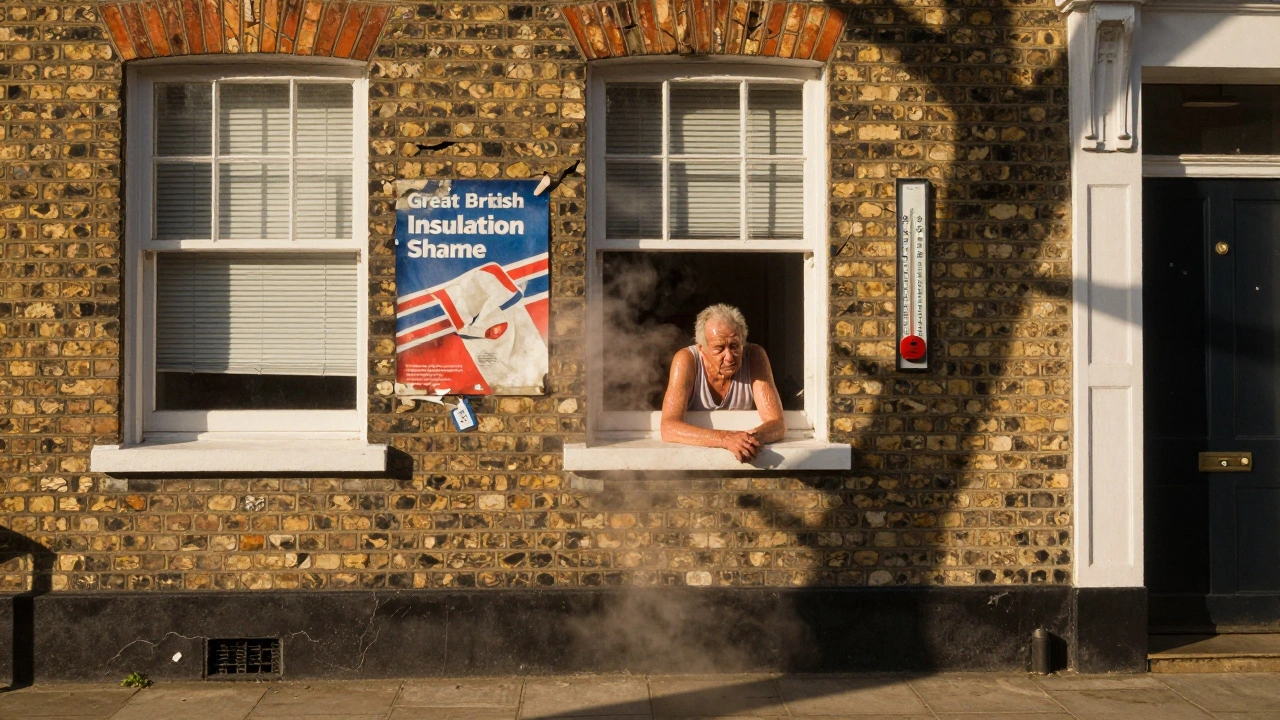
By 2030, London won’t just be dealing with more traffic or higher rents-it’ll be grappling with water rising in basements, trains slowing down because of overheated rails, and homes that no longer meet safety standards because of extreme heat. Climate change isn’t a distant threat for the city. It’s already here, and its impact on housing and infrastructure is accelerating faster than most planners expected.
London’s homes are getting too hot to live in
Over 40% of London’s homes don’t have air conditioning, and most were built before anyone thought about summer temperatures hitting 40°C. In 2022, the UK recorded its hottest day ever at 40.3°C, and heatwaves like that are now expected every other year by 2030. The problem? Older brick and stone buildings trap heat. Without proper insulation or ventilation, indoor temperatures can soar 10°C above outside levels. Elderly residents, children, and people with chronic illnesses are at highest risk.
Some new builds are starting to adapt. Developers like Berkeley Group and Barratt are now required to meet stricter thermal performance standards under the 2025 London Plan. New homes must include passive cooling features-shading, cross-ventilation, thermal mass-and use materials that reflect rather than absorb heat. But retrofitting 3 million existing homes? That’s a different story. The cost to insulate a single terraced house properly can run £8,000-£15,000. Most landlords won’t pay it unless forced. And renters? They’re stuck with sweltering flats and no power to demand change.
Floods are no longer rare-they’re routine
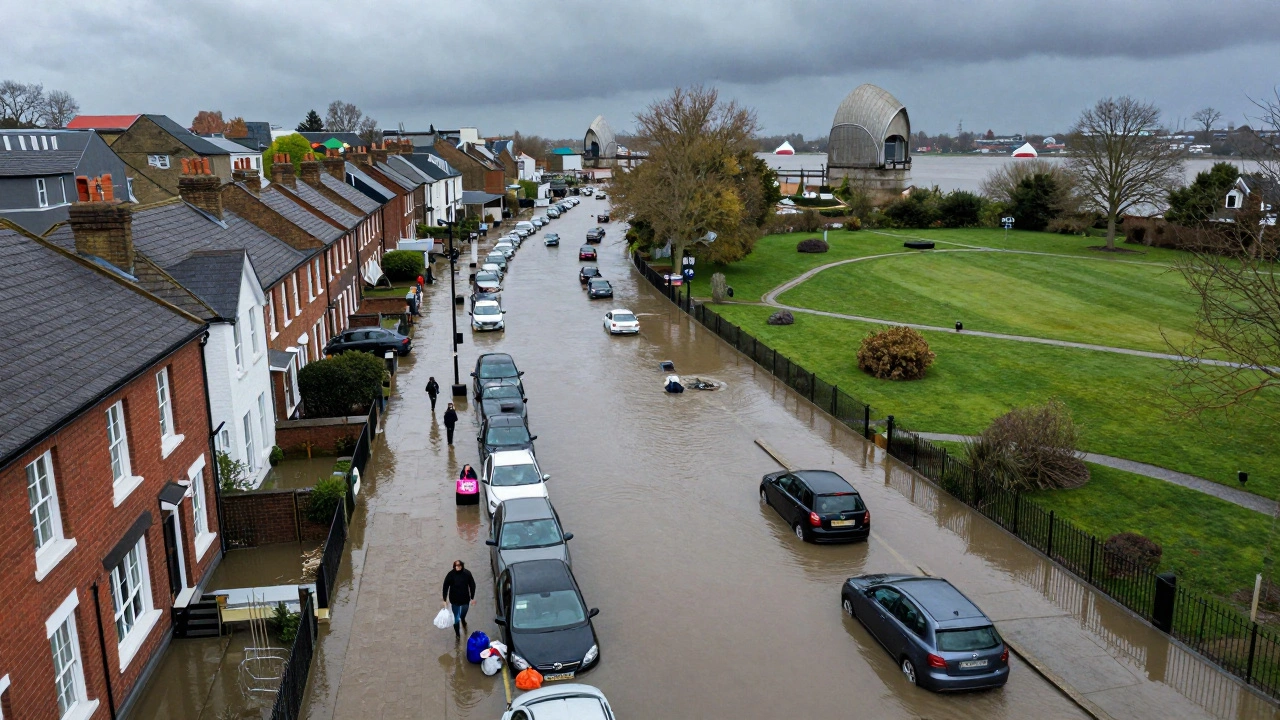
The Thames Barrier was built in 1984 to protect London from a once-in-a-century flood. By 2030, it’ll likely need to close every 2-3 years, not every 10-20. Sea levels have already risen 18cm since 1900, and projections show another 25-45cm by 2030. Combined with heavier rainfall-up to 30% more intense storms in the next five years-low-lying areas like Lewisham, Barking, and parts of Greenwich are becoming flood hotspots.
Insurance companies are taking notice. Flood risk zones are now mapped in real time by the Environment Agency, and homes in high-risk areas are seeing premiums jump 40-60% since 2020. Some lenders are refusing mortgages in zones marked as ‘high probability of flooding’ under the new 2025 Flood Risk Assessment guidelines. That means people who bought homes in places like Woolwich or Stratford five years ago might find they can’t sell-or can’t get a loan to fix damage after the next big storm.
There’s a push for ‘sponge city’ solutions: permeable pavements, green roofs, rain gardens. New developments like the Old Oak Common regeneration project include underground water storage tanks and bioswales to absorb runoff. But these are expensive. And they’re not being rolled out fast enough across the city’s aging neighborhoods.
Transport is breaking down under the heat
London’s Tube trains are designed to run safely up to 32°C. When temperatures hit 38°C, as they did in 2022 and 2023, the rails expand. Signals fail. Trains slow down or stop. In 2024 alone, TfL reported over 200 heat-related delays-more than in the previous five years combined.
Underground lines are especially vulnerable. Tunnel walls absorb heat, and ventilation systems are outdated. The Jubilee and Northern lines, which run deepest, are the worst affected. Plans to install cooling systems on 10 key stations by 2027 are underway, but only 20% of the network will be covered by 2030. Meanwhile, surface rail lines like those through Croydon and Sutton are being resurfaced with heat-resistant ballast, but the cost is £2.3 million per mile. The government has allocated £1.1 billion for rail upgrades through 2030-half of what experts say is needed.
Buses aren’t safe either. Over 60% of London’s bus fleet still runs on diesel, and the engines overheat in prolonged heat. Electric buses are being added, but only 1,000 of the 9,000-strong fleet are electric as of 2025. Charging stations are sparse, and battery life drops 25% in 35°C+ weather. Commuters are spending more time waiting-and more money on taxis.
Energy grids are under strain
When it’s hot, people turn on fans, air conditioning, and fridges. That spikes demand. In July 2023, London’s peak electricity demand hit 6.2 gigawatts-nearly 15% higher than the previous record. The grid, designed for a cooler climate, is now operating at 92% capacity during heatwaves. Blackouts are rare, but localized outages in Tower Hamlets and Southwark have increased by 300% since 2020.
Smart meters and demand-response programs are being rolled out, encouraging households to shift usage to off-peak hours. But not everyone can. Low-income families can’t afford to wait until midnight to run the washing machine. And many can’t afford solar panels or home batteries, which cost £5,000-£10,000 installed. The government’s ‘Warm Homes Discount’ doesn’t cover cooling costs. So the heat falls hardest on those who can least afford it.
What’s being done-and what’s falling behind
The Mayor’s Climate Change Strategy for 2030 includes targets for 100% zero-carbon housing, 80% reduction in flood risk, and 100% electric buses. But targets aren’t the same as action.
Progress is uneven. New developments in Canary Wharf and King’s Cross are climate-resilient by design-raised foundations, green roofs, on-site renewable energy. But in places like Brixton or Hackney, where regeneration has been slow, homes still sit on floodplains with no flood defenses. Retrofitting these areas requires funding, political will, and community buy-in-and all three are missing in too many places.
There’s also a lack of data. We know how many homes are at risk of flooding. But we don’t know exactly how many will become unlivable due to heat by 2030. The UK’s Building Research Establishment estimates 1.2 million homes in London could exceed safe indoor temperatures during summer. That’s nearly a third of the city’s housing stock. No one’s tracking that number closely enough to act.

What you can do now
If you own a home in London, here’s what to consider before 2030:
- Check your flood risk using the Environment Agency’s online map. If you’re in a high-risk zone, talk to your insurer and consider raising electrical sockets and installing non-return valves on drains.
- Improve insulation-even basic loft insulation can cut summer heat gain by 30%. Look for local grants like the Great British Insulation Scheme.
- Install window shading-external blinds or reflective films are cheaper than AC and work better.
- Join your local resilience group. Many boroughs now have community flood teams or heat action networks. They help with emergency plans and funding applications.
If you’re renting, ask your landlord for improvements. Under the 2025 Minimum Housing Standards, landlords must ensure homes don’t exceed 26°C during heatwaves. That’s a legal requirement now. If they refuse, report it to your local council’s environmental health team.
The bottom line
By 2030, London’s housing and infrastructure will look different-but not because of fancy tech or bold visions. It’ll change because people got tired of sweltering flats, flooded basements, and broken trains. The city has the tools to adapt. What’s missing is the urgency. If nothing changes, the cost won’t just be in pounds-it’ll be in health, safety, and fairness. Those who can afford to move out will. Those who can’t? They’ll be left holding the bill for a city that didn’t prepare for its own future.
Will my home be affected by flooding by 2030?
If your home is in a low-lying area near the Thames or a major river like the Lea, yes-there’s a high chance. Areas like Barking, Greenwich, and parts of Tower Hamlets are projected to see flood events every 2-3 years by 2030. Use the Environment Agency’s flood map to check your postcode. Even homes outside official flood zones can experience surface water flooding during heavy rain.
Can I get financial help to make my home climate-resilient?
Yes, but it’s limited. The Great British Insulation Scheme offers up to £5,000 for loft and wall insulation. Some boroughs, like Camden and Islington, have local grants for window upgrades or rain gardens. The Energy Company Obligation (ECO) scheme helps low-income households with heating and cooling improvements. Check your eligibility on the gov.uk website or contact your local council’s housing advice team.
Are new homes in London being built to handle climate change?
Yes, under the 2025 London Plan, all new developments must meet strict climate resilience standards. This includes elevated foundations in flood zones, passive cooling design, rainwater harvesting, and heat-resistant materials. Developers like Lendlease and Network Homes are already building these homes in areas like Old Oak Common and Barking Riverside. But these are mostly for higher-end or social housing-private market homes still vary widely in quality.
Will public transport still be reliable in 2030?
It’ll be better in some places, worse in others. Major Tube lines like the Central and Victoria are getting cooling upgrades, but only 20% of the network will be fully protected by 2030. Surface rail is being upgraded with heat-resistant tracks, but delays will still happen during extreme heat. Electric buses are expanding, but charging infrastructure is lagging. Expect more delays in summer unless you live near a recently upgraded corridor.
What happens if my home becomes uninsurable?
If your home is in a high-risk flood zone and insurers drop you, you can still get coverage through Flood Re-a government-backed scheme that caps premiums for eligible homes built before 2009. But if your home is newer or in a newly mapped high-risk area, you may need to pay significantly more or seek specialist insurers. The key is to act early: improve flood defenses, get your property assessed, and document all upgrades. That can help you qualify for better rates.