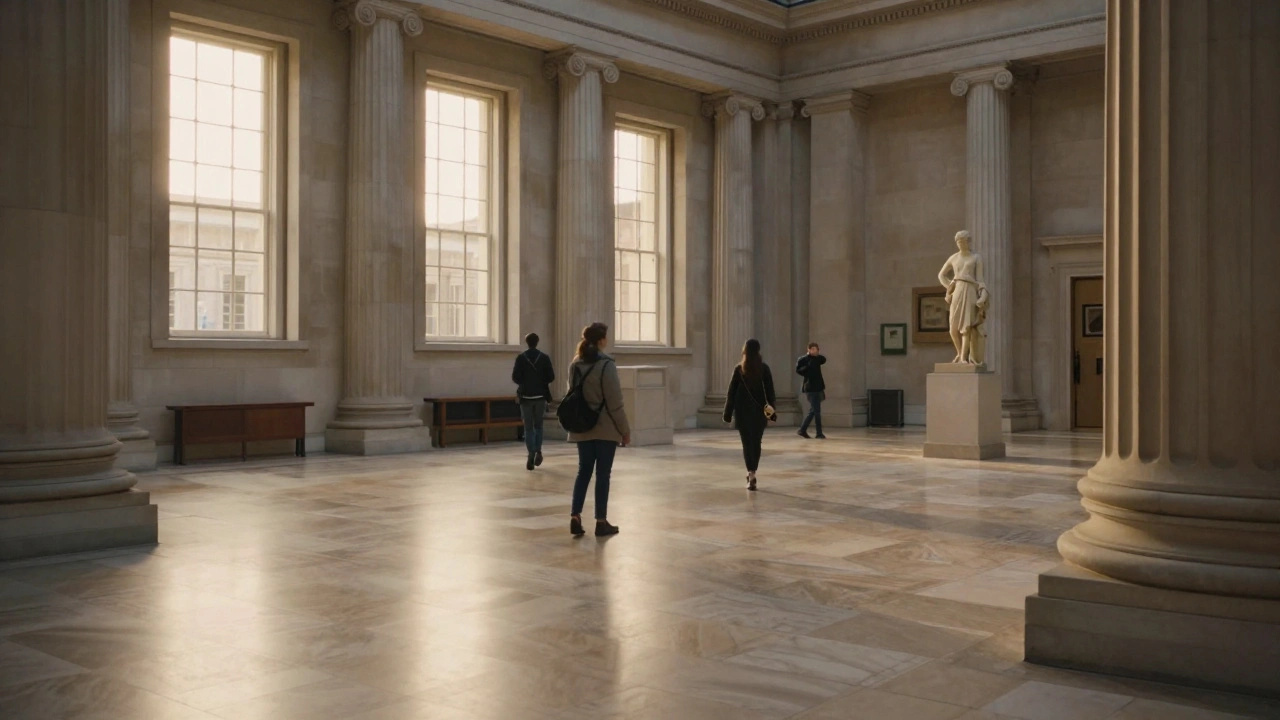
London’s museums are free, world-class, and packed-especially between June and August. You show up at the British Museum at 10 a.m., expecting quiet halls, only to find a line snaking out the door. Kids are crying. People are blocking the Rosetta Stone. You feel like you’re not seeing art-you’re fighting for space. It doesn’t have to be this way.
Know When the Crowds Are Worst
Peak season in London isn’t just summer. It’s school holidays-especially the six weeks between late July and mid-September. Weekends are worse than weekdays. Tuesdays and Wednesdays are your quietest days. Most tourists book weekend trips, so midweek visits mean fewer people, shorter lines, and more room to actually look at the exhibits.Try this: arrive right when the doors open. Most major museums open at 10 a.m., but some-like the Victoria and Albert Museum-let early entrants in at 9:30 a.m. If you’re staying nearby, get there 15 minutes early. You’ll beat the tour groups and have 20 minutes of nearly empty galleries before the first wave hits.
Book Ahead-Even for Free Museums
You don’t need to pay to get into the National Gallery, Tate Modern, or the Science Museum. But you still need to book a free timed entry ticket. Yes, really. Since 2023, almost all major London museums use timed entry to manage crowds. Walk-ins are either turned away or forced into 45-minute waits.Go to each museum’s official website. Look for “Plan Your Visit” or “Book Tickets.” Select your date and time. Pick a slot in the morning or late afternoon. Avoid 11 a.m. to 3 p.m.-that’s the peak window. Set a phone reminder. Show up five minutes early. If you don’t book, you might spend more time waiting than looking.
Use the Less Popular Entrances
Most tourists don’t know museums have multiple entrances. At the British Museum, everyone lines up on Great Russell Street. But the Montague Place entrance? Almost empty. Same at the Tate Modern: the main entrance on Bankside is packed. Walk around to the Blavatnik Building entrance on the south side. It’s quieter, has its own café, and leads straight to the modern art wing.At the Natural History Museum, skip the main facade. Use the Cromwell Road entrance near the dinosaur skeletons. It’s less crowded and gives you immediate access to the iconic hall. Google Maps shows all entrances-zoom in and check street view before you go.
Target the Hidden Gems First
When you walk into a museum, the big exhibits are in the center. That’s where the crowds gather. Instead, head to the corners. The British Museum’s Room 69a has Roman mosaics no one notices. The V&A’s Textile Room has 18th-century lace so delicate it takes your breath away. The Tate Modern’s Artist Rooms on Level 4 are often empty, even in July.These spots aren’t on the main maps. Ask a staff member: “What’s something most people miss?” They’ll point you to a quiet corner with something unforgettable. Spend your first hour exploring these hidden areas. By the time the crowds flood in, you’ve already seen the best stuff.

Bring Snacks and Water
Museum cafés are expensive and packed. A sandwich at the V&A costs £12. A bottle of water? £4.50. You can bring your own food and drinks into most London museums-just not glass containers or hot meals with strong smells. Pack a granola bar, an apple, and a refillable water bottle. Fill it at a water fountain (they’re everywhere now). Save your money and your sanity.Some museums have quiet outdoor seating. The Courtyard at the National Gallery has benches under trees. The Tate Modern’s rooftop terrace is free and has stunning views of the Thames. Eat there instead of cramming into a crowded café.
Use the Audio Guides-But Skip the Headphones
Most museums offer free audio guides via smartphone app. Download the official app before you go. It’s better than the old headset systems, which are broken half the time. But here’s the trick: don’t use headphones.Put your phone on speaker and walk slowly. You’ll hear the commentary without blocking out the space around you. You’ll notice people’s reactions, the light on a painting, the echo in a hall. It’s more immersive. And you won’t look like a tourist with wires sticking out of your ears.
Plan Your Route Around the Crowds
Don’t try to see everything. Pick one wing. Pick one theme. At the British Museum, focus on Ancient Egypt. Skip the Assyrian reliefs. At the National Gallery, stick to the Impressionists. Skip the Renaissance portraits. You’ll walk out feeling satisfied, not overwhelmed.Use the museum’s floor plan to pick a loop. Start at the back, end at the front. Avoid the central atrium. That’s where the tour buses drop people off. Stick to side corridors. You’ll find fewer people, better lighting, and more time to really look.

Visit on a Free Late Night
Some museums stay open late on Fridays. The Tate Modern opens until 10 p.m. on Fridays. The National Portrait Gallery until 9 p.m. The crowds thin out after 6 p.m. You get the same exhibits, fewer people, and a calmer vibe. It’s perfect if you’re not a morning person.Bring a light jacket. The museums are chilly. And if you’re tired, sit on a bench near a window. Watch the sunset over the city while you review what you saw.
Know Which Museums to Skip in Summer
Not all museums are worth fighting for. The Wallace Collection is tiny, free, and always quiet. The Foundling Museum is tucked away in Bloomsbury. The Museum of London Docklands is on the river-less touristy, more local. Skip the British Museum if you’re only there for a day. Go to the Guildhall Art Gallery instead. It’s free, has Roman ruins under glass, and you’ll have it mostly to yourself.What to Do If You’re Already Stuck in a Crowd
You’re trapped in front of the Egyptian mummies. The line to get out is 15 minutes long. Your kid is whining. Your phone is at 10%. Here’s what to do:- Step back. Find a doorway or alcove. Breathe. You’re not missing anything.
- Take a photo of the exhibit from where you stand. You’ll remember it better than if you pushed forward.
- Ask a staff member: “Is there another exit nearby?” They’ll often point to a side door you didn’t know existed.
- Walk to the gift shop. It’s usually less crowded. Grab a postcard. Sit down. Wait 10 minutes. The crowd will move.
Remember: museums aren’t races. You’re not competing. You’re here to be moved. Even if you only see one thing well, that’s enough.
Final Tip: Go Back
One visit isn’t enough. London’s museums are too big, too rich, too layered to take in once. Plan to return. Maybe next month. Maybe next year. Come in October, when the leaves turn and the crowds vanish. You’ll see things you missed. You’ll feel the space differently. That’s the real secret: you don’t need to conquer the museum. You just need to visit it-again and again.Do I need to book tickets for free London museums?
Yes. Even though entry is free, most major museums like the British Museum, Tate Modern, and the National Gallery require a free timed entry ticket booked online. Walk-ins are often turned away during peak season. Always check the official website before you go.
What’s the quietest day to visit London museums?
Tuesdays and Wednesdays are the quietest. Avoid weekends and school holidays (especially late July to mid-September). Museums open at 10 a.m., but arriving at 9:30 a.m. gives you a 20-minute head start before the crowds arrive.
Can I bring food and drinks into London museums?
Yes. Most museums allow bottled water and snacks. No glass containers or hot meals with strong smells. Bring your own food to save money and avoid crowded cafés. Some museums have quiet outdoor seating areas you can use.
Are there quieter entrances to major museums?
Yes. At the British Museum, use Montague Place instead of Great Russell Street. At the Tate Modern, try the Blavatnik Building entrance. At the Natural History Museum, use the Cromwell Road entrance. Google Maps street view helps you spot less crowded access points.
Which London museums are least crowded in summer?
Skip the British Museum and National Gallery if you want quiet. Try the Guildhall Art Gallery, Foundling Museum, Museum of London Docklands, or the Wallace Collection. These are free, world-class, and rarely packed-even in peak season.