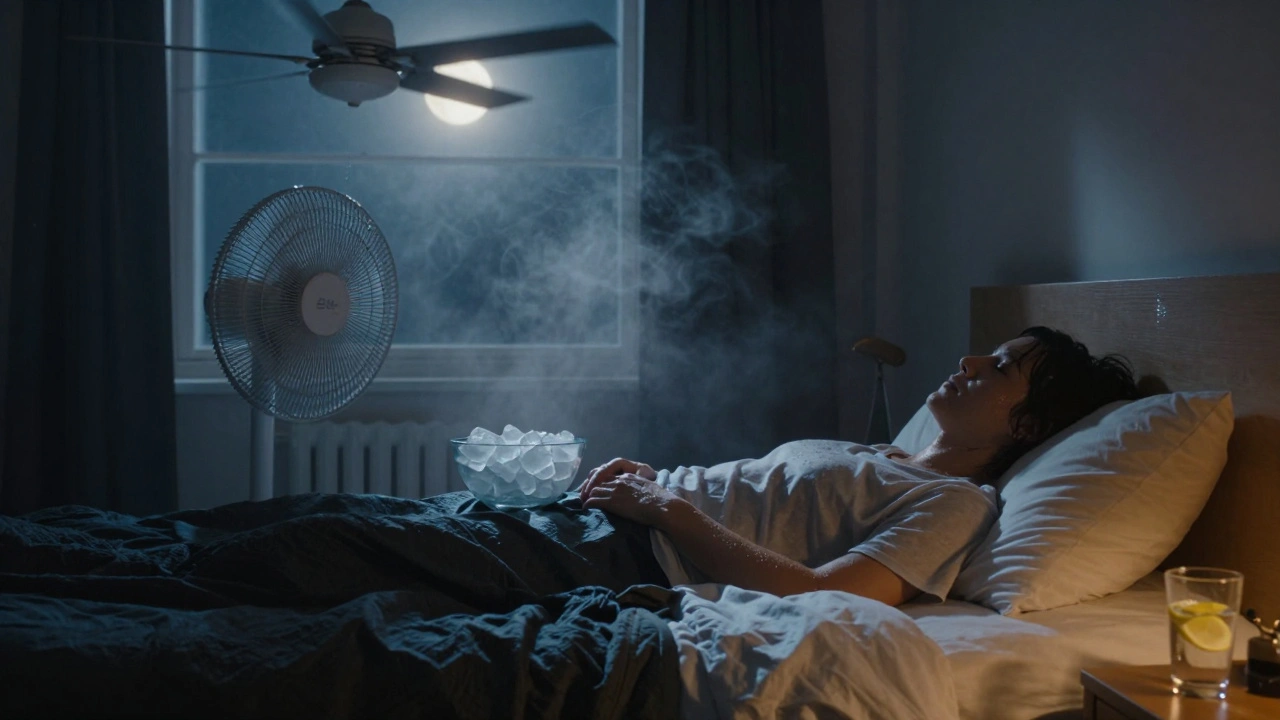
When the temperature in London hits 30°C in July, your bedroom turns into a sauna. You toss and turn, sweat soaks your sheets, and by 3 a.m., you’re wide awake wondering if you’ll ever sleep again. This isn’t just discomfort-it’s a real health issue. Poor sleep during heatwaves messes with your mood, weakens your immune system, and makes you more prone to mistakes at work. And if you’re over 65, pregnant, or have a chronic condition, the risks go up even more. The good news? You don’t need an air conditioner to sleep through a London heatwave. Here’s how to actually get rest when it’s hotter than your oven.
Lower your body temperature before bed
Your core body temperature drops naturally at night to help you fall asleep. But when it’s 28°C outside, your body can’t cool down. The trick isn’t to cool the room-it’s to cool you.
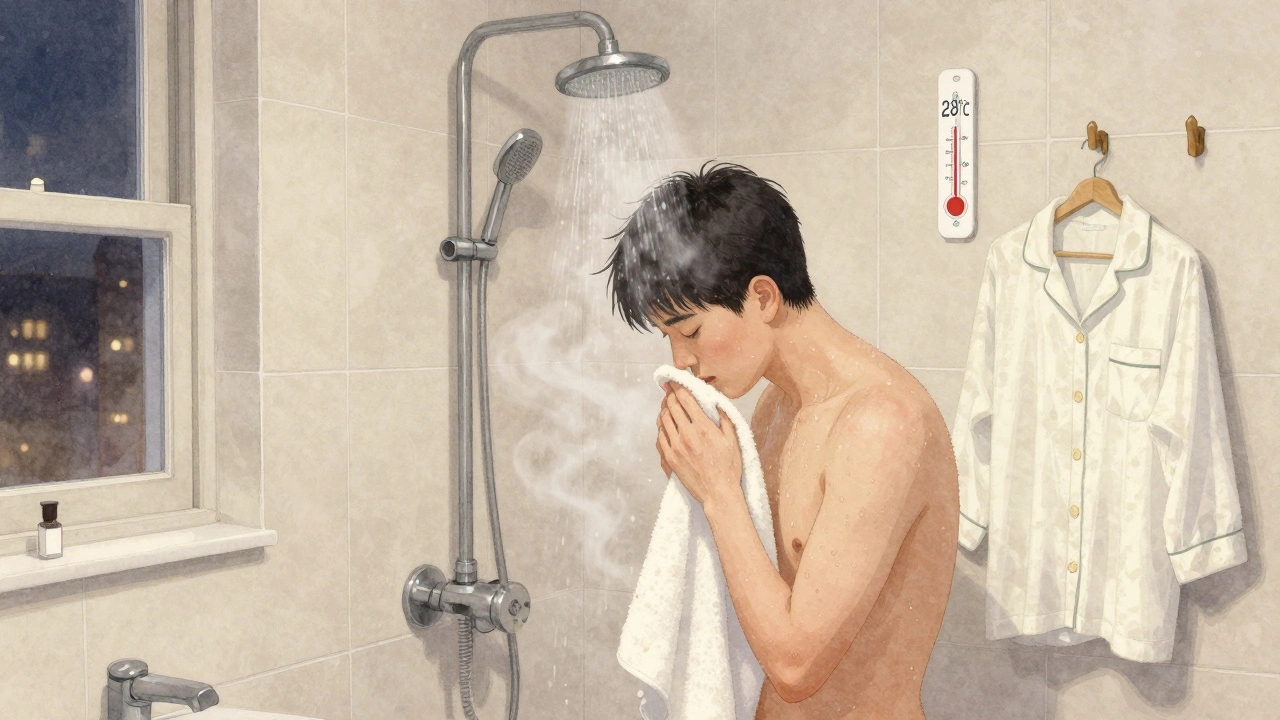
Take a lukewarm shower 60 to 90 minutes before bed. Not cold. Not hot. Lukewarm. Why? Cold showers make your blood vessels constrict, trapping heat inside. Lukewarm water opens them up, letting heat escape through your skin. It’s like opening a window for your body to breathe out the heat. After the shower, pat yourself dry-don’t rub. Let your skin air-dry for a few minutes. That slight evaporation keeps you cooler longer.
Wear loose, lightweight cotton pajamas-or nothing at all. Synthetic fabrics like polyester trap heat and sweat. Cotton breathes. It absorbs moisture and lets it evaporate. If you’re used to flannel, now’s the time to switch. Even a thin cotton T-shirt and shorts are better than a full set of PJs.
Optimize your bedroom setup
Your bedroom layout matters more than you think. Position your bed away from windows if possible. South-facing windows get the most sun all day. Even if you close the blinds, the glass holds heat like a brick wall. If you can’t move your bed, hang a lightweight cotton sheet over the window at night. It blocks residual heat without blocking airflow.
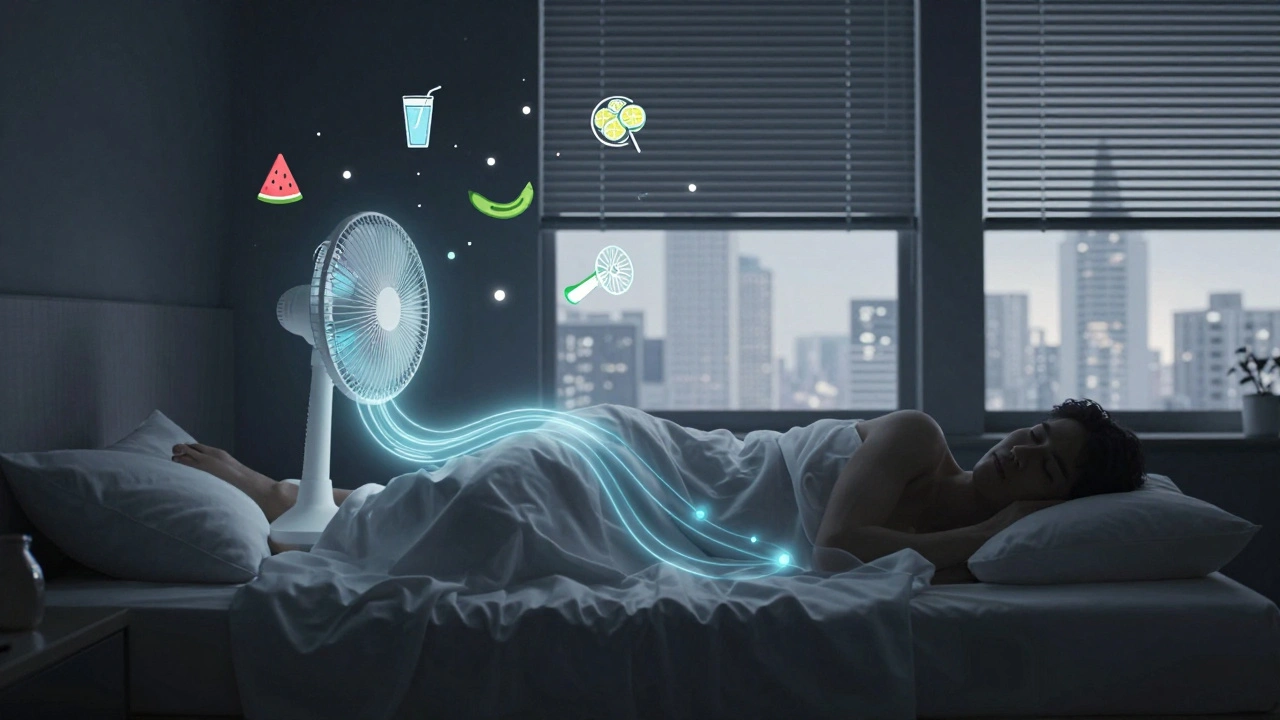
Use a fan. Not just any fan-a ceiling fan set to spin counterclockwise (that’s the summer setting) or a standing fan pointed at your feet. Why feet? Your feet have more blood vessels near the surface than any other part of your body. Cooling them tricks your brain into thinking your whole body is cooler. Place a bowl of ice cubes in front of the fan. As the air blows over the ice, it turns into a cool mist. This isn’t magic-it’s physics. The evaporating water pulls heat from the air.
Swap your mattress topper. Memory foam traps heat like a blanket. If you have one, remove it during heatwaves. Use a thin cotton pad instead. If you’re buying a new mattress, look for ones labeled "cooling gel" or "open-cell foam." Brands like Simba and Emma have models designed for UK summers. They don’t cost much more than standard ones.
Hydration isn’t just about drinking water
You’ve heard it a thousand times: "Drink more water." But during a heatwave, it’s not enough. You’re losing fluids through sweat, breathing, and even skin evaporation. Your body needs more than H2O-it needs electrolytes.
Start your day with a glass of water with a pinch of sea salt and a squeeze of lemon. Salt replaces sodium lost in sweat. Lemon adds potassium and makes it taste better so you actually drink it. Keep a bottle of water by your bed. Sip small amounts through the night-not gulps. Chugging water before bed just means you’ll wake up to pee.
Avoid alcohol and caffeine after 2 p.m. Both are diuretics. They make you pee more, which dehydrates you. A glass of wine might feel relaxing, but it disrupts deep sleep cycles. Same with coffee-even decaf has enough caffeine to interfere. Herbal teas like chamomile or peppermint are fine, but only if they’re served cool. Hot tea raises your core temperature.
Eat water-rich foods at dinner. Cucumber, watermelon, strawberries, celery, and zucchini are over 90% water. They hydrate you while giving you fiber and vitamins. Skip salty snacks like chips or cured meats. They make you thirsty and hold onto water, making you feel bloated and hot.
When to use an air conditioner (and when not to)
If you have an air conditioner, great. But most London homes don’t. And even if you do, using it wrong can make things worse.
Don’t set it below 22°C. That’s colder than your body’s natural nighttime temperature. You’ll wake up shivering, then turn it off, then feel even hotter. Set it to 24°C and leave it on all night. The difference between 24°C and 28°C is huge for sleep quality. If you’re worried about bills, use a smart plug to turn it off after 6 a.m. You don’t need it when the sun’s up.
If you don’t have AC, try a portable evaporative cooler. They’re cheaper than AC units and work well in dry heat. But London’s heatwaves often come with high humidity. In those cases, evaporative coolers won’t help much. Stick to fans and ice tricks.
What not to do
Don’t open windows wide during the day. That’s when the heat pours in. Keep them shut and blinds down until after sunset. Even then, open them only if the outside air is cooler than inside. Use a simple thermometer to check. If it’s 26°C outside and 29°C inside, wait.
Don’t use the oven or stove after 4 p.m. Cooking adds heat to your home. Grill outside, eat cold meals, or use a microwave. Even boiling pasta adds 3°C to your kitchen. That heat lingers for hours.
Don’t lie on the floor thinking it’s cooler. It’s not. Concrete floors can be hotter than air in summer. Your body heat transfers to the floor, and the floor gives it back. Stick to your bed with a thin sheet.
Real-life example: Sarah’s heatwave survival
Sarah, 52, lives in a third-floor flat in Peckham. Last July, temperatures hit 33°C for five straight days. She couldn’t sleep. Her doctor told her to stop taking melatonin-it wasn’t helping. So she tried these steps:
- Took a lukewarm shower every night at 9 p.m.
- Wore a cotton T-shirt and slept without sheets.
- Placed a bowl of ice in front of her fan.
- Drank lemon-salt water before bed and kept a bottle on her nightstand.
- Ate watermelon and cucumber for dinner.
By day three, she slept 6.5 hours. Not perfect-but enough to function. She didn’t buy an AC. She didn’t need one.
Who’s most at risk
Heatwaves hit some people harder. If you’re:
- Over 65
- On blood pressure or diuretic meds
- Pregnant
- Have heart or lung disease
- Live alone with no one to check on you
…then you need a plan. Talk to your GP about heat safety. Register with your local council’s heatwave support scheme. In London, many boroughs offer free fan loans and check-in calls during extreme heat. Don’t wait until you’re dizzy or confused. Act before it gets bad.
Final tip: Track your sleep
Use your phone’s sleep tracker-or even a notebook. Write down:
- Bedtime and wake time
- How many times you woke up
- How hot you felt
- What you did differently that night
After a week, you’ll see patterns. Maybe you sleep better when you skip wine. Or when you put ice in front of the fan. Small changes add up. You don’t need to fix everything at once. Just pick one thing tonight and try it.
Can I use a damp towel to cool down at night?
Yes, but only if you use it right. Dampen a cotton towel with cool (not icy) water, wring it out so it’s not dripping, and drape it over your legs or feet. Don’t wrap it around your neck-it can restrict breathing. Change it every 2 hours if it dries out. This works best when paired with a fan.
Is it safe to sleep with a fan on all night?
Yes, for most people. Fans don’t lower the room temperature, but they move air over your skin, helping sweat evaporate-which cools you. The only risk is if you have allergies or asthma, and the fan blows dust around. Clean your fan blades weekly during summer. If you’re sensitive, use a filter or point the fan at the wall, not directly at you.
Why do I wake up thirsty even after drinking water?
Because you’re losing more than just water. Sweat contains sodium, potassium, and magnesium. Plain water doesn’t replace those. That’s why you feel thirsty again. Add a pinch of salt to your water, or eat a banana before bed. Electrolytes help your body hold onto the water you drink.
Should I use blackout curtains during a heatwave?
Yes-especially if your windows face south or west. Blackout curtains block sunlight and reduce heat gain by up to 30%. Look for ones with a thermal backing. Even regular heavy curtains help. Keep them closed all day, even if it’s cloudy. The sun’s heat is still there.
How long do London heatwaves usually last?
Typically 3 to 7 days. The Met Office defines a heatwave as three consecutive days with temperatures above 26°C. In recent years, heatwaves have gotten longer and more intense. The 2022 heatwave lasted 11 days. Prepare for at least 5 days of high heat each summer. Keep a kit ready: water, fan, electrolyte powder, cotton sheets.
If you’re feeling dizzy, nauseous, or confused during a heatwave, it’s not just a bad night’s sleep. You could be developing heat exhaustion. Move to a cooler place, sip water, and call 111 if symptoms don’t improve in 30 minutes. Sleep matters-not just for energy, but for survival.