
Moving to London isn’t just about packing your bags. One of the first real challenges? Getting your money there without losing half of it to fees and bad exchange rates. If you’re sending cash from the US, Canada, Australia, or anywhere else, you’ve probably heard conflicting advice-bank transfers are safe, but expensive. Apps are fast, but are they reliable? Here’s the no-fluff guide to transferring money to the UK in 2026, based on what actually works for people who’ve done it.
Why Your Bank Transfer Is Probably Costing You Too Much
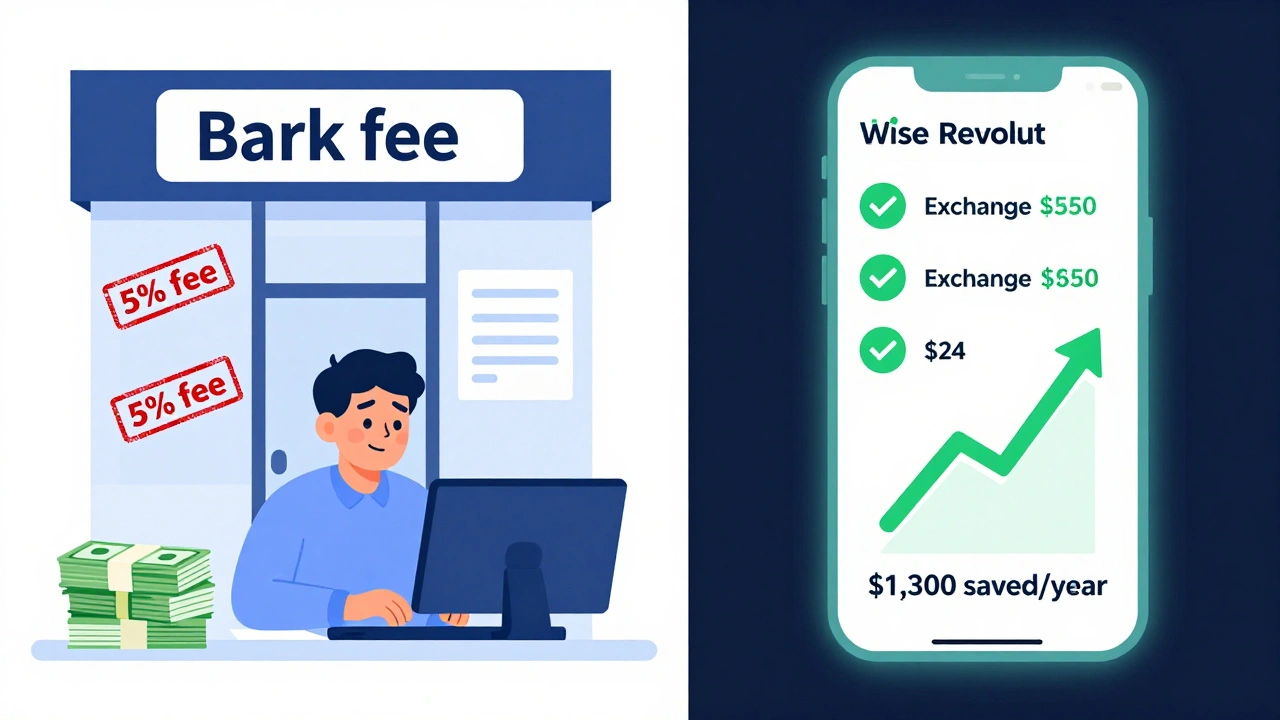
Most people start with their local bank because it feels safe. But here’s the truth: when you send $1,000 from the US to a UK bank account via a traditional bank, you’re likely to lose $40-$70 in hidden fees and poor exchange rates. Banks use what’s called the interbank rate-the real rate you see on Google-but then they slap on a markup of 3% to 6%. That’s not a fee you see upfront. It’s baked into the rate they give you. For example: if the real exchange rate is 1 USD = 0.79 GBP, your bank might give you 1 USD = 0.75 GBP. That’s a 5% loss right there. Multiply that by your monthly rent or salary transfer, and you’re talking hundreds of pounds wasted every year.Best Alternatives to Banks: Real Options People Use
You don’t need to stick with your bank. In 2026, there are five reliable, low-cost options that locals and expats actually use. Each has trade-offs, so pick based on your needs.- Wise (formerly TransferWise): Best for frequent, small-to-medium transfers. Uses the real mid-market rate with transparent fees-usually under 1%. You can hold GBP in a Wise account, pay UK bills directly, and even get a debit card. Used by over 15 million people.
- Revolut: Great if you’re already using it for travel or budgeting. Offers fee-free transfers up to £1,000/month (varies by plan). Exchange rates are real-time with small markups. Also gives you a UK bank account number if you’re setting up residency.
- PayPal: Convenient if you’re already using it, but avoid for large amounts. Fees can hit 5% for currency conversion. Good for sending small sums to friends or paying for services, not for rent or salary.
- OFX: Best for large transfers over £5,000. No fees on transfers over $10,000 USD. Offers dedicated account managers and forward contracts to lock in rates if you’re worried about currency swings.
- Western Union: Still around, mostly for urgent cash pickups. High fees and bad rates. Only use if you need cash in hand within minutes and have no other option.
How to Set Up Your First Transfer (Step-by-Step)
Let’s say you’re sending $3,000 from your US account to your new London flat. Here’s how to do it right:- Compare rates on Wise, Revolut, and OFX using their websites. Enter the amount and destination. Watch the total GBP you’ll receive-not the fee alone.
- Sign up for the service. You’ll need your ID, proof of address, and your UK bank details (sort code and account number). Most take under 10 minutes.
- Link your US bank account via ACH (free) or debit card (faster, but may cost $1-$3).
- Enter the transfer. Double-check the recipient’s name and account number. Mistakes here can cost you time and money.
- Track it. Most services send SMS/email updates. Transfers usually land in 1-2 business days. Faster if both banks are in the same region (e.g., US to UK via SEPA or Faster Payments).
What to Watch Out For: Hidden Costs and Scams
Not all services are honest. Here’s what to avoid:- “No fee” offers that hide the cost in the exchange rate. Always compare the final GBP amount you receive.
- Third-party intermediaries who ask you to send money to a “local agent.” That’s a scam. Legit services send directly to your UK bank account.
- Overseas ATMs that offer to convert cash for you. The rates are terrible, and you’ll pay ATM fees too. Use a Wise or Revolut card instead.
- Unregulated apps from unknown companies. Stick to well-known, FCA-regulated providers in the UK. Check the Financial Conduct Authority’s register before signing up.
How Much Can You Save?
Let’s say you transfer $2,500 every month to cover rent and living costs. Here’s how your savings add up:| Service | Fee per Transfer | Exchange Rate Markup | Annual Savings vs. Bank |
|---|---|---|---|
| Traditional Bank | $45 | 5% | $0 |
| Wise | $12 | 0.3% | $1,300+ |
| Revolut (Premium) | $0 (up to £1,000/month) | 0.5% | $900+ |
That’s over a thousand pounds back in your pocket every year. Enough to cover a weekend trip, a new coat, or a few months of gym membership.
What If You’re Getting Paid in GBP? Set Up a UK Account
If you’re starting a job in London, your employer might pay you directly into a UK bank account. That’s ideal. But if you’re freelancing or working remotely for a non-UK company, consider opening a UK bank account before you arrive. Services like Revolut and Wise let you get a UK account number and sort code before you land. You can give it to your employer, clients, or landlords. Then, you can receive GBP directly, avoid conversion fees, and spend locally without ATM charges.
When to Lock in Exchange Rates (Forward Contracts)
If you’re moving permanently and plan to transfer large sums over time-like your savings or property deposit-consider a forward contract. OFX, Wise, and some brokers let you lock in today’s rate for up to 12 months. This protects you if the pound drops suddenly. For example: if the GBP is at 0.80 today and you’re worried it’ll fall to 0.75 in three months, you can lock in 0.80 now and transfer your $10,000 later at that rate. No surprises.Final Tip: Use a Debit Card for Daily Spending
Once you’re in the UK, don’t carry cash. Use a Wise or Revolut debit card. It automatically converts your USD or CAD balance to GBP at the real rate when you pay. No ATM fees. No surprise charges. Even works for contactless payments on the Tube.And if you’re still using your foreign credit card? Stop. Most charge 3% foreign transaction fees on every coffee, bus ride, or Netflix subscription. Your card issuer doesn’t care that you live there now.
How long does it take to transfer money to the UK?
Most transfers via Wise, Revolut, or OFX arrive within 1-2 business days. Same-day transfers are possible if both banks support Faster Payments (UK) and you initiate the transfer before 3 PM UK time. Bank wire transfers can take 3-5 days and cost more.
Can I send money to the UK without a UK bank account?
Yes, but it’s harder. Services like Western Union or MoneyGram let you send cash to a pickup location in the UK. But you’ll pay high fees and get worse rates. For regular transfers, you need a UK bank account. Services like Revolut and Wise let you open one online before you arrive.
Is it better to transfer money monthly or in one lump sum?
It depends on your cash flow. If you’re paying rent monthly, transfer monthly. But if you’re moving savings or a large deposit, transfer in chunks over 2-3 months to average out exchange rate changes. Avoid sending everything at once if the pound is at a low point-you might regret it later.
Do I need to declare money transfers to HMRC?
No, not if it’s your own personal savings being moved to the UK. HMRC doesn’t track personal transfers. But if you’re bringing in large sums from business income or property sales, you may need to report it for tax purposes. Always keep records of transfers for at least 6 years.
What’s the cheapest way to send money to the UK from Canada?
Wise is usually the cheapest for Canadians. It offers CAD to GBP transfers with near-zero markup and fees under $10 for amounts under $5,000. Revolut is a close second if you’re already using it. Avoid Canadian banks-they charge up to 4% in hidden fees.
Next Steps: What to Do Today
Don’t wait until you land in London. Here’s your action list:- Compare Wise, Revolut, and OFX right now. Enter your amount and see what you’ll actually receive.
- Sign up for one service-takes 10 minutes.
- Get your UK bank details (sort code and account number) before you move.
- Ask your employer if they can pay you into that account.
- Download the app and test a small transfer first-$50 or $100-to make sure everything works.
Getting your money to the UK doesn’t have to be a headache. With the right tool, you’ll save hundreds every year-and have more to spend on exploring the city you’re about to call home.