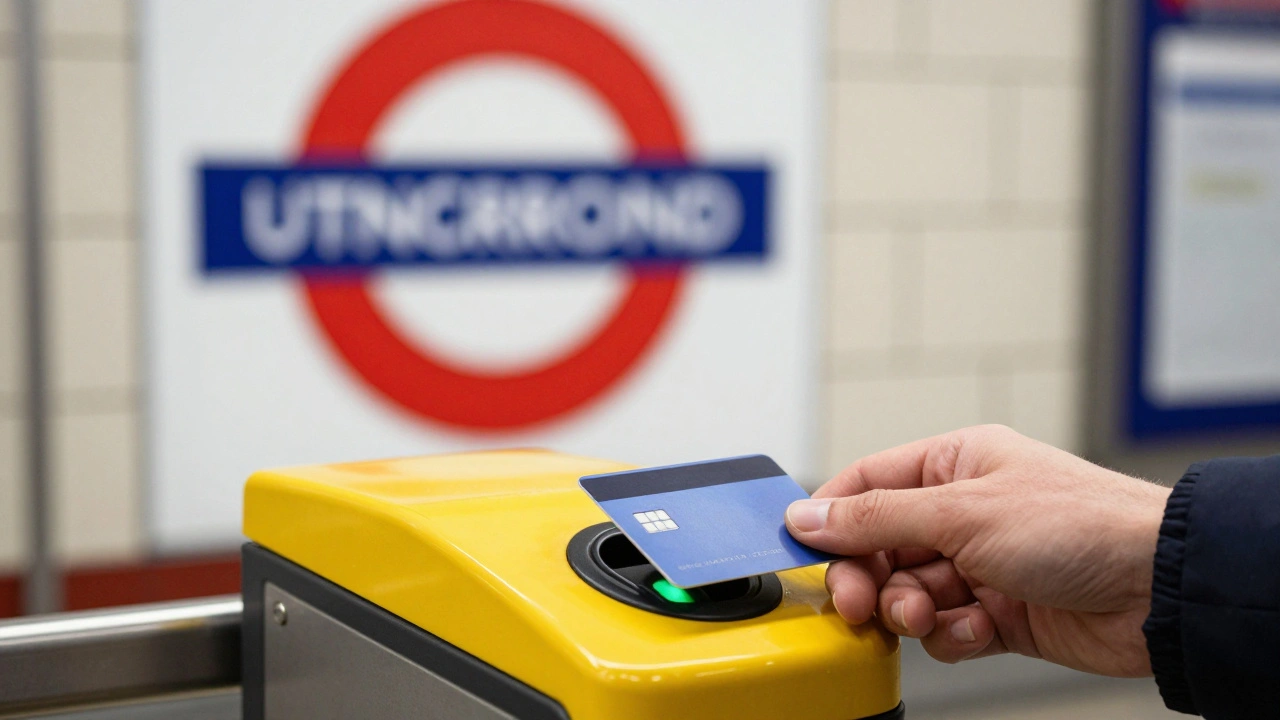
You might think you are paying for every single train ride you take. In reality, the system is designed so that you never pay more than a set limit per day or week. This hidden feature of London's transport network is called the fare cap. If you are commuting regularly and not using it correctly, you are likely throwing money away.
The Transport for London (TfL) system automatically calculates your spending. Once you hit the maximum price for a specific time period, any further journeys within that window are free. It sounds simple, but there are traps. Using the wrong payment method, traveling during peak hours, or crossing zone boundaries incorrectly can stop the cap from working in your favor. Let’s look at how to lock in these savings starting today.
Understanding How Fare Caps Work
Fare caps act as a ceiling on your travel costs. Instead of charging you individually for each tap-in and tap-out, the system tracks your total spend. When that total reaches the cap amount, your account resets. You can then travel as much as you want for the rest of that period without being charged again.
There are two main types of caps: daily and weekly. The daily cap resets at midnight. The weekly cap runs from Monday morning to Sunday evening. The system always chooses whichever option saves you more money. If you travel heavily on a Tuesday but barely move on Wednesday, the weekly cap might kick in earlier than expected based on your cumulative spending.
Daily Cap: Limits what you pay for unlimited travel within a single calendar day. Resets at 4:30 AM the next day.
Weekly Cap: Limits spending across seven days, from Monday 04:30 to Sunday 23:59. Often cheaper than five consecutive daily caps.
It is crucial to understand that the cap applies only to the zones you travel through. If you usually stay in Zones 1-2 but occasionally visit Zone 3, your cap increases to cover that wider range. The system does not offer partial discounts; it charges the highest zone combination used that day.
Contactless vs. Oyster: Which Saves More?
This is the most common question commuters ask. For almost everyone, the answer is the same: use either a registered Contactless Bank Card or an Oyster Card. Both methods apply the exact same fare prices and caps. There is no secret discount for one over the other regarding standard adult fares.
However, there are nuances. An Oyster card allows you to add credit manually. If you lose your bank card, your travel history remains safe on the Oyster app. With contactless, if you switch cards, you start fresh, though you can link multiple cards under one online account to consolidate history.
| Feature | Contactless Bank Card | Oyster Card |
|---|---|---|
| Fare Cap Eligibility | Yes | Yes |
| Price Difference | Same as Oyster | Same as Contactless |
| Loss Protection | Low (Card issuer liability) | High (TfL protects balance up to £75) |
| Registration Required | No (but recommended for tracking) | Yes (for online management) |
| Split Payments | Not supported | Supported (Family & Friends Oyster) |
Avoid using cash tickets or paper travelcards unless necessary. These do not benefit from automatic fare capping. You pay upfront for a fixed number of rides or a full day, regardless of whether you actually use them all. The flexibility of digital payments ensures you only pay for what you need, up to the cap.
The Danger of Peak Hour Pricing
Timing matters. TfL divides the day into peak and off-peak periods. Peak hours are generally 06:30-09:30 and 16:00-19:00 on weekdays. Fares during these times are higher. Since the fare cap is calculated based on the highest fare you incur, tapping in during peak hours raises your daily limit significantly.
If you tap in at 09:25 and get stuck on the platform until 09:31, your entire journey is classified as peak. This small delay can increase your daily cap by several pounds. To save money, try to adjust your schedule slightly. Leaving home ten minutes later or earlier can keep you in the off-peak bracket, lowering both individual journey costs and the overall cap threshold.
Weekends are entirely off-peak. The caps are lower, making Saturday and Sunday travel much cheaper per trip. This is why many people plan leisure trips on weekends-the effective cost per mile drops dramatically once the weekend cap is reached.
Zone Boundaries and Hidden Costs
London is divided into concentric zones. Most central stations are in Zone 1. As you move outward, zones increase to 9. Your fare depends on the number of zones crossed. A common mistake is assuming that staying within a single zone is always cheapest. Sometimes, traveling through a neighboring zone briefly might trigger a different routing logic, but generally, minimizing zone crossings is key.
Be careful with interchanges. If you change lines at a station like King’s Cross St Pancras, ensure you tap out and tap in correctly if required, although most modern gates handle this seamlessly. However, if you exit the paid area to walk between connected stations (like Holborn and Chancery Lane), you must tap out first. Failure to do so results in an incomplete journey charge, which can be expensive and may disrupt your cap calculation for that day.
Also, remember that some stations have separate entrances for National Rail and TfL services. Make sure you are using the correct gates. Tapping in at a National Rail gate when intending to take the Underground can lead to mismatched records and unexpected fees.
Maximizing Savings with Travel Cards
While fare caps are powerful, they are not always the best deal for heavy travelers. If you know you will travel extensively every day for a month, consider a monthly Travelcard. You can buy these digitally via the TfL Go app or load them onto your Oyster card.
Compare the cost of four weeks of daily caps against the price of a monthly Travelcard. For example, if the Zones 1-2 daily cap is £8.50, four weeks come to roughly £238. A monthly Travelcard for the same zones might cost less, depending on current pricing adjustments. Always check the TfL website for the latest rates before committing to a long-term pass.
Another tip: if you work hybrid, mixing office days with remote work, stick to contactless/Oyster with caps. On days you don’t travel, you pay nothing. With a monthly pass, you pay regardless of usage. Flexibility is your biggest ally here.
Troubleshooting Common Issues
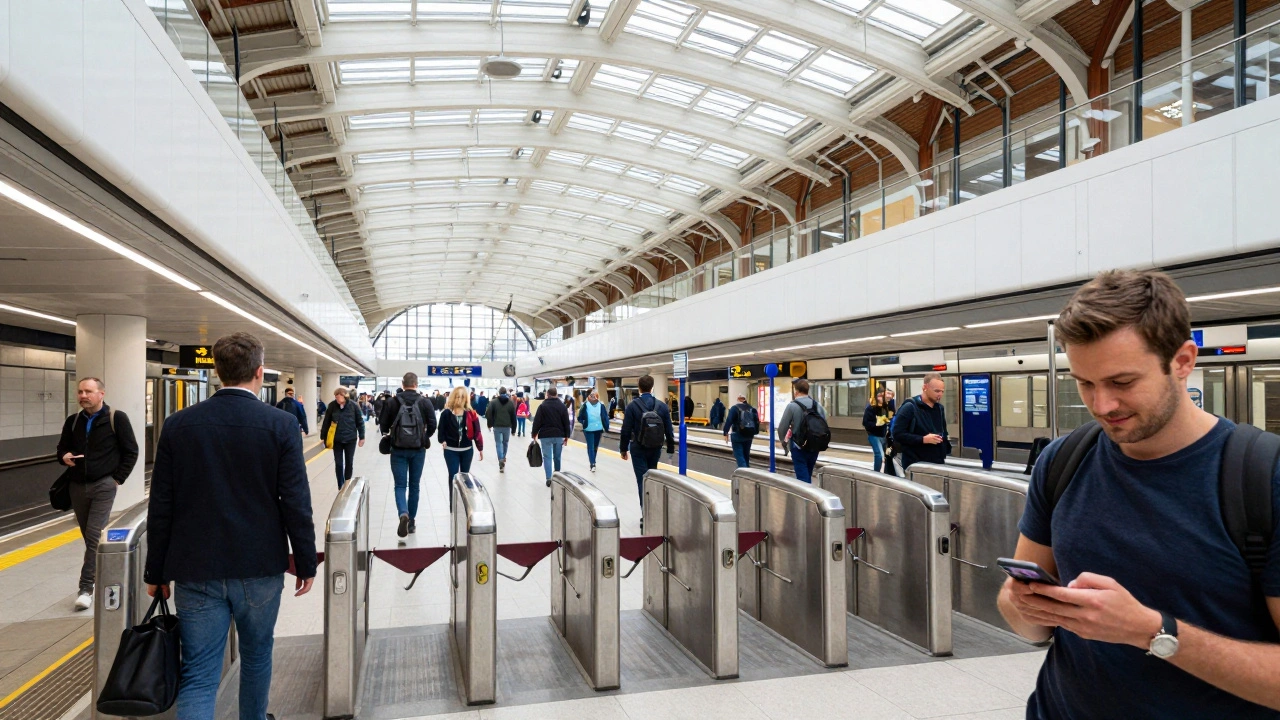
Sometimes things go wrong. Gates might not read your card. You might forget to tap out. Here is how to handle these scenarios without losing money.
- Forgot to Tap Out: The system will charge you the maximum possible fare for your zones. Visit a staff member at any station or use the TfL app to report the error. They can refund the difference if you prove your destination.
- Gate Malfunction: If the gate doesn’t open, look for the help point button. Do not force the gate. Report the issue immediately to avoid incomplete journey charges.
- Incorrect Card Used: If you accidentally use a different contactless card, you cannot merge the transactions. Each card has its own cap. Try to use the same card consistently to reach the cap faster.
Registering your Oyster card or linking your contactless card to your TfL online account is essential. This allows you to view your transaction history, see exactly when you hit the cap, and dispute errors easily. Without registration, you are flying blind.
Special Cases: Children and Visitors
If you travel with children, the rules change. Children under 11 travel free on buses, trams, and the Tube when accompanied by an adult. Children aged 11-15 need an Zip Oyster photocard to get half-price fares. Standard contactless cards do not offer child discounts. Applying for a Zip card takes a few weeks but pays for itself quickly if your child commutes regularly.
Visitors should also consider the Visitor Discount Card. This offers a 30% reduction on pay-as-you-go fares for up to one month. Combine this with fare caps for significant savings. Note that this discount applies only to the base fare, but the cap still functions on the discounted rate.
Does the fare cap reset every night?
Yes, the daily cap resets at 4:30 AM each morning. Any travel after this time starts a new daily cycle. The weekly cap runs from Monday 4:30 AM to Sunday 11:59 PM.
Can I use my phone instead of a card?
Yes, Apple Pay, Google Pay, and Samsung Pay work exactly like contactless bank cards. They benefit from the same fare caps and pricing structures.
What happens if I travel outside my usual zones?
Your fare cap will increase to cover the widest range of zones traveled that day. For example, if you usually travel Zones 1-2 but go to Zone 4, your cap becomes the Zones 1-4 rate.
Is it better to buy a weekly Travelcard?
For most people, pay-as-you-go with caps is cheaper because you only pay for days you travel. Weekly Travelcards are only better if you travel heavily every single day of the week.
Do fare caps apply to buses and trams?
Yes, bus and tram fares are included in your daily and weekly caps. Buses have a flat fare, which counts toward the overall cap limit.