Quick Guide: Pharmacy Essentials
- Prescriptions: You need a prescription from a GP or clinic for most strong medications.
- Costs: NHS prescriptions have a flat fee (around £9.90), while some people get them for free.
- Over-the-Counter: Minor ailments (colds, skin rashes) can be treated with advice from the pharmacist.
- Finding Help: Use the NHS website or look for signs like Boots or Superdrug.
The Basics of the UK Pharmacy System
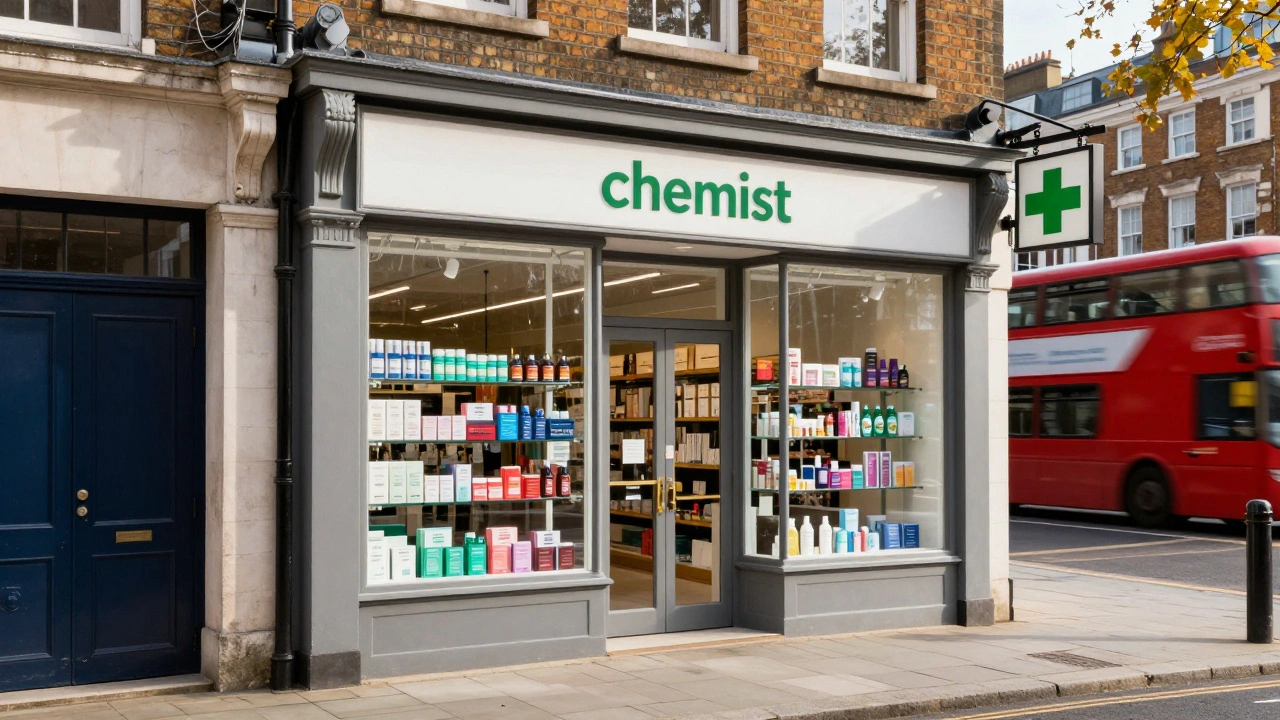
In the UK, a pharmacy is often called a "chemist." It's not just a store that sells shampoo and toothpaste; it's a clinical hub. Pharmacies in London is a network of licensed healthcare providers that dispense medications and provide clinical advice to the public. They range from massive chains to small, independent neighborhood shops. The most common ones you'll see are Boots and Superdrug, which act as one-stop shops for health and beauty.
The most important thing to understand is the split between "Over-the-Counter" (OTC) and "Prescription-Only Medicines" (POM). If you have a mild cough, you can just grab a bottle of syrup. But if you need antibiotics or strong painkillers, the law requires a prescription from a registered prescriber. You can't just walk into a chemist and ask for an antibiotic; they simply won't give it to you without a legal slip of paper.
How to Get a Prescription in London
If you aren't a UK resident, your first instinct might be to head straight to the pharmacy. However, the pharmacy is the destination, not the starting point. To get a prescription, you first need to see a doctor. If you're a visitor, your best bet is a General Practitioner (GP) is a primary care physician who serves as the first point of contact for patients in the UK healthcare system. You can find a local GP surgery, or if it's urgent, visit a 111-directed walk-in center.
Once you have your prescription, you have two choices: the NHS route or the Private route. If you use the National Health Service (NHS), the cost is standardized. As of 2026, you pay a fixed charge per item, regardless of how expensive the drug is. This is a huge advantage because a medication that costs £100 might only cost you about £9.90. If you go private, you pay the full market price, which varies by pharmacy.
Here is a breakdown of how the process actually flows:
- Consultation: Visit a GP or a private clinic (like those in Harley Street) to get diagnosed.
- Issuance: The doctor writes a prescription. Most are now "Electronic Prescriptions," meaning they send it digitally to your chosen pharmacy.
- Collection: You go to the pharmacy, provide your name and address, and wait for the pharmacist to dispense the medicine.
- Payment: Pay the NHS flat fee or the private price at the counter.
Navigating Medication Costs and Exemptions
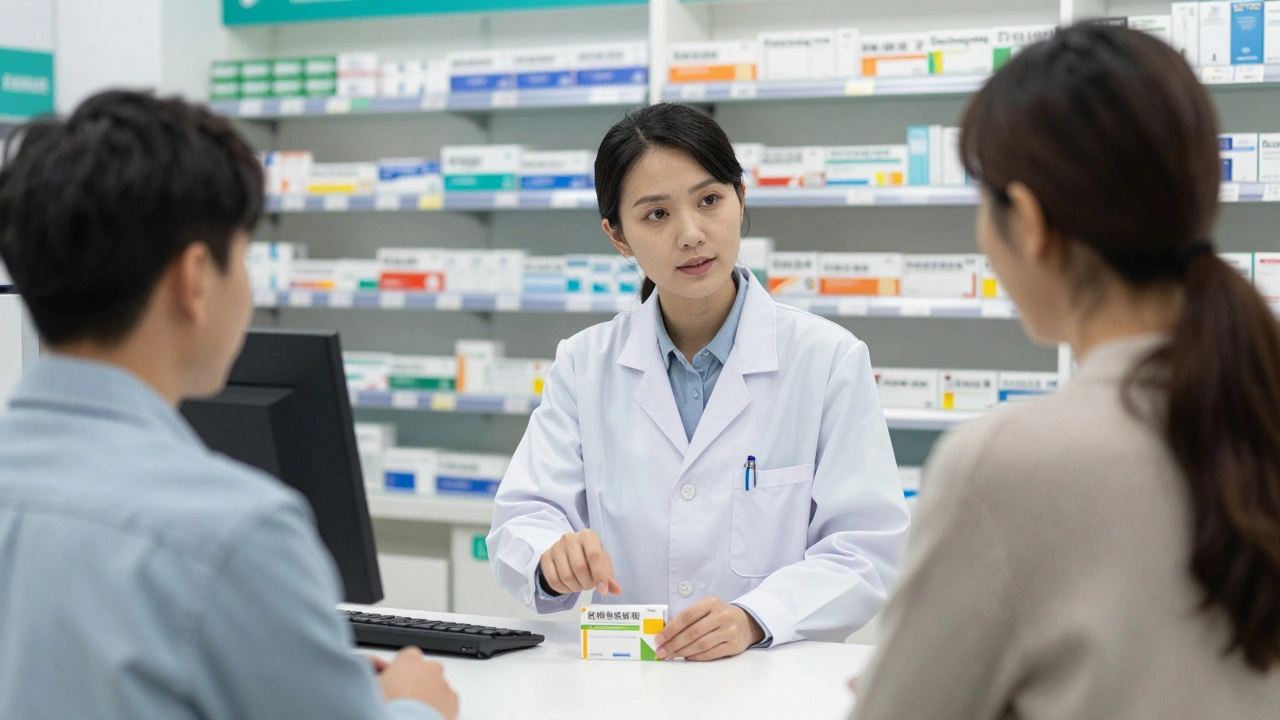
One of the most confusing parts of the UK system is who pays. Many people are eligible for free prescriptions, which is why the pharmacist will ask you several questions before you pay. This isn't just small talk; they are checking if you fit into an exempt category. For example, children under 16 and adults over 60 get their meds for free. Pregnant women and people with specific chronic conditions also qualify.
| Feature | NHS Prescription | Private Prescription |
|---|---|---|
| Cost | Flat fee per item (approx £9.90) | Market price (variable) |
| Requirement | NHS GP or approved prescriber | Any registered UK doctor |
| Speed | Standard (may need to wait) | Often faster/express |
| Availability | Available at any registered pharmacy | Available at any registered pharmacy |
Using the Pharmacy for Advice (Pharmacy First)
You don't always need a doctor. The UK has a program called "Pharmacy First," which encourages people to talk to pharmacists for common issues. Think of the pharmacist as a highly trained triage expert. They can help with things like ear infections, sore throats, or uncomplicated urinary tract infections (UTIs).
If you walk into a pharmacy and describe your symptoms, the pharmacist can do a few things. First, they can recommend an OTC medicine that works. Second, they can provide a clinical assessment to see if you need a stronger drug. In some cases, they can even refer you directly to a GP or suggest a specific clinic, saving you the hassle of calling a surgery and waiting on hold for an hour.
For example, if you have a mild skin rash, a pharmacist can identify if it's simple dryness (suggesting a moisturizer) or something requiring a steroid cream (which might need a prescription). This saves the NHS from being bogged down by minor issues and gets you treated faster.
What to Do With Foreign Prescriptions
This is a common sticking point for travelers. If you have a prescription from the USA, Canada, or Australia, you cannot simply hand it to a London pharmacist and expect them to fill it. UK pharmacists generally cannot dispense medication based on a foreign prescription because they cannot verify the prescribing doctor's credentials or the legality of the drug in the UK.
If you run out of essential medication while visiting, do not panic. You have two main options. The fastest way is to book a private GP appointment. They can review your foreign prescription, confirm it's necessary, and write a UK-equivalent prescription. Alternatively, if it's an emergency, you can visit an Urgent Care Centre is a medical facility providing immediate treatment for non-life-threatening conditions. They can provide a small emergency supply of a critical medication to tide you over until you can see a regular doctor.
Common Pitfalls and Pro Tips
Avoid the mistake of waiting until the last minute to get your meds. Some pharmacies don't keep every single drug in stock. If you have a specialized medication, the pharmacist might need to order it from a wholesaler, which can take 24 to 48 hours. If you're staying at a hotel, ask the concierge for the nearest "community pharmacy" rather than a big chain if you need something more personal or specialized.
Another tip: always carry a photo of your current medications and the generic names of the drugs. Brand names change between countries. For instance, a drug called "Tylenol" in the US is known as "Paracetamol" in the UK. Using the generic name ensures the pharmacist knows exactly what you're talking about without any confusion.
Lastly, remember that strong painkillers (like codeine-based products) are strictly regulated. You might find some low-dose versions over the counter, but the pharmacist will ask you a series of questions to ensure you aren't developing a dependency. Be honest and clear about your symptoms to get the right help.
Do I need a passport to get medicine at a pharmacy?
No, you do not need a passport to buy over-the-counter medicines. However, if you are seeing a GP to get a prescription, they will ask for identification to create a patient record.
Can I get a prescription from an online doctor and use a London pharmacy?
Yes, as long as the online doctor is registered and licensed to practice in the UK. They can send an electronic prescription directly to your chosen pharmacy in London.
What is the difference between a chemist and a pharmacy?
In the UK, they are essentially the same thing. "Chemist" is a more traditional, colloquial term, while "Pharmacy" is the official professional term.
Are pharmacies in London open 24 hours?
Very few are open 24/7. However, there are several "late-night pharmacies" in central areas. If you have an emergency at 3 AM, your best bet is an A&E (Emergency Room) or calling 111.
How much does a private prescription cost?
Private costs vary wildly. You pay for the cost of the drug itself plus a dispensing fee from the pharmacy. It is almost always more expensive than the NHS flat fee.
Next Steps for Your Health Journey
If you are moving to London permanently, your first priority should be registering with a local GP. This ensures you can access NHS prescriptions at the discounted rate and provides you with a consistent medical history. If you're just visiting, keep a digital copy of your prescriptions and a list of generic drug names in your phone.
For those with complex needs, look into "Pharmacy Services" that offer blood pressure checks or diabetes screenings. Many London chemists now offer these as free or low-cost services, meaning you can monitor your health without needing a full doctor's appointment every time.