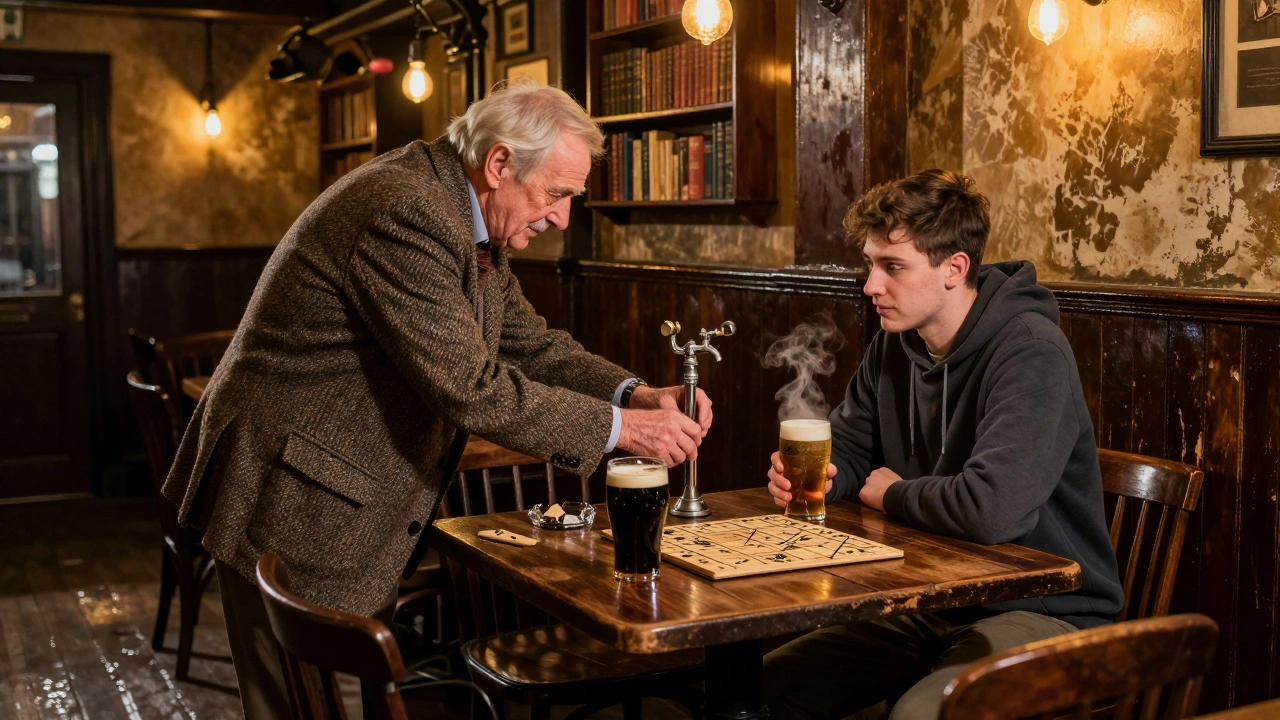
Walk into any traditional London pub on a Tuesday evening and you’ll see it: a 78-year-old man with a pint of bitter, chatting with a 22-year-old student about the best way to fix a leaky tap. Across the room, a grandmother teaches a group of teens how to play cribbage. No one’s rushing. No one’s on their phone. Just laughter, clinking glasses, and the kind of quiet belonging that’s getting rarer by the year.
London Pubs Are More Than Just Places to Drink
Most people think of pubs as places to grab a quick drink after work or catch a football match. But in neighborhoods like Islington, Brixton, and Hackney, the pub isn’t just a bar-it’s the neighborhood’s living room. And unlike a real living room, this one doesn’t have a door you can shut. It’s open to anyone who walks in, regardless of age, income, or background.
According to a 2024 survey by the Campaign for Real Ale, over 62% of regular pub-goers in London say they visit their local more for the people than the beer. These aren’t trendy cocktail bars with neon signs and DJ sets. These are the pubs with sticky floors, mismatched chairs, and landlords who remember your name-and your kid’s name too.
How Do These Pubs Stay Alive When So Many Are Closing?
Since 2000, over 10,000 pubs have shut down across the UK. But in London, the ones that survive are the ones that stopped being just pubs and became community hubs. The secret? They stopped chasing profit and started building relationships.
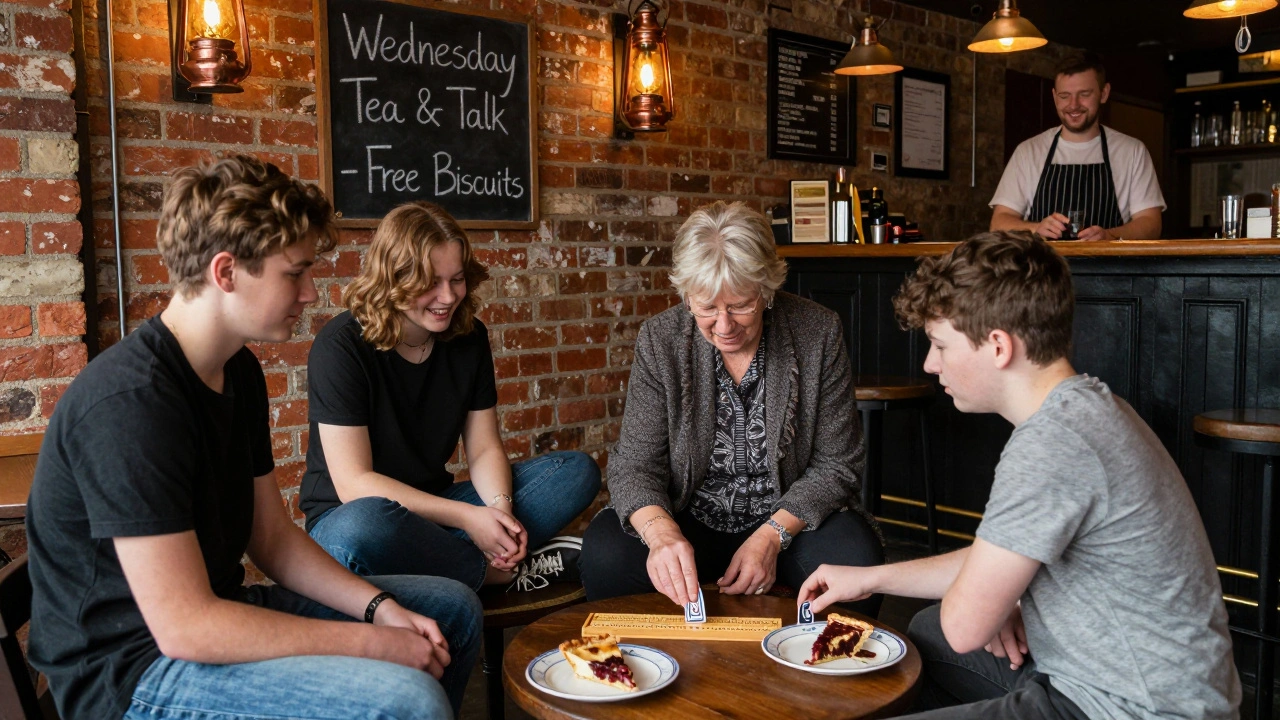
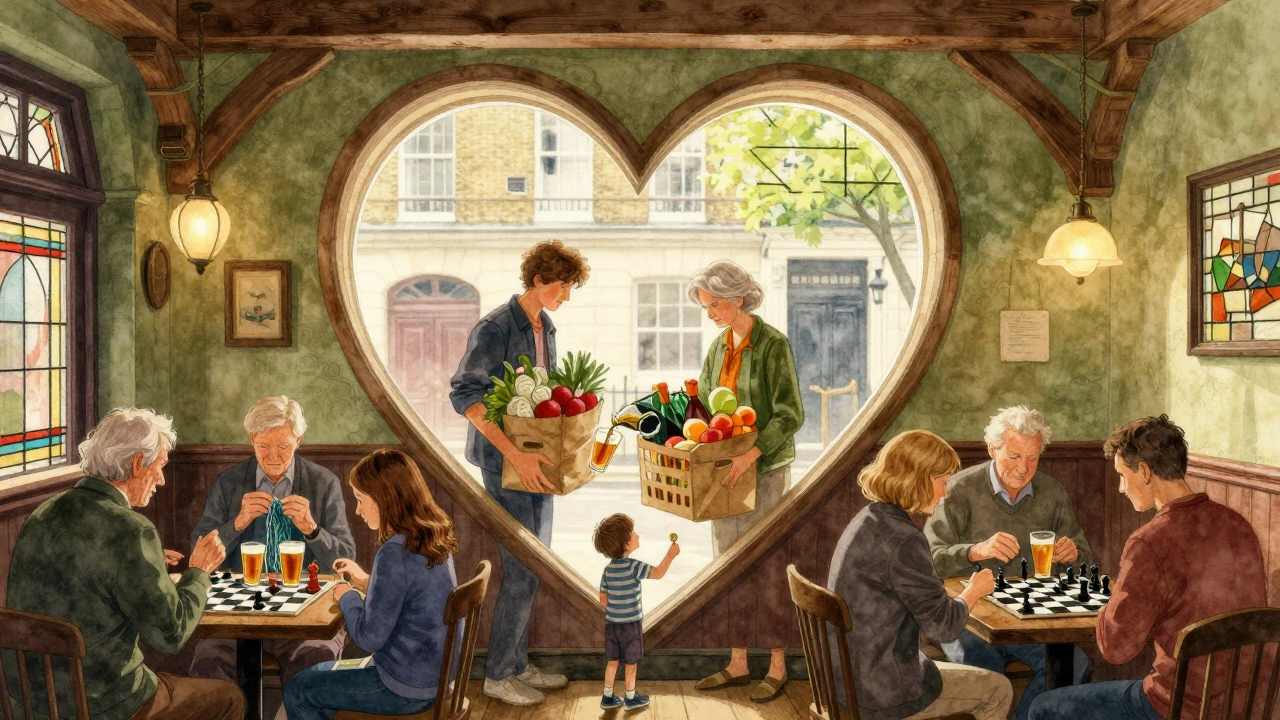
Take The Harrow in Peckham. It opened in 1847. In 2018, the landlord, Dave, noticed fewer young people were coming in. So he started hosting ‘Tea & Talk’ every Wednesday: free tea, biscuits, and a chance for older residents to share stories. The teens came for the free biscuits. They stayed for the stories. Now, the pub runs weekly chess nights, knitting circles, and even a monthly ‘Grandparent and Grandchild Cook-Off’.
It’s not charity. It’s strategy. When the same people come back week after week, they buy more. They bring friends. They tell others. And they defend the place when developers try to turn it into a boutique hotel.
The Unwritten Rules of a London Pub Community
There are no signs posted. No rulebook. But everyone knows the code.
- If you’re new, you don’t sit at the table with the regulars-until they invite you.
- If you’re older, you don’t complain about the music-if it’s too loud, you just ask the landlord to turn it down. He will.
- If you’re young, you don’t order a cider unless you’re willing to explain why. The landlord might challenge you. He’s not being rude-he’s testing if you care enough to learn.
- If someone’s having a bad day, someone else will buy them a drink. No questions asked.
This isn’t about politeness. It’s about mutual survival. In a city where rent keeps rising and people move every 18 months, these pubs are the only places where people stay long enough to become family.
Why This Matters for London’s Future
Loneliness is one of the biggest health crises in the UK. A 2025 report by Age UK found that 1 in 5 people over 75 in London say they have no one to talk to on a daily basis. Meanwhile, 1 in 3 young adults report feeling isolated despite being constantly connected online.
London pubs are quietly fixing this. They’re the only public spaces where generations naturally mix-not because someone organized a ‘youth outreach program,’ but because the space itself invites it.
Studies from the University of Westminster show that people who regularly visit intergenerational pubs report higher levels of life satisfaction than those who don’t. Even more telling: those who spend time in these pubs are 40% more likely to volunteer in their neighborhood.
This isn’t just about feeling good. It’s about keeping communities alive when everything else is pushing people apart.
What Makes a Pub Truly Intergenerational?
Not every pub with old people and young people counts. Here’s what actually makes it work:
- Shared tasks: Kids help set up tables after school. Seniors teach them how to pour a proper pint.
- Low barriers: No cover charge. No minimum spend. No dress code.
- Consistency: Same time, same day, every week. The pub becomes a rhythm in people’s lives.
- Landlord as glue: The owner isn’t just serving drinks-they’re listening, remembering, connecting dots.
- Real food: Not just crisps and nuts. Think Sunday roasts, homemade pies, or cheap pasta dishes that feed families.
Look at The Grapes in Limehouse. It doesn’t even have Wi-Fi. The owner says, ‘If you’re here to scroll, you’re in the wrong place.’ And yet, it’s packed every evening with students, retirees, single parents, and local artists-all sharing tables, swapping recipes, debating the merits of Arsenal vs. West Ham.
What Happens When These Pubs Disappear?
When a pub closes, it doesn’t just lose a building. It loses a network.
In Camden, the closure of The Crown in 2023 left a gap no café or co-working space could fill. The elderly woman who used to bring her grandson for Sunday pies now eats alone. The college student who learned to play poker there now drinks at home, scrolling through TikTok.
Research from the London School of Economics found that neighborhoods that lost their local pubs saw a 22% increase in reported loneliness over the next two years. The drop in community trust was even sharper.
These aren’t just buildings. They’re the glue holding neighborhoods together when the rest of the city is too expensive, too fast, too disconnected.
How to Find One-And Become Part of It
Not every pub is like this. But they’re out there. Here’s how to find one:
- Look for pubs with more than three tables. If it’s all standing room and bar stools, it’s probably just a drinking spot.
- Go on a weekday afternoon. If you see people reading, knitting, or playing cards, you’ve found it.
- Talk to the landlord. Ask, ‘Who’s the oldest regular here?’ If they know, it’s a good sign.
- Stay for more than one drink. See if someone invites you to join their table.
- Bring something. A book, a board game, or even just a smile. Don’t wait to be invited-start the connection.
You don’t need to be a regular to belong. You just need to show up-and stay.
Why This Isn’t Just Nostalgia
Some say this is just ‘old-fashioned’ culture fading away. But it’s not. It’s the future of urban living.
As cities get more crowded and digital, people are craving real, face-to-face connection. Pubs are the only public spaces left where that happens naturally-without apps, without tickets, without a membership fee.
They’re not perfect. They’re messy. Sometimes loud. Occasionally smoky. But they’re real. And in a world where everything is optimized for efficiency, that’s the rarest thing of all.
So next time you’re in London, skip the chain coffee shop. Walk into a pub that looks a little worn. Sit down. Say hello. You might just find your second living room.
Are London pubs still open to all ages?
Yes, most traditional pubs in London allow all ages during daytime hours, and many welcome younger patrons in the evening too. While alcohol sales are restricted to those 18+, the space itself is open to everyone. Many pubs have family-friendly meals, games, and events designed to bring in multiple generations. The key is whether the pub’s culture encourages it-not whether it’s legally allowed.
Why do older people prefer pubs over cafes?
Pubs offer more than coffee and silence. They offer belonging. Older people often find cafes too quiet, too impersonal, or too expensive for long stays. Pubs, by contrast, have tables you can sit at for hours, staff who know your name, and the chance to join a conversation without feeling like you’re intruding. Many pubs also serve hot meals, which cafes often don’t.
Can young people really connect with older generations in pubs?
Absolutely. It happens every day. In pubs like The Harrow in Peckham or The Grapes in Limehouse, young people learn how to play cards, cook traditional dishes, or even fix things from older regulars. In return, they bring new music, tech tips, or just fresh energy. These aren’t forced interactions-they grow naturally because the space doesn’t push people into roles. It lets them be themselves.
How can I help save my local pub?
Start by being a regular-even if it’s just once a week. Bring a friend. Ask the landlord what they need. Volunteer to help with events. Share your experience online. Many pubs survive because their community speaks up when they’re threatened. Local campaigns have saved over 200 pubs in London since 2020. Your voice matters more than you think.
Do I need to drink alcohol to be welcome in a London pub?
No. Many pubs now offer non-alcoholic drinks, tea, coffee, and soft drinks. Some even have ‘sober nights’ or ‘tea sessions’ for those who don’t drink. What matters is that you’re present, respectful, and willing to engage. The drink is just the excuse to stay.
Next Steps: How to Start Your Own Pub Connection
If you want to build something like this in your neighborhood, start small. Visit one pub twice a week. Don’t go to check your phone. Go to listen. Ask questions. Bring a book and leave it on the table. Someone will pick it up. That’s how connections begin.
Don’t wait for someone else to fix it. The pub you’re looking for is already there. You just have to sit down and say hello.