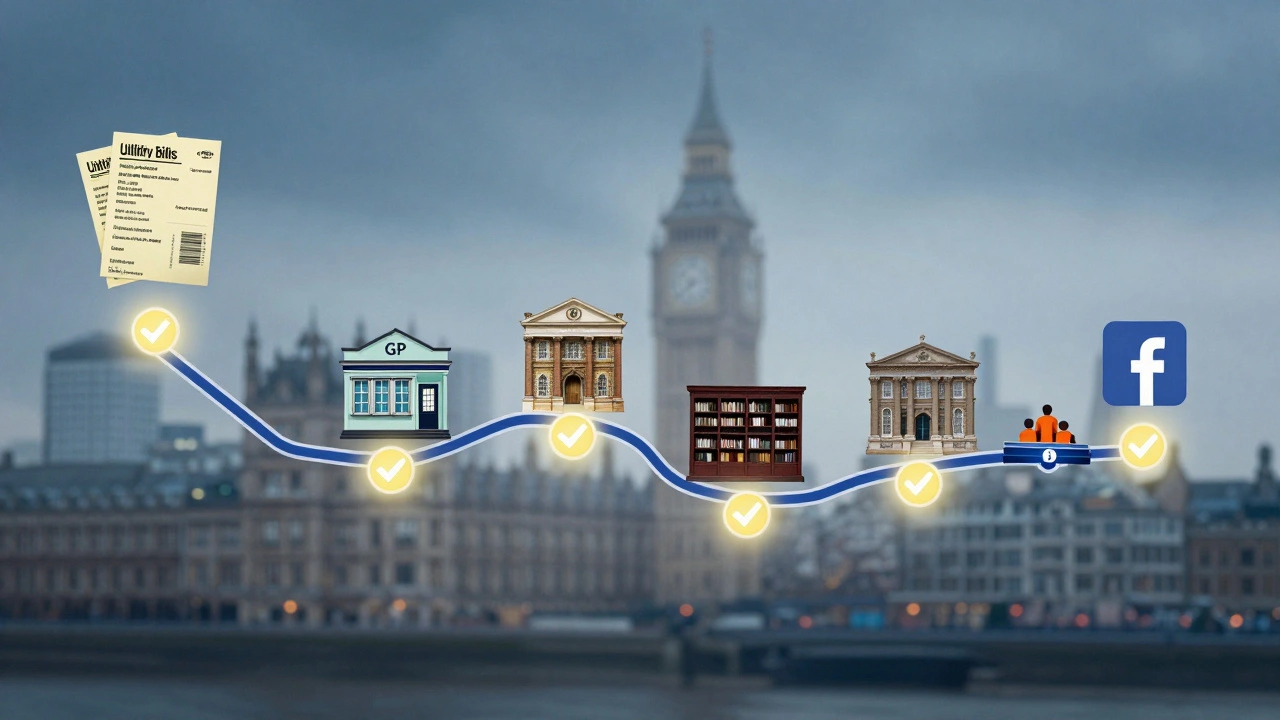
If you’re moving to London, you’re not just changing your address-you’re stepping into a city that runs on its own rhythm. It’s not like moving to a small town where you can just show up, unpack, and start walking to the corner shop. London demands preparation. Missing one step can cost you time, money, or both. This isn’t a generic ‘pack your bags’ guide. This is a real, battle-tested checklist used by people who actually made it through the chaos and now call London home.
Get your documents in order before you land
You can’t rent an apartment, open a bank account, or even get a phone contract without the right paperwork. Start here, even if you’re still in your home country. If you’re from outside the EU, you need a visa or settled status under the EU Settlement Scheme. Don’t wait until you arrive. Apply early-processing can take weeks. Bring your passport, proof of address, and any official letters from your employer or university. Keep digital and physical copies of everything: birth certificate, degree diplomas, marriage license, medical records. London landlords and service providers will ask for them. If you’re bringing pets, you’ll need a pet passport, microchip, and rabies vaccination proof. No exceptions.Book your first place to stay-temporarily
Don’t assume you’ll find a long-term rental on day one. London’s rental market moves fast. Most people start with a short-term furnished apartment, Airbnb, or even a hostel for the first 2-4 weeks. Use sites like SpareRoom, Rightmove, or Zoopla to scout neighborhoods, but don’t rent sight unseen. If you’re moving for work, ask your employer if they offer relocation support. Some companies have partnerships with short-term housing providers. Pick a location near public transport-Zone 2 or 3 is ideal for newcomers. Avoid Zone 1 unless you’re on a budget that can handle £2,500+ a month for a one-bedroom.Open a UK bank account
You need this to get paid, pay rent, and even buy a SIM card. Most banks require proof of address, which you won’t have yet. So start with a ‘basic’ or ‘starter’ account. Monzo, Starling, and Revolut are the easiest for newcomers-they accept your passport and a letter from your employer or university. Once you have a tenancy agreement or utility bill in your name, upgrade to a full current account. Barclays, HSBC, and Lloyds all have international customer services. Don’t wait. You’ll need it to set up direct debits for utilities and rent.Apply for a National Insurance number
This number is your key to working legally, claiming benefits, and even getting a phone contract. You can’t apply online before arriving. Book a phone appointment with the Department for Work and Pensions as soon as you land. Call 0800 141 2075. They’ll ask for your passport, visa, and proof of address. You’ll get a temporary number right away, and the official card in the mail within 2-6 weeks. Until then, your employer can still pay you-just give them your passport and appointment confirmation.Get a UK SIM card
Don’t rely on roaming. It’s expensive and unreliable. As soon as you land, head to a Vodafone, EE, or O2 store. Bring your passport. You can get a pay-as-you-go SIM for £5-£10 with 10GB of data and unlimited calls. O2’s ‘Pay Monthly’ plans are the most flexible for newcomers. Avoid Three-they have spotty coverage in parts of London. Use your new number to register for services like Uber, Deliveroo, and Amazon Prime. You’ll need it for two-factor authentication on everything.Set up utilities before you move in
Electricity, gas, water, and internet aren’t automatic. You need to contact providers and arrange transfers. If you’re renting, your landlord may handle some, but confirm in writing. For broadband, BT, Sky, and Virgin Media dominate. Compare deals on Uswitch or MoneySuperMarket. Fiber is standard now-avoid ADSL. For electricity and gas, Octopus Energy and Bulb are popular for their transparent pricing and app-based control. You’ll need your new address, move-in date, and bank details. Schedule the switch for the day you arrive. Don’t assume the previous tenant turned it off.Register with a GP (doctor)
The NHS is free, but you must register. Find a local surgery using the NHS website. Call or visit in person. Bring your passport, visa, proof of address, and NHS number if you have one. You’ll get a medical card in the mail. Keep it. If you need a prescription, you’ll pay £9.65 per item unless you qualify for exemption. Don’t wait until you’re sick. Some surgeries have waiting lists. Register within your first week.Understand how public transport works
London’s Tube, buses, and Overground are efficient-but confusing if you don’t know the rules. Get an Oyster card or use contactless payment (your credit card or phone). Oyster is cheaper for frequent riders. A single Tube ride in Zone 1-2 costs £2.80 with Oyster, £3.30 with contactless. Daily cap is £8.50. Download Citymapper-it’s better than Google Maps for real-time delays. Avoid rush hour (7:30-9:30 AM, 5-7 PM) if you can. Buses are slower but cheaper and give you a better view of the city.Learn the cost of everyday items
Groceries in London aren’t cheap. A liter of milk costs £1.10. A dozen eggs? £2.50. A loaf of bread? £1.50. A pint of beer in a pub? £6.50. A takeaway coffee? £3.50. Compare prices at Tesco, Sainsbury’s, Aldi, and Lidl. Aldi and Lidl are your best friends for savings. A weekly grocery shop for one person averages £45-£60. Don’t be fooled by ‘premium’ brands. Most products are the same under different labels. Use the Tesco app for vouchers.
Get a council tax bill
Every household pays council tax. It covers local services like trash collection, street lighting, and libraries. The amount depends on your property’s value band and how many adults live there. If you’re the only adult, you get a 25% discount. Students get 100% off. You’ll get a bill in the mail after you register. Pay monthly or in full. Miss a payment and you’ll get fines. Check your band on the Valuation Office Agency website. If you think it’s wrong, you can appeal.Find your nearest supermarket and pharmacy
Walk around your neighborhood on your first weekend. Note where the closest Tesco, Sainsbury’s, Boots, and Superdrug are. Boots is your go-to for painkillers, bandages, and toiletries. Superdrug is cheaper for makeup and shampoo. If you need a prescription filled, bring your NHS number and a photo ID. Pharmacies in London are open late-most until 10 PM. Some are open 24/7. Keep a list of nearby ones in your phone.Set up a laundry routine
Most flats don’t have washing machines. You’ll use laundrettes. Find one near you. Prices are £4-£6 per wash, £2-£3 per dry. Bring your own detergent-brands like Persil and Fairy are sold in packs of 3-5 loads. Don’t overload the machine. London laundrettes are strict about it. Use a timer. Some have apps to check machine availability. Wash darks and lights separately. Dry clothes on racks if you can-dryers eat electricity.Know your recycling rules
London boroughs have different rules. Some separate plastics, paper, glass, and food waste. Others combine. Check your local council’s website. Put recycling in the right bin. Get it wrong and your bin won’t be collected. Food waste goes in brown bins. Plastic bottles and cans go in blue. Paper and cardboard in green. Don’t put pizza boxes in recycling if they’re greasy. That’s a common mistake.Get a library card
It’s free. You can borrow books, DVDs, audiobooks, and even Wi-Fi hotspots. Use it to save money on entertainment. Some libraries have free language classes, job workshops, and kids’ activities. Register at your local library with your passport and proof of address. You’ll get a card in minutes. Access the digital library through the Libby app. Thousands of free ebooks and audiobooks.Download essential apps
Citymapper (transport), TfL Go (Tube updates), Too Good To Go (discounted food), Zoopla (rentals), Rightmove (buying), Monzo (banking), NHS App (appointments), O2 Tracker (mobile signal), and Google Maps (offline downloads). Install them before you move. You’ll use them daily.Understand the weather and pack smart
London is not always rainy-but it’s often damp. Temperatures range from 0°C in winter to 25°C in summer. You need a waterproof jacket, not just an umbrella. Thermal layers are better than one thick coat. Buy a good pair of waterproof boots. Avoid fashion shoes-they’ll soak through. Carry a foldable umbrella in your bag. Sunscreen? Yes. Even in November, UV levels can be high. Londoners forget this.Learn the local slang and etiquette
‘Cheerio’ means goodbye. ‘Ta’ means thanks. ‘Guv’ is short for governor. Don’t stand on the left on escalators-stand on the right, walk on the left. Queue properly. Don’t push. Say ‘excuse me’ if you need to squeeze past. Don’t ask people where they’re from-it’s rude. Say ‘hello’ to shopkeepers. Small courtesies matter here.