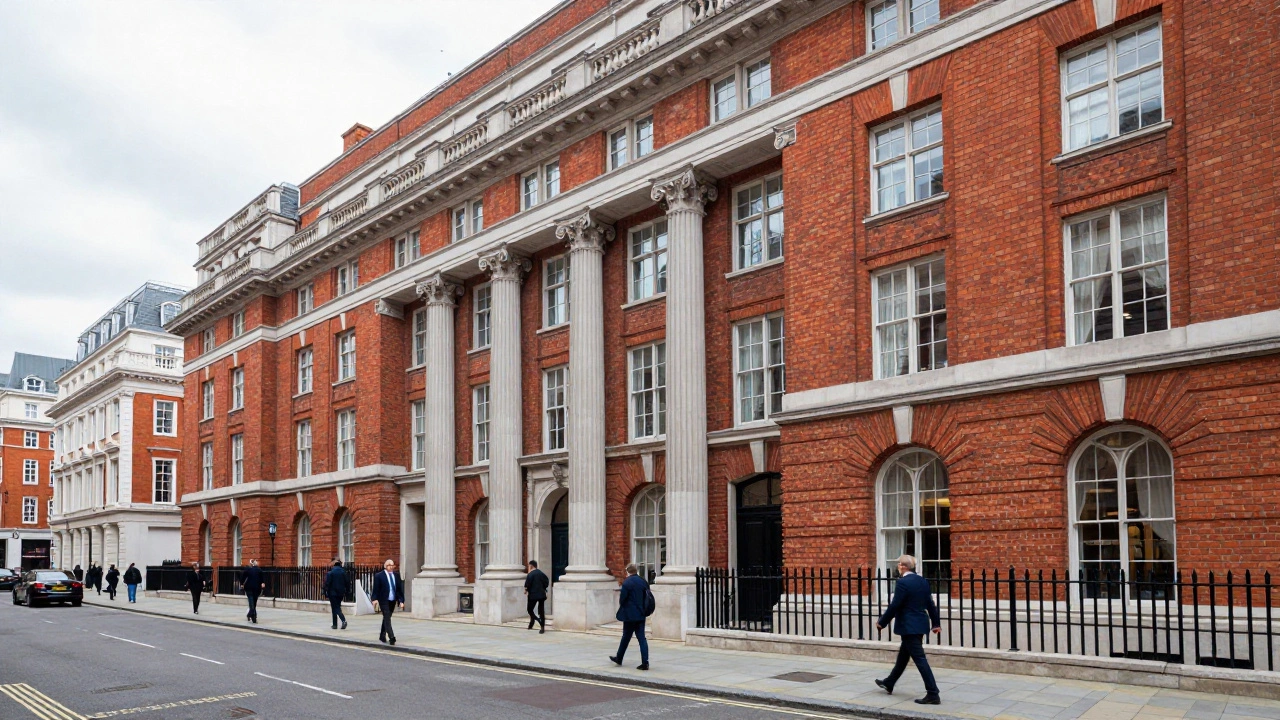
Walking past the red-brick buildings on Aldwych, you might think you’re entering a bank or a government office. You aren’t. This is the London School of Economics, known globally as LSE. It is a specialist research university dedicated to the study of economic, political, and social issues. Unlike traditional universities with sprawling campuses and rowing teams, LSE is built for one thing: serious intellectual work in the social sciences. If you are considering applying here, you need to understand that this place operates differently. The pressure is high, the pace is fast, and the connections you make will define your career long before you graduate.
Many students dream of Oxford or Cambridge. But if your passion lies in understanding how societies function, how markets behave, or how policies shape lives, LSE offers a sharper focus. It doesn’t try to be everything to everyone. It dominates its niche. Let’s look at what that actually means for your education, your job prospects, and your life after graduation.
The Unmatched Focus on Social Sciences
LSE does not have departments for physics, chemistry, or engineering. It does not offer degrees in fine arts or music performance. Instead, it concentrates entirely on disciplines that analyze human behavior and societal structures. This specialization creates an environment where every lecture hall, library shelf, and seminar room is optimized for critical thinking about the world we live in.
The core subjects include Economics, which at LSE is ranked among the top three globally. But economics here isn’t just math; it’s behavioral, institutional, and deeply connected to policy. Then there is Political Science, often studied alongside international relations. Students debate real-world conflicts, election strategies, and governance models with professors who advise heads of state. Sociology at LSE focuses on urban dynamics, inequality, and cultural shifts, while Law programs emphasize commercial law, human rights, and regulatory frameworks.
This narrow focus brings distinct advantages. When you attend a guest lecture, the speaker is likely a Nobel laureate, a central banker, or a former minister. There is no dilution from unrelated fields. Your peers are all driven by similar questions. You spend less time navigating general education requirements and more time diving deep into specialized topics like development economics, public policy analysis, or global finance.
- Interdisciplinary flexibility: You can combine modules from different departments easily. A common path involves mixing Finance with Law, or Politics with Sociology.
- Research intensity: Even undergraduate courses expect independent reading and critical analysis, mirroring postgraduate standards.
- Global perspective: Courses rarely focus solely on British history. They examine emerging markets, cross-border regulations, and international institutions.
If you want a broad liberal arts experience with intramural sports and campus festivals, LSE might feel too intense. But if you want to become an expert in how money, power, and society interact, this is arguably the best place on earth to do it.
Career Outcomes and Professional Trajectories
Why do recruiters love LSE graduates? Because they hire problem-solvers who understand complex systems. Employers know that an LSE student has survived rigorous coursework, handled heavy reading loads, and argued their points clearly under pressure. These skills translate directly to high-stakes environments.
The most common career paths fall into four main buckets: finance, consulting, public sector, and law. In Finance, LSE grads dominate roles in investment banking, asset management, and fintech. Firms like Goldman Sachs, JPMorgan, and BlackRock recruit heavily from campus because students already grasp market mechanics and risk assessment. For those interested in Consulting, companies such as McKinsey, BCG, and Deloitte value the analytical rigor taught in LSE’s quantitative modules. Consultants need to break down messy business problems into logical steps-a skill honed during countless essay deadlines.
The Public Sector remains another major destination. Graduates join the UK Civil Service, the European Commission, the World Bank, and the International Monetary Fund (IMF). These organizations seek individuals who understand policy implementation and economic impact. Similarly, Legal Careers attract many LSE law students, particularly those aiming for top-tier City of London firms specializing in corporate law or international arbitration.
| Sector | Typical Roles | Key Skills Valued |
|---|---|---|
| Finance | Investment Banking Analyst, Risk Manager | Quantitative modeling, financial literacy |
| Consulting | Management Consultant, Strategy Advisor | Problem-solving, data interpretation |
| Public Policy | Civil Servant, Policy Analyst | Research, writing, stakeholder engagement |
| Law | Corporate Lawyer, Legal Associate | Contract analysis, regulatory knowledge |
Salaries vary widely depending on the industry. Finance and consulting roles typically start between £45,000 and £60,000 plus bonuses, while civil service positions begin lower but offer stability and pension benefits. Regardless of the starting salary, the trajectory for LSE alumni tends to be steep due to the reputation of the degree.

The Power of the Global Alumni Network
One of the most valuable assets of attending LSE is not the diploma itself, but access to its alumni base. With over 300,000 graduates spread across every continent, the LSE Alumni Association functions as a powerful professional network. This isn’t just a mailing list; it’s an active community that facilitates mentorship, job referrals, and collaboration.
You’ll find LSE alumni in influential positions everywhere. Former prime ministers, central bank governors, CEOs of multinational corporations, and leading academics all share this alma mater. What makes this network unique is its density in key industries. If you want to break into international development, you can reach out to an alum working at the UN. If you’re targeting hedge funds in New York, there’s likely an LSE grad managing a portfolio there.
The association hosts regular events, both online and in person. Regional chapters organize mixers in cities like Singapore, Dubai, New York, and Berlin. These gatherings allow current students to connect with professionals in their target fields. Many internships and full-time jobs come through informal conversations at these events rather than formal applications.
Mentorship programs pair undergraduates with senior professionals who guide them through career decisions. This personalized advice helps students avoid common pitfalls and identify opportunities they wouldn’t have found alone. The sense of belonging extends beyond graduation-you remain part of a global tribe that values intellect, ambition, and civic responsibility.

Life in London: More Than Just Studying
Studying at LSE means living in Central London, one of the most dynamic cities in the world. The campus sits right in the heart of the West End, surrounded by theaters, museums, restaurants, and transport hubs. You don’t need a bus ticket to get to work or entertainment-it’s all within walking distance.
This location offers immense cultural enrichment. You can attend a play at the National Theatre after lectures, visit the British Museum on weekends, or explore galleries along Southbank. The diversity of London mirrors the diversity of LSE’s student body. Over 100 nationalities are represented on campus, creating a truly international atmosphere.
However, city life comes with challenges. Housing costs are significant. Most students live in purpose-built student accommodation nearby or rent shared flats in surrounding boroughs like Bloomsbury, Holborn, or Clerkenwell. Budgeting carefully is essential. Food, transportation, and leisure activities also add up quickly. Planning your finances early prevents stress later.
Transportation is convenient thanks to London’s extensive Underground and bus network. LSE provides discounted travel passes for students, making commuting affordable. Walking is often the fastest way to move around the immediate area anyway. The compact nature of the campus encourages exploration and spontaneity-perfect for someone eager to experience urban culture firsthand.
How to Stand Out During Application
Getting into LSE is competitive. Acceptance rates hover around 9% for popular courses like Economics and Accounting & Finance. To succeed, you need more than good grades. Admissions tutors look for intellectual curiosity, clear motivation, and evidence of independent thought.
Your personal statement should explain why you chose your subject and how you’ve engaged with it outside school. Have you read recent economic journals? Debated political theory? Volunteered for a nonprofit organization? Show genuine interest, not just achievement. Avoid generic statements about loving challenges or wanting to help people-be specific.
Interviews matter for some courses. They test your ability to think on your feet and articulate arguments clearly. Practice discussing current events, analyzing data sets, and defending your viewpoints respectfully. Interviewers care less about knowing the right answer and more about showing how you arrive at conclusions.
Finally, consider extracurricular involvement. Joining student societies, participating in debates, or contributing to campus publications demonstrates leadership and teamwork. LSE values well-rounded individuals who contribute positively to the academic community.
Is LSE harder than Oxford or Cambridge?
Difficulty depends on your strengths. LSE demands intense focus on social sciences with heavy reading and writing loads. Oxford and Cambridge offer broader curricula with tutorial systems. All three are highly competitive, but LSE specializes deeply in its field without distractions from STEM or arts programs.
What are the entry requirements for LSE?
Requirements vary by course. Generally, you need A-levels at AAA-AAB or equivalent IB scores of 38-40 points. Some courses require specific subjects like Mathematics or History. Check individual program pages for exact details, as competition increases annually.
Does LSE have a traditional campus?
No, LSE integrates into Central London. Buildings are scattered near Aldwych and Fleet Street. There’s no enclosed green space or residential colleges. Instead, you experience city life daily, accessing libraries, cafes, and offices seamlessly throughout your day.
How much does tuition cost at LSE?
For UK students, undergraduate tuition is approximately £9,250 per year. International students pay higher fees ranging from £20,000 to £25,000 depending on the course. Living expenses in London add another £12,000-£15,000 annually. Scholarships exist but are limited and merit-based.
Can I switch majors after starting at LSE?
Switching majors is possible but difficult due to capacity constraints and prerequisite differences. It’s better to apply for your preferred course initially. If unsure, choose a flexible foundation year or consult admissions advisors before submitting your application.