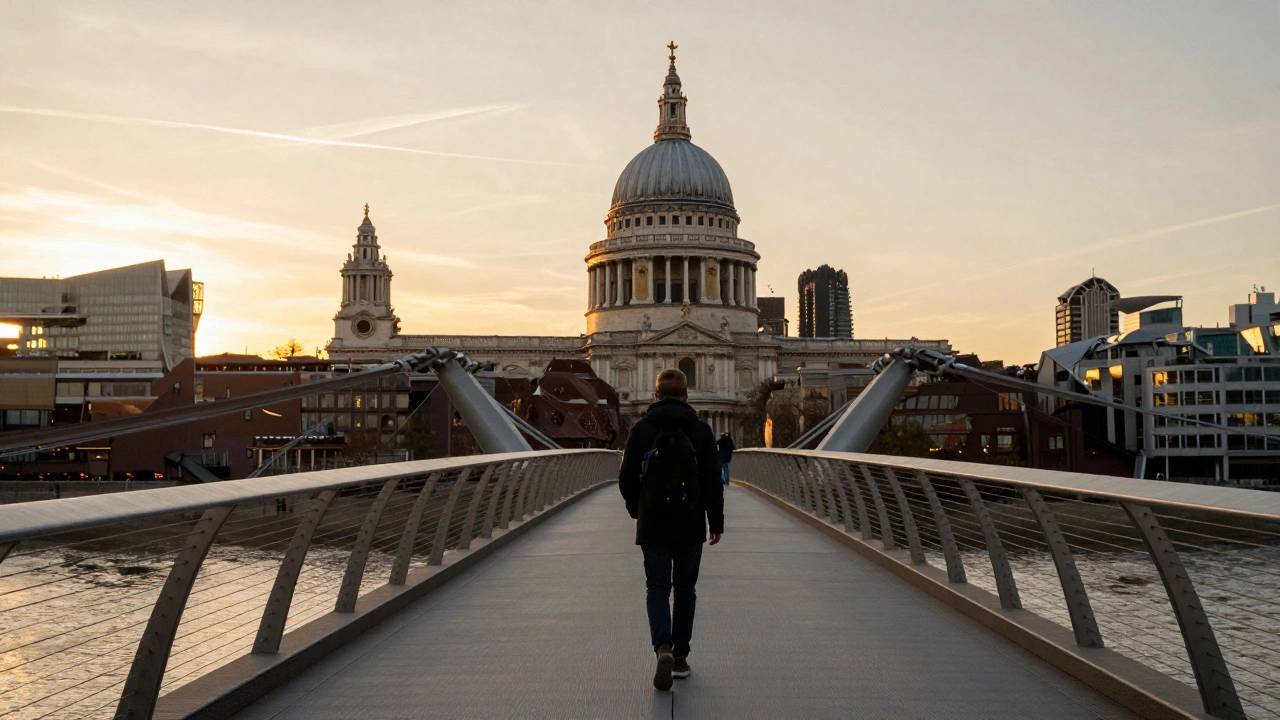
Standing between the City of London and the South Bank, the Millennium Bridge isn’t just another bridge. It’s the shortest, quietest, and most rewarding path between St. Paul’s Cathedral and Tate Modern. If you’ve ever walked across it at sunset, with the river glowing and the gallery’s angular facade in view, you know why it’s one of London’s most underrated experiences.
What Is the Millennium Bridge?
The Millennium Bridge is a steel suspension footbridge that opened in June 2000. It’s 325 meters long and connects Bankside on the south bank to the City on the north. Unlike the Tower Bridge or London Bridge, it doesn’t carry cars or trains-only people. That’s what makes it special. You get unobstructed views of the Thames, the Tate Modern, and the dome of St. Paul’s without traffic noise or crowds.
It was built to celebrate the new millennium and designed by Sir Anthony Caro, Sir Norman Foster, and Arup. The bridge’s sleek, narrow design looks like a blade slicing the water. It’s often called the ‘Wobbly Bridge’ because it shook when it first opened. Engineers fixed the issue by installing dampers, and now it’s as steady as a rock. Today, over 25,000 people cross it daily.
Why Walk Across It to Tate Modern?
If you’re heading to Tate Modern, walking across the Millennium Bridge is the best way to arrive. You don’t need to take the tube, fight bus traffic, or pay for parking. Just step off the bridge, turn left, and you’re at the entrance in under 90 seconds.
The Tate Modern itself is free to enter. It’s one of the most visited modern art galleries in the world, with works by Picasso, Warhol, and Hockney. But the real magic? The view you get as you approach it. The bridge frames the gallery’s chimney and glass tower perfectly. It’s the kind of moment you don’t plan for-you just stumble into it.
Many tourists head straight to the Tate’s main entrance from the South Bank tube station. But if you come from the north, the bridge gives you a dramatic reveal. You see the building slowly rise ahead of you, the river shimmering below. It’s cinematic.
What You’ll See Along the Way
Walking from St. Paul’s to Tate Modern isn’t just a path-it’s a tour. Here’s what you pass:
- St. Paul’s Cathedral - The iconic dome dominates the skyline. You can see it clearly from the bridge’s midpoint.
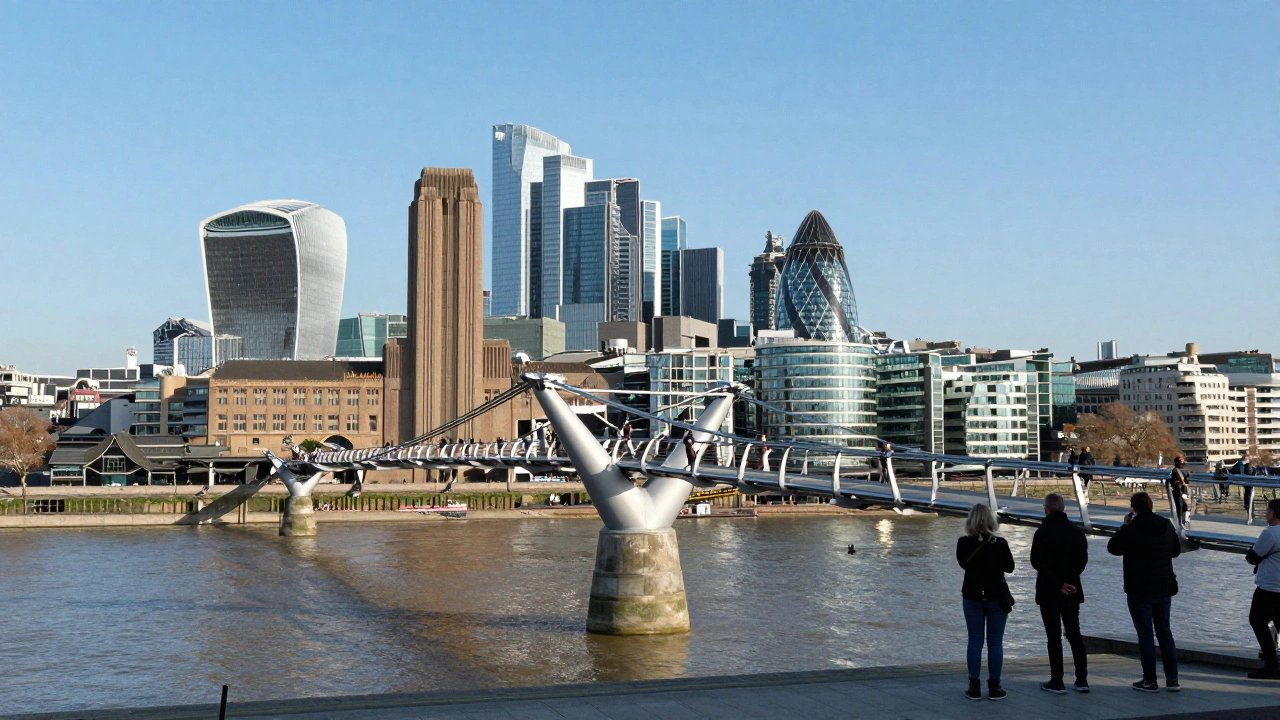
- The Gherkin (30 St Mary Axe) - A futuristic glass tower just a few hundred meters west of the bridge’s north end. It’s one of London’s most photographed buildings.
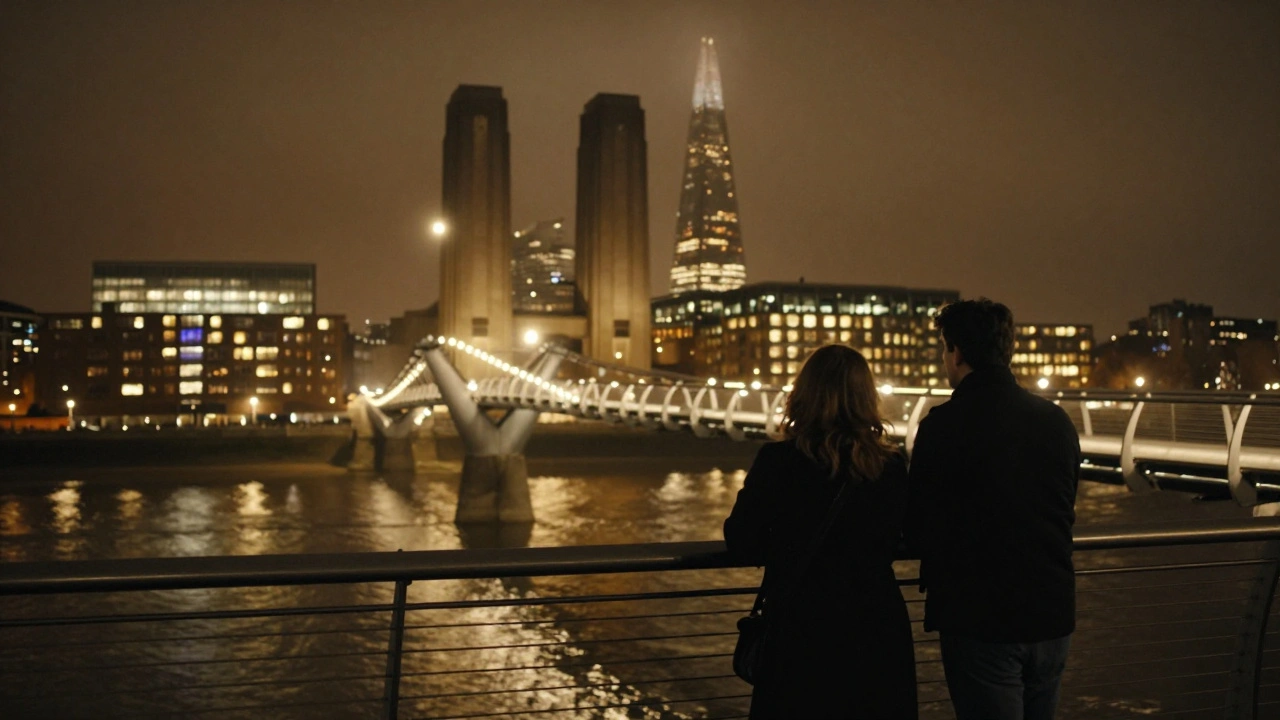
- The Shard - Visible in the distance to the southeast. The tallest building in the UK, it glows at night.
- Bankside Pier - Right at the south end of the bridge. This is where you catch river buses to Westminster or Canary Wharf.
- Tate Modern’s Turbine Hall - The massive, cathedral-like space inside the gallery. You can see its glass facade from the bridge, especially during exhibitions.
There’s no need to rush. The whole walk from the base of St. Paul’s to the Tate’s entrance takes about 15 minutes at a leisurely pace. Stop halfway to take photos. Sit on the low wall near the bridge’s center. Watch the boats glide under you.
Best Times to Cross
Timing matters. The bridge is quietest in the early morning (before 8 a.m.) and late at night (after 9 p.m.). Midday is crowded with tourists and office workers. But if you want the perfect light for photos, come just before sunset.
On clear evenings, the sun sets behind the Tate Modern, casting long shadows across the river. The bridge lights up automatically after dark, glowing softly like a ribbon of gold. On weekends, street musicians sometimes play near the south end. You might catch a violinist or a jazz trio.
Winter mornings offer mist over the river. Summer nights feel alive with people picnicking on the South Bank. Spring brings cherry blossoms along the riverwalk. Each season changes the vibe.
What to Bring
You don’t need much. But here’s what makes the walk better:
- Camera or phone - The views are too good to skip.
- Comfortable shoes - You’ll be walking on stone and metal. No flip-flops.
- A light jacket - The river wind picks up, even on warm days.
- A coffee from the Tate’s café - Grab one before you cross. Sip it as you walk.
Don’t carry a big bag. The bridge has no benches or rest areas. Keep it light.
How It Compares to Other Ways to Reach Tate Modern
| Method | Time | Cost | View | Best For |
|---|---|---|---|---|
| Millennium Bridge | 15 min walk | Free | Stunning river and skyline views | Photographers, travelers wanting a memorable arrival |
| South Bank Tube Station | 5 min walk | £2.80 (Oyster) | None | Speed, rainy days |
| London Eye Pier (river bus) | 20 min boat ride | £9.50 | Full river panorama | Tourists with time to spare |
| Blackfriars Bridge | 25 min walk | Free | Industrial, less scenic | Local commuters |
Most people pick the tube because it’s fast. But if you’re visiting Tate Modern for the first time, skip the underground. The Millennium Bridge turns a simple museum visit into a London moment.
What Else Is Nearby?
Don’t just cross the bridge and leave. The South Bank is packed with things to do:
- Shakespeare’s Globe - A reconstructed Elizabethan theatre, 10 minutes south. Catch a play if you’re here in summer.
- Borough Market - One of London’s best food markets. Open daily until 5 p.m. Try the cheese, pastries, or a hot chocolate.
- Hayward Gallery - Another free contemporary art space next to Tate Modern. Less crowded, often more experimental.
- Southbank Centre - A performing arts complex with concerts, film screenings, and rooftop bars.
Many people spend half a day here. Start at St. Paul’s, walk the bridge, explore Tate Modern, grab lunch at Borough Market, and end with drinks at the rooftop bar of the Tate’s extension.
Final Tip: Don’t Just Cross-Pause
The Millennium Bridge isn’t a means to an end. It’s a destination. People rush across it, snapping photos and moving on. But if you stop halfway, lean on the railing, and look back toward St. Paul’s, then forward toward the Tate, you’ll see why this bridge matters.
It’s not the longest. Not the oldest. Not even the most famous. But it’s the one that makes you feel like you’re walking through the heart of London-where history, art, and modern life meet.
Is the Millennium Bridge open 24/7?
Yes. The bridge is open every day, 24 hours a day. There are no gates or barriers. Even at midnight, you’ll find people walking across-couples, joggers, late-night artists. It’s one of the few places in central London that never truly sleeps.
Can I bring a stroller or wheelchair across the bridge?
Absolutely. The bridge has gentle slopes on both ends and wide, smooth pathways. It’s fully accessible. Wheelchairs, strollers, and mobility scooters pass through easily. There are no steps or stairs.
Is there a fee to walk across the Millennium Bridge?
No. It’s completely free. Unlike some attractions in London, there’s no ticket, no charge, no donation box. You just walk. That’s part of why it feels so authentic.
What’s the best photo spot on the bridge?
Stand near the center, where the bridge dips slightly. Look back toward St. Paul’s with the river in front of you. The dome frames perfectly between the bridge’s cables. For a Tate Modern shot, walk to the south end and turn around. The gallery’s chimney and glass walls line up with the bridge’s railings.
Are there restrooms on the bridge?
No. The bridge has no facilities. The nearest public restrooms are at Tate Modern (free for visitors) and Borough Market (pay-to-use). Plan ahead.