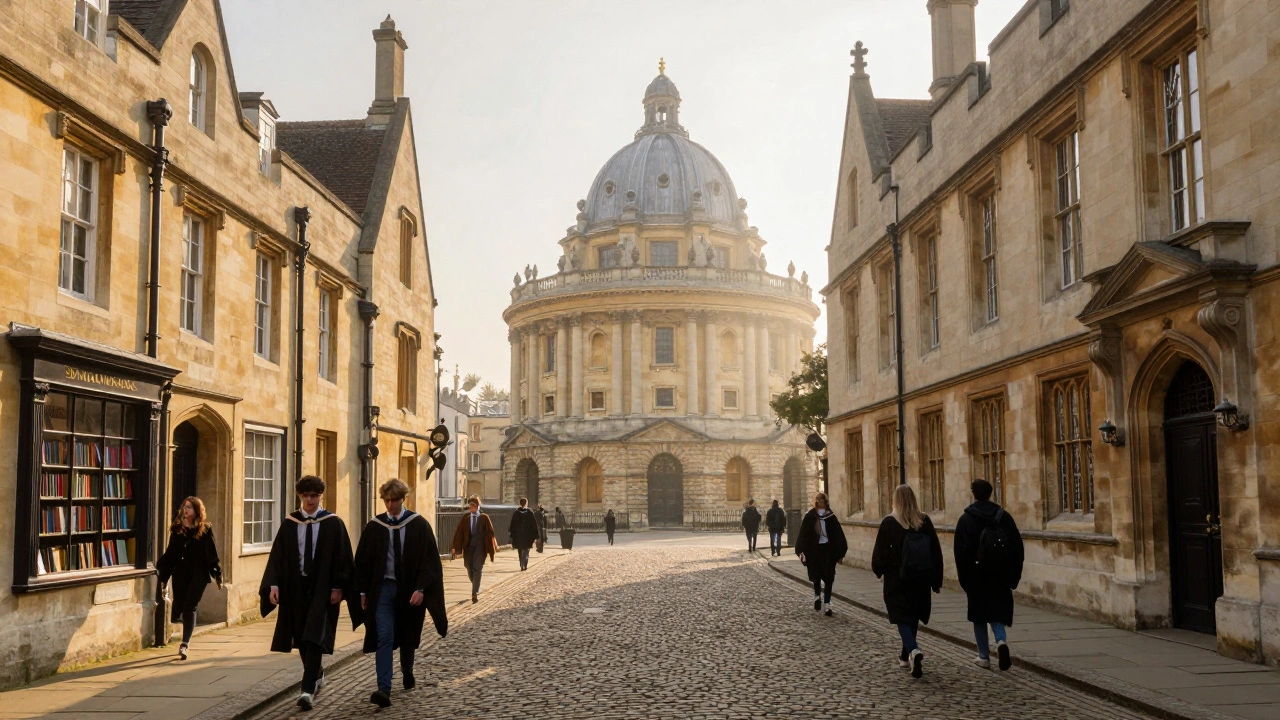
If you’re in London and have just one free day, two ancient university towns are calling your name: Oxford and Cambridge. Both are less than an hour away by train, packed with history, and feel like stepping into a Jane Austen novel. But which one should you pick? It’s not just about pretty buildings or punting. It’s about what kind of day you want to have.
Oxford: The City That Feels Like a Living Library
Oxford doesn’t just have colleges-it’s a city built around them. Walk down High Street and you’ll pass bookshops older than the United States, pubs where Tolkien once drank, and stone courtyards where Nobel laureates once studied. The city feels dense, layered, and alive with academic energy.
Start at Christ Church College. It’s the only Oxford college with its own cathedral, and it’s where Harry Potter’s Great Hall was filmed. You don’t need a full tour to get the vibe-just wander the cloisters in the morning light. The Bodleian Library is another must. Even if you can’t go inside the reading room (bookings are tight), the exterior alone-with its 15th-century arches and carved figures-is worth the walk.
Oxford’s museums are unmatched. The Ashmolean doesn’t just hold ancient artifacts-it tells the story of human civilization, from Egyptian mummies to modern art. It’s free, and you could spend half a day here without seeing everything. The Museum of Natural History? That’s where the dinosaur bones are. Kids love it. Adults get goosebumps.
For lunch, skip the tourist traps on Broad Street. Head to The Eagle and Child for a pint and a sandwich. It’s where C.S. Lewis and J.R.R. Tolkien met every Tuesday for decades. You’re not just eating-you’re sitting where legends debated fantasy worlds.
Cambridge: Quiet, Refined, and Perfect for Punting
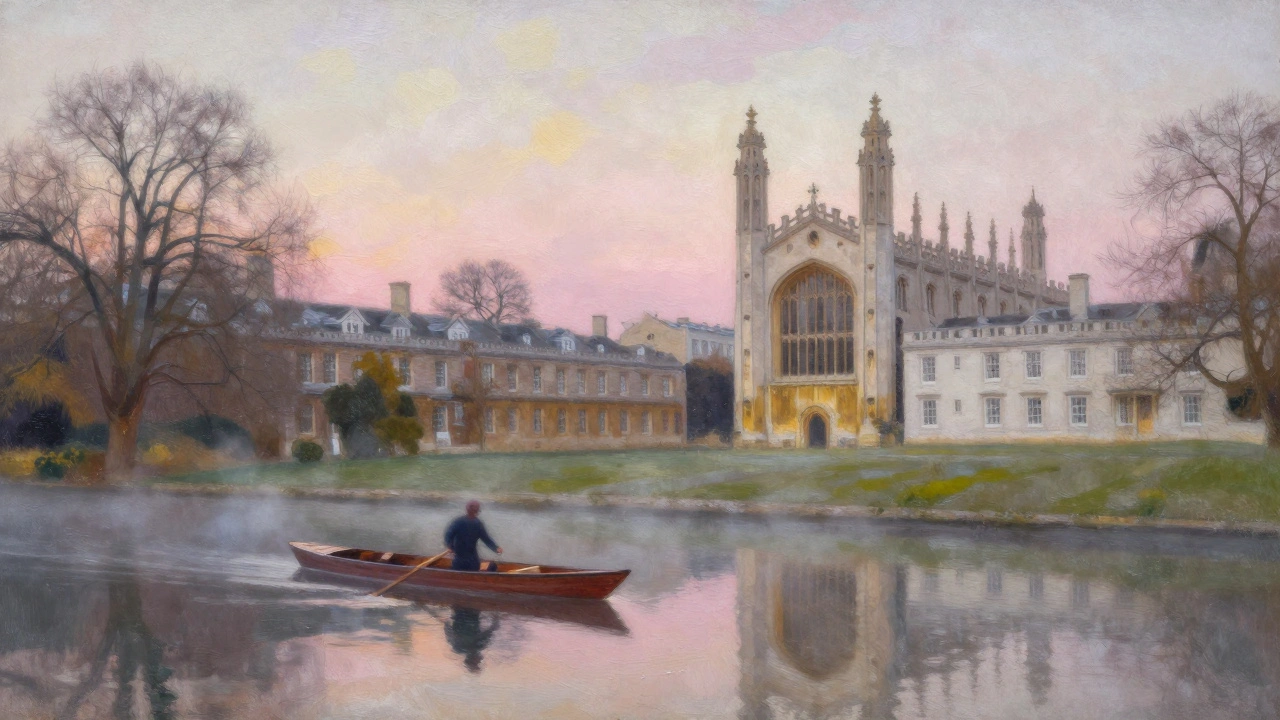
Cambridge is quieter. Slower. More like a dream you didn’t know you wanted. The River Cam winds through the town, lined with college backs that look like they were painted by Monet. This is where you want to be on a crisp winter morning, steam rising off the water, the silence broken only by the creak of a punt pole.
Start at King’s College. The chapel is one of the most beautiful buildings in England. If you’re lucky, you’ll catch the choir singing Evensong-free, and deeply moving. Walk the Backs, the stretch of gardens behind the colleges, and you’ll see Trinity, St John’s, and Clare all reflected in the water. You don’t need to pay to enter any of them-just stroll along the river path.
Punting is the signature Cambridge experience. Rent a punt from the bridge near the Eagle pub and push yourself along with a long pole. It’s harder than it looks. You’ll spin in circles, bump into other boats, and probably laugh the whole time. That’s the point. It’s not about skill-it’s about being in the moment.
Cambridge’s museums are smaller but just as rich. The Fitzwilliam Museum holds Greek vases, Renaissance paintings, and a whole wing of Asian art. It’s quieter than the Ashmolean, and you’ll often have rooms to yourself. The Whipple Museum of the History of Science? It’s a hidden gem with 18th-century telescopes, brass globes, and a working mechanical calculator from 1820.
For lunch, try The Eagle pub again-yes, there’s one here too. It’s not the same one as Oxford. This one’s where Crick and Watson announced they’d discovered DNA’s structure in 1953. There’s even a plaque on the wall. You can order a proper pub pie and feel like you’re dining in a science documentary.
Getting There: Train Times and Costs
Both towns are easy to reach from London. Trains leave from London Paddington for Oxford and London King’s Cross for Cambridge. The journey takes 50 to 60 minutes. A standard return ticket costs about £35-£45 if booked in advance. Off-peak fares are cheaper, and you can often find £15 deals if you’re flexible.
From the station, both towns are walkable. Oxford’s center is right outside the station. Cambridge’s is a 15-minute walk, but there are also frequent buses if you’ve got heavy bags.
Pro tip: Buy your ticket online the night before. Avoid the ticket machines at the station-they’re slower, and you’ll waste time you could spend in the colleges.
What You’ll Actually Do All Day
Oxford gives you more to see in a short time. You can hit three major museums, tour two colleges, grab lunch in a historic pub, and still have time to wander the covered market. It’s a full, rich, slightly overwhelming day.
Cambridge asks you to slow down. You’ll spend more time sitting by the river, watching the punts glide by. You’ll linger in the chapel. You’ll read the plaque at The Eagle and imagine two scientists realizing they’d cracked the code of life. It’s a day that lingers in your memory because it doesn’t rush you.
Which One Should You Pick?
If you love museums, history, and a buzz of activity, choose Oxford. It’s the place for people who want to see, touch, and absorb as much as possible. If you want peace, reflection, and beauty that unfolds slowly, Cambridge wins. It’s the place for people who want to feel something, not just check off sights.
Here’s a quick guide:
- Pick Oxford if: You like crowded streets with hidden gems, want to see more museums in one day, or are a fan of Harry Potter, Tolkien, or ancient science.
- Pick Cambridge if: You’d rather sit by a river, enjoy quiet courtyards, try punting, or feel like you’re walking through a poem.
Neither is better. They’re just different. Oxford shouts its brilliance. Cambridge whispers it.

What to Pack
Both towns are walkable, so wear good shoes. Winter in England means rain, even in December. Bring a light waterproof jacket and an umbrella. A small backpack is enough-you won’t need much beyond a camera, a book, and a thermos of tea.
If you’re going to Cambridge, bring a sense of humor. Punting is not a sport. It’s an adventure in clumsiness. You’ll fall in. You’ll laugh. You’ll remember it forever.
What to Skip
In Oxford, don’t waste time on the tourist bus tours. They’re expensive and slow. Walk. Get lost. That’s how you find the real Oxford.
In Cambridge, skip the guided college tours unless you’re obsessed with architecture. The Backs are free. The river is free. The peace is free. Those are the things that matter.
Final Thought: It’s Not About the Towns. It’s About the Feeling.
Oxford and Cambridge aren’t just places. They’re moods. One is bold, intellectual, and full of echoes of debate. The other is calm, poetic, and full of quiet revelations.
Take your pick. Or, if you can swing it, go to both. But if you only have one day? Let your mood decide. Not your itinerary.
Can I do both Oxford and Cambridge in one day?
Technically yes, but you’ll be rushing. The train ride between them takes 45 minutes, and you’d spend half your day on trains. You’d see the highlights but miss the soul of both. Better to pick one and really feel it.
Which is cheaper to visit?
Both are similar in cost. Train tickets are the same price. Most museums are free. Entry to colleges costs £10-£15, but you don’t need to pay to walk around the grounds or along the river. The biggest expense is lunch and transport from the station. Neither is significantly cheaper.
Is it worth visiting in winter?
Absolutely. Winter brings fewer crowds, mist over the river, and a quiet magic. The colleges look even more dramatic with bare trees and frost. Some gardens close early, but the main sights stay open. Pack warm layers and waterproof shoes.
Are these trips family-friendly?
Yes, especially Oxford. The Ashmolean and Museum of Natural History have hands-on exhibits kids love. Cambridge is quieter, so younger kids might get bored without punting or a picnic by the river. Bring snacks and a ball for open spaces.
Can I visit without a tour guide?
Yes, and you should. Most of the magic happens when you wander. You’ll find hidden courtyards, quiet bookshops, and benches with perfect views of the river. Guides are useful for deep history, but they don’t give you the feeling. Walk slow. Look up. Listen.