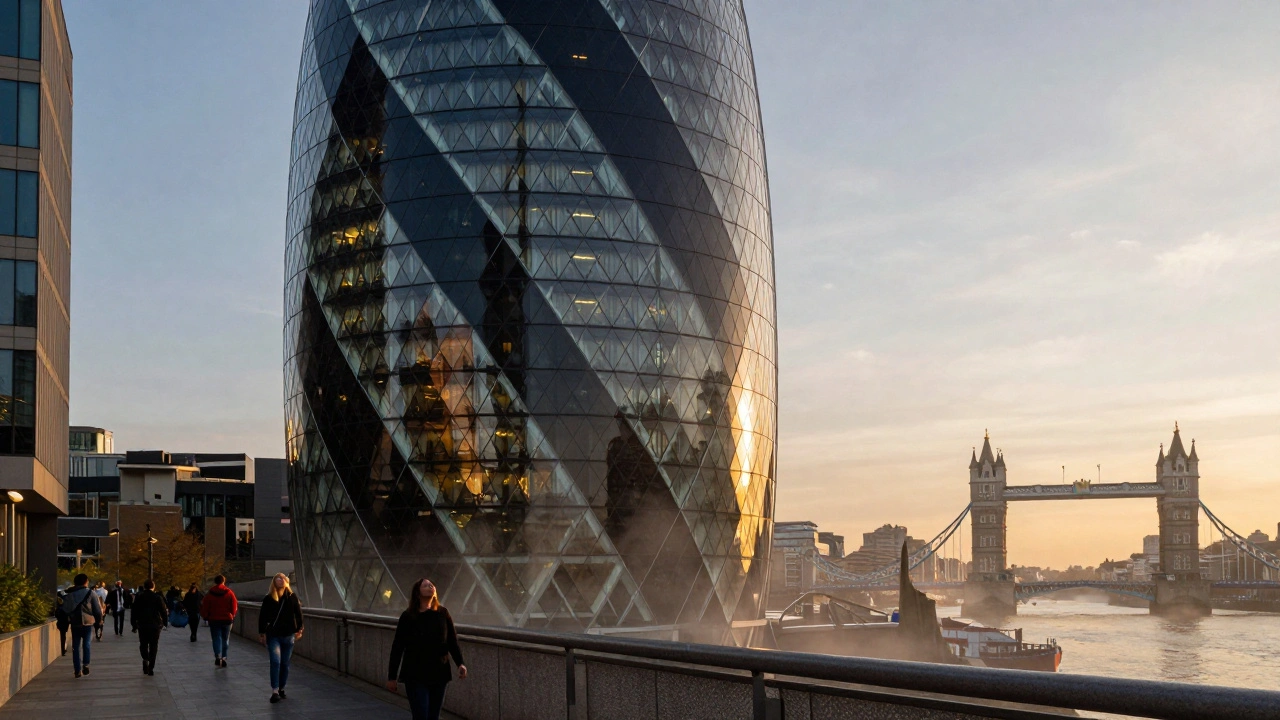
London isn’t just about red buses and black cabs. Walk past the Tower Bridge, turn a corner near the South Bank, and you’ll bump into buildings that look like they were designed by robots - and honestly? They kind of were. This isn’t sci-fi. It’s real architecture. Parametric and high-tech design has reshaped London’s skyline over the last 30 years, turning concrete and steel into something alive, responsive, and breathtakingly precise. If you’re curious where to see it, you don’t need a degree in engineering. Just follow the curves, the glass, and the exposed guts of the buildings.
What Exactly Is Parametric and High-Tech Architecture?
Let’s cut through the jargon. Parametric architecture is a design method that uses algorithms and data to generate shapes based on rules - like how a tree grows or how wind flows around a building. It’s not just fancy curves. It’s math made visible. Think of it like a video game engine building a landscape in real time, but instead of grass and mountains, it’s facades and roofs.
High-tech architecture is its older cousin. It emerged in the 1970s and 80s, celebrating engineering - exposed pipes, steel frames, glass walls, and mechanical systems turned into features, not hidden away. It’s the architectural version of showing off your engine in a sports car. You can spot it by its honesty: no fake stone cladding, no pretending to be old. Just structure, function, and flair.
These two styles often overlap. Many modern London buildings use parametric tools to design high-tech structures. The result? Buildings that breathe, bend, and respond - not just sit there.
The Gherkin: Where Math Meets the Skyline
You can’t miss it. The 30 St Mary Axe - better known as The Gherkin - is the poster child for parametric design in London. Designed by Norman Foster and completed in 2004, it’s not just a pretty shape. Its tapering form reduces wind turbulence by 20% compared to a boxy tower. That’s not luck. It’s computational modeling.
The glass skin? 1,500 unique panels, each shaped differently. No two are identical. That’s parametric design in action. Inside, the spiral atrium pulls air naturally through the building, cutting cooling costs by 50%. It’s energy-efficient because it was designed with climate data, not just aesthetics.
Visit on a clear day. Look up. See how the curves flow. You’re not just looking at a building - you’re seeing a weather simulation made real.
The Bloomberg European Headquarters: The Brain of the City
Just down the road from The Gherkin, at 125 London Wall, stands the Bloomberg European Headquarters. Opened in 2017, it’s one of the most advanced office buildings in the world. Designed by Foster + Partners, it’s a masterclass in high-tech efficiency.
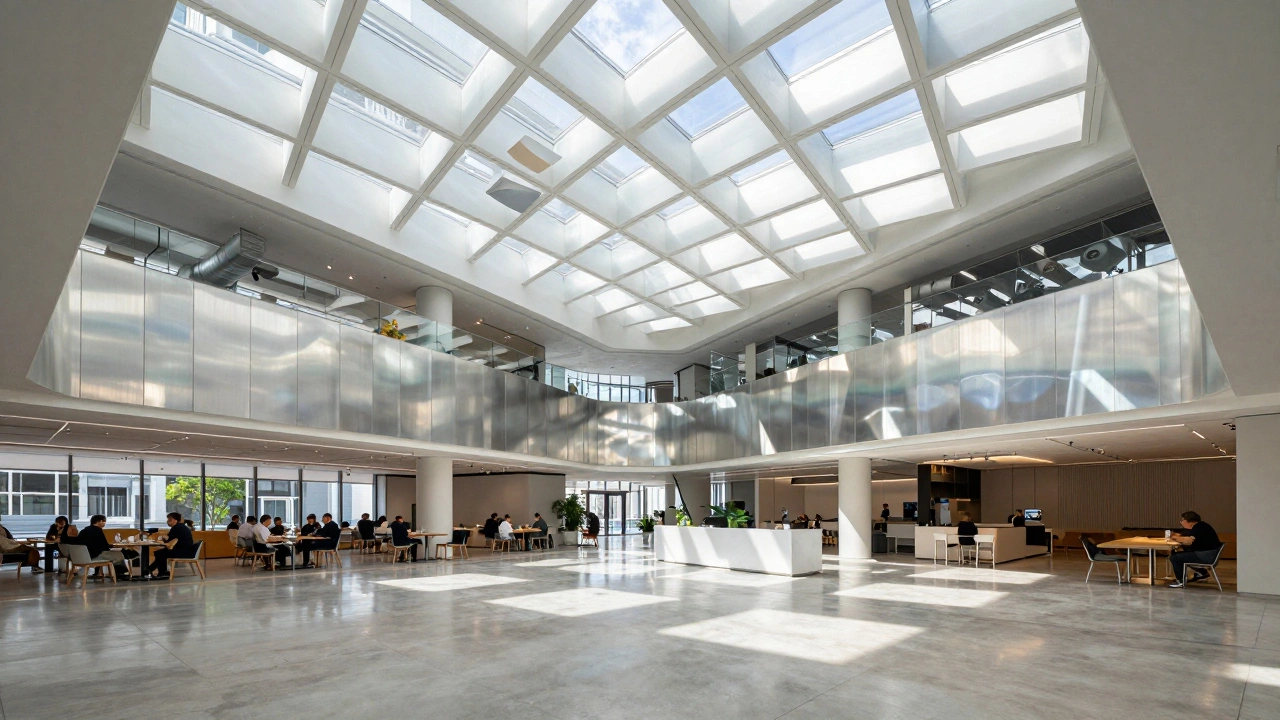
Here’s what makes it special: the ceiling. Every single lighting panel is adjustable. Sensors track sunlight, occupancy, and even how many people are in a room. The lights dim or brighten automatically. The ventilation adjusts per desk. It uses 40% less energy than a standard office of the same size.
And the materials? The ceiling panels are made from recycled aluminum. The floors? Concrete with embedded pipes that store cold water at night to cool the building by day. It’s not just green. It’s intelligent. You can tour it - but only if you’re invited. Still, the public atrium on the ground floor is open to everyone. Go. Look at the way the light dances on the curved surfaces. That’s parametric design guiding every beam and panel.
The London Aquatics Centre: A Wave Made Solid
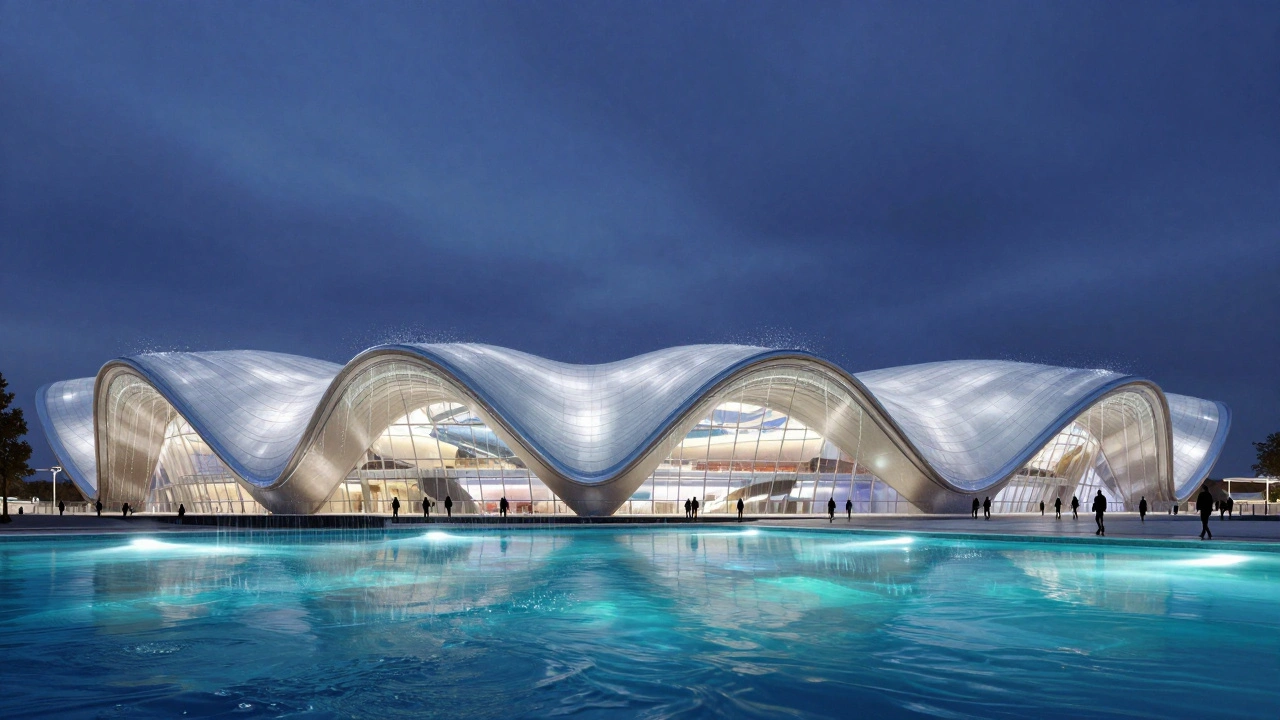
Not all high-tech architecture is glass and steel. The London Aquatics Centre in Queen Elizabeth Olympic Park is a sculptural marvel. Designed by Zaha Hadid, it opened in 2012 for the Olympics and looks like a frozen wave.
Its roof curves in three dimensions - no straight lines. That shape wasn’t drawn by hand. It was modeled using fluid dynamics software to mimic water movement. The result? A roof that channels rainwater, reduces wind load, and creates an open, airy interior without needing internal supports.
It’s parametric design at its most emotional. This building doesn’t just work - it feels like motion. Even if you’re not swimming, walk around it. Feel how the curves guide your eyes. That’s architecture that responds to nature, not just builds on top of it.
The Shard: The Needle That Touches the Clouds
At 310 meters tall, The Shard is London’s tallest building. Completed in 2012, it’s often mistaken for a traditional tower. But look closer. Its shape isn’t arbitrary. It tapers like a needle - not for style, but for physics.
Each of its eight triangular facets is angled to reduce wind pressure. The glass facade is triple-glazed. The building’s energy use is 30% lower than similar skyscrapers. It uses a double-skin façade: an outer layer of glass and an inner layer with vents. The gap between them acts like insulation.
It’s high-tech because it doesn’t hide its systems. The elevators are grouped in zones. The heating and cooling pipes are visible in the service cores. The design team used computational fluid dynamics to simulate wind flow at every level. That’s not guesswork. That’s data-driven architecture.
Where Else to Look
There’s more. Head to The Velodrome in East London - its timber roof curves like a bicycle track. Or The Emirates Air Line cable car - its towers use parametric supports to handle wind loads over the Thames. Even the Barbican Estate, though Brutalist, has high-tech elements: exposed ducts, modular units, and service towers that look like industrial pipes.
For a self-guided tour, start at Tower Bridge, walk to The Gherkin, then head to Bloomberg and The Shard. You’ll cover the best of parametric and high-tech in under 3 miles. Wear good shoes. Bring a camera. And don’t just take photos - look up. Look at the seams. Look at the angles. These buildings aren’t just there. They’re thinking.
Why This Matters
London’s modern architecture isn’t just about looking cool. It’s a response to real problems: climate change, urban density, energy use. These buildings prove that innovation doesn’t mean coldness. It can be beautiful, efficient, and human.
When you stand under The Aquatics Centre’s roof, you’re not just under a structure. You’re under a simulation of water flow, turned into shelter. When you walk into Bloomberg’s atrium, you’re inside a living system that adjusts to you.
This isn’t architecture for architects. It’s architecture for everyone. And London is one of the few cities where you can walk through decades of this evolution - from the exposed steel of the Lloyd’s Building in the 1980s to the algorithm-driven curves of today.
Can I tour the Bloomberg building?
Yes, but only through pre-booked guided tours. The public atrium on the ground floor is open daily without booking - you can walk in, grab a coffee, and see the stunning ceiling and lighting system up close. For full building tours, check the Bloomberg website for availability. They’re free but limited to 20 people per session.
Is The Gherkin open to the public?
The Gherkin is an office building, not a tourist attraction. You can’t go inside unless you work there or have a meeting. But you can visit the restaurant on the top floor - Searcys - which offers panoramic views. Book ahead. Or just take photos from the street. The best views are from the south side of the Thames near Tower Bridge.
What’s the difference between parametric and high-tech architecture?
High-tech architecture focuses on exposing structure and mechanical systems - think pipes, beams, and elevators as design elements. Parametric architecture uses algorithms to generate complex shapes based on data, like wind, light, or occupancy. Many modern buildings combine both: a high-tech structure (exposed systems) with parametric forms (curved, responsive surfaces). The Gherkin is parametric in form, high-tech in systems.
Are these buildings only for business use?
No. While many are offices, others are public: The Aquatics Centre, The Velodrome, and the Emirates Air Line are all open to visitors. Even The Shard has a public viewing gallery on floors 68-72. London has made sure these innovations aren’t locked away. You just need to know where to look.
Who designed the most famous parametric buildings in London?
Norman Foster designed The Gherkin and Bloomberg. Zaha Hadid designed the London Aquatics Centre. Richard Rogers, a pioneer of high-tech architecture, designed the Lloyd’s Building and the Millennium Bridge. These architects didn’t just build structures - they built systems that think, adapt, and respond.
Next Steps: How to Explore Further
If you loved seeing these buildings, dive deeper. The RIBA Architecture Gallery on Portland Place regularly hosts exhibits on parametric design. The Tate Modern has a permanent installation on computational design. And if you’re feeling ambitious, download the London Architecture Map app - it has GPS-tagged stops for 20+ high-tech buildings.
These buildings aren’t relics. They’re alive. And London is the best place in the world to walk through their evolution - one curve, one beam, one sensor at a time.