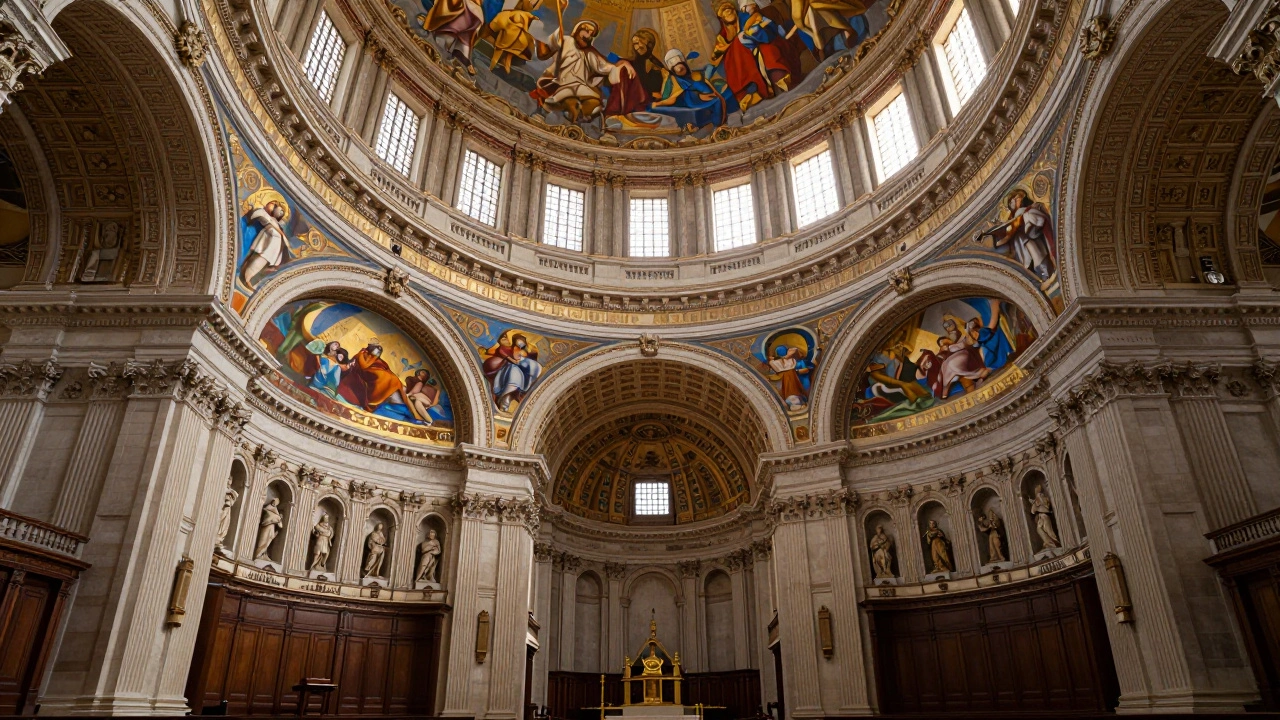
Walk into St Paul’s Cathedral and the first thing that hits you isn’t the silence-it’s the space. Not just any space. A dome so tall it feels like you’re standing under the sky itself. This isn’t just a church. It’s a 300-year-old engineering miracle designed by Sir Christopher Wren after the Great Fire of London burned the old cathedral to ashes. And inside? Every inch tells a story-not with words, but with stone, light, and sound.
The Whispering Gallery: Where Sound Becomes Magic
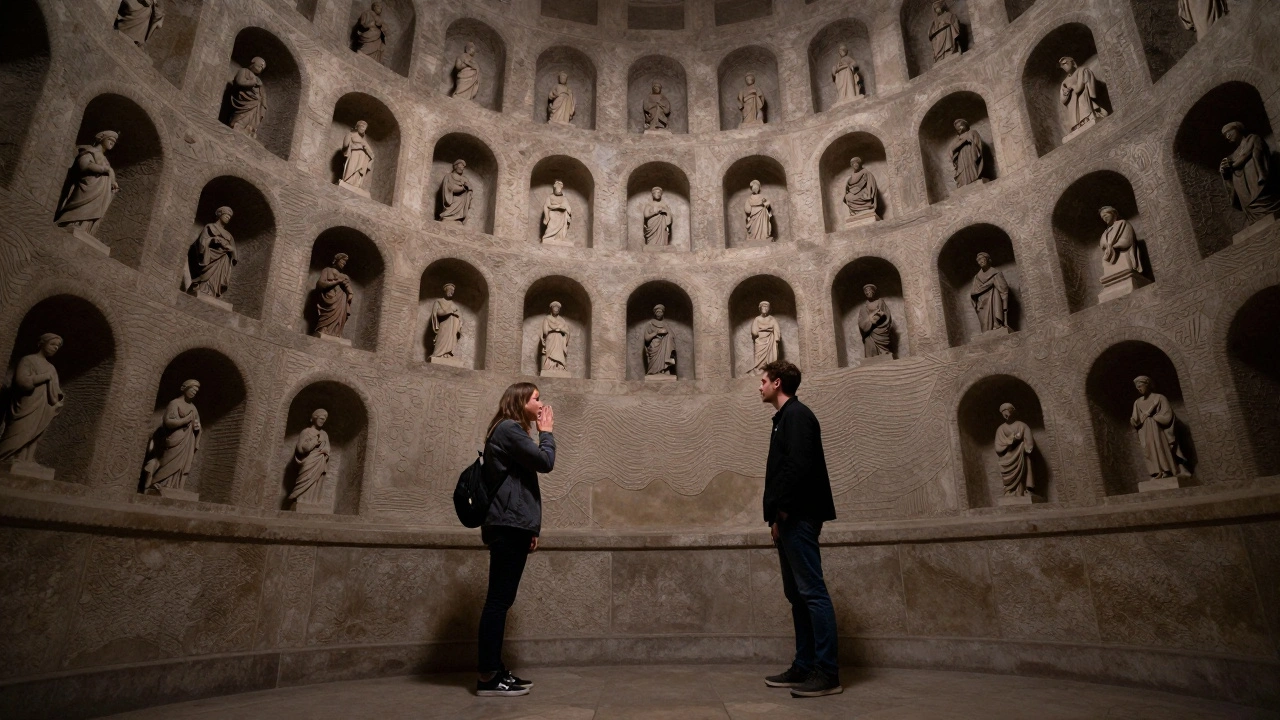
Head up 257 steps to the Whispering Gallery, a circular walkway hugging the inner curve of the dome. Stand close to the wall, whisper something, and have a friend stand exactly opposite. You’ll hear it like they’re right beside you-even though you’re 32 meters apart. That’s not magic. That’s acoustics. The curved surface of the dome reflects sound perfectly, like a giant echo chamber built in 1708. Tourists line up for this. Locals know it’s the quietest secret in London.
Wren didn’t just want beauty. He wanted science. The gallery’s design was intentional: to prove that a dome could be both grand and functional. You’ll notice the walls aren’t smooth. They’re lined with 72 small niches, each holding a statue of a saint or biblical figure. These aren’t just decoration. They break up sound waves, helping the whisper travel farther. This isn’t a museum exhibit. It’s a live experiment you can test with your own voice.
The Golden Dome: Engineering That Defied Gravity
Look up. The golden dome you see from the outside? It’s actually three domes stacked like Russian dolls. The outer one is the iconic silhouette you see in postcards. The middle one is structural-made of brick and timber, holding everything up. The inner one is the one you’re staring at from below, painted with a 17th-century fresco by James Thornhill. It shows scenes from the life of St Paul, glowing in gold leaf and deep blues.
Wren’s genius was hiding the heavy middle dome from view. He didn’t want the interior to feel cluttered with supports. So he built a hidden brick cone inside the middle dome to carry the weight of the lantern above. That cone? It’s the reason the inner dome looks impossibly light. No visible pillars. No bulky beams. Just clean, soaring space. When the cathedral opened in 1711, no one had ever seen anything like it. Even today, engineers study it.
The Stone Floor: Where Kings and Queens Are Laid to Rest
Walk across the floor. You’re stepping on history. Beneath your feet lie over 300 graves. Some are marked with simple brass plaques. Others are carved into grand monuments. Admiral Nelson, who defeated Napoleon at Trafalgar, rests here in a black marble sarcophagus, surrounded by a circle of 12 columns. The Duke of Wellington, who beat Napoleon at Waterloo, lies nearby under a massive statue of him in armor.
Wren didn’t plan for this. The cathedral was meant for worship, not burial. But after the Great Fire, London’s churches were destroyed. St Paul’s became the default resting place for national heroes. The floor is a who’s who of British military and political power. Look for the names: Blake, Tennyson, Florence Nightingale. Each plaque tells a life. Each tomb, a legacy.
The Choir and Organ: Music That Shakes the Soul
At the crossing, under the dome, sits the choir. On Sundays, their voices rise in harmony, echoing through the stone. The organ? It’s not just big-it’s alive. Built in 1694, it’s been rebuilt twice, but the original pipes still sing. There are over 7,000 pipes. The largest is 32 feet tall. When played at full volume, the sound vibrates your chest. You don’t hear it. You feel it.
Wren designed the space to carry music. He knew choirs would be central to worship. So he gave the cathedral a shape that naturally amplifies voices without echo. No reverb. No muddiness. Just clarity. Even today, when the choir sings Handel’s Messiah or a modern hymn, the acoustics are unmatched. Many say the sound here is the closest thing to heaven.
The Crypt: A City Beneath the City
Downstairs, past the quiet staircase, is the crypt. It’s colder here. Darker. But full of stories. This is where Wren himself is buried. His tomb is simple: a stone slab with just three words: Lector, si monumentum requiris, circumspice-Latin for, “Reader, if you seek his monument, look around you.”
The crypt holds over 200 tombs. Artists, scientists, bishops. There’s a memorial to the unknown soldiers of World War I. A statue of Queen Victoria’s son, Prince Leopold. A small chapel dedicated to the fallen of the British Empire. The crypt isn’t just a burial ground. It’s a mirror of Britain’s past-its pride, its losses, its quiet grief.
The Lantern: The Crown of the Cathedral
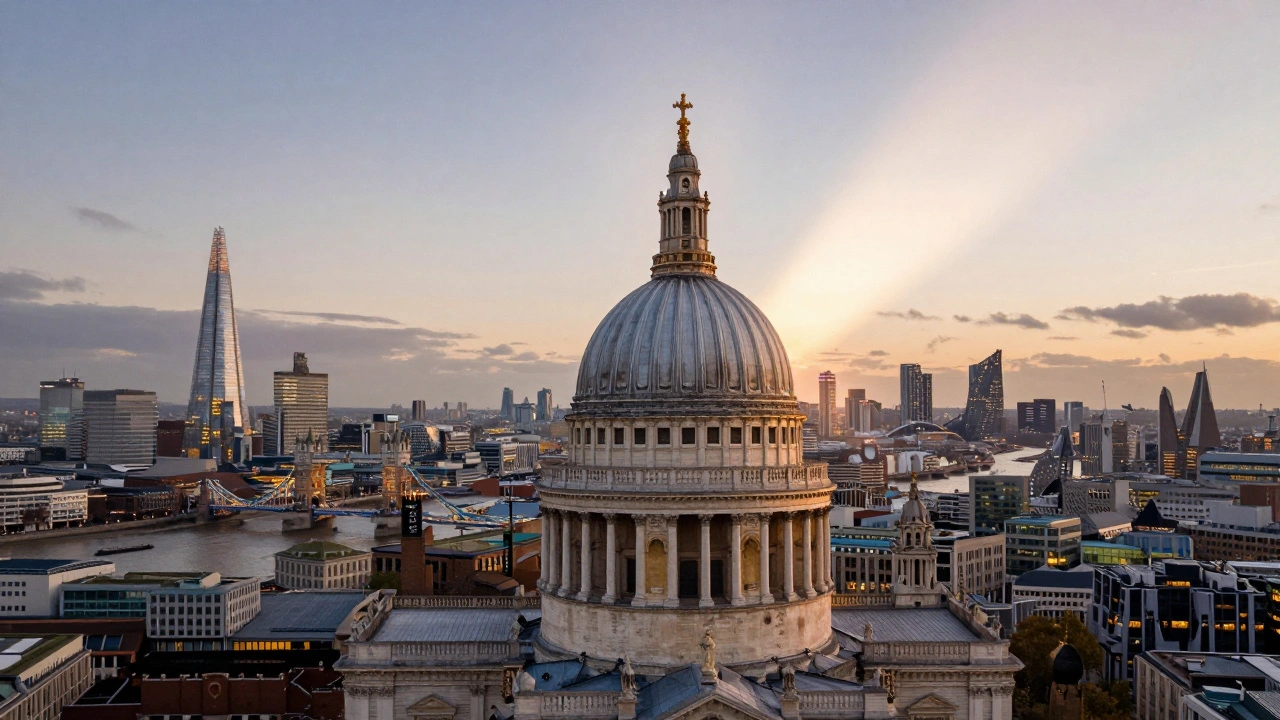
Climb another 528 steps-yes, that’s 785 total-to reach the lantern at the very top. It’s the highest public point in the cathedral. From here, you see London spread out like a map. The Thames curls past Tower Bridge. The Shard glints in the sun. The City’s skyline is a mix of old and new, all framed by Wren’s dome.
This isn’t just a view. It’s proof. Wren built this dome to rise above all else. To say, even after fire and war, beauty endures. The lantern isn’t decorative. It’s a beacon. At night, its lights glow softly, visible for miles. Pilgrims, tourists, locals-they all come to see it. Not because it’s pretty. Because it’s powerful.
Why This Matters Today
St Paul’s isn’t a relic. It’s still alive. It hosts royal weddings, state funerals, and protests. In 2011, Occupy London camped outside. In 2022, the Queen’s funeral procession passed through its doors. It’s not just architecture. It’s a stage for history.
Wren didn’t build this for fame. He built it to heal. After the fire, London needed hope. He gave them a cathedral that didn’t just stand-it soared. And today, it still does. Walk inside. Look up. Listen. Feel the silence. That’s not just a building. That’s a promise.
How long does it take to explore St Paul’s Cathedral interior?
Most visitors spend between 1.5 to 2.5 hours inside. If you’re just walking through the nave and choir, you can do it in 45 minutes. But if you climb the Whispering Gallery, the Stone Gallery, and the Golden Gallery, plus visit the crypt, plan for at least 2 hours. The climb is steep and narrow in places, so take your time.
Can you visit the dome for free?
No. Entry to St Paul’s Cathedral requires a ticket. As of 2026, adult tickets cost £25. This includes access to the interior, all galleries, and the crypt. Free entry is only available for attending worship services-like Sunday morning service or Evensong-but you can’t tour the galleries or climb the dome during those times.
Is the climb to the dome difficult?
It’s not easy, but most healthy adults can manage it. There are 528 steps to the Golden Gallery, with narrow, steep staircases and tight turns. No elevators. If you have mobility issues, you can still see the nave and crypt without climbing. The Whispering Gallery (257 steps) is the most popular option-less intense but still rewarding.
Are photos allowed inside?
Yes, photos are allowed in most areas, including the dome and crypt. But no flash, no tripods, and no photography during services. The best time for light shots is late afternoon, when the sun hits the inner dome just right. The Whispering Gallery is perfect for selfies-just don’t block the sound.
What’s the best time to visit to avoid crowds?
Early morning (9-10 AM) on weekdays is quietest. Weekends and lunchtime get packed. If you want the dome to yourself, aim for late afternoon. The light is better, and many tourists leave after lunch. Also, check the cathedral’s website-special events like concerts or services can mean restricted access.