British Museum layout: How to navigate the world’s largest collection of artifacts
When you step into the British Museum layout, the organized system of galleries, staircases, and corridors that guides visitors through over eight million artifacts. Also known as the museum floor plan, it’s not just a map—it’s a timeline you can walk through. The building itself was designed in the 1850s to feel like a temple of knowledge, with grand halls and quiet corners. But with 100+ galleries spread across four floors, getting lost is easy if you don’t know where to start.
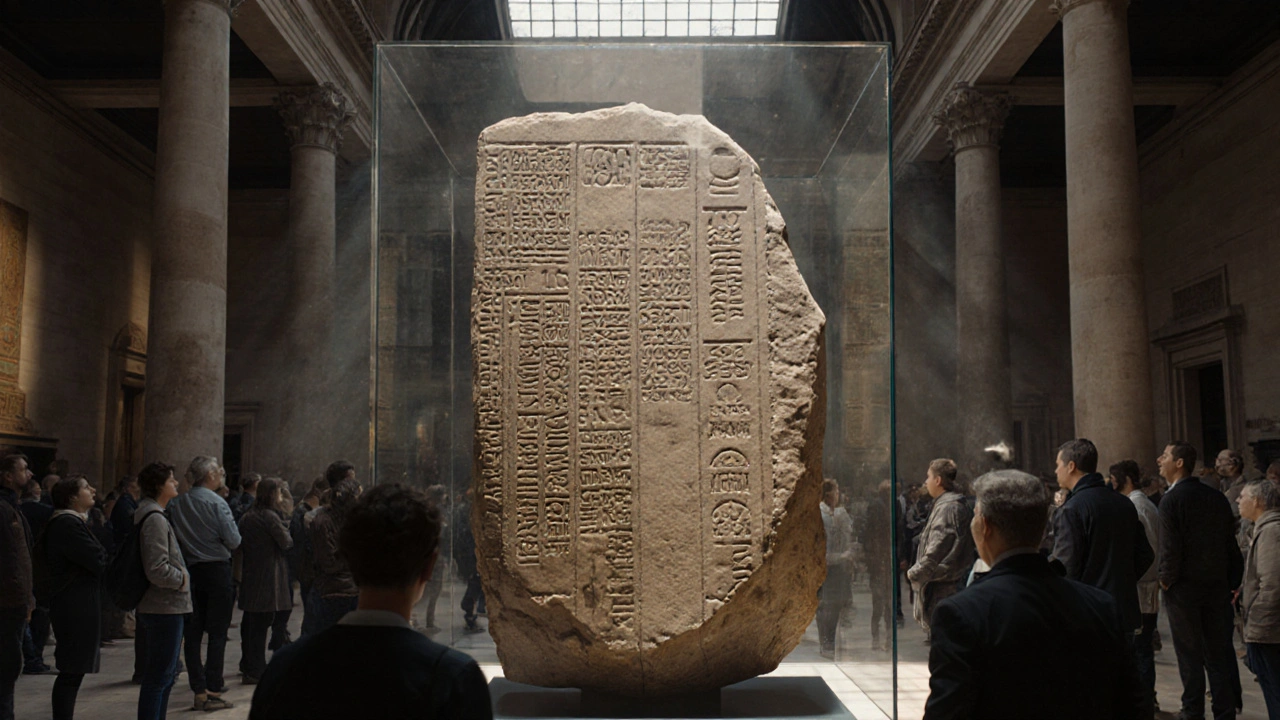
The British Museum floors, the four main levels that group artifacts by region and era. Also known as the museum levels, each one tells a different part of human history. Ground floor is where you’ll find the big names: the Rosetta Stone, the Elgin Marbles, and the Egyptian mummies. It’s the busiest, but also the most essential. First floor holds the ancient Near East, Greek and Roman treasures, and the Sutton Hoo ship burial. The second floor dives into Africa, Asia, and the Americas—less crowded, more intimate. The basement? That’s where the prints and drawings live, often overlooked but full of hidden masterpieces.
The British Museum galleries, the individual rooms where artifacts are displayed with context, lighting, and sometimes audio guides. Also known as exhibition spaces, they’re grouped by culture and time period, not randomly. You won’t find a random mix of Egyptian pots next to Chinese porcelain. Each gallery is a chapter. The Assyrian palace rooms feel like stepping into a 700 BCE palace. The Enlightenment Gallery shows how 18th-century thinkers saw the world. The Sainsbury African Galleries? Quiet, thoughtful, and rarely packed.
There’s no single "right" way to walk through the British Museum layout. But if you want to see the highlights without the shoulder-to-shoulder crowds, start at the back entrance on Montague Place. Head straight to the Great Court—you’ll get your first view of the reading room and the glass roof—then turn left toward the Egyptian Sculpture Gallery. That’s the quietest entry point to the museum’s crown jewels. Avoid the main entrance on Great Russell Street before 11 a.m. and after 2 p.m. on weekends.
Most people rush through the Rosetta Stone in five minutes. But if you pause, read the wall labels, and look at the carvings beside it, you’ll see how language became a key to unlocking history. That’s what the British Museum layout does—it doesn’t just show objects. It connects them. A Roman coin found in India, a West African mask displayed next to a Greek helmet, a Mesopotamian tablet next to a Chinese bronze bell. These aren’t random. They’re deliberate. The layout forces you to see how cultures touched each other, traded, fought, and copied ideas.
You don’t need a ticket for the Great Court. You don’t need a guide. You just need to pick one direction and follow it. The museum gives out free paper maps, but the app is better—it shows real-time crowd levels in each gallery. Use it. Skip the ones with red dots. Head to the green ones. The British Museum layout is designed to be explored slowly. There’s no finish line. You can spend an hour or eight days here and still find something new. What you’ll find below are real tips from people who’ve walked every corridor, sat in every quiet corner, and learned where the light hits the Parthenon sculptures just right.