Highgate Cemetery: History, Famous Graves, and What to See in London's Most Haunting Burial Ground
When you walk through Highgate Cemetery, a sprawling Victorian-era burial ground in North London known for its gothic arches, overgrown tombs, and eerie silence. Also known as London's most atmospheric cemetery, it’s not just a place for the dead—it’s a living archive of 19th-century grief, art, and social history. Opened in 1839, it was built at a time when London’s churchyards were overflowing, and the city needed a new way to bury its dead. What emerged wasn’t just a graveyard—it was a landscape of marble angels, crumbling obelisks, and family vaults carved like miniature cathedrals. This isn’t a place you visit for quick photos. It’s where you pause, listen to the wind through the yew trees, and wonder who once stood where you’re standing.
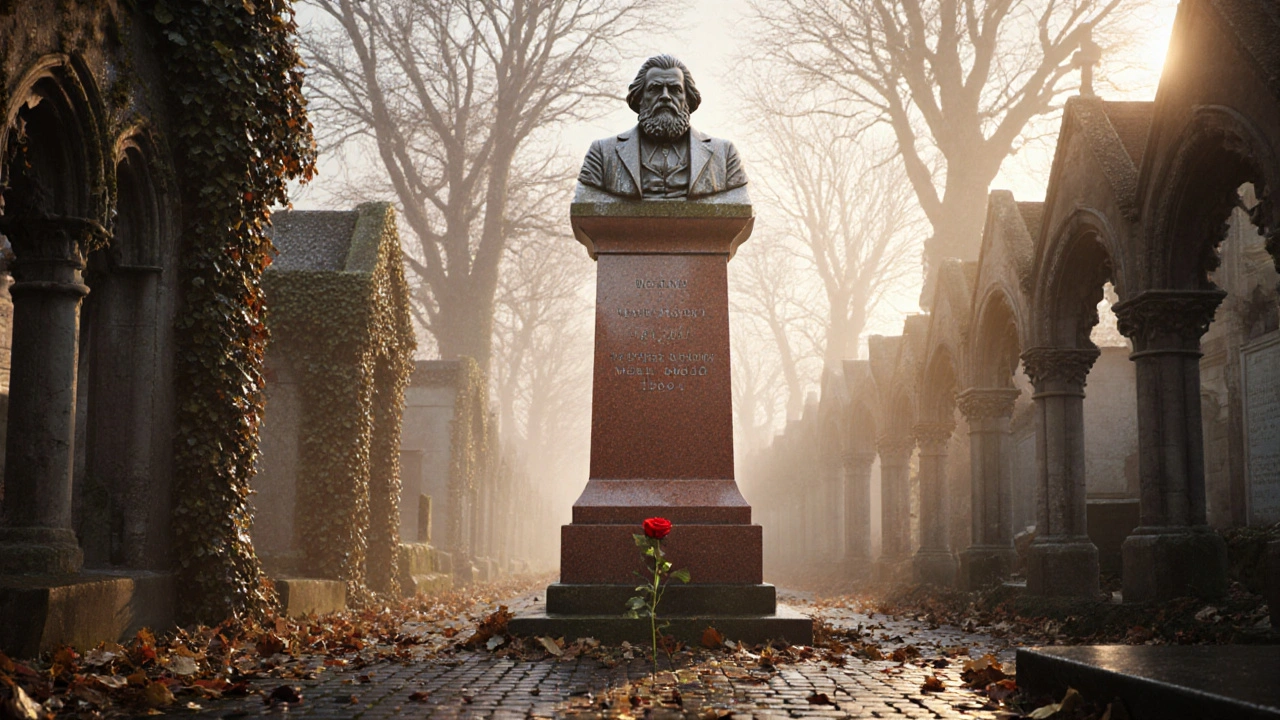
Highgate Cemetery is split into two halves: the older, west side, and the newer, east side. The west side is the one everyone remembers—the one with the winding paths, the leaning headstones, and the famous Karl Marx, the philosopher and economist whose massive tomb, topped with a bronze bust, draws visitors from across the world. Also known as Marx’s final resting place, his grave is a pilgrimage site for students, activists, and curious travelers alike. Just a few steps away lies George Eliot, the pen name of Mary Ann Evans, one of the greatest novelists of the Victorian era, buried under a simple stone that belies her literary impact. Also known as the author of Middlemarch, her quiet marker stands in stark contrast to the grandeur around her. Then there’s the poet Michael Faraday, the radical activist William Morris, and dozens of lesser-known names whose lives were shaped by London’s industrial rise and fall. The cemetery doesn’t just hold bodies—it holds ideas.
What makes Highgate Cemetery different from other London graveyards isn’t just its beauty. It’s the way time has slowed here. Moss creeps over names. Roots lift headstones. The air smells like wet earth and old stone. You can’t just wander in—guided tours are required for the west side, and they’re worth every pound. The guides don’t just read dates. They tell stories: the widow who had her husband’s coffin brought to the cemetery in a horse-drawn hearse, the child buried in a tiny coffin with a porcelain doll, the family who commissioned a tomb shaped like a book. These aren’t tourist facts. They’re human moments frozen in stone.
On the east side, things are quieter. Fewer tourists. More wild growth. The tombs here feel more personal, less staged. It’s where locals come to sit, to think, to remember. The east side doesn’t need drama. Its power is in its stillness.
Highgate Cemetery isn’t a theme park. It’s not even really a tourist attraction. It’s a place where London’s past breathes—quietly, stubbornly, beautifully. Whether you’re drawn by history, architecture, or just the strange pull of the unknown, this is one spot where the city doesn’t shout. It whispers. And if you listen close enough, you’ll hear it.
Below, you’ll find real stories from people who’ve walked these paths—how to visit without the crowds, which tombs to look for, why the cemetery feels different at dusk, and what the locals know that guidebooks don’t say.