When you walk into Tate Modern, you don’t just enter a museum-you step into a living conversation between art, space, and the city. It’s not just another gallery with paintings on walls. This is a place where industrial history meets cutting-edge creativity, and where the River Thames becomes part of the exhibit. If you’ve ever wondered what makes Tate Modern different from every other modern art museum, the answer is simple: it’s the way everything here connects.
The Turbine Hall: When Space Becomes Art
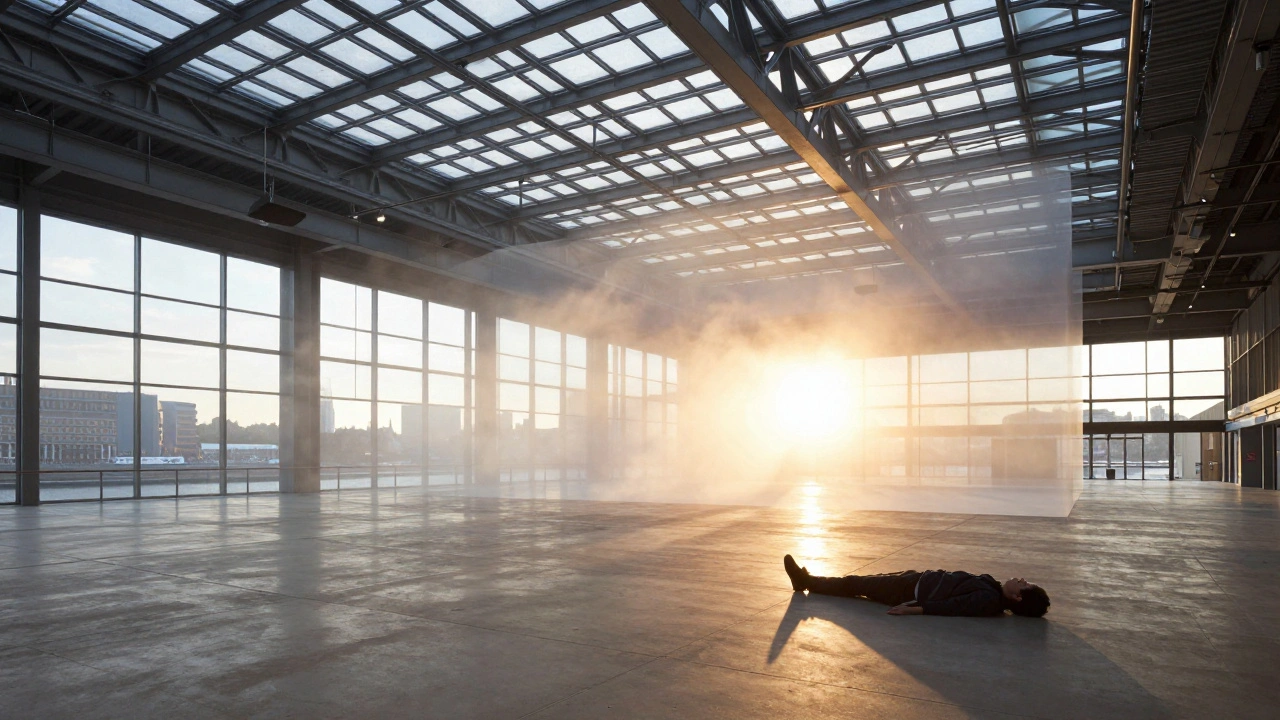
The Turbine Hall is the heart of Tate Modern. It’s not a room. It’s not even a gallery. It’s a 150-meter-long, 35-meter-high industrial cavern that used to generate electricity for London. Today, it’s where artists turn empty space into something you feel in your bones. No walls. No frames. Just you, the art, and the echo of your footsteps.
In 2025, the hall featured Olafur Eliasson’s "The Weather Project", a massive sun made of monofrequency lights and mist that made visitors lie down on the floor just to stare up. In 2024, it was Ai Weiwei’s "Law of the Journey"-a 60-meter-long boat made of inflatable rubber, carrying over 500 faceless figures, symbolizing the global refugee crisis. These aren’t just installations. They’re experiences you can’t capture on Instagram.
What makes the Turbine Hall special isn’t the scale-it’s the freedom. No one tells you how to move through it. No one says what to think. You walk. You pause. You feel the cold air rising from the river below. You notice how the light changes as the sun moves across the glass ceiling. That’s the point. Art here doesn’t hang on walls. It breathes with the building.
Modern Masters: The Real Names Behind the Icons
Most people think of Picasso, Warhol, or Pollock when they hear "modern art." But Tate Modern doesn’t just show the usual suspects. It digs deeper. It asks: Who else was shaping the 20th century?
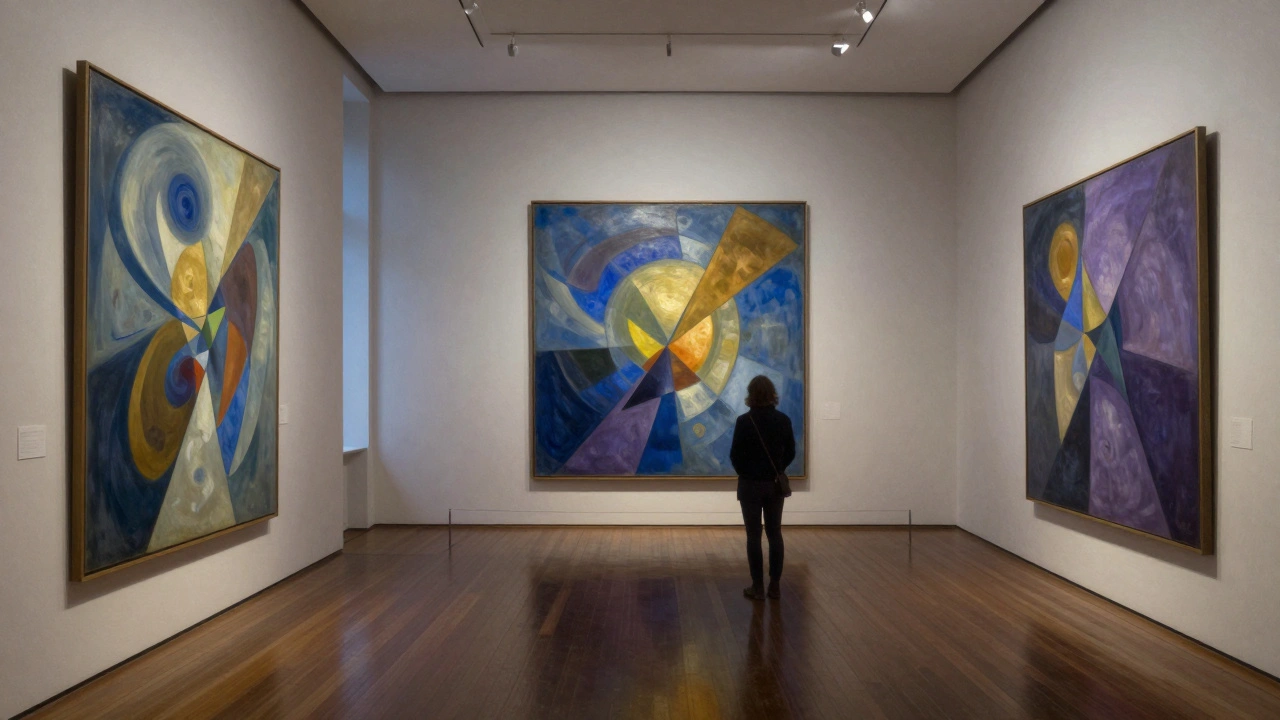
Take Hilma af Klint. She painted abstract works before Picasso even started. Between 1906 and 1915, she created over 1,200 pieces-spiritual, geometric, bold-based on her visions and séances. Tate Modern gave her a full solo show in 2018, and it was one of the most visited exhibitions in the museum’s history. Today, her work hangs quietly in Room 12, next to Kandinsky. You can stand there for 20 minutes and still not see everything.
Then there’s Lee Krasner. Jackson Pollock’s wife. Often overshadowed. But her 2023 retrospective here showed how her chaotic, layered canvases influenced not just him, but the whole Abstract Expressionist movement. Her painting "The Seasons"-a 3-meter-wide explosion of color and texture-still draws crowds. People don’t just look at it. They lean in. They whisper. They take photos. Then they leave quietly, like they just witnessed something sacred.
The collection doesn’t stop at Europe and America. Room 7 has Zanele Muholi’s portraits of Black LGBTQ+ communities in South Africa. Room 11 holds Frida Kahlo’s self-portraits, but not the ones you’ve seen on mugs. These are the raw ones-the ones with sweat, blood, and broken spines. Tate Modern doesn’t just display icons. It restores their humanity.
Thames Views: The River as a Frame
Walk to the fifth floor. Open the doors. Step onto the terrace. And suddenly, the art doesn’t feel like it’s inside anymore. The river is part of the exhibit.
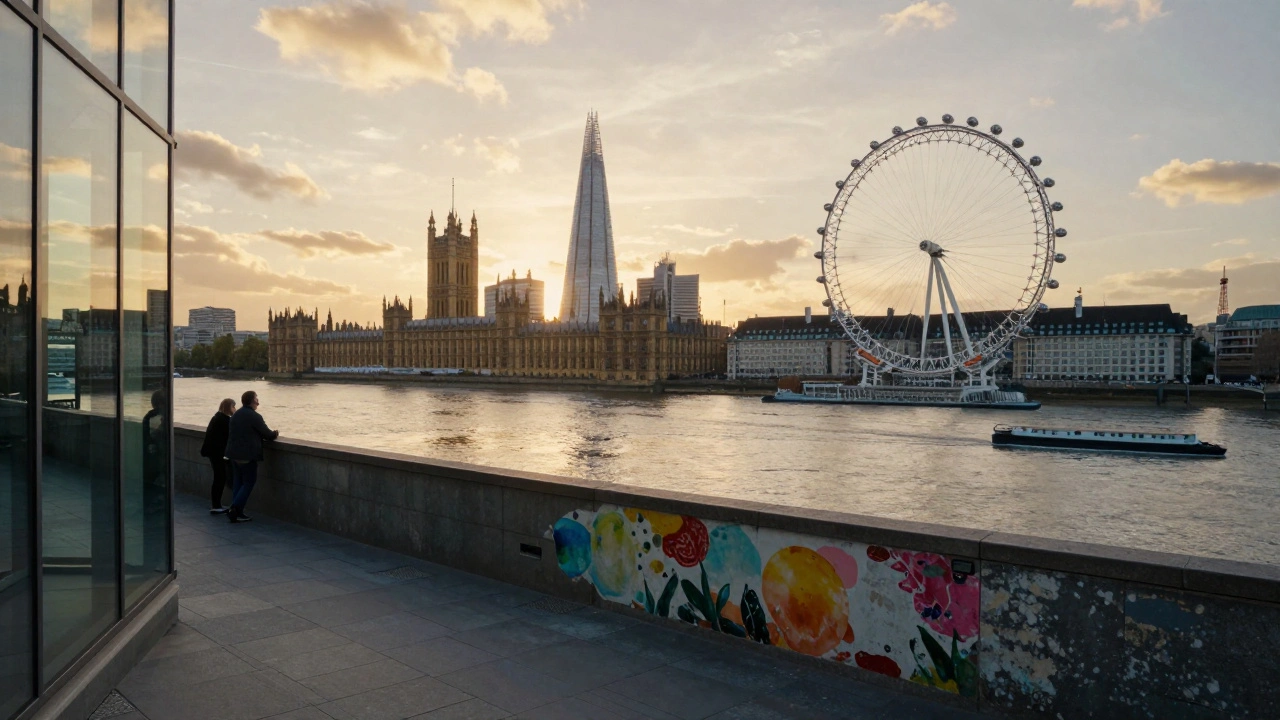
The Thames flows past Tate Modern like a slow-moving mirror. On a clear day, you can see the Shard piercing the skyline, the London Eye turning like a giant wheel, and the Houses of Parliament glowing gold in the afternoon light. But it’s not just the view. It’s the way the light changes. How the clouds cast shadows on the water. How the boats move like brushstrokes.
Many visitors don’t realize this: the building’s design was meant to frame the river. The glass walls on the top floor aren’t accidental. They were placed so you’d look out, not just at the river, but at the city’s pulse. You’ll see tourists pointing cameras. Artists sketching. Couples sitting silently. All of them, quietly connecting with something bigger than the paintings.
One of the most memorable moments? A local artist in 2024 painted a 10-meter-long mural on the terrace wall using only water. As the sun rose, the image faded. By noon, it was gone. No one was told it was happening. No signs. Just a quiet disappearance. That’s the kind of art Tate Modern encourages-not to be preserved, but to be felt, then let go.
What You Won’t Find (And Why It Matters)
There’s no gift shop right at the entrance. No Starbucks on every floor. No audio guides you have to rent. No timed entry tickets for the permanent collection. That’s not an oversight. It’s intentional.
Tate Modern wants you to wander. To get lost. To sit on the floor in front of a Rothko and not feel rushed. To notice that the woman next to you is crying. To realize you’ve been standing there for 45 minutes without checking your phone.
Even the free entry policy isn’t just about accessibility-it’s about trust. They believe if you’re curious enough to walk in, you’ll stay long enough to feel something. No pressure. No upsells. Just space. And art. And time.
When to Go: Secrets of Timing
If you want to feel the Turbine Hall the way it was meant to be felt, go on a weekday morning. Around 10 a.m., when the light hits the glass ceiling just right. The crowds haven’t arrived. The staff are still setting up. The air is still. You’ll hear your own breath.
Weekends? They’re alive. But crowded. If you’re going then, head straight to the top floor. The terrace is quieter. The river doesn’t care if it’s Saturday or Tuesday.
Don’t miss the late-night openings on Fridays. The lights dim. Music plays softly. People talk in hushed tones. It’s not a party. It’s a ritual.
Final Thought: Art That Stays With You
Tate Modern doesn’t ask you to understand art. It asks you to feel it. To let it sit in your chest. To carry it out with you, even if you can’t explain why.
You’ll leave with no postcard. No ticket stub. Maybe just a memory of the light on the river, the silence in the Turbine Hall, or the way a painting made you stop breathing for a second. That’s the point. Not to collect art. But to be changed by it.
Is Tate Modern free to enter?
Yes. Entry to the permanent collection is always free. You only pay if you want to see a special exhibition, which are ticketed. Most visitors never pay a penny.
How long should I spend at Tate Modern?
You can see the highlights in 2 hours, but if you want to feel it, give yourself 4 to 5. Sit with the art. Don’t rush. The Turbine Hall alone deserves an hour. The top-floor terrace deserves another.
Is Tate Modern worth visiting if I’m not into art?
Absolutely. It’s not just about paintings. The building itself is a masterpiece. The Turbine Hall is one of the most powerful architectural spaces in London. The river views are unbeatable. You don’t need to know art history to feel the weight of silence in a Rothko room or the awe of standing under a 35-meter-high ceiling.
Can I take photos inside?
Yes, for personal use. No flash. No tripods. No selfie sticks. Some special exhibitions ban photography entirely-signs are posted at the entrance. If in doubt, ask a staff member. They’re happy to help.
What’s the best way to get there?
The closest Tube station is Blackfriars (5-minute walk) or Southwark (7-minute walk). Bus 45, 63, or RV1 also stop right outside. If you’re coming from the South Bank, it’s a 10-minute stroll along the river. Walking is the best way-it lets you see the building from the outside first.