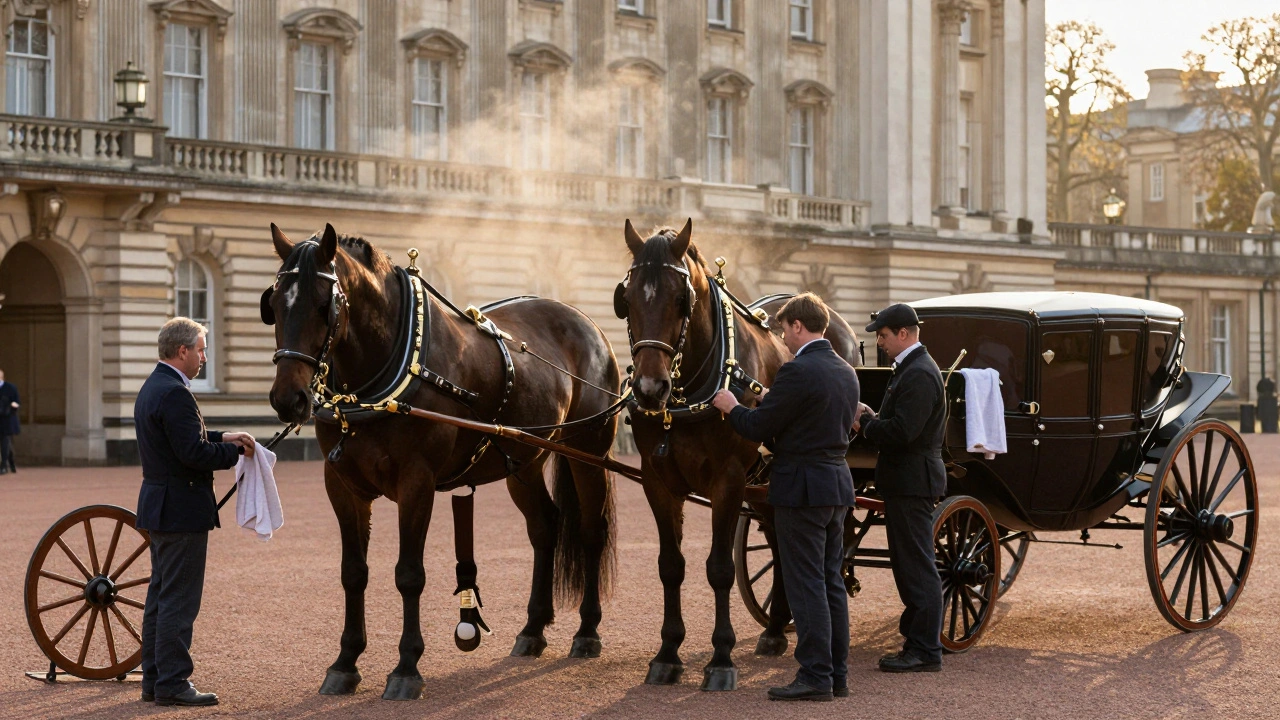
Most visitors to Buckingham Palace line up for the Changing of the Guard. But if you really want to see how the British monarchy moves - literally - you should head to the Royal Mews. It’s not a museum tucked away in a corner. It’s a working stable, a busy workshop, and a living piece of history all in one. Every day, horses are groomed, carriages are polished, and drivers check harnesses. This isn’t for show. This is how the royal family gets around.
What Exactly Is the Royal Mews?
The Royal Mews is a large building at the back of Buckingham Palace, housing over 30 horses and 100 vehicles. It’s not just a collection of old carriages. These are fully functional, daily-use transportation tools for the royal family. The Queen’s state coach, the Gold State Coach, is one of the most famous. Built in 1762, it weighs over four tons and is pulled by eight horses. You won’t see it on a regular day - it’s only used for coronations and major state events. But you can see the landau carriages, the barouches, and the modern SUVs they use for everyday travel.
There’s a reason this place is called a "mews" - it comes from the French word "muer," meaning to molt. Back in the 14th century, royal falcons were kept here while they molted. Over time, the space became home to horses instead. The current building dates to 1833, built by John Nash for King George IV. It’s been upgraded since then, but the heart of it hasn’t changed: horses, carriages, and the people who keep them running.
The Horses: More Than Just Animals
The horses you see at the Royal Mews aren’t just any horses. They’re carefully selected, trained, and cared for by a team of 20+ grooms and coachmen. Most are Cleveland Bays or Irish Draughts - strong, calm, and steady. They need to handle loud crowds, flashing cameras, and sudden noises without flinching. One wrong step could mean disaster.
Each horse has a name, a schedule, and a personality. There’s Monty, a 17-hand Cleveland Bay who pulls the State Landau on state visits. Princess, a gentle mare, often carries the Queen’s grandchildren on quiet outings. They work four days a week, rest three. Their diet? Hay, oats, and a special mix of vitamins. They get their own vet, farrier, and even a massage therapist. Yes, really. The royal horses get more attention than most luxury cars.
The Carriages: From Gold to Gas
The Royal Mews has carriages from every era. You’ll see the 1902 State Landau, used for royal weddings and jubilees. The Glass Coach, built in 1890, has windows so the public can see the royal passengers - a deliberate move to make the monarchy feel more accessible. Then there’s the 1986 Rolls-Royce Phantom VI, the first car to carry the Queen on official duties. It’s still in use today.
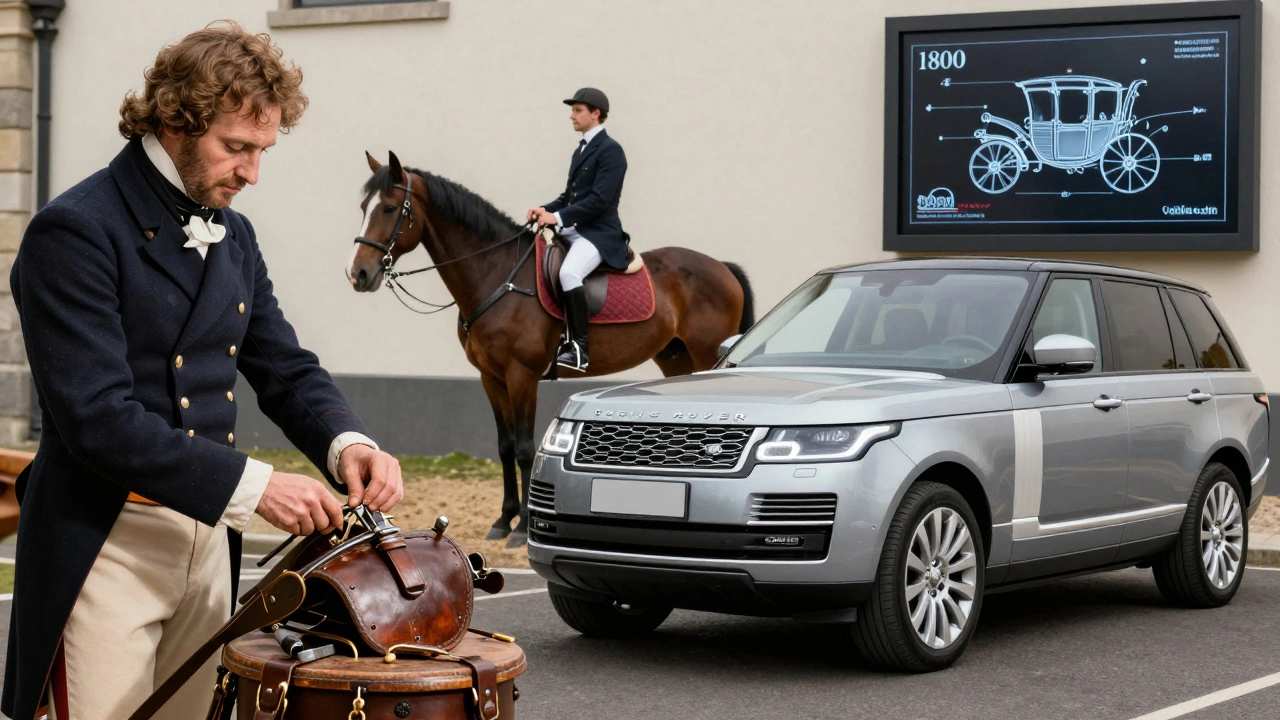
But here’s the twist: the royal family doesn’t just use horse-drawn carriages anymore. They have a fleet of modern vehicles too. Land Rovers, Bentleys, and even electric vehicles are kept here. The Mews doesn’t just preserve history - it adapts to it. The Queen’s last official car was a hybrid. The King now uses an electric Range Rover for short trips. The Mews isn’t stuck in the past. It’s evolving with the times.
How It All Works: Behind the Scenes
Every morning, the team arrives at 6 a.m. The horses are fed, brushed, and checked for injuries. The carriages are cleaned with microfiber cloths, not rags. Brass fittings are polished with a special wax. Harnesses are inspected for wear. Each piece of tack is numbered and logged. If a strap breaks, it’s not replaced - it’s repaired by hand, using the same techniques from 150 years ago.
The coachmen are trained at the Royal Mews School. It’s a two-year program. You learn how to drive six-horse teams, how to handle a horse that spooks at fireworks, and how to stand perfectly still for hours while a crowd snaps photos. You don’t just drive a carriage - you become part of a ritual. One coachman told me, "You’re not just a driver. You’re a guardian of tradition."
What You Can See Today
When you visit the Royal Mews (open daily except when the royal family is in residence), you can walk right up to the carriages. There’s a glass floor so you can see the wheels and axles. You can touch the leather of a harness (yes, they let you). There are videos showing how a carriage is built from scratch. You can watch a groom saddle a horse in real time.
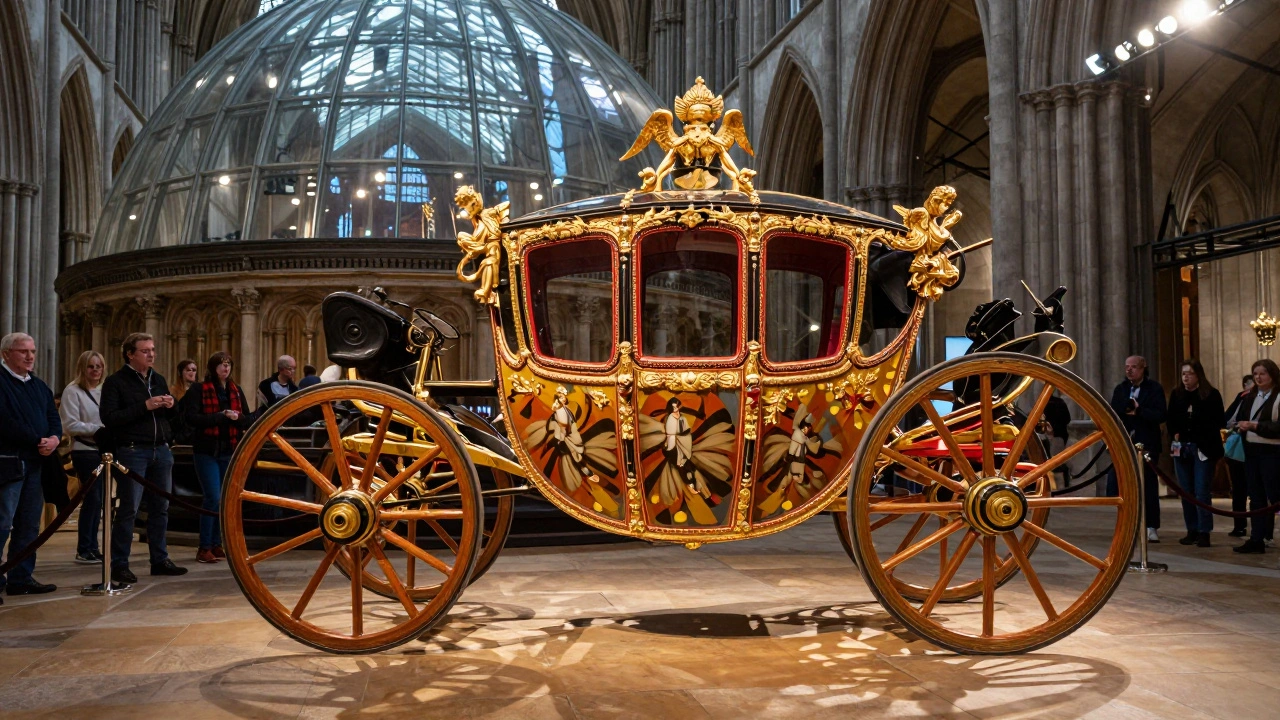
The most popular stop? The Gold State Coach. It’s so heavy, it took 32 men just to move it into the Mews in 1911. Now it sits under a climate-controlled dome. You can see the gold leaf, the carved angels, and the hand-painted panels. It’s overwhelming. And it’s real. Not a replica. Not a prop. This is the same coach that carried Queen Victoria to her coronation.
Why It Matters
The Royal Mews isn’t just about horses and carriages. It’s about continuity. In a world that moves faster every year, this place moves at the pace of tradition. It’s a reminder that some things - like craftsmanship, patience, and dignity - don’t need to be modernized to stay relevant.
When you see a royal carriage rolling out of Buckingham Palace, you’re not just watching a parade. You’re seeing a team of people who’ve trained for years, a horse that’s been cared for since birth, and a vehicle built before the telephone existed - all still working perfectly. That’s not magic. That’s discipline. That’s history in motion.
Planning Your Visit
- Location: Inside the grounds of Buckingham Palace, near the garden entrance
- Hours: Open daily 9:30 a.m. to 5:30 p.m. (closed during royal events)
- Tickets: Included in the Palace ticket - no separate fee
- Best time: Mid-morning, when the horses are being groomed
- Don’t miss: The interactive touchscreen displays showing how carriages were built in the 1800s
You’ll need about 45 minutes to see everything. If you’re short on time, head straight to the Gold State Coach - it’s the one everyone remembers.