
Imagine earning a degree from one of the world’s most prestigious university systems without ever stepping foot on a campus. For working professionals, parents, or those living far from traditional universities, this isn't just a fantasy-it's the reality of University of London Online Degrees, which are flexible, accredited qualifications delivered through a network of historic and modern institutions. But how does it actually work? Is it just watching videos at your own pace, or is there more to it?
The short answer is that it is much more than passive video consumption. It is a structured, rigorous academic experience designed to fit around your life, not replace it. Whether you are looking to upskill for a career change or simply satisfy an intellectual curiosity, understanding the mechanics of this system is crucial before you commit.
What Exactly Are University of London Online Degrees?
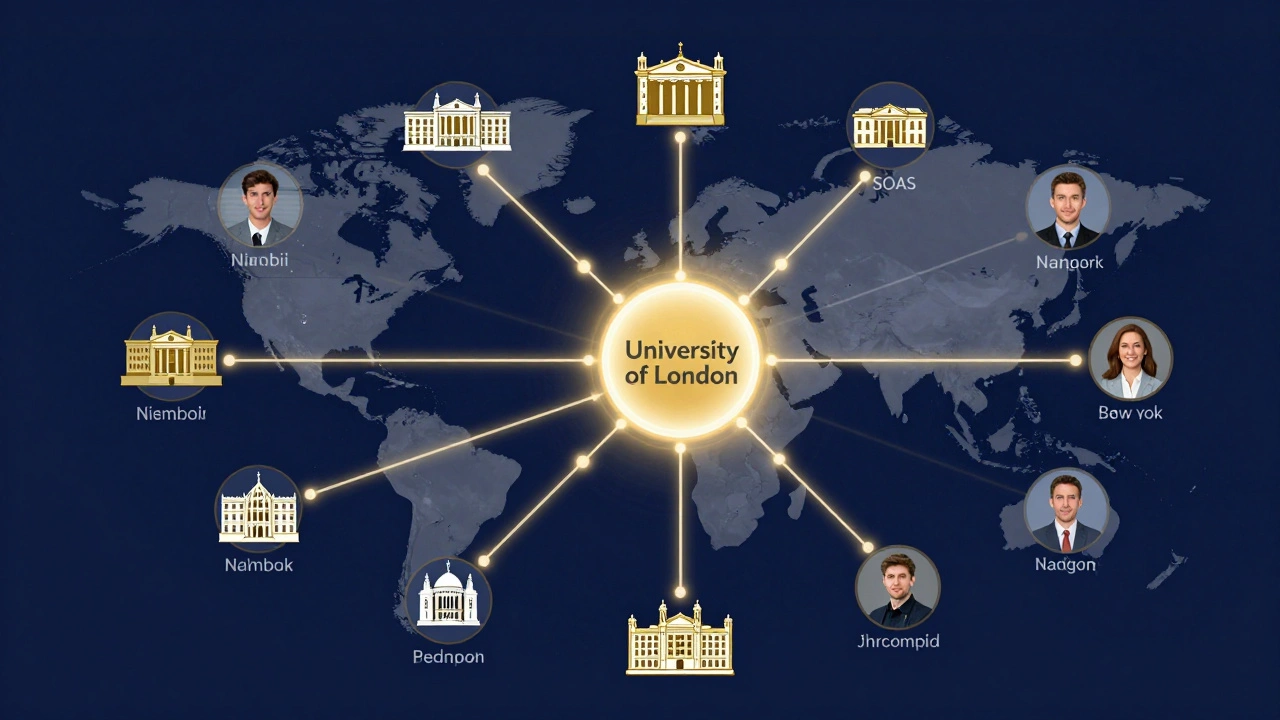
To understand the offering, you first need to understand the institution. The University of London is a federal university comprising over 17 independent member institutions, including heavyweights like King’s College London, SOAS, and Birkbeck. Unlike a standard university where you apply to the whole entity, here you often apply to specific programs hosted by these members but coordinated centrally for distance learners.
The online degree structure relies on a partnership model. While some courses are delivered directly by the University of London’s central distance learning arm (often referred to as the School of Professional Development), many are delivered through partner institutions or specialized faculties. This means your diploma might say "University of London," but your actual coursework could be guided by academics from Imperial College London or the London School of Hygiene & Tropical Medicine.
This federal structure ensures that every course meets strict quality standards. You aren’t getting a "watered-down" version of a degree. The syllabus, assessment methods, and grading criteria are identical to those used for on-campus students. The only difference is the delivery method.
How the Learning Experience Actually Works
If you’ve never done distance learning, the idea of studying alone can feel isolating. However, the University of London system has evolved significantly since its early days of correspondence courses via mail. Today, the experience is digital, interactive, and highly structured.
Here is what a typical term looks like:
- The Virtual Learning Environment (VLE): All your materials live in a centralized online portal. This isn’t just a repository of PDFs. It includes discussion forums, live webinar links, assignment submission portals, and grade tracking tools.
- Weekly Modules: Most programs follow a weekly rhythm. You might start the week by reading assigned chapters or watching recorded lectures. Mid-week involves participating in forum discussions with peers from around the globe.
- Tutor Support: You are not abandoned to figure things out alone. Each module has a dedicated tutor who reviews your work, provides feedback, and holds office hours (usually via Zoom or Teams) to clarify complex concepts.
- Assessments: Exams are rarely multiple-choice bubbles. You will write essays, complete case studies, or produce research papers. These are submitted digitally and marked against detailed rubrics.
The key takeaway is that while you control *when* you study, you do not control *what* you study. The curriculum is fixed, ensuring consistency across thousands of students worldwide.
Who Is This For? Defining Your Student Persona
Online degrees are not for everyone. They require a level of self-discipline that many undergraduates struggle to develop. So, who thrives in this environment?
The Career Changer: If you are working in marketing but want to move into data science, quitting your job to study full-time is risky. An online degree allows you to keep your income while gaining new credentials. Employers value this because it shows you can manage professional responsibilities alongside academic rigor.
The International Student: Visas and relocation costs are massive barriers to entry for many. With University of London online degrees, you can access top-tier British education from Nairobi, New York, or Bangkok without leaving home. This democratizes access to higher education significantly.
The Lifelong Learner: Some people return to education after a decade-long hiatus. They may feel rusty on academic writing or nervous about competing with 19-year-olds. The online format offers a lower-pressure environment where maturity and experience are assets, not liabilities.
If you are someone who needs constant external pressure to meet deadlines, or who thrives on the social energy of a lecture hall, this might not be the right fit. You must be comfortable with solitude and self-motivation.
Accreditation and Recognition: Does It Count?
This is the most common question I hear: "Will employers take me seriously?" The answer is yes, provided you choose the right program. The University of London is a registered charity and a recognized degree-awarding body in the UK. Its degrees are listed on the UK government’s official register of higher education providers.
Furthermore, many programs are accredited by professional bodies. For example, computing degrees may be accredited by the British Computer Society (BCS), and business degrees by the Association of Business Schools (AACSB). This adds a layer of industry validation beyond just the university name.
In terms of global recognition, the University of London brand carries significant weight. It is one of the oldest university systems in the world, founded in 1836. When you put "University of London" on your CV, recruiters instantly recognize the prestige associated with its member institutions. Just ensure you clearly state that it was an online/distance learning qualification if asked, though increasingly, the mode of delivery matters less than the skills acquired.
Costs and Financial Considerations
Money is always a factor. Online degrees are generally cheaper than their on-campus counterparts, but they are not free. Here is a realistic breakdown of what to expect in 2026:
| Cost Component | Estimated Range (GBP) | Notes |
|---|---|---|
| Tuition Fees (Per Year) | £4,000 - £9,000 | Varies heavily by subject; STEM and Business tend to be higher. |
| Application Fee | £50 - £100 | One-time non-refundable fee. |
| Textbooks/Materials | £200 - £500 | Many resources are digital, reducing physical book costs. |
| Examination Fees | Included | Usually bundled into tuition, unlike some US models. |
Financial aid options exist but are limited compared to on-campus loans. Look for employer sponsorship schemes. Many companies have budgets for continuing education. If you can tie your degree directly to your current role, your employer might cover 50-100% of the cost. Additionally, some member institutions offer scholarships for high-performing applicants or those from underrepresented backgrounds.

Challenges and Pitfalls to Avoid
No educational path is perfect. Distance learning comes with unique hurdles that can derail your progress if you aren’t prepared.
Isolation: Without face-to-face interaction, it is easy to feel disconnected. Combat this by actively participating in online forums. Treat them as virtual coffee chats. Build relationships with classmates; you never know who might become a future colleague.
Procrastination: Flexibility is a double-edged sword. Because you don’t have a mandatory 9 AM lecture, you might push work to the weekend. Create a rigid schedule. Block out two hours every evening for study, just as you would block out time for meetings.
Technical Issues: Reliable internet is non-negotiable. If you live in an area with poor connectivity, plan ahead. Download materials when you have good signal so you can work offline.
Next Steps: Getting Started
If you are ready to explore this path, start by visiting the University of London’s official online learning website. Browse the catalog and filter by your field of interest. Read the entry requirements carefully-some programs require prior work experience or specific undergraduate degrees.
Contact the admissions team with specific questions. Ask about the expected weekly time commitment (usually 15-20 hours) and the support available for international students. Finally, speak to current alumni. Their experiences will give you the most honest insight into whether this journey is right for you.
Are University of London online degrees the same as on-campus ones?
Yes, academically speaking. The curriculum, assessment standards, and faculty expertise are identical. The final certificate may indicate "distance learning" or "online," but the academic rigor and content are equivalent to the residential experience.
Can I work full-time while studying?
Absolutely. The programs are specifically designed for working professionals. Most students dedicate 15-20 hours per week to their studies, fitting coursework around their job schedules. Flexibility is the core benefit of this model.
Do I need to attend any classes in person?
Generally, no. The entire program is delivered online. However, some specific programs may offer optional residential intensives or networking events in London or other global hubs, but attendance is rarely mandatory for graduation.
Is the degree recognized internationally?
Yes. The University of London is a globally recognized institution with a long history. Its degrees are accepted by employers and other universities worldwide. Always check specific country regulations if you plan to practice a regulated profession (like law or medicine).
How long does it take to complete a degree?
A standard bachelor’s degree typically takes three years of full-time equivalent study, but can be extended up to five or six years part-time. Master’s degrees usually take one to two years. The pace depends on how many modules you take per term.