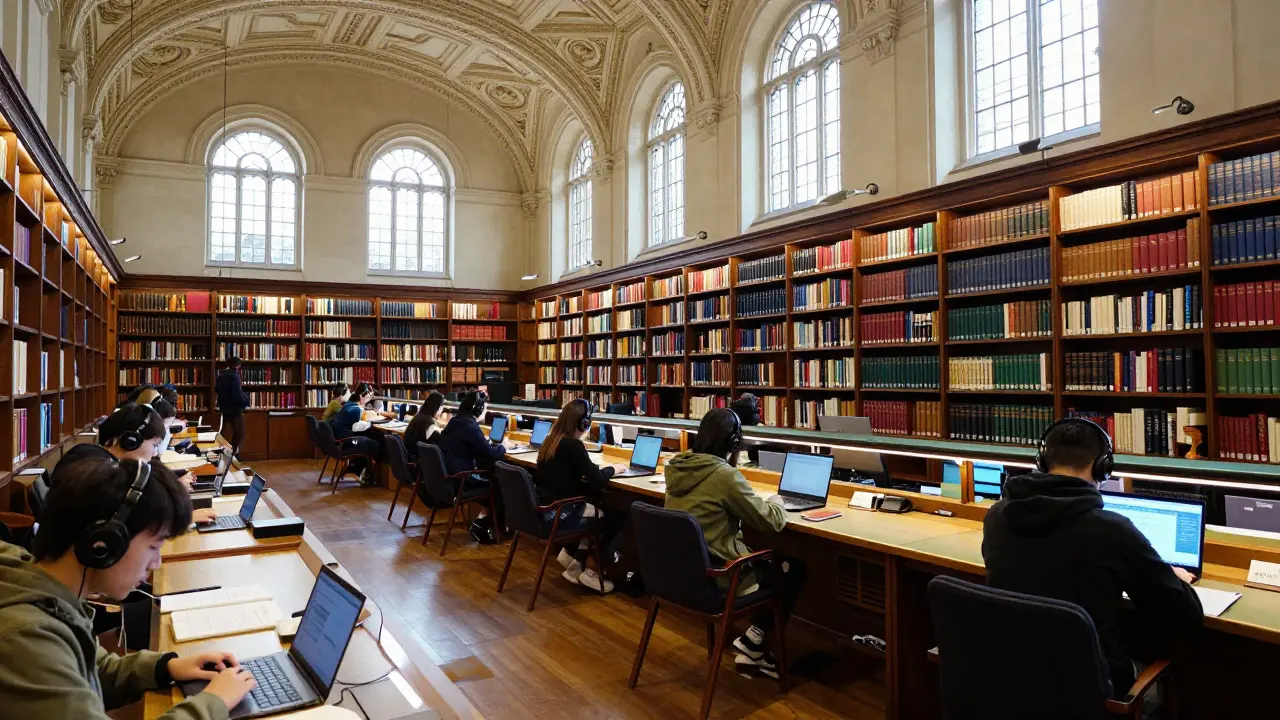
Walking into a silent, air-conditioned room with thousands of books and a free coffee machine is the dream for many students. But finding that perfect spot in London isn't always easy. You might be juggling deadlines, group projects, or just need a quiet corner to focus away from the noise of the city. University libraries are more than just book repositories; they are the heart of academic life in London. They offer everything from 24-hour access during exam periods to specialized research archives and comfortable lounge areas.
This guide breaks down the top study environments at major institutions like University College London (UCL), King's College London (KCL), and Imperial College London. We will look at opening hours, booking systems, amenities, and which spots work best for different types of studying. Whether you prefer total silence or a buzzing collaborative hub, there is a space designed for your workflow.
Quick Summary / Key Takeaways
- UCL Main Library offers the largest collection and extensive 24/7 access during term time, ideal for long-term deep work.
- KCL Strand Campus provides modern, open-plan spaces with good natural light, suitable for group study and casual reading.
- Imperial White City features high-tech facilities and dedicated computer labs, perfect for STEM students needing specific software.
- Most major libraries require online booking for individual desks, especially during peak times like exams.
- Non-students can often access public sections or pay a day pass fee, but full services usually require student status.
The Big Three: UCL, KCL, and Imperial
When we talk about study spaces in London, three names dominate the conversation. Each has a distinct vibe and set of resources that cater to different academic needs.
University College London (UCL) stands out for its sheer scale. The main library on Gower Street is a historic building that has been modernized with digital displays and ergonomic furniture. It houses over 3 million items, making it one of the largest in the UK. If you are looking for rare manuscripts or extensive journal archives, this is your go-to. The atmosphere here tends to be serious and focused. You will see many students wearing headphones, typing quietly, or taking notes by hand. It’s less about socializing and more about getting the job done efficiently.
In contrast, King's College London (KCL) offers a slightly more relaxed environment. The library at the Strand campus is located in a stunning Victorian building. The interior is bright, with large windows letting in plenty of daylight. This makes it a popular spot for humanities and social sciences students who appreciate a pleasant aesthetic while working. KCL also excels in providing comfortable seating areas where you can stretch your legs or have a quick chat with a classmate without disturbing others too much.
Imperial College London takes a different approach. Located primarily in South Kensington and White City, its libraries are heavily integrated with technology. For engineering and science students, the availability of specialized computers, statistical software licenses, and data storage solutions is crucial. The White City campus, in particular, is newer and features sleek, contemporary design. It feels more like a tech hub than a traditional library, which appeals to students who value efficiency and modern infrastructure.
Navigating Booking Systems and Access Rules
One of the biggest pain points for students is securing a seat. In London, space is premium, and so is a desk in a quiet library. Most universities use online booking systems to manage capacity. Here is how it typically works:
- Register Online: You need an active student account. Log in via the university portal.
- Select Time Slot: Choose your preferred date and time. Popular slots (like evenings before deadlines) fill up fast.
- Check-in on Arrival: Scan your ID card at the entrance kiosk. If you don’t show up within 15 minutes, your booking may be released.
- Respect the Zone: Silent zones enforce strict no-talking rules. Discussion rooms allow collaboration but may have sound limits.
During normal term time, most libraries operate from early morning until late evening, often closing around 9 PM or 10 PM. However, during exam periods, these hours extend significantly. At UCL, for instance, the main library opens 24 hours a day for registered students. This is a lifesaver when you are pulling an all-nighter. Keep in mind that access to special collections or restricted archives may still have limited hours even during exams.

Amenities That Make a Difference
It’s not just about having a table and a chair. The quality of your study experience depends heavily on the amenities provided. Let’s compare what you can expect from top-tier London university libraries.
| Feature | UCL Main Library | KCL Strand Campus | Imperial White City |
|---|---|---|---|
| Opening Hours (Term) | 8 AM - 10 PM (24/7 Exams) | 8 AM - 9 PM | 8 AM - 9 PM (24/7 Exams) |
| Free Wi-Fi Speed | High-speed fiber | Standard broadband | High-speed fiber |
| Coffee Facilities | Vending machines & cafe nearby | On-site cafe | Vending machines & vending pods |
| Group Rooms | Bookable, equipped with screens | Open discussion areas | Smart classrooms & huddle rooms |
| Power Outlets | At every desk | At most desks | At every desk |
Notice the difference in group study options? UCL and Imperial offer bookable rooms with technology, which is great for presentations. KCL focuses more on open, flexible spaces. If you are someone who needs absolute solitude, look for designated “silent zones” or carrels. These are small, enclosed desks that block out visual distractions. They are highly sought after and often booked weeks in advance during busy periods.
Beyond the Main Hubs: Hidden Gems and Specialized Spaces
While the main libraries get the most attention, each university has smaller, specialized spaces that offer unique advantages. For example, the Bloomberg Centre at KCL is known for its law and politics resources, featuring a quieter, more intimate setting. Similarly, LSE Library in Holborn is a powerhouse for social sciences, with a strong emphasis on debate and discussion-friendly zones.
If you are studying medicine, the Guy's Hospital Library affiliated with KCL provides clinical case studies and medical journals that aren't available elsewhere. For arts students, the Courtauld Institute of Art library offers direct access to art archives and reproduction services. These niche spaces often have fewer crowds, making them easier to find a seat in without booking far in advance.

Tips for Maximizing Your Study Time
To get the most out of these spaces, follow these practical tips:
- Plan Your Visits: Check the occupancy levels on the library website before heading out. Many apps show real-time seat availability.
- Bring Essentials: Even with power outlets, bringing a portable charger ensures you’re never caught off guard. Noise-canceling headphones are a must-have in shared spaces.
- Use the Tech: Don’t just read physical books. Use the library’s digital databases to download PDFs for offline reading. This saves screen time and battery.
- Network Strategically: If you’re in a group room, use it for collaboration. If you’re in a silent zone, keep interactions minimal. Respect the unwritten rules of the space.
- Explore Local Options: If your university library is full, consider nearby public libraries like the British Library in St Pancras, which offers free entry and vast resources for researchers.
Frequently Asked Questions
Do I need to book a seat in London university libraries?
Yes, for individual desks and group rooms, booking is usually required during term time. Common areas may be first-come, first-served, but they fill up quickly. Always check the specific policy of the university you are visiting.
Can non-students use these libraries?
Access varies. Some libraries allow day passes for a fee, while others restrict entry to current students and staff. Public sections of larger libraries like the British Library are open to everyone, but specialized university collections often require registration or affiliation.
Which London university library is open 24 hours?
UCL Main Library and Imperial White City Library both offer 24-hour access during exam periods. During regular term time, hours are limited, but some departments may have extended hours.
Are there food options inside the libraries?
Most libraries have vending machines for snacks and drinks. Cafes are often located adjacent to or within the library buildings. Eating is generally allowed in common areas but prohibited in silent zones or near special collections.
How do I find a quiet place if the main library is noisy?
Look for designated silent floors or carrels. Alternatively, try smaller departmental libraries or specialized centers like the Bloomberg Centre at KCL. These areas tend to have stricter noise policies and fewer people.