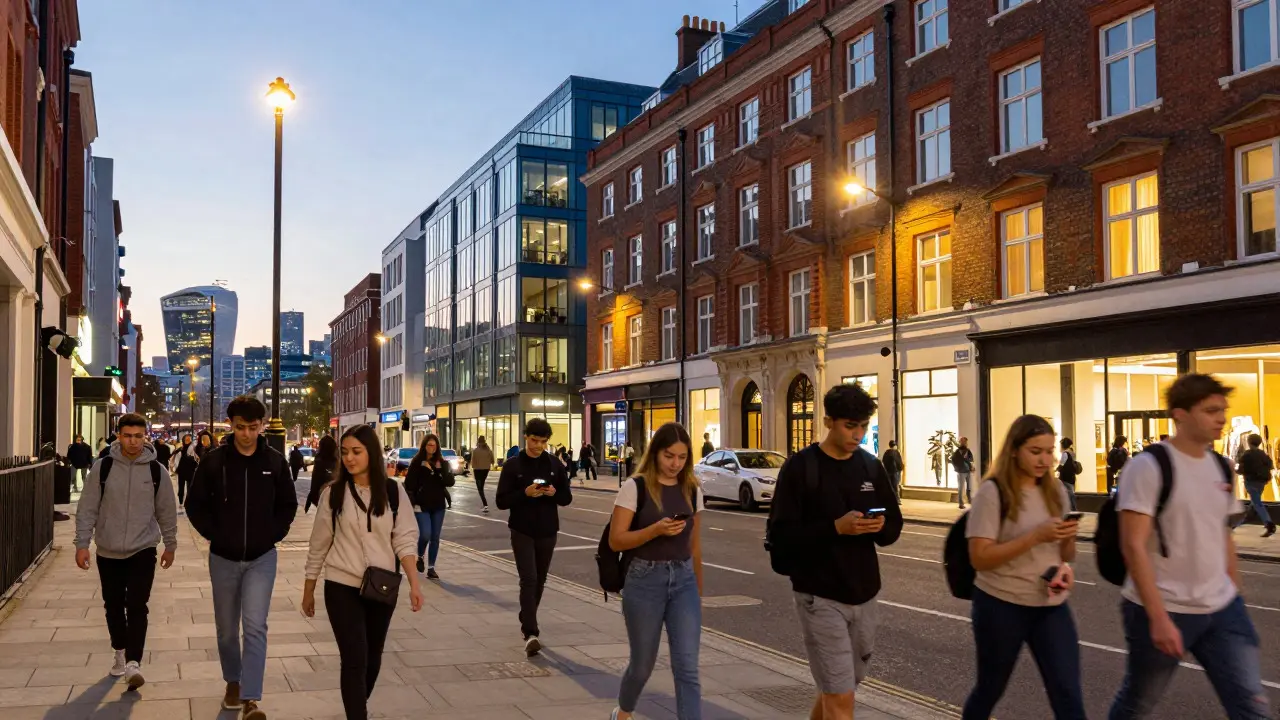
Choosing where to live in London can feel like a high-stakes gamble. You want a place that feels secure at 2 AM after a late study session, doesn't drain your entire bank account, and gets you to campus without eating up half your day. It’s a tightrope walk between safety, price, and commute.
This guide breaks down the most popular zones for international and domestic students. We’re not just listing postcodes; we’re looking at the real trade-offs. Whether you prioritize a short Tube ride or a lower rent, there is a specific area that fits your budget and lifestyle. Let’s find it.
Quick Summary / Key Takeaways
- Southwark offers the best balance of affordability and central access for many universities.
- Camden is vibrant but requires a longer commute to southern campuses; ideal for creative fields.
- Islington provides a quieter, greener environment with excellent safety ratings, though rents are rising.
- Barking & Dagenham remains the most affordable option if you can tolerate a 45+ minute journey into the city center.
- Always verify the actual walking distance to the nearest Tube station, not just the map line, as this impacts daily convenience significantly.
Understanding the Trade-Offs: Safety vs. Cost
In London, you rarely get all three things-cheap rent, total safety, and a quick commute-at once. Understanding which factor matters most to you helps narrow the field. Safety in London is generally high across all boroughs, but perception varies. Areas with higher foot traffic and good street lighting tend to feel safer, even if crime statistics show minor variations. For students, "safety" often means having a reliable public transport network nearby so you don’t have to walk long distances in the dark.
Price is the biggest differentiator. Central zones (Zones 1 and 2) command a premium. A one-bedroom flat in Zone 1 can cost over £1,800 per month, while similar space in Zone 6 might be under £1,200. However, cheaper areas often mean longer commutes. If your university is in South Bank, living in East London saves money but adds 30-40 minutes to your daily travel time. This is a financial decision disguised as a logistical one.
Top Picks by University Location
Your choice heavily depends on where you study. Here is how the major hubs break down:
For UCL, King's College, and LSE Students
If you are based in Bloomsbury, South Bank, or Russell Square, Southwark is a borough located south of the Thames, known for its mix of modern apartments and historic sites. It is directly opposite the City of London and offers direct Tube connections via the Jubilee and Northern lines. Rents here are mid-range, making it accessible for students who want to be close to the action without paying prime central prices. The area around Waterloo and Elephant & Castle has seen significant regeneration, offering new builds with better energy efficiency.
For UAL (Central Saint Martins, LCCM) Students
Students attending University of the Arts London are part of a federation of six colleges focused on arts and design. often gravitate toward Camden and Islington. Camden is lively, with a strong nightlife scene and independent shops. It feels less corporate than other areas. Islington, just north of Camden, is slightly more residential and green, with parks like Finsbury Park providing a breather from the urban density. Both areas are well-connected by the Northern and Victoria lines, keeping commutes manageable even if you aren’t living next door.
For Imperial and Royal Holloway Students
Imperial students in SW7 will look at Wandsworth or Lambeth. Lambeth is particularly popular due to its proximity to Vauxhall and Clapham Junction. These areas offer a mix of Victorian terraces and modern flats. While rents are higher than the East End, the commute to Imperial is short, often just a few stops on the District or Northern line. For those studying at Royal Holloway in Egham, living in London itself might be impractical unless you work in the city; however, many choose to stay in London for social reasons, accepting a longer train journey to Surrey.

Deep Dive: Specific Neighborhoods and Attributes
Let’s look at specific data points for four key areas to help you visualize the difference.
| Area/Borough | Avg. Rent (1-Bedroom) | Safety Perception | Commute to Central London | Best For |
|---|---|---|---|---|
| Southwark | £1,400 - £1,600 | High (Well-lit, busy) | 10-15 mins | KCL, LSE, General Social Life |
| Camden | £1,300 - £1,500 | Medium-High (Nightlife risks) | 15-20 mins | UAL, Creative Industries |
| Barking & Dagenham | £900 - £1,100 | Medium (Suburban feel) | 35-45 mins | Budget-Conscious, QMUL |
| Ealing | £1,200 - £1,400 | High (Residential) | 20-25 mins | UWL, Family-Friendly Vibes |
Barking & Dagenham is an outer London borough in the east, known for being one of the most affordable areas in the capital. If budget is your primary constraint, this is your go-to. The Elizabeth line has improved connectivity significantly, cutting travel times to Liverpool Street and Whitechapel. However, the vibe is distinctly suburban. You won’t find the same level of spontaneous cultural events as in Zone 2, but you save enough money to eat out more frequently or invest in hobbies.
Ealing, in West London, offers a different proposition. It has a strong community feel, with regular markets and a diverse population. The Central line provides a direct route to Oxford Circus and Tottenham Court Road. It’s a bit further out than Southwark, but the trains are fast. Many students appreciate the slightly slower pace compared to the frantic energy of Soho or Shoreditch.
The Commute Factor: More Than Just Time
Commute time isn't just about minutes; it's about mental bandwidth. A 45-minute commute involves standing in crowded carriages, navigating transfers, and dealing with potential delays. Over a semester, this adds up to dozens of hours lost. If you live in Zone 6, you might spend 1.5 hours a day traveling. That’s 7.5 hours a week. Compare that to someone living in Zone 2 who spends 20 minutes commuting. The difference is nearly five hours a week of free time for studying, working, or resting.
Consider the mode of transport too. Walking is free and healthy, but only viable if you're within 15-20 minutes of your destination. Cycling is faster than the bus in heavy traffic, but you need secure storage and decent weather. The Tube is reliable but can be expensive if you cross multiple zones. Check the TfL fare calculator for your specific route before signing a lease. A small saving on rent might be wiped out by higher travel costs.

Safety Nuances and Practical Tips
When people talk about safety in London, they often conflate crime statistics with personal feeling. In reality, violent crime rates in student areas are low. The bigger issue is petty theft, especially in tourist-heavy zones like Westminster or Covent Garden. Keep your phone secured and avoid displaying valuables.
Look for streets with active businesses. A quiet, empty street at night can feel unsafe regardless of actual crime rates. Areas with 24-hour cafes, shops, or bars tend to have more natural surveillance. Also, check the local police beat website for recent incident reports. Some areas have higher reports of anti-social behavior near large HMOs (Houses in Multiple Occupation), which are common student accommodations. Read reviews on platforms like Rightmove or OpenRent specifically mentioning noise levels and neighbor quality.
Hidden Costs and Pitfalls to Avoid
Rent is only part of the equation. Council tax is usually exempt for full-time students, but you must provide proof of enrollment. Utility bills can vary wildly depending on the building’s age and insulation. Older Victorian buildings in North London can be drafty, leading to higher heating costs in winter. Ask for average monthly utility bills from the previous tenant or landlord.
Also, beware of "service charges." Some newer developments include these in the rent, covering cleaning and security. Others charge separately. Clarify what is included before signing. Finally, consider the deposit. Most landlords require 5 weeks' rent as a deposit, held in a government-approved scheme. Ensure the contract specifies when this will be returned and under what conditions.
Frequently Asked Questions
Which area in London is the safest for students?
While safety is subjective, areas like Richmond, Kingston, and parts of Islington are often cited as very safe due to their residential nature and low crime rates. However, most central student areas like Southwark and Camden are also considered safe, provided you use common sense at night. The key is choosing well-lit, busy streets rather than isolated ones.
How much should I budget for rent in London as a student?
As a rule of thumb, aim to keep your total housing costs (rent + utilities) below 30% of your net income. For a typical student bursary or scholarship, this might mean targeting rooms in shared houses costing £800-£1,200 per month in Zones 2-3, or £600-£900 in Zones 4-6. Private studios or one-bedrooms will be significantly higher, often exceeding £1,500 in central areas.
Is it worth living further out to save money?
It depends on your tolerance for commuting. If you save £400 per month by moving from Zone 2 to Zone 6, that’s £4,800 a year. However, if the extra commute costs you £100 per month in travel passes and eats 2 hours of your day, the net benefit shrinks. Calculate the total cost of time and money before deciding. For many, Zone 3 offers the sweet spot of affordability and reasonable access.
What documents do I need to rent a room in London?
You typically need proof of identity (passport or driver's license), proof of address (bank statement or utility bill), and proof of income or sponsorship (letter from university or employer). International students may also need a guarantor, either a UK-based relative or a professional guarantor service. Always check the specific requirements of the agency or landlord early in the process.
Are private rentals better than university halls?
University halls offer convenience, built-in community, and often included utilities, but can be more expensive and less flexible. Private rentals give you more space, freedom, and potentially lower costs if you share with friends, but come with more responsibility regarding bills, repairs, and finding suitable housemates. Many students start in halls for their first year to adjust, then move to private accommodation later.