There is a specific kind of silence that hangs over the streets of London when you step away from the tourist crowds. It’s not just quiet; it’s heavy. For photographers, this city offers a paradox: it is one of the most densely populated places on Earth, yet it hides thousands of forgotten corners where time seems to have stopped. This guide isn’t about chasing ghosts or breaking into private property for the sake of thrill-seeking. It’s about understanding how to capture the decay, the beauty, and the history of derelict London sites safely and legally.
Many people assume that photographing abandoned buildings requires a death wish or a lawyer on speed dial. In reality, with the right knowledge, you can find incredible compositions without risking a lawsuit or your life. The key lies in distinguishing between public access points, licensed derelicts, and truly off-limits zones. Whether you are using a high-end mirrorless camera or a vintage film SLR, the approach remains the same: respect the structure, check the legal status, and let the light do the work.
Understanding the Legal Landscape of Urban Exploration
Before you pack your bag, you need to understand what "abandoned" actually means in the context of UK law. A building being empty does not mean it is yours to explore. Trespass is a civil matter in England and Wales, meaning landowners can sue you for damages if they catch you, though police rarely get involved unless you cause damage or refuse to leave. However, some sites are under strict protection due to structural instability or heritage status.
The safest way to start is by focusing on "soft" dereliction. These are areas that were once industrial or commercial but have been cleared of hazardous materials and left open to the elements. They often sit on public land or have permissive agreements with local councils. For example, parts of the former docks in East London have transitioned into mixed-use spaces where old warehouses stand alongside new apartments. You can often photograph these from public footpaths without needing special permission.
On the other hand, "hard" dereliction involves structures that are actively decaying, with loose bricks, broken glass, and unstable floors. These require more caution. Always look for signage. If you see a "No Entry" sign, treat it as a hard stop. If you see "Private Property," assume you need written consent. Many serious urban explorers (urbexers) now use apps and community forums to track which sites have recently been sold or secured. Knowledge is your best insurance policy.
Top Locations for Capturing Decay and Beauty
London is huge, so narrowing down your targets saves time and energy. Here are three distinct types of locations that offer different photographic challenges:
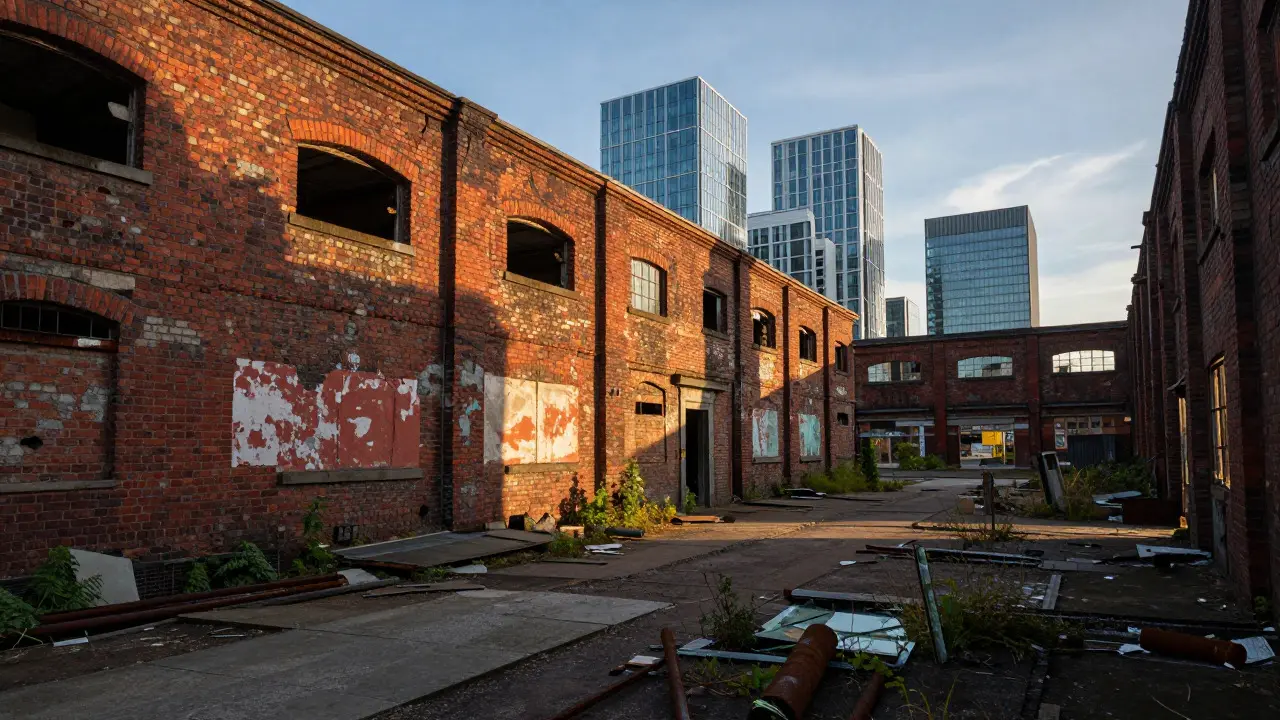
- The Docklands Warehouses: Areas around Wapping and Canary Wharf still hold remnants of the 19th-century trading era. The brickwork here is iconic. Look for the contrast between the raw red bricks and the modern glass towers in the background. It’s a powerful visual metaphor for the city’s transformation.
- Abandoned Railway Lines: The disused tracks of the former Metropolitan and Circle lines offer linear compositions. Vegetation has reclaimed many of these paths, creating a natural frame for your shots. The rusted sleepers and overgrown grass provide excellent texture details.
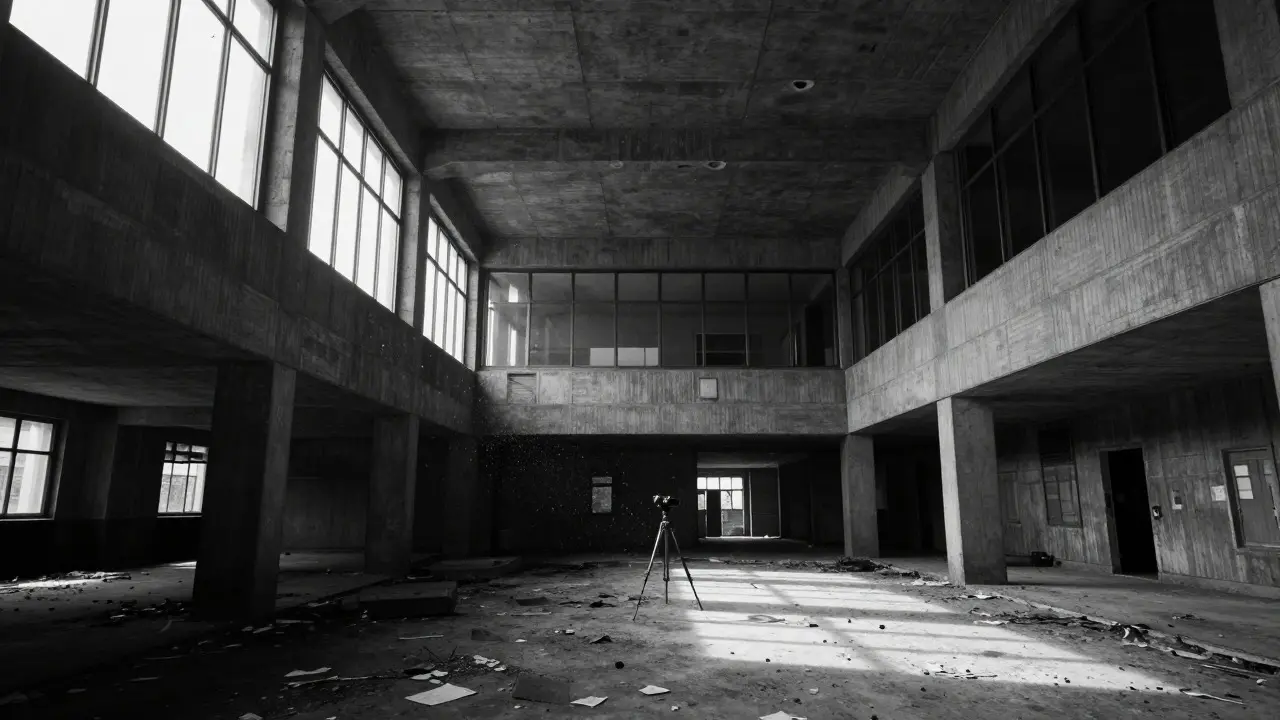
- Suburban Derelicts: While central London is heavily monitored, the outer boroughs like Croydon or Brixton have pockets of forgotten offices and factories. These are less crowded and often feature unique architectural styles from the 1960s and 70s, such as brutalist concrete facades.
Each location demands a different lighting strategy. The docklands benefit from the golden hour when the low sun rakes across the brick surfaces, highlighting every crack and chip. Suburban sites, often surrounded by trees, are better shot during overcast days when the soft, diffused light prevents harsh shadows from obscuring details.
Essential Gear for Shooting in Ruins
You don’t need expensive equipment to take great photos, but certain tools make the process smoother and safer. Dust is the enemy of digital sensors. If you’re shooting in a crumbling building, carry a blower and a lens pen. Change lenses outside if possible, or use a dedicated macro lens for close-ups of peeling paint and rusted metal.
Lighting is another critical factor. Most derelict sites are dark inside. Bring a fast prime lens (f/1.4 or f/1.8) to maximize light intake. If you want to shoot longer exposures to smooth out water drips or capture star trails through broken windows, a sturdy tripod is non-negotiable. A headlamp with a red light mode is also useful; it helps you navigate without disturbing the ambient atmosphere or washing out the scene with harsh white light.
| Item | Why You Need It | Pro Tip |
|---|---|---|
| Fast Prime Lens | Maximizes light in dark interiors | f/1.4 is ideal for night shoots |
| Tripod | Stability for long exposures | Use a ball head for quick adjustments |
| Headlamp | Navigates dark spaces safely | Red light preserves night vision |
| Dust Blower | Cleans sensor after shooting | Keep it in your pocket for quick fixes |

Composition Techniques for Ghost Architecture
Photographing empty spaces can be tricky. Without people to provide scale, images can feel flat or confusing. One effective technique is to use leading lines. Broken beams, cracked floors, and staircases naturally draw the eye into the depth of the frame. This creates a sense of journey, inviting the viewer to follow the path deeper into the ruin.
Another powerful tool is framing. Use doorways, windows, or arches to frame your subject. This adds layers to the image and creates a "window within a window" effect. It also helps separate the foreground from the background, adding depth to an otherwise two-dimensional space.
Don’t ignore the small details. A single weed growing through a crack in the pavement tells a story of resilience. A faded poster on a wall hints at the past life of the building. These micro-moments often make for more compelling images than wide-angle shots of entire rooms. They connect the viewer to the human element, even in the absence of people.
Safety First: Avoiding Common Pitfalls
Derelict sites are unpredictable. Floors can collapse without warning. Glass shards hide in plain sight. Mold spores can trigger allergies. Before entering any site, assess the risk. If you hear creaking sounds, back up slowly. Wear sturdy boots with good grip, not sneakers. Carry a first-aid kit, even if you’re only going for an hour.
Weather plays a significant role too. Rain makes wooden floors slippery and can cause leaks that turn into streams. Wind can blow debris into your eyes or camera. Check the forecast before you go, and avoid visiting sites during storms or extreme heat. Hydration is key, especially if you’re exploring for several hours.
Post-Processing: Enhancing the Mood
Raw files from derelict sites often lack contrast and color vibrancy. Post-processing is where you can really define the mood. Desaturate the colors slightly to emphasize the decay. Increase the clarity to bring out textures in the brick and concrete. Watch out for noise, especially if you shot at high ISO in low light.
Consider black and white conversions. They strip away distractions and focus attention on form, light, and shadow. A well-executed monochrome image of a ruined church or factory can be hauntingly beautiful. Experiment with curves to deepen the blacks and lift the whites, creating a dramatic range that mirrors the starkness of the environment.
Frequently Asked Questions
Is it legal to photograph abandoned buildings in London?
Yes, provided you have permission to enter the property. If you are on public land or have permissive access, you can usually photograph freely. However, always check for signs indicating restrictions. Trespass is a civil matter, so while police rarely intervene, landowners can pursue legal action if you cause damage or refuse to leave.
What camera settings work best for dark interiors?
Use a wide aperture (f/1.4-f/2.8) to let in more light. Keep your ISO as low as possible to minimize noise, but increase it if necessary to maintain a sharp shutter speed. A tripod allows you to use slower shutter speeds, which is ideal for capturing detail in low-light conditions.
How do I find safe derelict sites to visit?
Join online communities focused on urban exploration. Local forums often share updates on site safety and access rights. Additionally, look for sites that are partially accessible from public paths, such as old railway lines or industrial zones that have been cleared of hazards.
Do I need a model release for people in abandoned buildings?
Generally, no, if you are shooting for personal use or editorial purposes. However, if you plan to sell the images commercially, it’s wise to obtain a model release, especially if the person is recognizable and the image implies endorsement.
What should I do if I get stuck in a derelict site?
Stay calm and assess your surroundings. Use your headlamp to look for exits. If you have a phone, try to call for help. Mark your path with chalk or tape if you’re exploring deep inside a large structure. Always tell someone your planned route and expected return time.