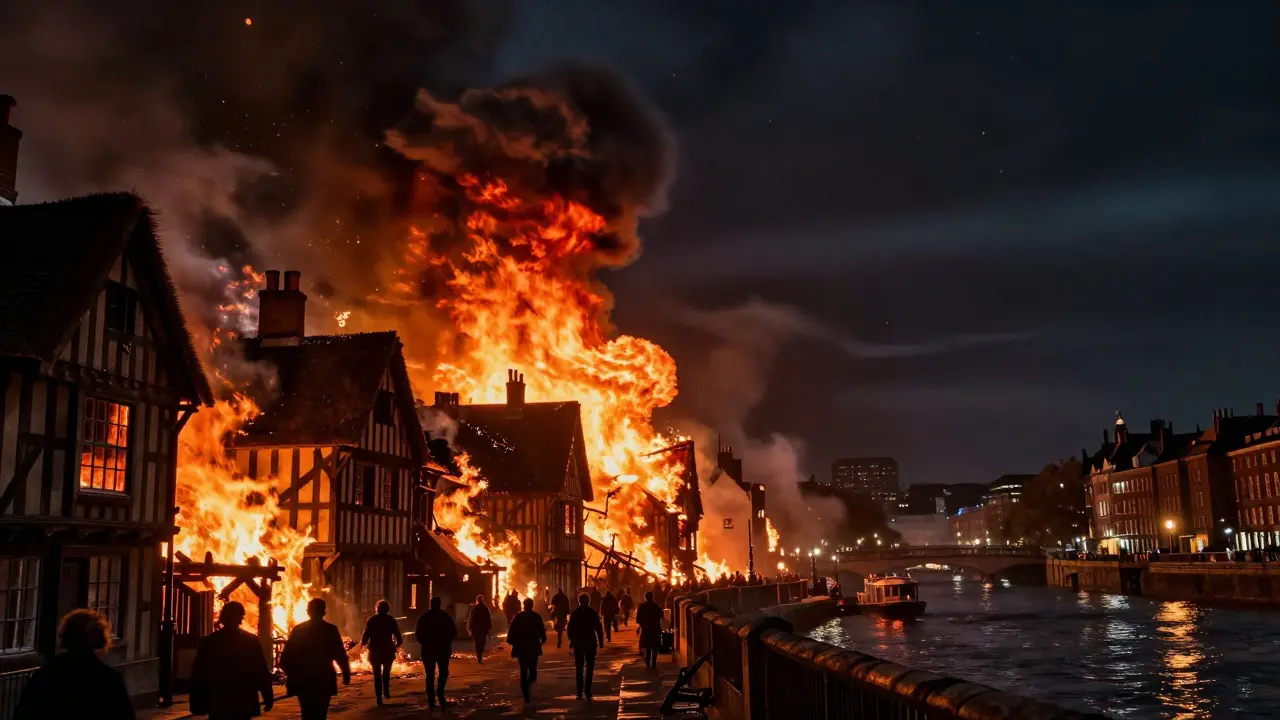
Imagine waking up to the smell of burning timber before the sun even rises. For thousands of Londoners in September 1666, this wasn't a nightmare; it was reality. The Great Fire of London is a catastrophic fire that destroyed over 13,000 houses, 87 churches, and the medieval city center between September 2 and 5, 1666. It remains one of the most significant events in British history, reshaping the architecture, urban planning, and social fabric of the capital for centuries.
You might think you know the basics: a bakery started it, Thomas Farriner was the baker, and it burned for four days. But the story is much deeper than a simple arson case. It was a perfect storm of weather, building materials, and human error that turned a small kitchen blaze into an inferno that consumed the heart of the city. Today, when you walk through the City of London, you are walking on the ashes of that disaster, with modern skyscrapers rising where medieval timber frames once stood.
The Spark That Ignited History
The fire began at 1:00 AM on Tuesday, September 2, 1666, in Pudding Lane. The location was critical because Pudding Lane was a narrow street lined with wooden buildings, many of which were used for food preparation. The owner of the bakery was Thomas Farriner, also known as Roper. His daughter reported seeing flames escape from the oven, but by the time they tried to extinguish them, the heat had spread to the dry wood and thatched roofs nearby.
Why did it get out of control so quickly? Three main factors played a role:
- Building Materials: Most buildings in the City of London were constructed from wood, plaster, and thatch. These materials were highly flammable and provided ample fuel for the fire.
- Weather Conditions: A strong southeast wind blew throughout the night, fanning the flames and pushing the fire westward toward the dense commercial districts.
- Lack of Water Supply: The River Thames was close, but the pumps were old and inefficient. Additionally, the streets were too narrow for fire engines to operate effectively.
By morning, the fire had jumped several blocks. People tried to save their belongings, but the heat was intense enough to melt lead and glass. The sound of explosions-caused by gunpowder stores catching fire-added to the chaos. Residents fled across the river to Southwark, watching their homes turn to ash in real-time.
Four Days of Destruction
The fire raged for four days, finally being extinguished on Saturday, September 5, 1666. During this time, the entire medieval city was wiped out. Let’s look at the scale of the damage:
| Category | Quantity Destroyed | Significance |
|---|---|---|
| Houses | Over 13,000 | Roughly 70% of the residential buildings in the City |
| Churches | 87 | Including St. Paul’s Cathedral (partially collapsed) |
| Public Buildings | 43 | Includes the Royal Exchange, Guildhall, and St. Mary-le-Bow |
| Square Meters Burned | Approximately 1.6 km² | Covering about 80% of the City of London |
Despite the massive destruction, the official death toll was surprisingly low. Records show only six confirmed deaths, mostly among the elderly or infirm who couldn’t escape. However, historians believe the true number could be higher, as many victims’ bodies were never recovered from the rubble. The economic loss, however, was staggering. Insurance claims totaled around £100,000, a sum equivalent to millions of pounds today. This financial shock led to the creation of the first modern insurance market in London, with Nicholas Barbon playing a key role in establishing Lloyd’s Coffee House as a hub for underwriters.
Rebuilding the City: Wren and the New London
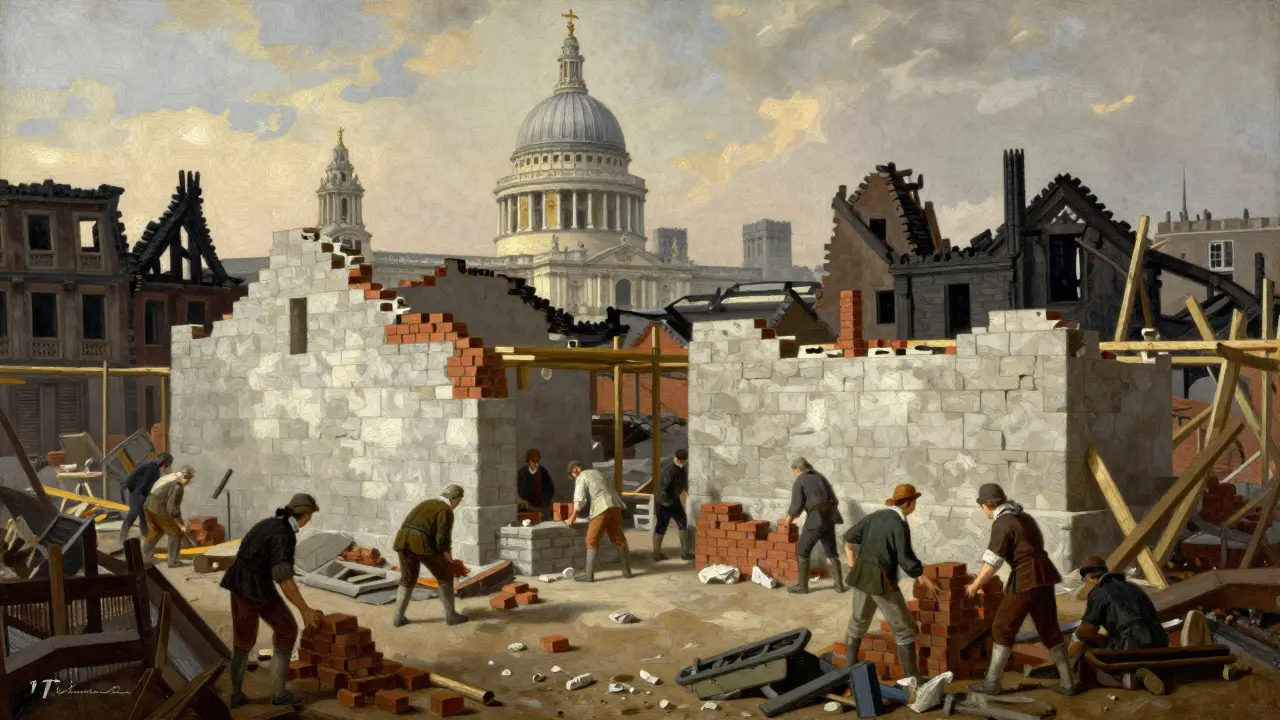
In the aftermath, King Charles II appointed Sir Christopher Wren, the leading architect of the era, to oversee the rebuilding. Wren proposed a radical new design featuring wide, straight boulevards and brick construction. While his full plan was never implemented due to property rights issues, his influence shaped the city’s recovery. He designed 52 new churches, including the iconic dome of St. Paul’s Cathedral, which took 35 years to complete.
The rebuild introduced stricter building codes. Timber-framed structures were banned in favor of brick and stone, making the city more fire-resistant. This shift not only improved safety but also gave London its distinctive red-brick aesthetic. The event also spurred advancements in firefighting technology and urban planning principles that are still studied today.
The Monument: A Symbol of Resilience
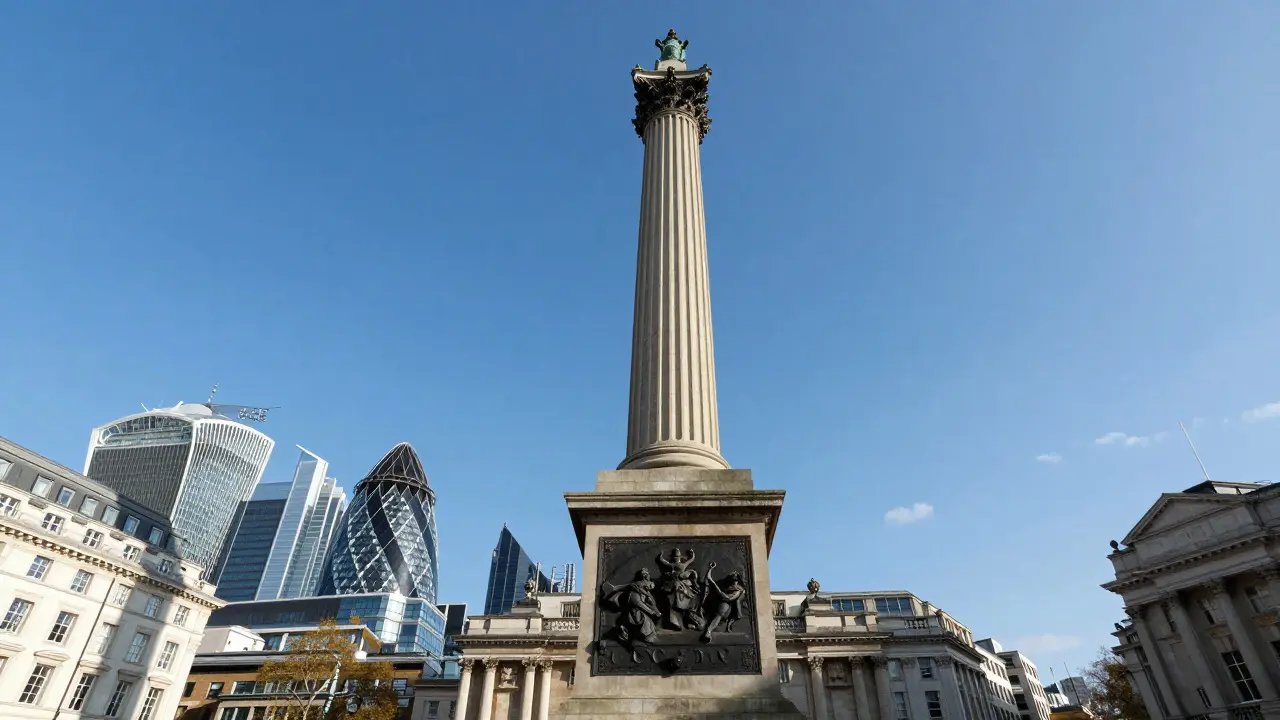
Today, visitors can see the physical legacy of the fire at the London Monument, also known as the Fire Monument. Located near Leadenhall Market, this 61.5-meter (202-foot) column stands as one of the tallest free-standing columns in the world. Built between 1671 and 1677, it was designed by Christopher Wren and Robert Hooke. The monument features a bronze urn at the top, symbolizing the fire that was "extinguished" and kept in check.
For centuries, the Monument was controversial. Many Londoners blamed the French and Catholics for starting the fire, fueled by rumors of a papal plot. To address these fears, an inscription was added to the base of the column: “Underground, the Papists, in the Year 1666, intended to have burned down this Protestant City.” This text remained until 1710, when public opinion shifted and the blame was removed. Today, the Monument serves as a reminder of both the tragedy and the city’s ability to rebuild stronger.
If you visit the area, you can climb the 311 steps inside the Monument for panoramic views of the City of London. The experience offers a unique perspective on how the skyline has changed since 1666, with modern skyscrapers like the Gherkin and the Walkie-Talkie towering above the historic sites.
Lessons Learned: How the Fire Changed Urban Planning
The Great Fire of London wasn’t just a disaster; it was a turning point for urban development. Here are three key lessons that influenced cities worldwide:
- Material Standards: The ban on wood in favor of brick and stone became a standard practice in European city centers. This reduced fire risks and increased building durability.
- Insurance Markets: The need to compensate for losses led to the formalization of insurance. Lloyd’s of London emerged as a global leader in risk management, a direct result of the post-fire economic needs.
- Urban Zoning: Although Wren’s grand plan wasn’t fully adopted, the idea of separating residential and commercial zones gained traction. This concept evolved into modern zoning laws that regulate land use based on function.
These changes helped London recover faster than other European cities that suffered similar fires. The event also highlighted the importance of emergency services, leading to the establishment of organized firefighting brigades rather than relying on ad-hoc volunteer efforts.
Frequently Asked Questions
Who really started the Great Fire of London?
The fire started accidentally in the bakery of Thomas Farriner on Pudding Lane. While there were rumors of arson or foreign sabotage, no definitive evidence supports these theories. The combination of dry conditions, wooden buildings, and strong winds made any small spark capable of causing widespread damage.
How long did it take to rebuild London after the fire?
Most of the city was rebuilt within a decade, but major projects like St. Paul’s Cathedral took 35 years to complete. The rapid reconstruction was driven by economic necessity and strict building regulations that prioritized speed and safety.
Is the London Monument open to the public?
Yes, the Monument is open to the public during daylight hours. Visitors can climb the spiral staircase to the top for views of the City of London. Admission fees vary, and guided tours are available to provide historical context.
Did the Great Fire affect areas outside the City of London?
The fire was largely contained within the City of London walls, but smoke and embers reached nearby areas like Westminster and Southwark. However, the majority of the destruction occurred within the 1.6 square kilometers of the central city.
What role did Samuel Pepys play in documenting the fire?
Samuel Pepys, a naval administrator, kept a detailed diary that provides one of the most vivid accounts of the fire. His entries describe the panic, the rescue efforts, and the personal losses he experienced, offering invaluable insights into the human side of the disaster.