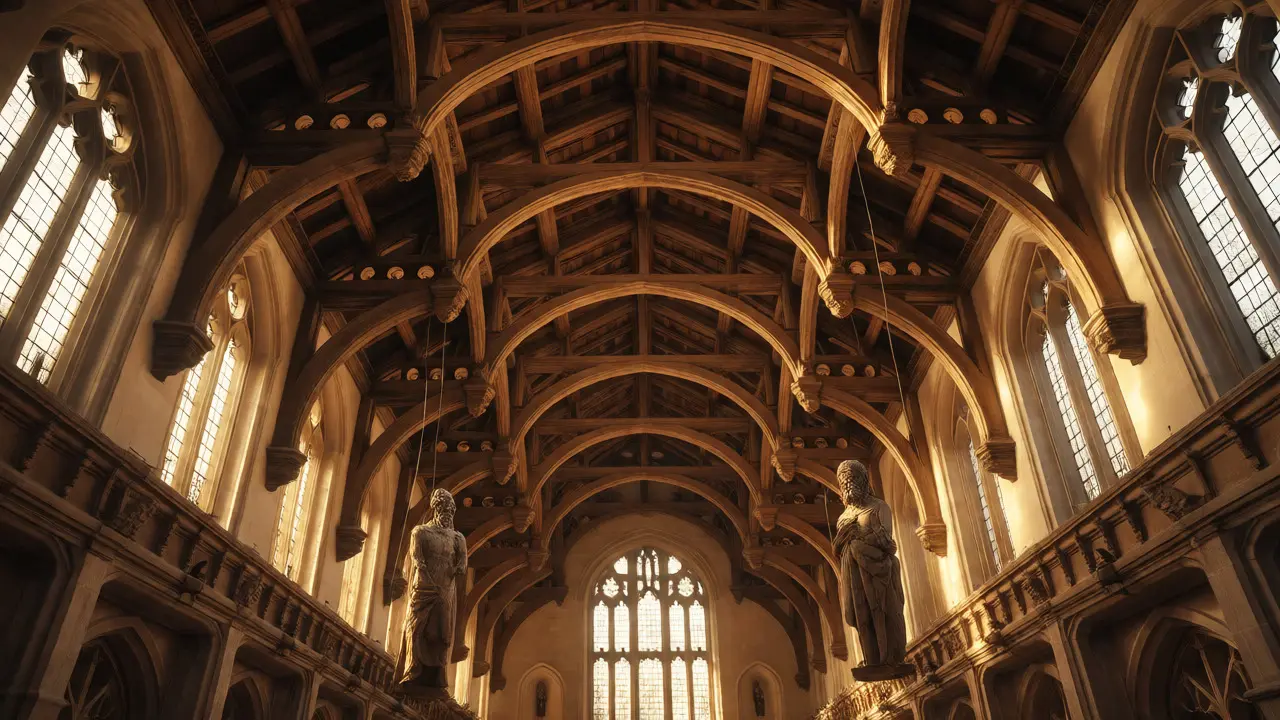
You are standing in a room that has witnessed more power shifts than most countries. Guildhall is the largest secular medieval building still standing in London, a massive stone skeleton that has held court, celebrated feasts, and housed the government of the City for over seven hundred years. Most tourists walk right past it, mistaking it for just another old office block near Bank station. That mistake costs you one of the best free cultural experiences in the UK. You don't need a ticket to see the Great Hall. You don't need a guide to understand its weight. You just need to know where to look.
This isn't about memorizing dates from a plaque. It's about understanding how this building shaped the modern concept of local government and why its giant statues matter today. If you're visiting London or trying to navigate the City's hidden corners, here is how to actually get value out of your visit.
The Core Experience: What You Actually See
When you step into the Great Hall, the first thing that hits you is the scale. The roof spans 150 feet without a single central pillar holding it up. This was an engineering nightmare in the 14th century. Today, it’s just breathtaking. Look up at the hammerbeam timber structure. It’s not just decorative; it’s a statement of wealth and technical skill from the medieval era.
Suspended from the ceiling are two giants: Gogmagog and Corineus. They aren't original to the hall. These wooden figures, created in 1708, replaced earlier versions destroyed during the English Civil War. They represent legendary kings of Britain, but their presence serves a practical historical purpose-they remind visitors that the City of London once claimed independence from the Crown. Standing there, looking at these 12-foot-tall effigies, you realize this wasn't just a meeting room. It was a stage for political theater.
- Architecture: Gothic style with a unique double-aisle design.
- Dimensions: Approximately 150 ft long, 65 ft wide, and 60 ft high.
- Key Feature: The largest medieval timber roof in Europe.
Why Guildhall Matters More Than Westminster
People assume Parliament is the center of British power. For centuries, it wasn't. The City of London had its own jurisdiction, its own laws, and its own army. Guildhall was the headquarters of that independent power. While the King sat in Westminster, the Lord Mayor ruled from here. This tension between the City and the Crown defined much of England's constitutional history.
Think of Guildhall as the boardroom of the merchants who built the British Empire. Here, trade agreements were finalized before ships even left port. Here, the Livery Companies-trade guilds like the Drapers or the Mercers-negotiated wages and standards that affected every worker in London. When you tour the City of London Corporation's current offices adjacent to the hall, you are seeing the direct descendant of those medieval meetings.
| Era | Primary Function | Key Event |
|---|---|---|
| Medieval (1300s) | Administrative Center | Establishment of the Court of Common Council |
| Tudor/Stuart (1500s-1600s) | Judicial & Ceremonial | Trial of Lady Jane Grey (1553) |
| Georgian/Victorian | Civic Governance | Major renovations by George Dance the Younger |
| Modern (Today) | Cultural Venue & Office | Hosts the Lord Mayor's Banquet |
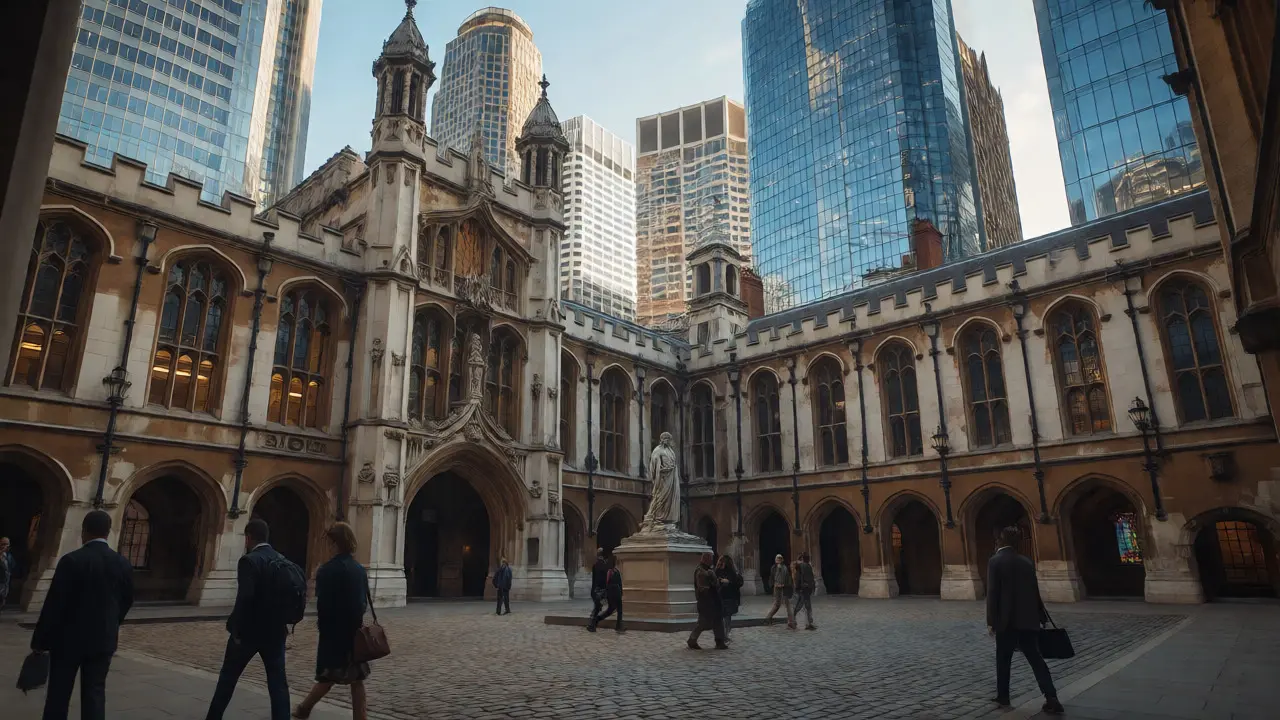
Navigating the Surrounding Historic City Centre
Guildhall doesn't exist in a vacuum. It sits in the heart of the City of London, a square mile of financial district that looks nothing like the rest of London. To make sense of the area, you need to connect the dots between Guildhall and its neighbors.
Start at Leadenhall Market. It’s a ten-minute walk south. This covered market, with its ornate Victorian roof, was a trading hub for poultry and game. Now it’s mostly restaurants and bars, but the layout remains. From there, head north to St. Paul’s Cathedral. You’ll pass through streets that were rebuilt after the Great Fire of 1666. Christopher Wren designed many of them, and his influence is everywhere.
If you’re interested in finance, stop at the Bank of England Museum. It’s free, interactive, and explains how money moved from gold coins in Guildhall vaults to digital numbers on screens. It contextualizes why this small area controls so much global capital.
Practical Tips for Your Visit
Here is the friction point: Guildhall is not always open. It is a working civic building first and a tourist site second. There is no permanent exhibition inside the Great Hall itself unless there is a specific event running. However, the exterior is always visible, and the courtyard is accessible.
For the full experience, check the schedule for guided tours. These are often run by the City of London Corporation or volunteer guides. They take you into rooms usually closed to the public, including the Library and the Art Gallery. The library holds rare books and manuscripts dating back to the 15th century. Seeing a book printed in 1470 next to a modern laptop creates a strange temporal dissonance that is worth experiencing.
- Check Opening Times: Tours vary by season. Weekdays are better for quiet reflection; weekends are busier with events.
- Dress Code: Smart casual is fine. No special requirements, but wear comfortable shoes for cobblestones.
- Photography: Allowed in the Great Hall, but flash is prohibited to protect the woodwork.
- Accessibility: Step-free access is available via the main entrance, but some upper floors may require stairs.

Beyond the Stones: The Living Legacy
It’s easy to treat historic buildings as dead things. But Guildhall is alive. Every November, the Lord Mayor’s Show parade ends here. The banquet held inside feeds hundreds of guests under the same roof where medieval merchants debated wool prices. The rituals haven’t changed much. The food has improved, sure. But the sense of ceremony remains intact.
This continuity is rare. In most cities, historic centers become museums frozen in time. In London, they remain functional. You might see a judge in robes walking to court while a tourist takes a selfie with the giants. That juxtaposition is the essence of London. It doesn’t erase its past; it layers it over the present.
If you want to deepen your understanding, read about the Livery Companies. There are over 100 of them. They started as unions for tradesmen. Now, they are charitable organizations and networks of influence. Understanding them helps you understand why certain streets in the City have names like Poultry, Bread Street, or Milk Street. The geography is literally edible.
Frequently Asked Questions
Is entry to Guildhall free?
Yes, entry to the Great Hall is generally free when it is open to the public. However, access can be restricted due to private events or official business. Special exhibitions or guided tours that include the Library and Art Gallery may charge a fee, though many are also free or donation-based.
Can I attend a wedding or event at Guildhall?
Yes, Guildhall is a popular venue for weddings, corporate events, and charity galas. Because it is a historic listed building, bookings must adhere to strict preservation guidelines. Events are typically held in the Great Hall or the nearby Guildhall Yard.
Who owns Guildhall?
The City of London Corporation owns and manages Guildhall. This is the local authority for the Square Mile, distinct from the Greater London Authority. The Corporation uses parts of the building for administrative purposes while maintaining the historic areas for public use.
Are the giants Gogmagog and Corineus real people?
No, they are mythical figures from British legend. Gogmagog was said to be a giant of immense strength, and Corineus was a Trojan warrior who founded Britain. Their statues serve as symbolic guardians of the City, representing its ancient heritage and legendary origins.
What is the nearest tube station?
Bank Station is the closest major interchange, served by Central, Northern, Waterloo & City, DLR, and Elizabeth Line trains. Moorgate and St. Paul’s stations are also within a short walking distance, offering additional options depending on your starting point.