
Arriving in London is a vibrant metropolis with over 40 universities and millions of residents can feel overwhelming. You are surrounded by people, but finding your tribe takes more than just walking around Soho. Building a strong student network is the difference between surviving your degree and thriving in it. It opens doors to internships, study groups, and lifelong friendships that extend far beyond graduation.
You don't need to be an extrovert to make this happen. You just need a strategy. Whether you are at Imperial College, UCL, or King's College, the city offers specific channels for connection. This guide breaks down exactly how to leverage societies, digital platforms, and local events to build a community that supports your academic and personal growth.
The Power of University Societies
Your first stop should always be your university’s official society list. These are curated groups where shared interests already exist. Unlike random meetups, these groups have built-in trust because everyone is in the same academic bubble. Most London universities host hundreds of these clubs, ranging from niche academic circles to broad social groups.
Here is how to choose the right ones:
- Academic & Professional Clubs: If you are studying law, join the Law Society. For engineering, look for IEEE or ACM chapters. These groups often invite industry speakers and offer mentorship programs directly linked to career services.
- Cultural & National Societies: If you are an international student, national societies (like the Indian Students' Association or the Chinese Cultural Society) provide a crucial support system. They help with visa queries, cultural festivals, and homesickness.
- Hobby-Based Groups: Hiking, coding, photography, or board games. These are low-pressure environments where you can meet people without the stress of academic performance.
Pro tip: Don't just sign up online. Attend the "Society Fair" during Freshers' Week. Walk the stalls, talk to the presidents, and ask what their most active events are. A society with no recent activity on social media is likely dormant.
Leveraging Digital Platforms for Connection
Physical presence matters, but discovery happens online. Before you even step foot in a lecture hall, you can start building bridges. The digital landscape for students in London is fragmented across several key platforms.
| Platform | Primary Use Case | Best For | Activity Level |
|---|---|---|---|
| LinkedIn is a professional networking site used for career connections | Professional contacts, alumni, recruiters | Internships, job leads, mentorship | Medium (requires active outreach) |
| Eventbrite is an event ticketing platform popular for local meetups | One-off workshops, talks, social mixers | Discovering new communities, skill-building | High (varies by topic) |
| Meetup.com is a platform for organizing local group activities | Recurring hobby groups, language exchanges | Consistent weekly/monthly gatherings | Moderate (niche-specific) |
| WhatsApp/Telegram are instant messaging apps widely used for group coordination | Internal group communication | Staying updated within existing circles | Very High (once added) |
On LinkedIn, don't wait until final year. Start connecting with second-year students in your department now. Send a personalized note mentioning a shared course or interest. On Eventbrite, search for keywords like "London Tech," "Creative Writing Workshop," or "Student Startup Night." These events attract motivated peers who are looking for collaboration, not just casual chat.
Mastering the Art of the First Interaction
You have joined the club, you are at the event, and now what? Many students freeze up. Here is a simple framework to break the ice without feeling forced.
- Observe and Comment: Notice something about the environment. "This venue is cool, have you been here before?" It’s low stakes and easy to answer.
- Ask Open-Ended Questions: Instead of "Do you like this?", try "What made you join this society?" or "What are you working on this semester?" People love talking about their passions.
- Share a Small Personal Detail: Vulnerability builds trust. Mention a challenge you’re facing or a funny mistake you made recently. It invites reciprocity.
- Follow Up Immediately: Within 24 hours, send a message. "Great meeting you at the [Event Name]! Loved hearing about your project on [Topic]. Let's grab coffee next week."
Consistency beats intensity. One deep conversation is better than ten shallow nods. Aim for quality connections with three to five people per month rather than trying to know everyone.

Beyond Campus: City-Wide Opportunities
London is huge, and your university bubble is small. To build a robust network, you need to engage with the wider city. This is where you meet professionals, other university students, and creative minds outside your immediate academic circle.
Consider these high-value activities:
- Volunteering: Organizations like Oxfam or local food banks welcome student volunteers. You meet diverse people while doing good work. It’s a natural way to bond over shared values.
- Co-working Spaces: Places like WeWork or Hubud often host free morning briefings or networking happy hours. Even if you aren't a member, some allow drop-ins for a fee. It’s a great place to see how professionals operate.
- Language Exchanges: Apps like Tandem or HelloTalk connect you with locals and other internationals for language practice. These sessions are relaxed and focused on conversation, making them ideal for breaking barriers.
- Industry Hackathons: If you are in tech or design, hackathons are intense but rewarding. You work in teams for 24-48 hours. The pressure creates strong bonds quickly.
These experiences add layers to your network. You aren't just known as "the quiet student from Biology"; you become the person who organized the volunteer drive or won the design sprint.
Maintaining Your Network Long-Term
Building the network is only half the battle. Keeping it alive requires effort. Relationships fade if left unattended. Here is how to keep your connections warm without burning out.
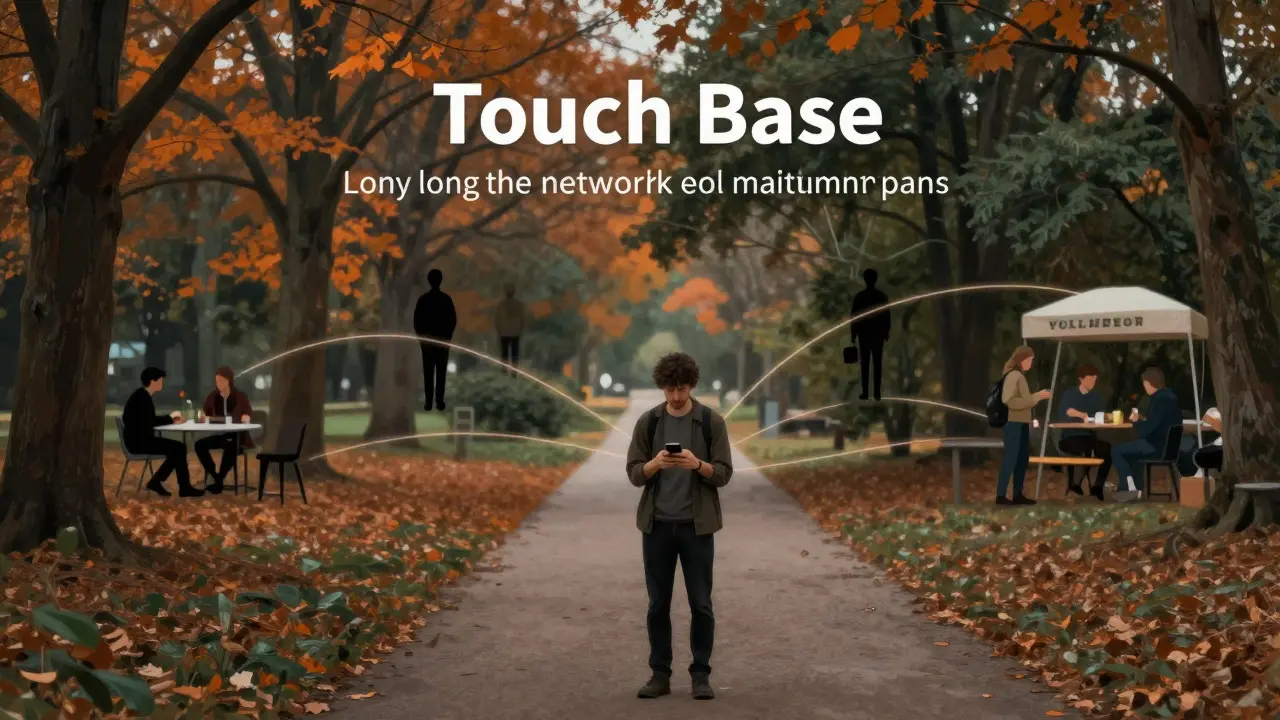
Use the "Touch Base" rule. Every two months, reach out to one person from your network. It doesn't have to be about business. Share an article they might find interesting, congratulate them on a post, or just say hello. This keeps you on their radar.
Create a shared calendar or group chat for your closest circle. Plan monthly activities: a pub quiz, a hike in Richmond Park, or a movie night. Regularity creates habit. When people know they will see you every fourth Saturday, they prioritize showing up.
Finally, be generous. Introduce people to each other. If you know someone looking for a flat and another moving out, connect them. If you hear about a job opening, forward it to a friend. Being a connector makes you valuable and strengthens your entire web of relationships.
Common Pitfalls to Avoid
Even with the best intentions, students often make mistakes that hinder their networking efforts. Watch out for these traps:
- Waiting for the Perfect Moment: There is no perfect time. Join the club now, even if you think you'll get busy later. Momentum is everything.
- Being Too Transactional: Don't approach everyone asking for favors. Give value first. Help others, listen actively, and show genuine interest. The favors will follow naturally.
- Ignoring Introverts: Not everyone thrives in large crowds. Seek out smaller, intimate settings like dinner tables or one-on-one coffee chats. These often lead to deeper connections than loud parties.
- Neglecting Online Presence: If you want professional connections, ensure your LinkedIn profile is updated. A blank profile signals disinterest in career development.
Frequently Asked Questions
How many societies should I join as a new student?
Start with two to three. One academic/professional, one cultural/hobby-based, and one social. More than four often leads to burnout and superficial participation. Quality over quantity ensures you actually attend events and build real connections.
Is it too late to build a network if I am in my second year?
No, it is not too late. Second years are often more engaged in serious projects and career planning, making them excellent mentors and collaborators. Focus on professional societies and industry events to catch up quickly.
What if I am an introvert and hate large crowds?
Focus on small-group activities. Look for book clubs, hiking groups, or one-on-one mentoring schemes. Volunteering also works well because the focus is on the task, reducing social pressure. You can still build deep networks in quieter settings.
Do I need to pay for memberships to join these groups?
Most university societies charge a small annual fee (usually £10-£30) which covers event costs. External meetups on Meetup.com may charge a small entry fee per event. However, many informal groups and volunteering opportunities are completely free.
How do I transition from student friends to professional contacts?
Keep the relationship warm after graduation. Continue to engage on LinkedIn, share relevant content, and offer help when possible. As you move into jobs, introduce your student friends to your colleagues and vice versa. This bridging role solidifies your position as a connector in the industry.