Walking through the crowded streets of London, trying to navigate the Tube without burning through your phone battery or getting hit with exorbitant roaming fees is a common headache for visitors. Whether you are staying for a weekend or a month, having reliable mobile connectivity is no longer optional; it’s essential for maps, translations, and staying in touch. The good news? You don’t have to overpay. With the right setup, you can stay connected for a fraction of what international carriers charge.
The key is understanding the difference between physical SIM cards and digital alternatives, and knowing which networks actually cover the city well. Let’s break down exactly how to pick the right option for your trip so you can focus on exploring, not troubleshooting signal bars.
Quick Summary / Key Takeaways
- eSIMs are the fastest way to get online upon arrival, avoiding queues at airports or convenience stores.
- Prepaid physical SIMs from major providers like Vodafone or EE offer robust coverage but require ID verification.
- For short trips (under 7 days), an eSIM from a global provider is often cheaper and more convenient than buying a local SIM.
- Always check if your phone supports eSIM technology before leaving home.
- Data-only plans are usually sufficient for most tourists unless you need to make local calls.
eSIM vs. Physical SIM: Which Is Right for You?
The biggest decision you’ll face is choosing between a traditional plastic SIM card and an eSIM. An eSIM is a digital profile that you download directly onto your device, eliminating the need to swap out tiny plastic chips. If you’ve used an eSIM before, this process takes less than five minutes. You simply scan a QR code provided by the service provider, and you’re connected.
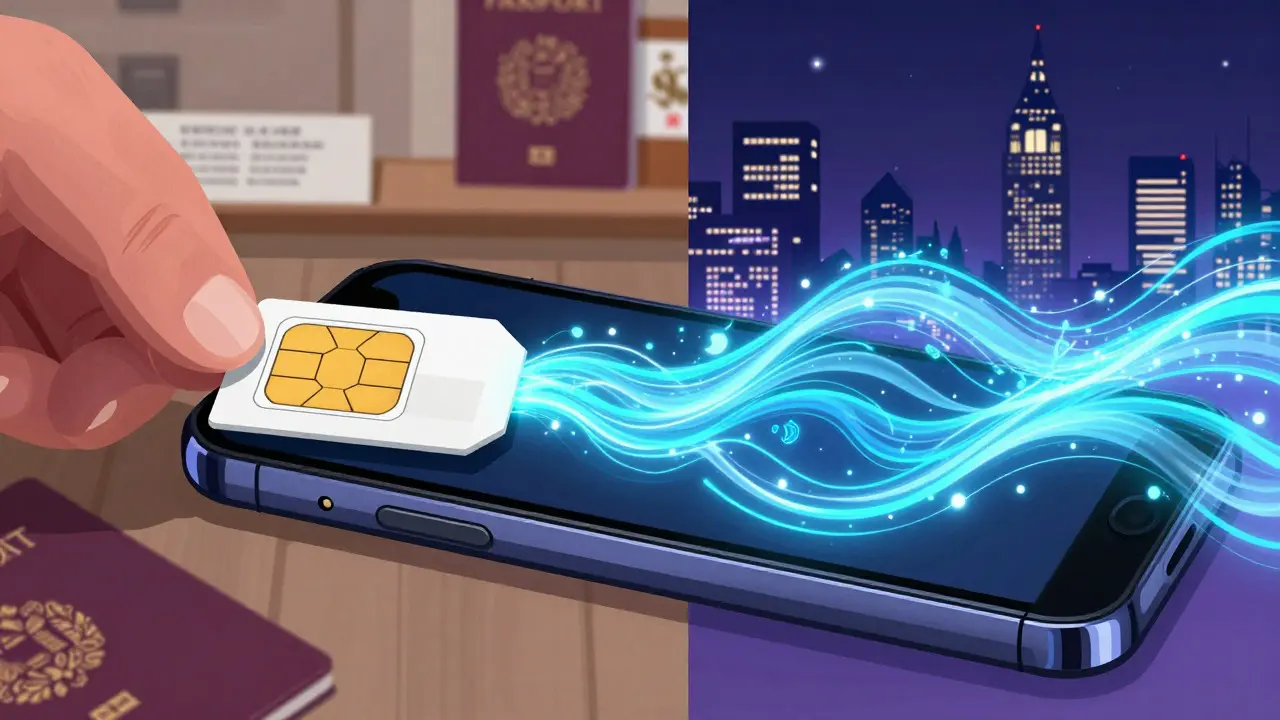
Physical SIMs, on the other hand, involve visiting a shop-often located in airport arrivals halls or high-street electronics stores-to purchase a card. While this method allows you to test different network strengths in person, it requires you to present valid photo identification, such as a passport, due to UK registration laws. For many travelers, the time spent queuing and explaining their needs to a store clerk outweighs the benefits, especially when they could have been online within minutes of landing at Heathrow or Gatwick.
| Feature | eSIM | Physical Prepaid SIM |
|---|---|---|
| Activation Time | 5-10 minutes (online) | 15-30 minutes (in-store) |
| ID Required | No (usually) | Yes (Passport) |
| Cost | Mid-range to High | Low to Mid-range |
| Convenience | High (no physical swap) | Moderate (requires store visit) |
| Device Compatibility | Must support eSIM | Universal (if unlocked) |
Top Providers and Network Coverage in London
Not all networks are created equal. In the UK, the four main mobile operators are EE, Vodafone, Three, and O2. Each has distinct strengths depending on where you plan to spend most of your time.
EE generally offers the strongest 4G and 5G coverage across London, including deep underground areas and older buildings. If you rely heavily on real-time navigation while traveling through the city center or visiting suburban areas, EE is often the safest bet. Vodafone follows closely, providing excellent urban coverage and competitive pricing for mid-term stays. Three is known for offering generous data allowances at lower price points, making it a favorite for heavy data users who primarily stay in central zones. Finally, O2 provides solid performance and frequent promotional deals, though its coverage in remote parts of Greater London may vary slightly compared to its rivals.
When selecting a provider, consider your itinerary. If you’re sticking to Zones 1 and 2, any major provider will work fine. However, if you plan to day-trip to places like Windsor or Brighton, prioritize providers with stronger rural coverage, typically EE or Vodafone.
Understanding Data Needs and Plan Selection
One of the most common mistakes visitors make is buying too much data. Unless you are streaming high-definition video constantly or using your phone as a hotspot for multiple devices, you likely need less data than you think. A typical tourist uses about 1GB to 3GB per day for maps, social media, email, and occasional video calls.
Here is a general guide to help you estimate your usage:
- Light User: Maps, messaging, light browsing. Expect to use 1-2GB per day.
- Moderate User: Social media, music streaming, some video calls. Expect 3-5GB per day.
- Heavy User: Video streaming, constant hotspot usage, large file downloads. Expect 5GB+ per day.
For a 7-day trip, a 10GB-20GB plan is usually more than enough for most travelers. Many providers now offer "unlimited" data plans, but be aware that these often come with fair usage policies that throttle speeds after a certain threshold. Read the fine print to ensure "unlimited" means truly unlimited for your use case.
Step-by-Step Guide to Getting Connected
If you choose the eSIM route, here is how to set it up before or immediately after your flight lands:
- Check Device Compatibility: Ensure your iPhone (XS or newer) or Android device supports eSIM and is unlocked.
- Select a Provider: Compare prices from global eSIM providers or direct UK carrier apps. Look for plans that include data only, as voice services are rarely needed by tourists.
- Purchase Your Plan: Buy the eSIM profile online. You will receive a QR code via email.
- Install the Profile: Go to your phone settings, select "Mobile Data" or "Cellular," and add a new data plan. Scan the QR code.
- Activate Data Roaming: Once installed, enable data roaming for the new line to start connecting to the UK network.
If you opt for a physical SIM, head to a Vodafone, EE, Three, or O2 store. Bring your passport. Ask for a "prepaid tourist SIM" with a specific data allowance. The staff will activate it on the spot, and you should be connected within minutes.
Common Pitfalls to Avoid
Even with the best intentions, small oversights can ruin your connectivity experience. First, never assume your home carrier’s roaming package is the cheapest option. International roaming rates can be three to five times higher than local prepaid rates. Second, watch out for hidden costs. Some cheap eSIM providers charge extra for customer support or require you to pay with credit cards that incur foreign transaction fees. Third, verify your phone is unlocked. If your phone is locked to a US or European carrier, it won’t accept a UK SIM card or eSIM profile until you unlock it, a process that can take several days.
Finally, keep your home SIM active if possible. By using an eSIM for data and keeping your physical home SIM for receiving SMS codes (like bank alerts or two-factor authentication), you avoid the hassle of changing your number or missing critical texts. This dual-SIM capability is one of the biggest advantages of modern smartphones for travelers.
Frequently Asked Questions
Do I need a UK phone number for my SIM card?
No, most tourist SIM cards and eSIMs are data-only. You do not need a local phone number to access the internet. If you do need a number, look for "voice + data" plans, but note that calling back to your home country from a UK number can still be expensive.
Can I use my home SIM card in London?
Yes, but you must enable data roaming. Be sure to check your carrier’s roaming rates first. If you are in the EU, rates may be reasonable due to regulation, but for non-EU countries, daily caps can apply quickly. A local SIM or eSIM is almost always cheaper for stays longer than a few days.
Where can I buy a physical SIM card in London?
You can buy them at major airports (Heathrow, Gatwick, Stansted, City), dedicated carrier stores (Vodafone, EE, Three, O2) found in shopping centers, and many convenience stores like WHSmith or Tesco Express. Airport kiosks are convenient but sometimes pricier than city-center stores.
Is 5G available on tourist SIM cards?
Yes, most major UK providers offer 5G on their prepaid and eSIM plans. However, 5G coverage is concentrated in central London and major hubs. You will likely fall back to 4G LTE in residential areas or underground stations, which is still fast enough for most tasks.
What happens if I run out of data mid-trip?
If you have an eSIM, you can usually top up instantly via the provider’s app or website. If you have a physical SIM, you can buy additional data packs online or at a store. To avoid disruption, consider choosing a plan with a buffer of extra data or setting up automatic top-ups if the provider supports it.