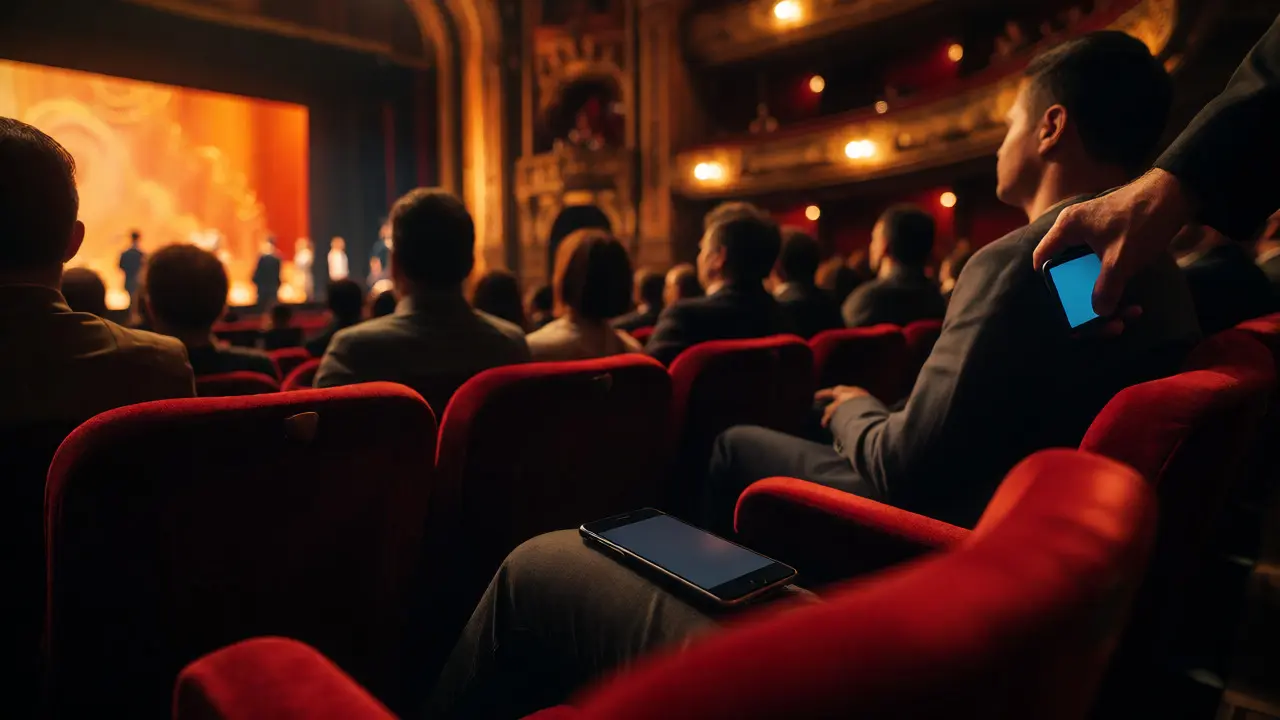
You just bought tickets to Hamilton at the Victoria Palace Theatre, or maybe you're catching a fringe play in Soho. You’re excited, dressed up, and ready for magic. But then it happens: the person behind you starts scrolling Instagram during the opening monologue. Or worse, you arrive five minutes late and are stuck in the lobby while everyone else is settling into their seats.
West End theatre etiquette isn't just about being polite; it's about preserving the shared experience that makes live performance unique. Unlike watching Netflix at home, where you can pause for snacks, a stage show demands collective focus. This guide breaks down exactly what’s acceptable, what gets you glared at by ushers, and how to handle the tricky situation of arriving late without ruining your night.
The Golden Rule: Silence Your Devices Properly
We all know the rule: turn off your phone. But let’s be real-most people just put it on silent. That’s not enough. A vibrating phone buzzing against a wooden seat or in your pocket creates a low-frequency hum that disrupts the actor’s rhythm and distracts nearby audience members. In London theatres, this is considered a major faux pas.
Here is the specific protocol used by ushers across the West End:
- Power Down: Don’t just silence it. Turn it completely off. If you forget, switch to Airplane Mode to prevent notification lights from flashing.
- Stow It Away: Keep your phone in your bag or jacket pocket, not on your lap. The glow of a screen in a darkened auditorium is visible from three rows back.
- No Texting During Intermission: Even if the house lights go up, keep volume low. Actors often hear audience noise from backstage, and loud texting chatter can break their concentration before they return.
If you absolutely must answer an emergency call, step out immediately. Do not whisper. There is no such thing as a quiet conversation in a theatre lobby that doesn’t carry back into the hall when you return.
Photography: What You Can and Cannot Capture
This is where confusion spikes. Social media has changed how we document experiences, but photography policies vary significantly between venues. Generally, the rule is simple: no photos or videos during the performance. Flash photography is strictly prohibited because it blinds actors and ruins the immersion for others.
However, there are nuances. Many theatres now allow professional photographers in the foyer during intervals, but amateur smartphone shots? It depends.
| Venue Type | Pre-Show (Foyer) | During Performance | Post-Show (Bow) |
|---|---|---|---|
| Royal Opera House | Allowed (No flash) | Strictly Prohibited | Usually Allowed |
| National Theatre | Allowed | Prohibited | Check with Ushers |
| Fringe Theatres (e.g., Edinburgh Fringe style venues in London) | Often Encouraged | Depends on Director | Often Allowed |
A pro tip: If you want to share your excitement on Instagram, take a picture of your ticket stub or the exterior marquee before entering. Once you cross the threshold into the auditorium, put the camera away. Some modern productions, like Hadestown or certain immersive shows, might explicitly invite audience interaction via apps, but these will be announced clearly beforehand. Assume silence and darkness unless told otherwise.
Navigating the Latecomer Policy
You got stuck in traffic on the A40, or the Tube was delayed again. You arrive ten minutes after curtain-up. What happens next? This is the most stressful part of London theatre etiquette.
Most major West End houses have strict latecomer policies. You cannot simply walk in and find your seat. Why? Because walking down a central aisle blocks sightlines for dozens of people, and the rustle of coats and footsteps disrupts the scene in progress.
Instead, you will likely be held in the foyer or a designated waiting area until a suitable break in the action. This could mean waiting until the end of Act One, which might be 45-60 minutes later. Here’s how to manage it:
- Check Your Ticket: Look for fine print regarding lateness. Some premium tickets guarantee entry, while standard ones do not.
- Talk to the Head Usher: Be honest and apologetic. They have seen it all. Ask if there is a "late seating" window coming up soon.
- Consider a Refund or Exchange: If you are more than 15 minutes late, ask if you can exchange your ticket for another date. While not guaranteed, some box offices are flexible if the show isn’t sold out.
- Accept the Loss: If you miss the first act, don’t complain loudly upon re-entry. Slip in quietly, bow slightly to those you pass, and settle in. Apologizing verbally mid-scene draws more attention than just sitting down silently.
Note that smaller fringe theatres are often more lenient, allowing latecomers to enter during quieter moments, but always check ahead.
Dress Code and General Conduct
Gone are the days when you needed a tuxedo for the opera or a suit for every play. Today, London theatre dress codes are relaxed. However, "casual" doesn’t mean "gym clothes." Wearing shorts, flip-flops, or a hoodie with a loud graphic tee might mark you as a tourist who hasn’t done their homework.
Think "smart casual." Jeans are fine if they’re clean and not distressed. Closed-toe shoes are preferred, partly for style, partly because squeaky sneakers are audible in hushed scenes. More importantly, consider the temperature. Older theatres like the Garrick Theatre may lack modern air conditioning, so layering is wise. Conversely, new builds like the Shakespeare’s Globe (if indoor) or The Old Vic can be chilly due to high ceilings and stone walls.
Eating and drinking also have rules. Most theatres prohibit food and drink inside the auditorium. Exceptions exist for VIP boxes or specific dining experiences (like Dinner Theatre). Never sneak in a chocolate bar or a soda bottle. The crinkle of a wrapper is louder than you think.
Applause and Interaction: When to Clap?
Nothing kills the mood faster than premature applause. In musicals, audiences often clap after every song. In straight plays, clapping between scenes can confuse actors about whether the scene has ended. The general rule: wait for the house lights to rise or for the actors to acknowledge each other before clapping.
What about laughter? Laugh freely! Comedies rely on audience reaction. But avoid talking back to the stage unless it’s an interactive show like The Play That Goes Wrong. And please, stop coughing. If you have a cold, bring lozenges. Uncontrollable coughing fits should prompt a quick exit to the lobby.
Special Considerations for Accessible Seating
If you book accessible seating, familiarize yourself with the venue’s specific layout. Some wheelchair spaces are located at the back or sides, offering different sightlines. Arrive early to ensure staff assist you properly. If you have hearing or visual impairments, request audio description or touch tours in advance. These services are free but require booking slots, so plan ahead rather than assuming availability on the day.
FAQ: Common Questions About London Theatre Etiquette
Can I eat my own snacks inside the theatre?
Generally, no. Most London theatres prohibit outside food and drinks in the auditorium to protect upholstery and minimize noise. You can usually buy drinks and sweets from the bar during intervals, but consuming them during the performance is frowned upon. Check your specific venue’s policy, as some family-friendly matinees may be more lenient.
What happens if I arrive late to a West End show?
You will typically be held in the foyer until a natural break in the performance, which could be at the end of the first act. You won’t be allowed to walk in mid-scene. Some theatres offer partial refunds or exchanges for late arrivals, but this is at their discretion. Always aim to arrive 15-20 minutes early to browse the programme and get seated comfortably.
Is it rude to leave early?
Leaving during a performance is disruptive. If you must leave, do so during a blackout or interval. Exiting mid-scene requires standing up and walking past seated patrons, blocking views and creating noise. Try to stay until the curtain call, even if you didn’t enjoy the show, as a sign of respect to the performers.
Do I need to tip the usher?
Tipping ushers is not mandatory in London theatres, but it is appreciated. A small amount (£1-£2) per person is common if the service was helpful, especially if they assisted with heavy coats or difficult seating arrangements. It’s a gesture of goodwill, not an obligation.
Can I bring children to any show?
No. Each production has a minimum age requirement, usually listed on the ticket or website. Children under 7 are rarely admitted to evening performances unless specified. Babies are generally not permitted in the auditorium except for dedicated baby-friendly shows. Always check the age rating before purchasing tickets to avoid disappointment at the door.
Final Thoughts: Respect the Space
Ultimately, theatre etiquette comes down to one thing: respect. Respect for the artists performing, respect for the staff working, and respect for the fellow audience members sharing the space. By managing your phone, understanding latecomer rules, and keeping noise levels low, you contribute to the magic of live performance. Enjoy the show-you’ve earned it by following the unspoken code.