British Museum vs National Gallery: Which London Art Museum Is Right for You?
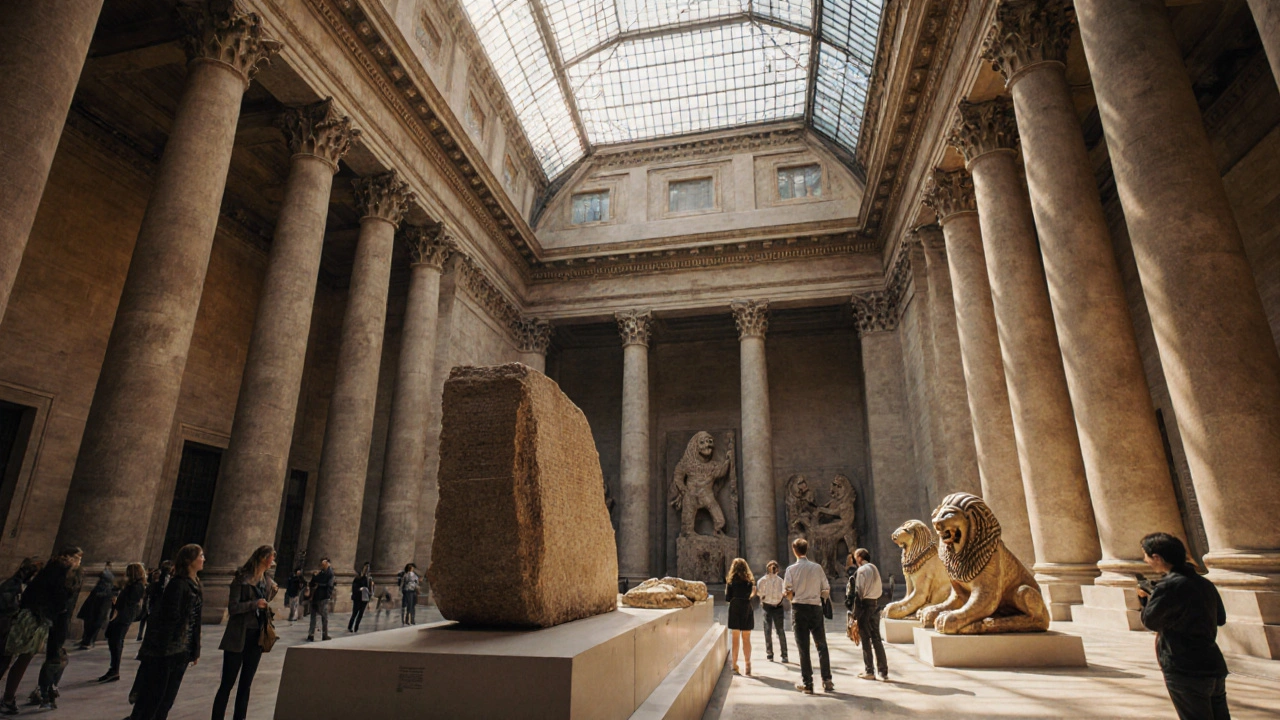
When you think of British Museum, a vast public collection of human history and culture from around the world, also known as the world’s first national public museum. you picture mummies, Roman statues, and the Rosetta Stone. Meanwhile, National Gallery, a free public collection focused on Western European paintings from the 13th to 19th centuries. is all about Van Gogh’s sunflowers, Turner’s storms, and Botticelli’s angels. These aren’t just two museums—they’re two completely different ways of experiencing history and art.
The British Museum is a time machine. You walk through halls filled with artifacts from Egypt, Greece, Mesopotamia, and beyond. It’s not about brushstrokes or color theory—it’s about objects that shaped civilizations. You’ll see the Elgin Marbles, the Sutton Hoo helmet, and the Lewis Chessmen. It’s massive, overwhelming, and deeply human. You don’t come here for quiet contemplation—you come to be amazed by what people made centuries ago, far from London. On the other hand, the National Gallery is a gallery of emotion. Every painting here tells a story, not just through subject, but through light, texture, and mood. You stand in front of a Caravaggio and feel the drama. You look at a Monet and feel the morning mist. It’s smaller, more focused, and designed for people who want to sit, stare, and let art sink in.
Both are free. Both are in central London. But they serve different needs. If you love archaeology, ancient empires, and the raw power of objects that survived wars and time, the British Museum is your place. If you’re drawn to the soul of a painting, the brushwork of Rembrandt, or the quiet beauty of a Renaissance portrait, the National Gallery will stay with you longer. You can’t truly understand London’s cultural depth without seeing both—but you don’t need to do them both in one day. Pick your mood. Pick your story. And let the city’s greatest collections speak to you.
Below, you’ll find real guides from locals and visitors who’ve walked these halls—whether they’re hunting for the best way to see the Rosetta Stone without the crowds, or which Van Gogh to stand in front of when the light hits just right. These aren’t tourist brochures. They’re honest, practical tips from people who’ve spent hours inside, trying to figure out what it all means.