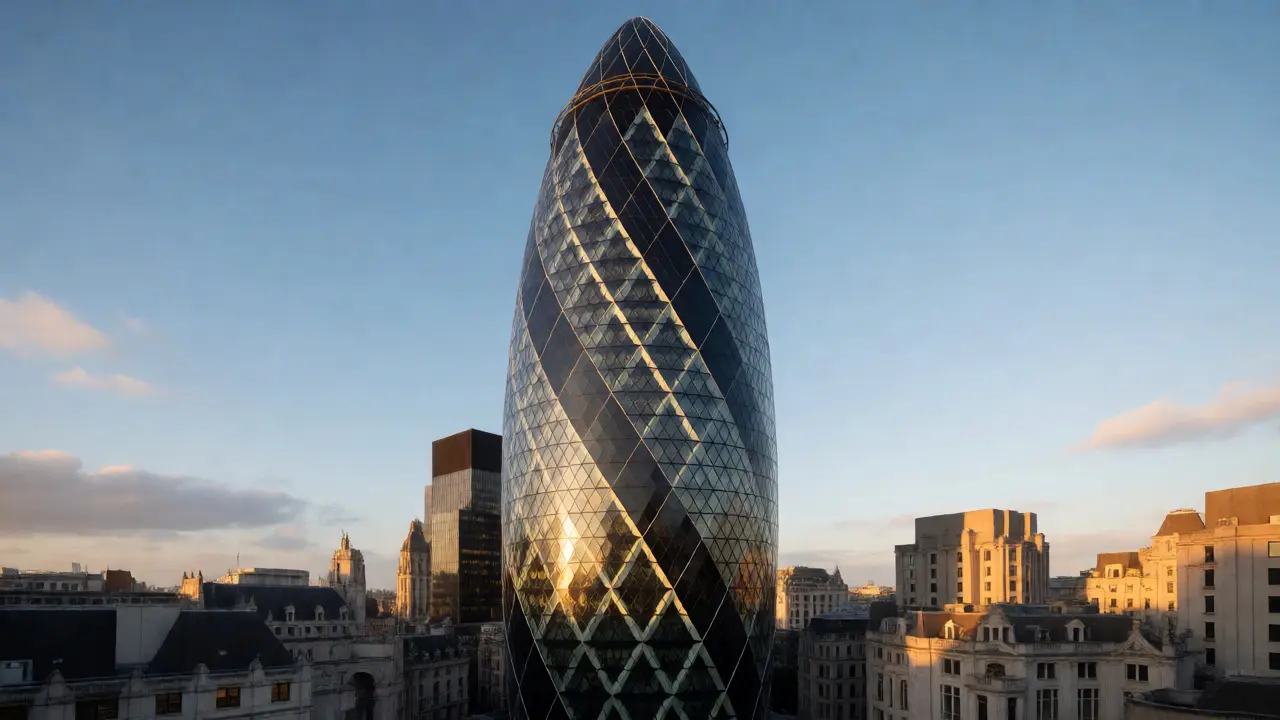
You’ve seen it in every movie set in London. It looks like a pickle, a bullet, or a spaceship that crashed into the City of London. But what is The Gherkin actually? Officially known as 30 St Mary Axe, this 41-story skyscraper isn’t just a weird shape on the skyline. It’s a masterpiece of engineering that changed how we think about tall buildings.
If you’re walking through London today, you can’t miss it. But most people just snap a photo and keep walking. That’s a mistake. There’s a fascinating story behind why it was built, how it stays cool without massive air conditioning bills, and who actually works inside those curved glass panels. Let’s break down why this building matters, not just to architects, but to anyone interested in how cities evolve.
Why Does It Look Like That?
The shape isn’t random. It wasn’t designed by an AI or a committee trying to be quirky. The diagrid structure-that crisscrossing pattern of steel beams you see on the outside-serves two critical purposes. First, it reduces wind load. Tall buildings in London face strong gusts from the Thames corridor. A traditional rectangular tower would sway dangerously. The rounded, tapered shape allows wind to slip around it smoothly, reducing the need for heavy internal bracing.
Second, the form maximizes floor space while minimizing the footprint. By bulging out in the middle and tapering at the top and bottom, the building creates larger office spaces on the upper floors where tenants pay more. This design choice directly influenced its commercial viability. Without this clever geometry, the project might never have gotten off the ground financially.
Norman Foster, the architect behind the vision, didn’t want another box. He wanted a landmark. And he got one. The building stands 180 meters tall, making it one of the most recognizable structures in Europe. But its fame comes with controversy. Some locals love it; others hate it. Yet, you can’t ignore its impact on the London skyline since it opened in 2003.
The Engineering Behind the Green Giant
When Swiss Re, the global insurance giant, commissioned the building, they had strict requirements. They wanted a headquarters that reflected their brand: stable, forward-thinking, and efficient. The result was one of the first truly "green" skyscrapers in the world.
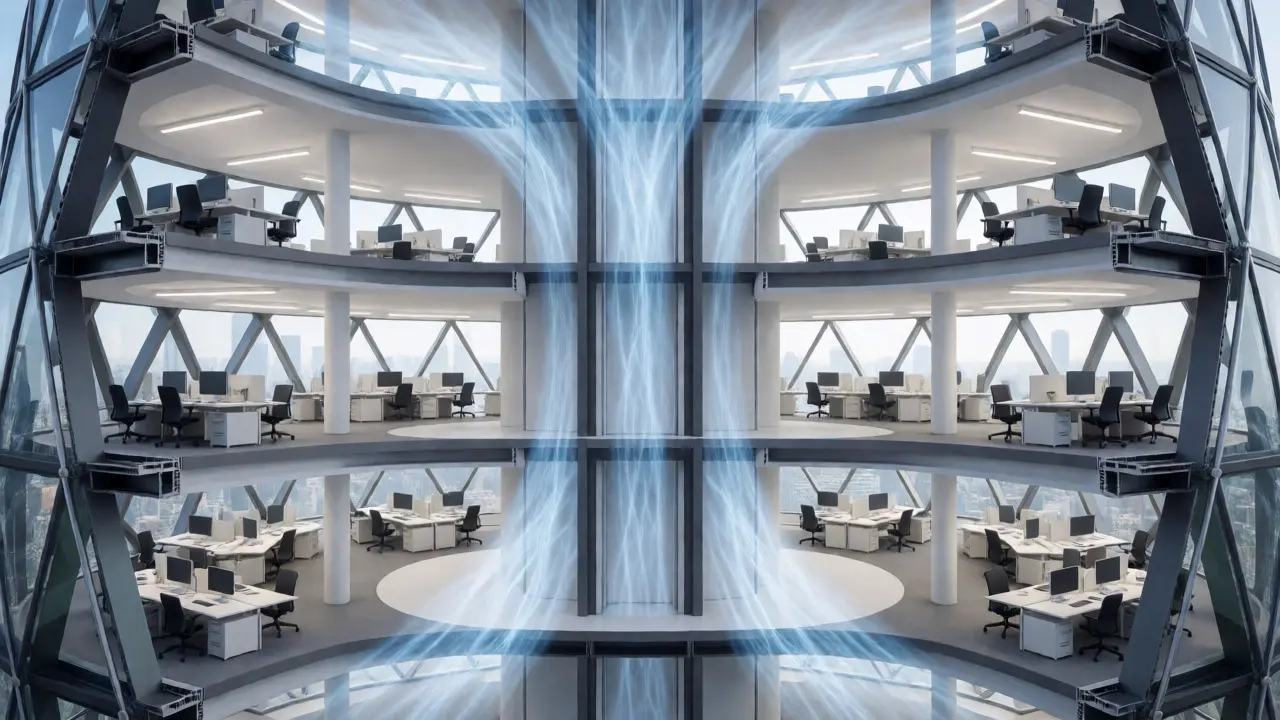
How does it work? The double-skin facade is key. Between the inner and outer layers of glass, there are six vertical shafts that act as chimneys. Hot air rises naturally through these vents, pulling fresh air into the offices below. This natural ventilation system cuts energy consumption by up to 50% compared to similar-sized buildings. You don’t hear the hum of massive AC units when you stand near it because the building breathes on its own.
- Energy Efficiency: Uses half the electricity of comparable towers.
- Water Recycling: Collects rainwater for toilet flushing and cooling systems.
- Material Choice: Primarily steel and glass, chosen for durability and recyclability.
This wasn’t just marketing fluff. In 2004, the building won the Royal Institute of British Architects’ Stirling Prize. Judges cited its innovative approach to sustainability in a dense urban environment. Today, as climate concerns drive new construction codes globally, The Gherkin remains a case study in passive design.
A Brief History of the Site
The land where The Gherkin stands has a dark past. Before the skyscraper, this site held the Baltic Exchange, a historic trading hub for maritime goods. On April 10, 1992, the Irish Republican Army detonated a bomb nearby, causing massive damage to the exchange. The blast destroyed much of the original structure, leaving a scar on the City of London.
Rebuilding became a political nightmare. Planners initially proposed a cluster of smaller buildings to respect the historic scale of the area. But developers pushed back. They argued that a single, iconic tower would regenerate the district better than a bland block of offices. After years of public inquiries and legal battles, permission was finally granted in 2000 for a single tower. Construction began shortly after, and by 2003, the distinctive silhouette appeared over London.
This history explains why the building feels so isolated yet dominant. It sits alone, surrounded by older, lower structures. This contrast highlights its modernity but also sparks debate about heritage versus progress. Should London preserve its old charm, or embrace bold new forms? The Gherkin forces you to answer that question every time you look at it.
What Happens Inside?
You might assume the interior is just endless rows of cubicles. It’s not. The layout follows the curve of the exterior. Office floors are circular, with desks arranged around the perimeter to maximize views. Central cores house elevators and services, freeing up window seats for employees.
Access is restricted. Unlike some tourist attractions, you can’t just walk in and buy a ticket. The building is primarily private office space. However, there are ways to experience it:
- Public Viewing: Occasionally, guided tours are available through specific cultural programs, though these are rare and often require booking months in advance.
- Events: The building hosts corporate events and conferences. If you’re invited, take the chance to step inside.
- Virtual Tours: Several online platforms offer 360-degree walks through the lobby and observation areas.
The lobby itself is a statement piece. Polished stone floors, minimalist lighting, and high ceilings create a sense of calm amidst the bustling city outside. It reflects the company culture of its main tenant: professional, understated, and confident.
Cultural Impact and Public Opinion
Love it or hate it, The Gherkin is part of London’s DNA now. It appears in films like *Mission: Impossible - Fallout* and countless TV shows. Tourists use it as a navigation point. "Meet me by the pickle," they say. It’s become shorthand for modern London.
| Feature | The Gherkin | Traditional Tower |
|---|---|---|
| Shape | Bullet/Diagrid | Rectangular Box |
| Ventilation | Natural Chimney Effect | Mechanical HVAC |
| Wind Resistance | High (Aerodynamic) | Low (Requires Bracing) |
| Icon Status | Global Landmark | Generic Office Block |
Public opinion shifted over time. Initially, many Londoners mocked the design. Critics called it a "phallic symbol" or a "monstrosity." But as other futuristic buildings emerged, such as the Walkie-Talkie and the Cheesegrater, The Gherkin gained appreciation for its elegance. It paved the way for architectural diversity in the City.
Today, it represents resilience. It survived the post-9/11 security scrutiny, the 2008 financial crisis, and Brexit uncertainty. Its continued occupancy proves that good design withstands economic storms. Companies still want to lease space here, despite higher rents, because the prestige and efficiency outweigh the cost.
Visiting Tips for Architecture Fans
If you’re planning a visit, timing matters. Early morning light hits the eastern face, highlighting the spiral pattern of the diagrid. Sunset offers dramatic shadows against the blue sky. Avoid midday glare if you’re taking photos; the glass reflects too much sunlight then.
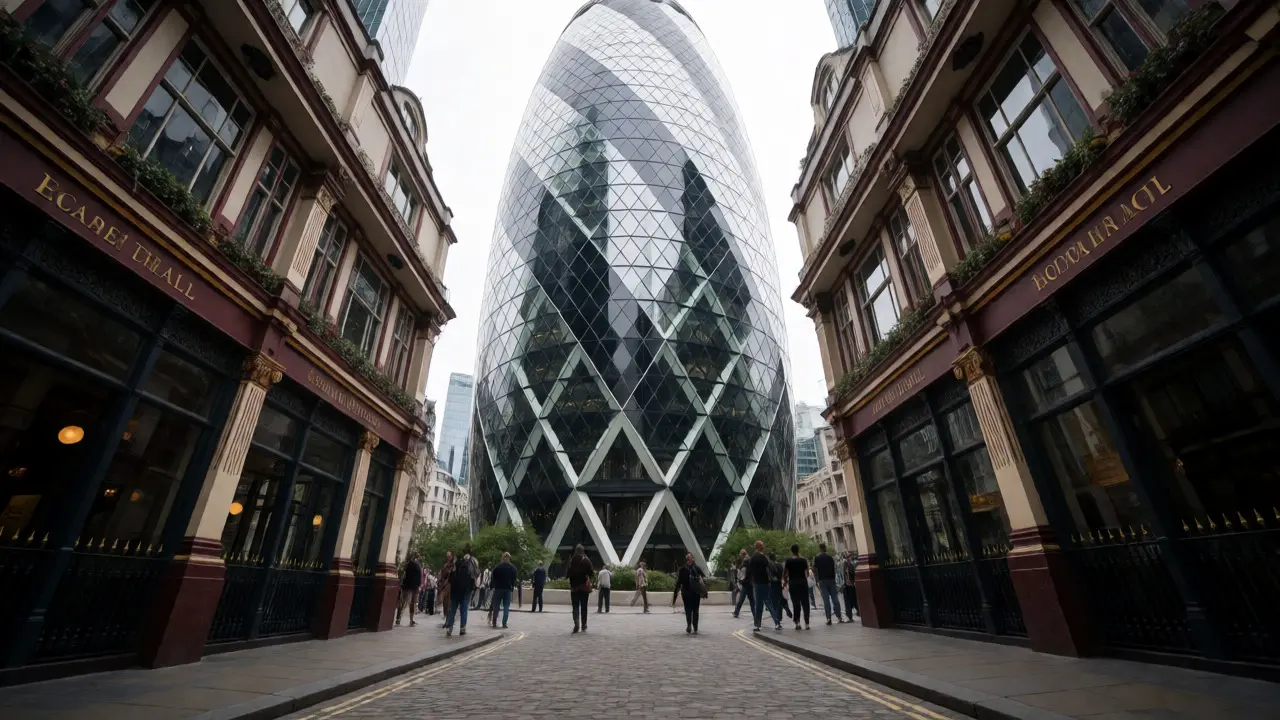
Stand across the street at Leadenhall Market for a classic angle. Or walk north towards Liverpool Street Station for a view that includes the spire of St. Helen’s Bishopsgate. This juxtaposition of medieval church and modern skyscraper tells the whole story of London in one frame.
Don’t forget to look up. The curvature changes depending on your perspective. From certain angles, it looks twisted; from others, it seems perfectly symmetrical. This optical illusion is intentional. It keeps the eye engaged, preventing the monotony that plagues many large-scale projects.
Can I go inside The Gherkin?
Generally, no. It is a private office building. Access is limited to tenants and invited guests. However, occasional public tours may be organized by local heritage groups, so check ahead for special events.
Who owns 30 St Mary Axe?
The building is owned by Ivor Grosvenor Estates, a joint venture between Ivor Grosvenor and Aviva Investors. Swiss Re was the original anchor tenant but sold the property in 2007.
Why is it called The Gherkin?
Londoners gave it the nickname due to its resemblance to a gherkin pickle. The official name is 30 St Mary Axe, referring to the street address. The nickname stuck because it’s catchy and descriptive.
Is The Gherkin sustainable?
Yes, it was one of the first major eco-friendly skyscrapers. Its natural ventilation system and energy-efficient design reduce carbon emissions significantly compared to conventional towers of the same era.
How tall is The Gherkin?
It stands at 180 meters (591 feet) tall with 41 stories. While not the tallest in London anymore, it remains one of the most visually prominent due to its unique shape and central location.